

Several weeks ago, we learned about how the Federal Aviation Administration (FAA) planned to force flight cuts at Chicago O’Hare Airport (ORD), given the extent to which airlines are trying to grow there, and the impact that will have on congestion.
There’s now a major update, as the FAA has finalized just how many flights will have to be cut. This is going to have some major impacts on the battle we’re currently seeing at Chicago O’Hare Airport (ORD), between American and United….
Chicago O’Hare flights will be reduced by 12% this summer
Recently, we’ve seen both American and United add a lot of capacity in Chicago, and this is part of a battle between the two companies. Both airlines have a hub in Chicago, but United has taken the lead (by far) in recent years, and now American is trying to regain some market share. So in reality, we’re just seeing a lot of capacity dumping in Chicago over the coming months (and a lot of smack talk!).
In light of all of this, the Federal Aviation Administration (FAA) has just finalized an order to force schedule reductions at Chicago O’Hare, which will apply for much of the the IATA summer 2026 season (which goes from late March until late October).
To what extent should we expect flight cuts? Going back a couple of months, there were 3,080 planned peak day operations at the airport in summer, compared to 2,680 peak day operations during the same period in 2025. The FAA believes that this “increase is significant and would stress the runway, terminal, and air traffic control systems at the airport.”
So the FAA has now finalized an order, which will go into effect for flights between May 17 and October 24, 2026. With this, we’ll see 2,708 daily peak day operations be the cap for the airport. That represents a roughly 12% capacity reduction compared to what was initially planned, so expect lots of flights to be cut, primarily impacting American and United.
Operations will be allocated to air carriers in proportion based on their share of operations from last summer. Even last summer didn’t go smoothly at the airport, with a massive number of delays.
The idea is that the FAA will issue limitations to airlines in 30-minute increments. These half-hour limitations will range from 30 operations per half-hour during low demand periods, to 84 operations per half-hour at peak periods. Why the inconsistency? ATC staffing requirements and runway configuration changes require there to be certain “valleys,” for a period to safely transition throughout a day.
With the current price of jet fuel, I can’t help but wonder if airlines may have been forced to cut some capacity on their own, but I guess this settles it…
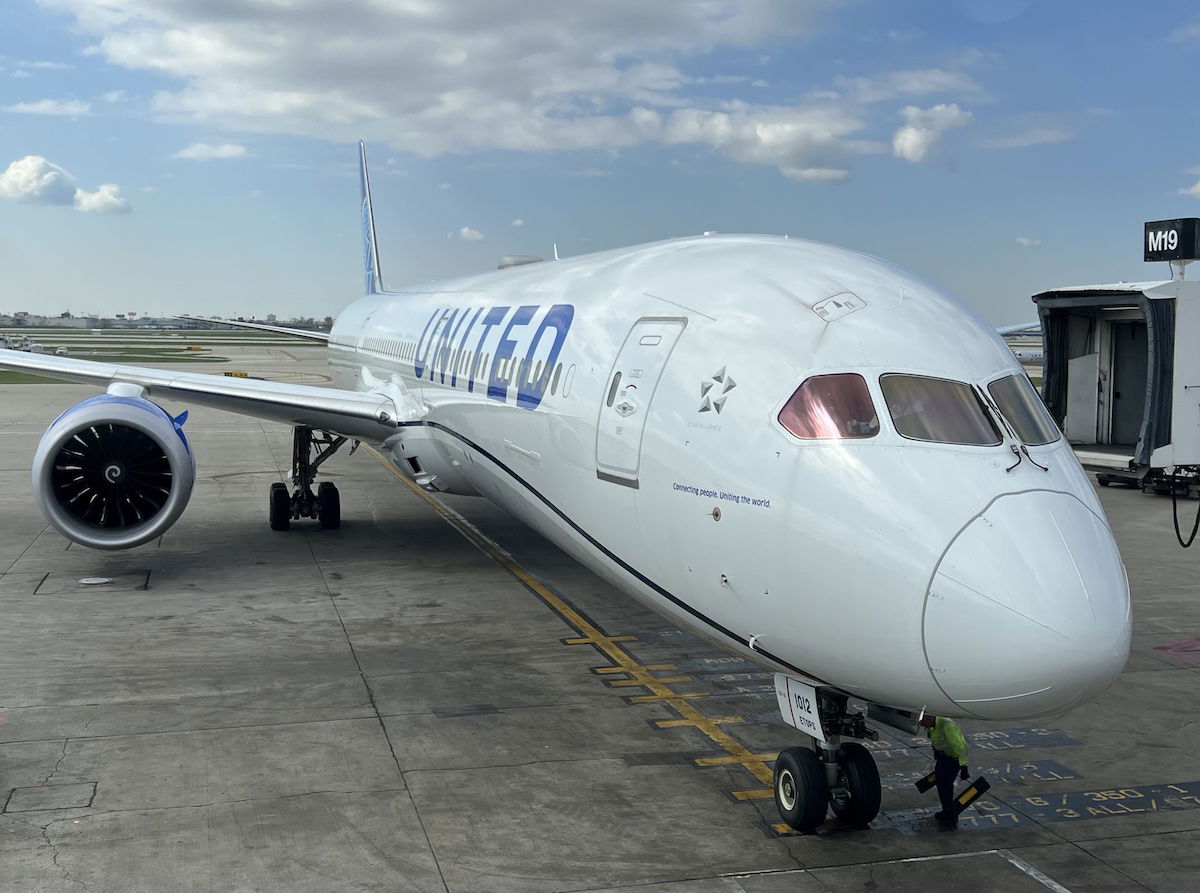
Is this good news for American and/or United?
The whole reason that American and United are now battling so fiercely in Chicago is because of the airport’s gate allocation process. Airlines are allocated gates in the future based on historical usage, so both airlines have been trying to flood the market, so that they don’t lose market share to the other airline.
In theory, this battle between the two airlines is good for consumers, in terms of added capacity leading to lower fares. However, what would’ve been significantly less pleasant is the impact to on-time performance at the airport. Chicago O’Hare can be a bit of a mess on a good day (especially in terms of taxiway congestion), and with such an increase in service, it was going to get bad.
So, is this update good or bad news for American and United? I suppose it depends how you look at it. In some ways, it’s good for both American and United, since odds are that this incremental flying was going to be extremely unprofitable, so it’s helpful that they’re being forced to decrease service.
Now, if airlines could fly their full, planned Chicago schedules, I think it would’ve been worse for American than United. While both airlines would’ve likely lost money on this flying, American is in a much worse position, and it would’ve made a weak competitor even weaker.
I suppose with route cuts being proportionate to 2025 flying, this basically leaves both airlines in the same position they were in before this whole battle started, meaning neither airlines is growing market share relative to their competitor.
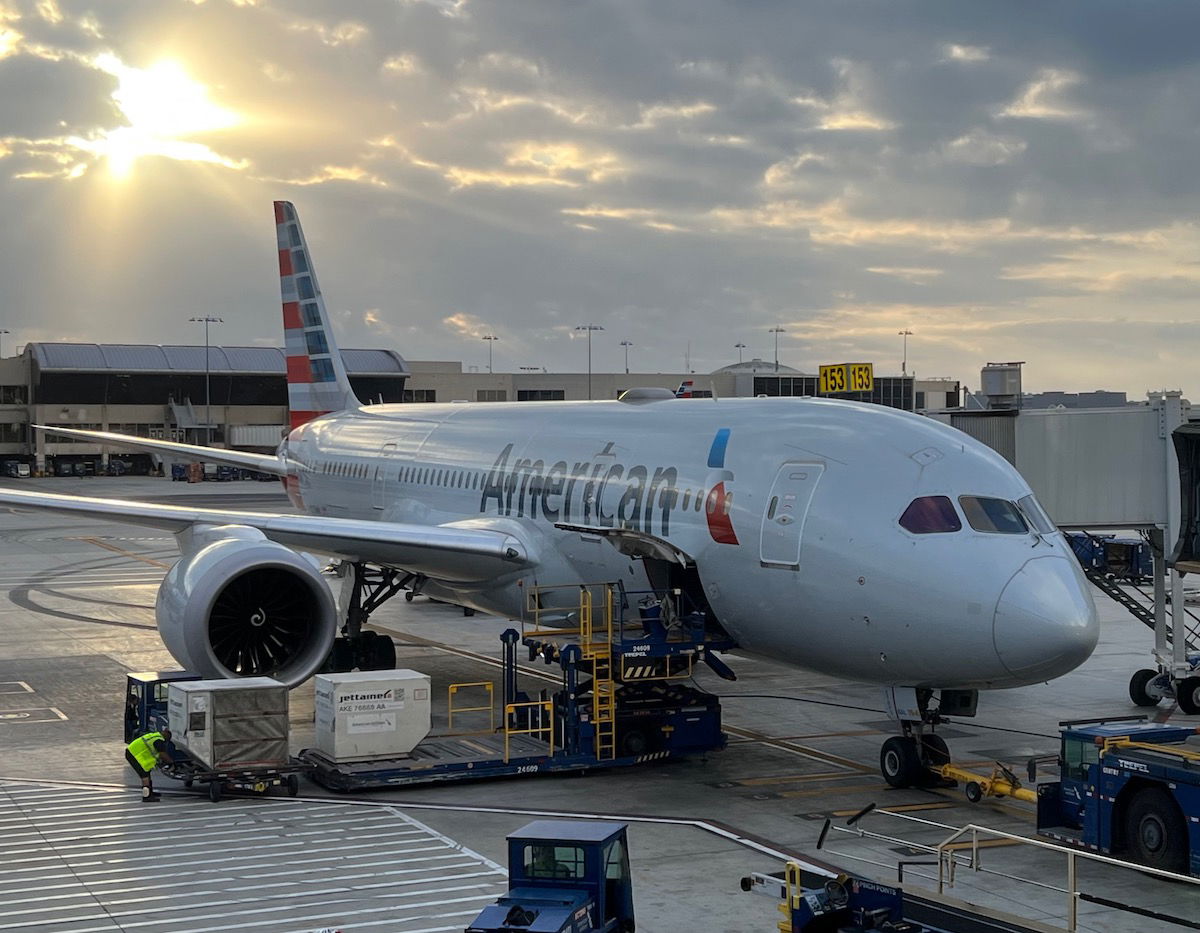
Bottom line
The FAA has finalized its plans to restrict flights at Chicago O’Hare Airport over the coming summer months, given the amount of capacity that we’ve seen added in recent times, by both American and United. While the airport was initially supposed to see 3,080 daily peak day departures, that cap has been lowered by 12%, to 2,708 daily peak day departures.
Given the gate allocation process in Chicago, this leaves the competitive dynamics in Chicago pretty unchanged.
What do you make of the FAA’s decision to cut flights in Chicago?




Using July 2025 as the baseline certainly favors AA, but quality of the networks along with higher fuel prices bodes relatively well for UA. Taxiing around ORD, it is amazing how many AE E175s and how few wide bodies AA uses. UA's operation uses significantly higher gauge (+27 seats/departure) and by all accounts is far more profitable. UA knew the FAA would not allow all the proposed growth and they are quite nimble in reallocating...
Using July 2025 as the baseline certainly favors AA, but quality of the networks along with higher fuel prices bodes relatively well for UA. Taxiing around ORD, it is amazing how many AE E175s and how few wide bodies AA uses. UA's operation uses significantly higher gauge (+27 seats/departure) and by all accounts is far more profitable. UA knew the FAA would not allow all the proposed growth and they are quite nimble in reallocating lift. It will be interesting to see how the battle for ORD market share plays out going forward.
now tell us how many of those CRJ450s and 550s with their industry WORST CASM UA will be operating.
AA's E175s are absolutely golden in economic performance compared to UA's small RJs.
By all accounts? Feel free to share that data w/ us - using industry standard - not Kirby Kalculations.
and, yeah, AA doesn't have a whole lot of widebody activity at ORD but UA certainly doesn't knock it out of the park...
now tell us how many of those CRJ450s and 550s with their industry WORST CASM UA will be operating.
AA's E175s are absolutely golden in economic performance compared to UA's small RJs.
By all accounts? Feel free to share that data w/ us - using industry standard - not Kirby Kalculations.
and, yeah, AA doesn't have a whole lot of widebody activity at ORD but UA certainly doesn't knock it out of the park w/ global connectivity.
You do realize that DL flies to 3 cities in E. Asia from DTW and 2 from MSP? UA serves precisely ONE city from ORD to E. Asia.
and the FAA put an end to the "battle of Chicago." they aren't changing their mind next year.
AA isn't going anywhere - and if they can't make it, DL will just buy them and carve up their network, keeping their ORD hub - you know, just to torque Scotty
oh, and AA has free high speed WiFi on virtually all of its ORD flights.
UA still charges for it on most of their domestic flights- according to their OWN spokeperson
If you weren't so incessant in spewing your fabricated drivel about UA, I wouldn't have to spend so much time countering it.
TD say, "You do realize that DL flies to 3 cities in E. Asia from DTW and 2 from MSP? UA serves precisely ONE city from ORD to E. Asia."
That is so good for DL.
UA has a hub at SFO among others and together they serve more Asian destinations and passengers to/from Asia than AA & DL combined.
TPAC destinations 2016/2025:
UA: 23/32
DL: 15/8
AA: 8/7
and yet even with all those widebodies that you think matter at ORD, UA can't be bothered to fly to more than just Tokyo.
Are you capable of admitting that UA underperforms rather than incessantly deflect?
If SFO was so great and connected to the US, then UA really wouldn't need ORD at all, now would they?
The reality is that SFO and every western US hub is not connected to as many...
and yet even with all those widebodies that you think matter at ORD, UA can't be bothered to fly to more than just Tokyo.
Are you capable of admitting that UA underperforms rather than incessantly deflect?
If SFO was so great and connected to the US, then UA really wouldn't need ORD at all, now would they?
The reality is that SFO and every western US hub is not connected to as many small and medium sized cities in the Eastern US as a Midwest hub - which is precisely why DL flies to Asia from the west coast and from hubs in the Eastern US
and your argument about AA vs UA fleet economics is just plain wrong. UA would have an advantage if they didn't use that pesky and INEFFICIENT CRJ 450s and 550s.
The bottom line is likely that AA probably has better fleet economics at ORD than UA.
AA's problem at ORD is its revenue underperformance.
and UA will not get the chance to dump capacity into ORD to try to run AA out of town.
You should read the FAA's order.
Amsterdam (AMS), Athens (ATH), Barcelona (BCN), Brussels (BRU), Dublin (DUB), Frankfurt (FRA), Tokyo (HND), London 3/day (LHR), Madrid (MAD), Milan (MXP), Munich (MUC), Paris (CDG), Rome (FCO), Sao Paulo (GRU), Tel Aviv (TLV), Zurich (ZRH) & SNN & EDI on the 752s.
and precisely one city to Asia.
and a whole bunch of 40 or 50 seat 2 cabin aircraft that are very costly to operate because UA mgmt including Kirby have consistently refused to buy a small mainline aircraft which is what would make AA or anyone's E175s uneconomical.
Why is it so hard for you to accept and admit the facts - which everyone can see on every response you write?
Take out of map of the US, think about where the UA hubs are located and even someone with limited understanding of networks should be able to figure it out. Good luck.
we get it.
and yet DL doesn't have a hub in Tokyo but still flies there from two Midwest hubs and does have a JV Partner hub at ICN which it also serves from MSP and DTW. DL also flies to PVG from the Midwest.
If SFO is so great, then it would be connected to all of the cities that DL connects over DTW or MSP - but UA at SFO comes nowhere close...
we get it.
and yet DL doesn't have a hub in Tokyo but still flies there from two Midwest hubs and does have a JV Partner hub at ICN which it also serves from MSP and DTW. DL also flies to PVG from the Midwest.
If SFO is so great, then it would be connected to all of the cities that DL connects over DTW or MSP - but UA at SFO comes nowhere close to connecting that traffic.
DL's strategy of connecting its network across the US to cities throughout the world and specifically E. Asia gives it better strength outside of the western US than UA.
all of those widebodies that you claim UA has don't serve some of the largest markets on UA's network
can you just admit that UA's network really isn't as great as you think it is and the supposed advantage you think UA has doesn't exist when compared to DL's dual midwest hub strategy?
as for your comment about fuel prices, UA will pay the most per gallon of the big 4 which is exactly the way it has been for years.
AA pays less than UA while DL is offsetting a significant part of the higher cost of jet fuel thru profits from the refinery.
DL has the best domestic hub in the world, ATL. UA has the best international gateways to Asia & Europe and the proof is obvious in the data. AA's MIA is the premier gateway to Latin & South America. UA's overall network is the best in the world, but it is still underdeveloped.
TATL destinations 2016/2025:
UA: 22/42
DL: 32/34
AA: 21/20
TPAC destinations 2016/2025:
UA: 23/32
DL has the best domestic hub in the world, ATL. UA has the best international gateways to Asia & Europe and the proof is obvious in the data. AA's MIA is the premier gateway to Latin & South America. UA's overall network is the best in the world, but it is still underdeveloped.
TATL destinations 2016/2025:
UA: 22/42
DL: 32/34
AA: 21/20
TPAC destinations 2016/2025:
UA: 23/32
DL: 15/8
AA: 8/7
TLAT Destinations 2016/2025 :
AA: 92/97
UA: 57/66
DL: 58/52
If UA keeps taking share in their domestic hubs then it's just a matter of time.
US market share 2016/2025
DL: 19.9% / 17.8%
AA: 20.0% / 17.4%
UA: 13.9% / 16.7%
United clearly is the biggest loser since the plan allows very slight growth over last year; AA proposed the lowest amount of growth this summer so the ratio of flights between AA and UA will be locked in for 2026 and perhaps into the future.
This is evidence of yet another failed UA strategic plan and now marks the third UA hub where the FAA has had to step in to prevent overscheduling.
Of...
United clearly is the biggest loser since the plan allows very slight growth over last year; AA proposed the lowest amount of growth this summer so the ratio of flights between AA and UA will be locked in for 2026 and perhaps into the future.
This is evidence of yet another failed UA strategic plan and now marks the third UA hub where the FAA has had to step in to prevent overscheduling.
Of course, AA and UA have already committed to the resources that were needed to plan to operate their full schedules but it is too late to reschedule those resources into new markets; the window for finalizing schedules for June has already closed at most airlines. UA esp. but also AA will pay for employees and planes that they cannot operate.
Of course, alot of this extra capacity could not have been operated profitably at fuel costs before the Iran war but even more so they will lose money now - so they are happy to see some flights cancelled but it will still cost both airlines but UA the most.
anecdotally, I had two friends fly on UA coded RJ flights connecting through ORD this week and both had their first flight of their itinerary delayed or cancelled to the point they were both delayed by a day. There were multiple delays and cancellations in the same market on UA regional carriers that day and there were no ATC or weather issues at ORD all day. All UA does to improve its operational integrity won't matter if its regional jet flights perform poorly - because the DOT considers any domestic flights w/ a carrier's marketing code part of that airline's network for on-time and cancellation purposes.
Instead of needlessly claiming winners and losers, can’t we just recognize that this was a good preemptive move to avoid costly delays, especially with all the taxiway construction at this airport?
Delta hasn't had to have the FAA intervene and cap schedules in any DL hub airport; neither has any other airline had.
UA's growth plan under Kirby was operationally and economically unsustainable and the wheels are falling off the bus one at a time.
to pretend that we shouldn't discuss who loses and wins because of changes in the industry may be what you want to try to not admit that other airlines - including...
Delta hasn't had to have the FAA intervene and cap schedules in any DL hub airport; neither has any other airline had.
UA's growth plan under Kirby was operationally and economically unsustainable and the wheels are falling off the bus one at a time.
to pretend that we shouldn't discuss who loses and wins because of changes in the industry may be what you want to try to not admit that other airlines - including DL - are far better run esp. strategically - but it is simply not realistic to put your head in the sand just to avoid noting that there are wins and losses in life and the losses are stacking up for UA and its fan club.
Tim, I’m not even a United fan. Sure, I’ve been a Diamond, 1K, EP, even a frickin’ Mosaic 3 over the years, and yet, I’m trying to look at this objectively. Construction happens at airports. JFK T1, T6/7, and some of the runways there have undergone major renovations over the years. And yet, Delta still operates at ORD, so this does affect everyone.
this isn't about construction.
It is about overscheduling in an attempt to drive a competitor out of the market and to destabilize the US air transportation system.
UA has been slapped by the FAA not once, not twice, but three times for overscheduling three of its largest revenue hubs.
Yet if Atlanta gets a flake of snow, it takes three days for DL to recover. So what's the difference?
Tim, what are you talking about? The FAA stepped in, many years ago, to limit flight growth in LGA and JFK.
So was that a “slap down” against DL? No? Why not? How is that any different than the FAA limiting flights in airports where UA already has a commanding lead?
You’re also forgetting (though we all know you’re not really forgetting) that UA continues to upgauge through the system, allowing significant growth in...
Tim, what are you talking about? The FAA stepped in, many years ago, to limit flight growth in LGA and JFK.
So was that a “slap down” against DL? No? Why not? How is that any different than the FAA limiting flights in airports where UA already has a commanding lead?
You’re also forgetting (though we all know you’re not really forgetting) that UA continues to upgauge through the system, allowing significant growth in its hubs, even if flight counts don’t increase as much.
That’s why UA is increasing share in NYC while DL flies primarily RJs in LGA, one half of its inefficient split NYC hub.
You’re so transparent, clearly threatened by UA’s resurgence and strong growth.
TD(s): "I wouldn't have to spend so much time counter..."
Webster & Oxford, among others, tend to propagate a meaning of the verb(as opposed to noun) that runs counter (see what I did there?) to his highness's contemporary definition...
but the winner is D E L T A because everyone will move from Chicago to Detroit
Ironic they're ending up at the same amount as last year.
Well now that Kirby’s D-CK measuring contest is being cancelled maybe we can avoid 45 minutes taxiing to gates and extra waiting that was going to result. These airlines are obtuse
The results are in: Scott’s at 2-inches!
So, he's now Pilate's fwend?