
On December 31, 2022, a tragic accident happened, whereby an airport ground worker was sucked into an engine. The NTSB has just released its preliminary report on this incident, so I wanted to share the details of that, since I know many were curious how something like this could happen.
Baggage handler at Montgomery Airport has fatal accident
On Saturday, December 31, 2022, a baggage handler working on the ramp at Montgomery Regional Airport (MGM) in Alabama was sucked into the engine of an Embraer E175. Specifically, the employee worked for Piedmont Airlines, a wholly owned subsidiary of American Airlines. The incident took place as an American Eagle aircraft operating for Envoy Air (another wholly owned subsidiary of American) was flying to & from Dallas Fort Worth Airport (DFW).
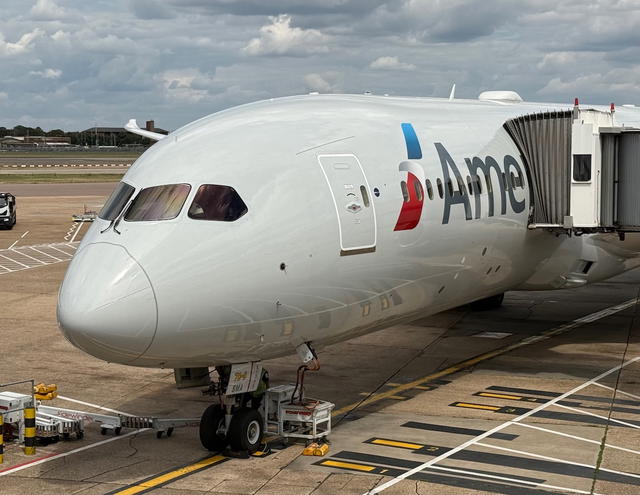
AA3408 arrived at Montgomery Airport at 3:35PM, 20 minutes behind schedule, and was scheduled to depart back to Dallas with the same flight number at 3:46PM. The return flight was canceled due to the incident, and the four year old aircraft with the registration code N264NN (which was involved in the incident) stayed on the ground there until January 8, 2023, though has since reentered service.
The airport closed for several hours following this incident, but ended up reopening later that evening on the same day. This was simply a heartbreaking tragedy, and my thoughts are with the family and friends of the employee, who are no doubt still struggling with this loss.
How could something like this happen?
Aviation is incredibly safe, both on the ground and in the air. So many precautions are taken to minimize risk, so how could an incident like this occur? According to the preliminary NTSB report:
- The plane had an inoperative auxiliary power unit (APU), so the pilots left both engines running for the required two minute engine cool down period
- As the plane approached the gate, three ramp agents were present, but clear of the safety area
- After stopping the aircraft and setting the parking brake, the captain gave the hand signal to connect the airplane to ground power
- As he was shutting down the number two engine (on the right), the first officer opened his cockpit window to remind the ramp agents that the engines were still operating
- The captain made a brief announcement asking passengers to remain seated until the seatbelt sign had been turned off, with the plan for it to remain on until the plane had connected to ground power, and the number one engine (on the left) could be shut down
- Immediately thereafter, the pilots saw a warning light illuminate, and the airplane shook violently, followed by the immediate automatic shutdown of the number one engine
- Unsure of what occurred, the captain extinguished the emergency lights and shut off both batteries, before leaving the flight deck to investigate
Video surveillance captured the accident sequence, and showed the airplane being marshalled into the gate. The ramp agent who died in this accident was seen walking toward the back of the plane with an orange safety cone. She disappeared from view in the video, and then reappeared and began walking away from the airplane and toward the left wing tip, where she disappeared from the camera view again.
She then reappeared on the camera, and walked along the leading edge of the left wing and directly in front of the number one engine, where she was “pulled off her feet and into the operating engine.”
The report suggests that the ground crew held a safety briefing around 10 minutes before the airplane arrived, and a second safety “huddle” took place shortly before the plane arrived, to reiterate that the engines would remain running until ground power was connected. It was also discussed that the airplane should not be approached, and the diamond of safety cones should not be set until the engines were off, spooled down, and the airplane’s rotating beacon light had been turned off (which hadn’t happened).
According to two of the other employees at the scene, one person observed the ramper approaching the back of the plane to set the safety cone, and attempted to alert her to stay back and wait for engines to be shut down. Another employee allegedly stated he yelled and waved her off because the engine was still running.
Bottom line
A tragic accident happened at Montgomery Airport on December 31, 2022, as a ramper working for a wholly owned subsidiary of American Airlines was reportedly sucked into the engine of an Embraer E175. This happened while the plane was on the ground after landing from Dallas.
We now have more details about what happened. The plane’s APU was inoperable, so the engines needed to stay running for around two minutes. While there was allegedly a safety briefing about the need to stay clear of the aircraft’s engines, for whatever reason those protocols weren’t followed, leading to this horrible accident.
Simply terrible…
What do you make of this awful incident?


Membership is free and takes no more information than commenting as a guest. Earn status points for good contributions, and see fewer ads as your status grows.