
Last week I wrote about how an American and Delta jet nearly collided on the runway at JFK. Many of us wondered how something like this could happen, and we now have more information.
Basics of the JFK runway incident between American & Delta
Just to recap the basics, on January 13, 2023, an American Airlines Boeing 777-200ER and Delta Boeing 737-900 nearly collided on runway 4L at JFK. The Delta plane had been given takeoff clearance, and the American plane accidentally taxied to the wrong runway. In the process, the American 777 crossed the runway that was being used for takeoffs, where the Delta plane was accelerating.
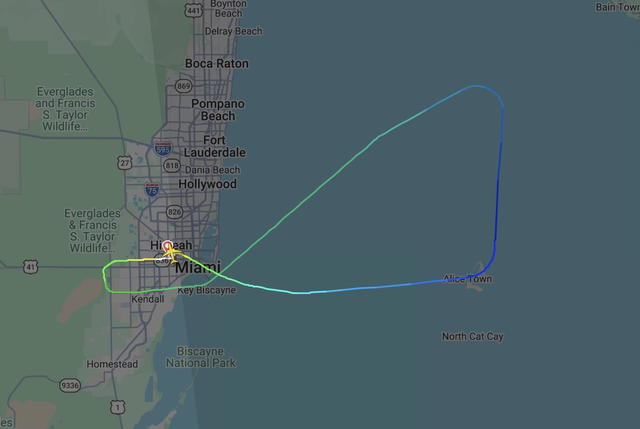
Fortunately the air traffic controller quickly noticed what was going on, and the Delta pilots promptly aborted the takeoff, preventing potential disaster. Below you can see a recreation of what happened, and hear the air traffic control audio.
The big question has been how the American 777 pilots could make a mistake like this, not only taxiing to the wrong runway, but crossing an active runway without permission. Well, we now have some insights.
The factors that contributed to this incident
Forbes has an interesting story about what allegedly contributed to this incident. I’m not sure whether knowing these details is reassuring or more concerning. Here are a few of the key facts, according to sources that are quoted:
- The first officer was brand new to the Boeing 777, and had previously flown on the Boeing 737; she was making her first 777 flight after 100 hours of training flights
- Not only that, but this was the first officer’s first flight under new cockpit procedures that had been implemented at the airline on January 2
- With these new procedures, she had to engage in a series of new tasks, including processing takeoff data, including flap and power settings, doing a runway assessment, and making the cabin takeoff announcement
After the incident, the other major question is why the American plane didn’t return to the gate, but instead continued to London. Well, apparently the American pilots didn’t realize how serious the incident was:
- While air traffic controllers gave the American pilots a phone number to call (as is standard following any sort of safety related incident), it’s not clear if they actually got through
- The American pilots didn’t initially realize there was a runway incursion; the pilots had only switched to the tower frequency after the Delta plane was cleared for takeoff, so they didn’t realize the Delta plane aborting takeoff had to do with their actions
- The crew reportedly didn’t understand the seriousness of the situation until the plane got to London
- While there was a third pilot in the cockpit in the jumpseat, he didn’t seem to realize anything was wrong either
Now, of course this doesn’t address why the (experienced) captain taxied the plane to the wrong runway. Not only were the pilots never cleared to taxi to the runway they were headed for, but you’d think the captain would have realized the general flow of traffic at the airport. How on earth could something like this happen?
So the above in no way explains the root cause of this near disaster. Part of what makes flying safe is that you have multiple sets of eyes double checking that everything is correct. Obviously when you have one pilot who is less experienced and is also learning new procedures, it potentially reduces safety margins.
But it does seem increasingly clear that there was some general confusion and stress in the cockpit, as you had a very inexperienced first officer on that specific plane, combined with brand new procedures.
The union’s interesting safety concerns
It can be debated whether the new cockpit procedures contributed to this incident. You had a first officer who was taking her first post-training 777 flight, and on top of that she was learning new general cockpit procedures.
When American introduced these new cockpit safety procedures at the beginning of the year, the Allied Pilots Association (the union representing American pilots) warned of the safety risks of doing this.
Specifically, the union argued that in-person training should have been done, rather than this being done via a bulletin where pilots are just supposed to read up on the new rules. As a spokesperson for the union said at the time, “a reading assignment is not training.”
Per the union’s announcement on January 2:
American Airlines Flight Operations management is attempting to circumvent robust safety-related pilot training by unilaterally imposing operational changes via bulletin. While APA does not oppose fleet harmonization, we are steadfast in our commitment that pilots must be properly trained BEFORE operating with passengers. This training must be developed in a stakeholder safety culture that acknowledges and addresses concerns raised by APA. To date, that has not occurred. This attempt to train by bulletin, while ignoring serious safety concerns and well-established best practices, runs the risk of dramatically eroding margins of safety.
Simply put, management’s actions are unwise and unsafe.
The operational changes that management is attempting to implement without fulsome training alters how pilots communicate, coordinate, and execute flight safety duties at some of the most high-threat times of flight. These high-threat times include, but are not limited to, rejected takeoffs, low visibility approaches, and go-arounds. Aligned and standardized crew communication and coordination is the bedrock of maintaining the safety margin during all phases of flight, but particularly during high task-loaded maneuvers. Management’s attempt to train by bulletin reeks of training on the cheap and placing profits before people.
And then just around two weeks later, this incident happens. I’m not suggesting that this is the reason such a serious incident nearly occurred, though I think it’s at least a possibility that it contributed to the confusion in the cockpit.
Bottom line
An American Airlines Boeing 777 recently taxied onto a runway at JFK as a Delta Boeing 737 was taking off. Fortunately the air traffic controller caught what was going on, and canceled the takeoff clearance for the Delta jet. Catastrophe was narrowly avoided, and it’s possible (though not guaranteed) that this could have ended very differently.
There have been questions about how something like this could happen. While it remains to be seen why a senior 777 captain would taxi a plane to the wrong runway, we now know that the first officer was brand new to the Boeing 777, and was also still familiarizing herself with new cockpit procedures, which she was dealing with for the first time.
I’m curious what a full investigation reveals in terms of how the plane could taxi to the wrong runway without anyone noticing.
What do you make of the added details regarding this incident?


Membership is free and takes no more information than commenting as a guest. Earn status points for good contributions, and see fewer ads as your status grows.