
At the moment, we’re seeing a bit of an inflight Wi-Fi revolution, in terms of airlines introducing Starlink Wi-Fi, which offers speeds that are truly in line with what you’d expect on the ground (unlike the faux “high speed” Wi-Fi offered by Viasat, etc., which can be good, but not reliably great).
Among the “major” US airlines, we’ve seen Alaska, Hawaiian, Southwest, and United, all go with Starlink, while we’ve seen Delta go with Amazon Leo (a questionable choice, given the timeline). Well, American has now announced plans to upgrade its inflight Wi-Fi, and it’s great news.
Free Starlink Wi-Fi coming to 500+ American planes in 2027
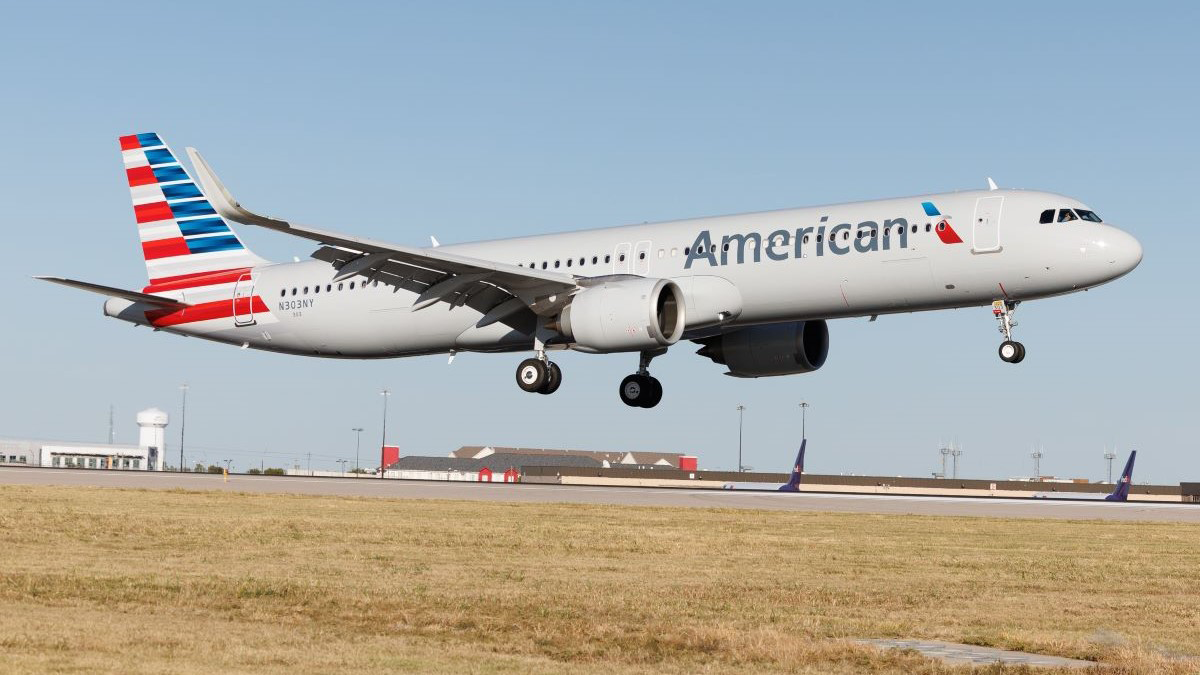
American is partnering with SpaceX to introduce Starlink Wi-Fi, with installation expected to begin as of early 2027. American plans to introduce this service on more than 500 aircraft. Specifically, it’ll be installed on all Airbus A320-family aircraft, including A319s, A320s, A321s, A321neos, and A321XLRs. However, there are no official plans for this to be introduced on other aircraft.
This service will be offered on a complimentary basis, and there’s no indication that you’ll even need to be an AAdvantage member to use the service.
Starlink is known for its high speed, low latency broadband internet, and the service is offered gate to gate. Starlink Wi-Fi allows for live streaming, productivity similar to on the ground (with high upload and download speeds), gaming, e-commerce, and more. Having recently taken my first flights with Starlink, I can confirm that this is a total game changer, as I see it.
Starlink is becoming increasingly popular with airlines. So far we’ve seen carriers like Aer Lingus, airBaltic, Air France, Air New Zealand, Alaska Airlines, British Airways, Copa Airlines, Emirates, Gulf Air, Hawaiian Airlines, Iberia, Korean Air, Lufthansa Group, Qatar Airways, SAS, Singapore Airlines, Southwest Airlines, United Airlines, Virgin Atlantic, and WestJet, all announce plans to install the service.
For context, American currently has Viasat Wi-Fi on most narrow body planes, and Panasonic Wi-Fi on most wide body planes. Wi-Fi is free for all AAdvantage members on Viasat aircraft, so American’s current Wi-Fi situation is pretty competitive.
Here’s how American’s Chief Customer Officer, Heather Garboden, describes this Starlink development:
“As a premium global airline, we are continuously seeking out world-class partners like Starlink to deliver what our customers need and want. The addition of Starlink solidifies American as a leading airline in keeping passengers connected in flight.”
“American is committed to elevating every aspect of our customers’ travel journeys, which in the air means keeping them connected and comfortable with the assurance they won’t have to download documents ahead of a flight or worry about lag time. Starlink’s high speed and low latency make the Wi-Fi more reliable, which matters when customers are trying to load pages, join real-time collaboration tools or stay connected consistently throughout a flight. We are excited to bring an at-home level of Wi-Fi experience to our narrowbody fleet, enabling our customers to work, game, stream and scroll endlessly.”
This is generally good news, but American is following
Hey, it’s great to see that American plans to introduce Starlink Wi-Fi, since I think this will quickly become an expectation among consumers, rather than something that’s just nice to have. So I commend American for making this announcement, though it’s also hard to pat the airline on the back too much:
- Installation is only starting in early 2027, roughly 18 months after United started introducing Starlink Wi-Fi; there was nothing stopping American from committing to this earlier (other than the cost)
- American only plans to install Starlink on under half of its aircraft (when you factor in regional jets), so I’m not sure why Boeing and Embraer planes aren’t getting this service; arguably it’s the Panasonic wide body planes most in need of the service
So yeah, this is good news, though United continues to have the edge here. American’s strategy is somewhere between Delta’s and United’s. Delta is (stupidly, in my opinion) waiting for Amazon Leo, which will only be available in 2028 at at the earliest (at which point every United plane is expected to have Starlink), and Delta only plans to install that on roughly half of its fleet.
We recently had reason to believe that American might be making a big inflight entertainment announcement, which could also include the return of seat back TVs on most narrow body aircraft. So I’m curious to see if there’s another announcement coming soon…

Bottom line
In early 2027, American Airlines plans to start rolling out Starlink Wi-Fi, which is an exciting development. However, the service will only come to around 500 aircraft, consisting of all narrow body Airbus planes. I’m not sure why Boeing planes aren’t getting any love or what’s going on there, because that doesn’t really strike me as a comprehensive solution.
Either way, it’s good news. In terms of the “big four” in the US rolling out next generation Wi-Fi, this should put United first, then Southwest, then American, and then Delta.
What do you make of American’s Starlink plans?




"“As a premium global airline.'"" LOL. Only one of those things is arguably true, as AA is sub-premium and mostly U.S. domestic. Given that most of its profits come from credit card co-branding, one could argue that air transport is just a side hustle.
Cute post but delta is the least profitable flying planes and the most reliant on credit cards to be profitable.
Although your twisted mind is incapable of admitting it, an airline that flies 10% more ASMs (UA) than DL is better off despite making just 2/3 of the profit DL makes even with UA's multi-year labor cost advantage which UA suddenly decides to settle as fuel costs soar -a convenient way to cover the greatly reduced earnings.
And specific to high speed WiFI, it is notable that DL has 90% of its fleet with high...
Although your twisted mind is incapable of admitting it, an airline that flies 10% more ASMs (UA) than DL is better off despite making just 2/3 of the profit DL makes even with UA's multi-year labor cost advantage which UA suddenly decides to settle as fuel costs soar -a convenient way to cover the greatly reduced earnings.
And specific to high speed WiFI, it is notable that DL has 90% of its fleet with high speed WiFI in service now while UA has 90% of its mainline fleet that not only DOES NOT have Starlink but also does not even offer a free low speed option now that T Mobile has pulled the plug
and DL's profit gap compared to other airlines will grow due to the refinery and as MRO revenues grow, something no other airline can duplicate.
and Amex is simply the most valuable credit card partner available; no amount of wishing and renegotiating will allow AA or UA to come close to the revenue DL gets from Amex.
People care about ASMs and PRASMs when buying stocks. Nobody cares about them when buying tickets.
and yet DL manages to sell more revenue than any other airiline.
Apparently you, to no surprise, have no clue what motivates purchase decisions.
Seems like a very shortsighted decision on AA’s part to not include the Boeing planes (especially the widebodies). Hopefully it’s a contract issue that can eventually be resolved.
A smart move by AA leadership, though going after the usable ViaSat narrowbodies ahead of the very unusable Panasonic widebodies must be an indicator that they're stuck in the Panasonic contract for a period beyond 2027. This is unfortunate. Now... I can't wait for the comments from TD.
They are trying to jump on Delta's sinking premium theme, but this isn't going to help much given the limited deployment. Still better than Delta's decision to wait on Amazon. Moral of the story is fly United or Southwest!!!
the only thing dumber than the notion that UA has an advantage with WiFi when it only has 10% of its mainline fleet equipped with high speed WiFi is that DL is making a mistake by not doing what everyone else is doing by going with Amazon.
Amazon is a far larger and more successful CONSUMER company; Musk's most customer direct company is Tesla which continues to shrink.
Delta has spent more of its...
the only thing dumber than the notion that UA has an advantage with WiFi when it only has 10% of its mainline fleet equipped with high speed WiFi is that DL is making a mistake by not doing what everyone else is doing by going with Amazon.
Amazon is a far larger and more successful CONSUMER company; Musk's most customer direct company is Tesla which continues to shrink.
Delta has spent more of its 100 years zigging when others have zagged and this will be yet another issue where the near-sighted aviation bloggers will be wrong yet again.
DL already has high speed WiFi on 90% of its fleet and also is the only US airline that offers free high speed WiFi across the US but also across the Atlantic and to S. America.
As for why AA is only doing half of its fleet is because there simply is no company that can provide the bandwidth to satisfy the growing number of customers that want satellite WiFi - and the market is not just airlines.
Even Starlink will struggle with capacity; DL's strategy of using multiple providers including Viasat, Hughes and Amazon is to get as much capacity from as many providers -not unlike what it has done with aircraft and engines and why DL was able to take delivery of more Airbus widebodies than all of the 787s that Boeing delivered to AA, AS and UA. COMBINED.
Technology is constantly moving and it is UA that is the furthest behind in free high speed WiFI installations; they don't even offer a slow speed free option now that T Mobile has pulled the plug.
AA is second behind DL in in-service high speed installations; they will be fine with a multi-platform system just as DL has - AA is just playing catch up like everything else AA is doing.
*Delta has spent more of its 96 years...
*DL was able to take delivery of fewer Airbus widebodies than all of the 787s that Boeing delivered to AA, AS and UA. COMBINED, and not even more than than Boeing delivered either to AA or UA alone.
Fixed it for ya '
Facts:
1) Delta established as an airline in 1929, as evidence that Delta themselves celebrated their 75th anniversary in 2004.
2) Widebody deliveries...
*Delta has spent more of its 96 years...
*DL was able to take delivery of fewer Airbus widebodies than all of the 787s that Boeing delivered to AA, AS and UA. COMBINED, and not even more than than Boeing delivered either to AA or UA alone.
Fixed it for ya '
Facts:
1) Delta established as an airline in 1929, as evidence that Delta themselves celebrated their 75th anniversary in 2004.
2) Widebody deliveries last 365 days: Delta: 7 (3 A330s, 4 A350s), American: 9 (787s), United: 7 (787s)
BURN!!!!
as usual, I manage to light up this and other boards as others, not me, meltdown, trying to argue.
As usual, the deranged pilot won't accurately quote what I said because the facts hurt
DO you think, little Paul, that you can tell us the number of widebodies that DL compared to AA, UA and AS received in 2023 and 2024 as well as 2025?
Boeing just now has decided to deliver what...
as usual, I manage to light up this and other boards as others, not me, meltdown, trying to argue.
As usual, the deranged pilot won't accurately quote what I said because the facts hurt
DO you think, little Paul, that you can tell us the number of widebodies that DL compared to AA, UA and AS received in 2023 and 2024 as well as 2025?
Boeing just now has decided to deliver what it didn't for years.
DL has received more widebodies from Airbus and you can't stand to admit that DL's diversification strategy won.
Not a soul can answer the question as to how much UA lost by not having high speed WiFi for years - because if they do, they will have to admit that DL will not lose by going from a slower high speed to a faster high speed WiFi, far different than UA which went from NO high speed WiFi to the HOPE of fleetwide Starlink in 2 years.
it is impossible to argue that will be at a disadvantage without quantifying the loss UA has suffered over the past 5 years.
you're the only one suggesting data that you haven't provided, Tim.
If you want to make the argument that a US3 airline could fly with zero internet whatsoever and not take a premium yield hit, go for it. But you know as well as anyone does how stupid your argument sounds because it is.
Who cares, Timbits? Delta screwed the pooch with this. Admit it for once. Well, you won't, because that would admit that Delta screwed the pooch on this, and that can happen to the Only Perfect Airline In The World. And when you use the phrase "hi-speed wifi" in regard to Delta, you're missing two letters, an "s" and a "t". I'm hoping that some day, one of us triggers the apoplexy that will kill you....
Who cares, Timbits? Delta screwed the pooch with this. Admit it for once. Well, you won't, because that would admit that Delta screwed the pooch on this, and that can happen to the Only Perfect Airline In The World. And when you use the phrase "hi-speed wifi" in regard to Delta, you're missing two letters, an "s" and a "t". I'm hoping that some day, one of us triggers the apoplexy that will kill you. That way you can end up buried in the Secret Biscoff Tunnel below ATL.
why should anyone admit that DL will be at a loss?
How did UA survive as long as it did for years without any high speed WiFi? The sheer notion that UA will win over customers by finally offering high speed WiFI but UA was never hurt in the past is complete denial of reality
DL already has 90% of its fleet WITH high speed WiFI, the complete opposite of what UA has now
Tim, I hate to break it to you, but 600 ms latency is not "high speed WiFi". Not to mention how inconsistent Viasat is, as we all should know very well here. Starlink has 50 ms latency on average, which lines up with the average home in America. Ookla recently released data showing Starlink destroys every other WiFi provider for airlines. This is not the same realm.
SpaceX - delivers 85% of all mass sent to space
Tim - "Starlink will struggle with capacity"
Also, "high speed wifi" and Starlink are NOT the same. Like comparing a Cessna to the SR-71.
While having nothing to do with the discussion about high speed internet, but because Sel mentioned the SR-71 and that is perhaps the definition of high speed, I leave this here, the SR-71 Blackbird Speed Check Story: https://www.thesr71blackbird.com/Aircraft/Stories/sr-71-blackbird-speed-check-story
They have to counter the sheer utter crap that is Airbus with something. Starlink is just the thing for that.
Plans have already been announced to retrofit 772s with Viasat before they even get their Flagship suite retrofit, 77Ws are getting Viasat at the same time as their suites, and newer 788 and 789Ps already have Viasat. My guess is that AA already has a contract with Viasat to do the remaining 787 fleet.
But that still leaves the 737 and RJ’s, which I don’t understand. At least Panasonic will be killed off soon.
It is an insult and a betrayal of Americans that the corrupt Airbus is bribing AA for this. The sooner US airlines are only allowed to use Boeing the better. US made Boeings are the safest planes in the world and it's time the corruption ends.
It's good that Trump started the war to distrupt global travel so that the Middle Eastern and Asian airlines have their unfair advantage taken away from them.
Solid bait, 9/10.
In the first instance, the choice of WiFi is nothing to do with the aircraft manufacturer. No one sane should fly a US carrier.
Good news but i don't get not adding it to widebodies and boeings
I can either get 1 Mbps of bandwidth "brought to you by AT&T" on a Boeing or fly an Airbus to get Starlink. I guess you really can spell 'clown show' with two a's.
American Airlines: *(Plans to start installing existing, mature-platform Starlink Wifi in about 500 of their planes, starting in 2027)
TD: AA management are idiots! Terrible mistake!
Delta Air Lines: *(Plans to start installing brand new, unproven platform Amazon LEO Wifi in about 500 of their planes, starting a year later, in 2028)
TD: Delta is brilliant! Amazing move! Leading the industry again!
the dumb pilot,
feel free to quote what I said, not what you want.
AA is late to the party but they have more aircraft equipped wiht high speed free WiFi than any other airline EXCEPT DL.
accuracy matters. That's why you fly simulators and I fly real aircraft
"AA is late to the party but they have more aircraft equipped wiht high speed free WiFi than any other airline EXCEPT DL."
Except this isn't true. AA has LONG had more planes with high speed wifi than Delta and now has more planes with free high speed wifi than delta.
Nice try though. You love to pretend regional fleets don't exist but they do and AA has FAR free high speed wifi aircraft...
"AA is late to the party but they have more aircraft equipped wiht high speed free WiFi than any other airline EXCEPT DL."
Except this isn't true. AA has LONG had more planes with high speed wifi than Delta and now has more planes with free high speed wifi than delta.
Nice try though. You love to pretend regional fleets don't exist but they do and AA has FAR free high speed wifi aircraft than Delta.
It's like you just hate real information and keep saying whatever pops in your head.
"That's why you fly simulators and I fly real aircraft"
oh you fly real aircraft, huh Tim? Well this is new information and counter to much of what you've said. So you're now talking smack to someone else because you can fly a Cessna but seem to make fun of another poster being competent enough to teach in the simulators? It's like you're actually dumb enough to post insults to others that are just utterly idiotic and make you look even stupider, Tim.
God, I hope you don't fly for Delta, I can't imagine my aircraft pilot posting while flying like you do much less any commercial pilot with no control over their emotions or mental faculties like you. But we all know you don't. Delta fired you. A private pilot's license doesn't make you more accurate, pal.
and you ignorantly ignore that AA DID NOT offer its WiFi for free = but could have - and no other carrier including AA offers free high speed WiFi across the Atlantic and to Latin America.
DL has hundreds of RJs with high speed WiFI, just as AA and DL and AS do. It doesn't change the global mainline fleet differences.
No US airline offers total global coverage across their entire fleet for free high...
and you ignorantly ignore that AA DID NOT offer its WiFi for free = but could have - and no other carrier including AA offers free high speed WiFi across the Atlantic and to Latin America.
DL has hundreds of RJs with high speed WiFI, just as AA and DL and AS do. It doesn't change the global mainline fleet differences.
No US airline offers total global coverage across their entire fleet for free high speed WiFi but DL comes closer than any other airline
you have been convinced I was fired for DL and now you post that you hope I don't fly for DL.
Clearly the last time your IQ was checked, the meter was at the bottom of the gauge.
"and you ignorantly ignore that AA DID NOT offer its WiFi for free = but could have - and no other carrier including AA offers free high speed WiFi across the Atlantic and to Latin America."
1. Not you trying to change the topic to something new now? No, AA didn't offer free wifi when they could've. Did anyone say otherwise?
2. Yes, AA does (there are widebodies at AA with viasat vs panasonic...
"and you ignorantly ignore that AA DID NOT offer its WiFi for free = but could have - and no other carrier including AA offers free high speed WiFi across the Atlantic and to Latin America."
1. Not you trying to change the topic to something new now? No, AA didn't offer free wifi when they could've. Did anyone say otherwise?
2. Yes, AA does (there are widebodies at AA with viasat vs panasonic already) and AA has a plan to upgrade other parts of the widebody fleet to enable free wifi.
3. You left out TPAC? DId you not want to talk about how delta has never had wifi coverage on their TPAC Network, at all?! ;)
lol.
your lack of mental comprehension is always amusing.
Pal, you're the one with the stupid comebacks to a guy with a user name of "pilot Paul" saying he flies sims while you fly real planes lol
You really are an idiot. And yes, Your history is very well documented Tim. I suppose today is one of those days you pretend otherwise?
We've been over this, there's an easy way to solve this. My information comes from your former coworkers about your Delta status -- They think/thought you're an idiot too and love sharing it. If you're now claiming to be someone else, do feel free to send a driver's license or something to Ben or Gary only.
I don't care to see it and hell, you trust them with your IP address and email 100 times per day, why not prove who you say you are or, rather.... affirm who you really are? It's always noticeable that you rarely deny your past history, only that others are deranged for mentioning it. Are you now saying you weren't fired by Delta? That's easy to prove. Go for it. Plenty of others have confirmed it But you won't because you are exactly who is alleged to be hiding behind how many screennames is it across the years?
you simply cannot accept that DL has more aircraft operating with and offering high speed WiFi in more parts of the world than any other airline.
THAT is the issue plain and simple.
AA COULD HAVE but DIDN'T. DL DID and got the bandwidth.
DL will close its "exceptions" which you love to dwell on long before either AA or UA complete their FIRST offerings of free high speed WiFi.
and when you can't win at facts, you turn to personal attacks
"you simply cannot accept that DL has more aircraft operating with and offering high speed WiFi in more parts of the world than any other airline."
Again. Feel free to provide any proof for this. They do not. Not free or otherwise lol. ANY PROOF! AA has LONG been the leader in high speed wifi and now is the leader in free high speed wifi. There simply isn't any comparison. Delta has never been a...
"you simply cannot accept that DL has more aircraft operating with and offering high speed WiFi in more parts of the world than any other airline."
Again. Feel free to provide any proof for this. They do not. Not free or otherwise lol. ANY PROOF! AA has LONG been the leader in high speed wifi and now is the leader in free high speed wifi. There simply isn't any comparison. Delta has never been a leader in high speed wifi -- free? Maybe if you exclude JetBlue but JetBlue was the domestic leader on it.
"AA COULD HAVE but DIDN'T. DL DID and got the bandwidth."
Feel free to link to literally ANYTHING that proves this. why? Because it isn't true and you just love to yell nonsense into the wind when proven consistently wrong as you are here.
"DL will close its "exceptions" which you love to dwell on long before either AA or UA complete their FIRST offerings of free high speed WiFi."
I don't dwell on Delta exceptions. I bring up your dogmatic statements that simply are not true and remind you why they aren't true based on delta strategic decisions you call "exceptions".
Sorry to remind you again but AA already offers more free wifi fleetwide than Delta does -- but don't let the facts hit you on your scared run out the door.
"and when you can't win at facts, you turn to personal attacks"
And here we are -- first you pretend you're someone else then when called out on it when you could easily prove what you momentarily say, you say I'm attacking you. lol... You are funny, I'll give you that but also just a horrendous liar and fraud.
You're the idiot telling another poster they're dumb for using a "pilot" title while you pretend to know anything about flying a plane.
Grow up, you're pathetic (that's a personal attack -- reminding you of your own life history? That's your own personal choices. Calling you pathetic is an attack and my opinion -- your own life is due to your choices.)
Also... I noticed you went dark for about 12 hours. Were you on a Delta flight to Asia? ;)
TD:
"AA is second behind DL in in-service high speed installations;"
Airline with the most mainline high-speed wifi: well, all of AA has it -- yes, the panasonic birds can stream content though it's nothing compared to starlink or even viasat -- Delta does not have high speed wifi installed on the entire mainline fleet
AA mainline planes per the last 10-k: 1,013
DL Mainline planes per the last 10-k: 989 - the...
TD:
"AA is second behind DL in in-service high speed installations;"
Airline with the most mainline high-speed wifi: well, all of AA has it -- yes, the panasonic birds can stream content though it's nothing compared to starlink or even viasat -- Delta does not have high speed wifi installed on the entire mainline fleet
AA mainline planes per the last 10-k: 1,013
DL Mainline planes per the last 10-k: 989 - the 717s that are mostly still using gogo wifi = 909 and this is being generous since Delta's widebody fleet doesn't have working TPAC coverage while AA widebodies do or, per Tim, many Delta A359s don't even have any wifi if you read what he rants in previous wifi articles
"AA is second behind DL in in-service high speed installations; they will be fine with a multi-platform system just as DL has - AA is just playing catch up like everything else AA is doing."
But to address the rest of the comment:
AA vs DL:
Airline with the most owned or marketed/operated High Speed Wifi installed -- AA hands-down, easily.
First airline to complete mainline high speed wifi installation -- AA hands down, easily -- Delta still hasn't done this. I actually don't recall who announced the installation first but the first to actually install high speed wifi was easily AA.
First airline to offer free global wifi to customers across the fleet and network -- Neither. Neither airline has ever been able to do this and the only US3 airline with a plan to do this is United. Delta has still not laid out a plan to EVER do this with their current fleet -- Sorry, Tim. You can't provide free wifi across your network when your 717s can't offer more than gogo. ;) How many times has Delta failed to make a strategy work for this over HOW LONG?
Airline with global wifi: Only AA between AA/DL - Delta never has done this
Airline moving to LEO high speed wifi first between the two -- AA, hands down to a proven product -- DL appears to be making the ViaSat bet once again -- betting on unproven technology and satellite launches that have screwed Delta's global wifi coverage for YEARS now
There really isn't much funnier than hearing Tim Dunn crow about Delta when Delta was FAR BEHIND AA in rolling out high speed wifi on their mainline fleet, still hasn't done it, and now has a strategy to be in last place of the US3 with an unproven product -- just like Delta's TPAC ViaSat mistake
"As for why AA is only doing half of its fleet is because there simply is no company that can provide the bandwidth"
This is just funny that Tim knows so little about Starlink. If you knew just about anything about the satellite coverage or bandwidth the ALREADY IN THE SKY satellites can provide, you'd be laughing at yourself as well.
But let's play your little game --
AA Fleet = ~1,580 planes
Average Gauge = ~143
Average Load Factor = 100%
Everyone is using the wifi at the same time at the heaviest rate
= AA Could be flying up to 225,940 people at one time -- of course the entire fleet is never off the ground at the same time nor is it all in one geographic place to strain ONE satellite, nor is the airline EVER flying at 100% load factor but this is simply pointing out how ludicrous it is when tim just writes instead of thinks
In Tim Dunn's imaginary world, it seems he honestly believes a satellite constellation with thousands of satellites IN ORBIT TODAY will apparently be overloaded BUT... a satellite constellation from Amazon that isn't even operational yet, well now... that's just good business.
I realize you have mental issue, but at least try to think before you type, Tim. No Tim, There is not a starlink bandwith overload looming lol
https://satellitemap.space/
Just stare at this one. I tried to post the Amazon equivalent of this map but... well, we all know how that would look and why it isn't available ;)
I'm sure Amazon will eventually roll out a good product. I'm not knocking amazon despite this not being their core business but we're talking about what is proven today. Making up imaginary bandwidth allegations based on your own lack of research and knowledge, tim? Now that's just bad business ;)
you argue incessantly, manipulate facts because you can't accept that DL really does have the most WiFi equipped aircraft w/ free high speed WiFi than any other airline in the world.
UA's hope that they will lead the industry is delusion in a tech world that moves faster than your brain can add two single digit numbers (which takes a whole lot of time).
Your life would have a whole lot more meaning if...
you argue incessantly, manipulate facts because you can't accept that DL really does have the most WiFi equipped aircraft w/ free high speed WiFi than any other airline in the world.
UA's hope that they will lead the industry is delusion in a tech world that moves faster than your brain can add two single digit numbers (which takes a whole lot of time).
Your life would have a whole lot more meaning if you would quit fixating on me and accept that the world you want is quite different than what really exists.
Again, you mistake DL's wi-fi for high-speed. It isn't. Stop using that term.
I don't argue incessantly. I simply provide data that shows you have no idea what you're talking about -- something you make VERY easy routinely.
Delta has never been a leader in high speed wifi, it is no longer the leader in free high speed wifi, and has set out a strategy that will put itself in last place for free high speed wifi for years.
No. Delta no longer can say that they...
I don't argue incessantly. I simply provide data that shows you have no idea what you're talking about -- something you make VERY easy routinely.
Delta has never been a leader in high speed wifi, it is no longer the leader in free high speed wifi, and has set out a strategy that will put itself in last place for free high speed wifi for years.
No. Delta no longer can say that they have the most wifi equipped aircraft with free high speed internet.
That changed the moment that the airline with the most high speed equipped aircraft in the world, AA, made the wifi free. It's amusing how you love to ignore an entire segment of the US3 capacity to try and make an argument that doesn't even exist in the mainline world.
"Your life would have a whole lot more meaning if you would quit fixating on me and accept that the world you want is quite different than what really exists."
Oh the irony of you suggesting to ANYONE how to find meaning in life when your entire world revolves around an airline that fired you... Thanks. I won't be losing sleep providing data to counter your attempts to flat out lie over and over.
But do feel free to counter anything I wrote -- It's quite noted that you simply said the usual drivel about "... can't accept that..." instead of supporting even a single one of your contentions.
Facts, Tim. They aren't tough.
I'd offer you advice about how to find meaning in your life, but I think you need a professional therapist for that monumental task ;)
yes, you argue incesantly beause you can't admit that DL has, by far, the most high speed free WiFi equipped aircraft in the world.
It doesn't matter if you accept it or not, mini brain.
DL has the most high speed free WiFi equipped aircraft serving more of the world than any other airline in the world.
Most sane people would avoid a US carrier. 767, 717 and 757s lol
oh ladies and gentleman...
we have a NEW qualifier from Tim! lol
"DL has the most high speed free WiFi equipped aircraft serving more of the world than any other airline in the world."
Now in order to have the most free wifi planes, you have to serve more of the world with them... well.. since Delta only uses the 717 domestically, I guess Delta can be removed from consideration from this new qualifier...
oh ladies and gentleman...
we have a NEW qualifier from Tim! lol
"DL has the most high speed free WiFi equipped aircraft serving more of the world than any other airline in the world."
Now in order to have the most free wifi planes, you have to serve more of the world with them... well.. since Delta only uses the 717 domestically, I guess Delta can be removed from consideration from this new qualifier since Delta can't even serve their own home market with free mainline wifi like AA can. And we can take out the widebodies. If they can't even serve Asia, at all, how can the plane provide it to more of the world than others?
You're funny. go back to the insane asylum. Your jokes make more sense there.
You get so riled up over a stat that isn't real. Give it up, bud.
Nothing says "premium" like crazy inconsistencies that don't seem logical on the surface (to the customer). All they know is that your product is inconsistent and they never know which version they purchased tickets on.
This is why, for all the smack talk between UA and DL....AA isn't even mentioned.
the smack talk exists because Scott Kirby desperately wants to think that UA is in the same league as DL.
yet Kirby somehow forgets that UA's profits - which were still only 2/3 of DL's in 2025 - were boosted by underpaying UA labor.
And UA manages to have the worst baggage handling in the industry.
UA is nowhere close to being at parity with DL but Scotty desperately wants to believe that the...
the smack talk exists because Scott Kirby desperately wants to think that UA is in the same league as DL.
yet Kirby somehow forgets that UA's profits - which were still only 2/3 of DL's in 2025 - were boosted by underpaying UA labor.
And UA manages to have the worst baggage handling in the industry.
UA is nowhere close to being at parity with DL but Scotty desperately wants to believe that the game is between DL and UA to the exclusion of AA.
The reality is that AA has a far stronger set of hubs than UA has - which is evidenced by Kirby's need to dream AA's hub at ORD out of existence.
and AA has far more aircraft with high speed WiFI in service right now - including from ORD - than UA>
with all these airlines adopting starlink i have to say i am really worried about all those flyers with TDS. How are they going to be able to stay connected during their flight now that they cant use viasat or panasonic and are forced to use Elon's service.
Good move by AA. It sounds like they have some Viasat contracts that won’t allow Starlink fleet-wide in the near term, but AA still might beat DL to that punch as DL is only hoping to start installing Amazon LEO’s undeveloped & uncertified offering in 2028 (?) for only 500 aircraft. Starlink’s even better Gen 3 product will likely be deployed well before then.
>arguably it’s the Panasonic wide body planes most in need of the service
I guess you missed a couple words and meant Panasonic equipped Boeing wide body planes