
American Airlines is genuinely trying to improve at the moment, and we’re seeing endless positive initiatives, both big and small. As the latest change, American has revealed internally that it will stop involuntarily denying passengers boarding. This is more meaningful of a change than you’d assume at first glance.
American will no longer involuntarily bump passengers
Airlines frequently oversell flights, given that there are often no shows, misconnects, etc. Airlines are really good at getting this right, though in some situations, there do end up being more passengers than seats at the gate (in which case a flight goes from being oversold to overbooked).
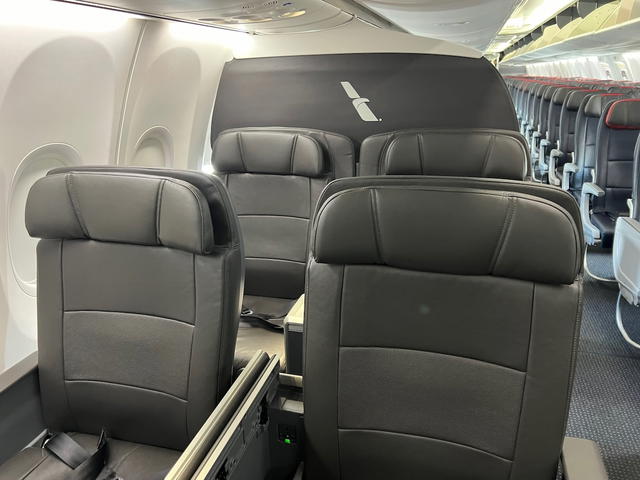
In those situations, airlines are first supposed to voluntarily deny passengers boarding, meaning that they offer some sort of compensation in exchange for passengers agreeing to take another flight. When that happens, it’s a win-win, since passengers are trading their seat for vouchers, gift cards, free tickets, etc.
If an airline can’t get enough volunteers, then they start to involuntarily deny passengers boarding. At this point, passengers are due cash compensation, which is government mandated. Involuntary denied boardings are also reported to the Department of Transportation (DOT), so the frequency with which airlines do that is published, and may be factored into overall airline quality scores.
Speaking of which, this is an area where American has historically ranked dead last. Just for context, in 2025, American involuntarily denied boarding to around 15,000 passengers, making up around 60% of the roughly 25,000 passengers who were involuntarily denied boarding across US airlines last year.
Arguably involuntary denied boardings should never happen. After all, there will always be some passengers who are willing to volunteer if the price is right, so it all comes down to how much the gate agents are invested in ensuring no involuntary denied boardings, and also how much discretion they have to increase compensation to get volunteers.
Along those lines, View from the Wing flags how American is telling its employees to stop involuntarily bumping passengers, as the airline has a new “zero involuntary denied boarding mandate.” This isn’t just some pie in the sky thing, but the airline is literally telling employees not to involuntarily deny passengers boarding under any circumstances. The airline is authorizing those who are bumped to be rebooked on the next flight, even if it’s already sold out. Here’s the memo to employees:
MANDATE: ZERO INVOLUNTARY DENIED BOARDINGS
“No invols” is no longer a goal – it is a company requirement. Continue working the oversale until every affected customer has voluntarily accepted the offer and confirmed travel.
1. DO NOT CLOSE THE AIRCRAFT DOOR – The aircraft door must remain open while any potential involuntary denied boarding is outstanding. All required volunteers must agree to the voluntary conditions before door closure. Take a delay, when necessary, to resolve the oversale.
2. LEADERSHIP MUST BE AT THE GATE – Airport leadership at the CSM level or above must be present for any oversold flight and actively support the team through resolution, including going above max compensation. DOD no longer authorizes or denies going above max compensation – station leadership will determine whether a higher amount is necessary to secure volunteers and prevent an involuntary denied boarding
3. NEW CUSTOMER-FRIENDLY ANNOUNCEMENTS – Begin early and use the new upbeat and transparent language that explains why fewer seats are available than originally anticipated, including an aircraft swap or weight-and-balance restriction when applicable. The new announcements make it easy for customers to volunteer.
4. YOU MAY GUARANTEE VOLUNTEERS THE VERY NEXT FLIGHT – A volunteer may be confirmed on the very next departure, even when that flight does not currently show available seats. Use Find/Protect; if the next flight has no availability, call Day of Departure (DoD) for booking support. An involuntarily denied customer would receive only the next flight with available seats – an important comparison when having a one-on-one conversation with a customer.
5. USE TRANSPARENT ONE-ON-ONE CONVERSATIONS – If individual outreach will help secure a volunteer, work the priority list before door closure. Call DoD only to obtain the customer-specific DOT involuntary denied boarding compensation amount. Explain that amount and present a voluntary package with compensation and a confirmed seat on the very next flight.
DOCUMENTATION: Record the solicitation start time, each compensation increase, escalation details, and any oversale anomaly in the O-text.
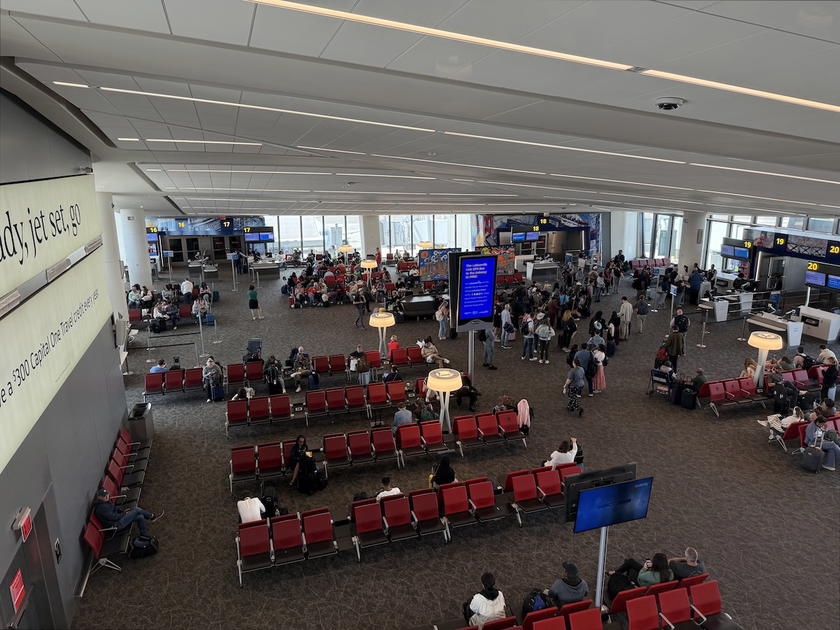
This really shows that American is trying to improve
The airline industry is of course more competitive than ever before, especially in the United States, where the major carriers are all trying to decommoditize air travel, and create brand loyal customers.
So we see airlines make all kinds of flashy announcements, some of which have substance, and some of which don’t. But this change from American is actually pretty remarkable, since it’s not even being announced publicly, so American isn’t even doing this to score brownie points.
Instead, this is clearly about actually trying to improve operations, create an overall better passenger experience, and also get better Department of Transportation statistics (something that’s worth striving for). Operational reliability in every way is important, and American is only now starting to embrace that concept.
Things are headed in the right direction, and I’m happy to see that. But as I always say, the issue is that when you’ve squandered nearly a decade in a hyper competitive industry where positive changes often take years to be realized, it’s not exactly easy to catch up.
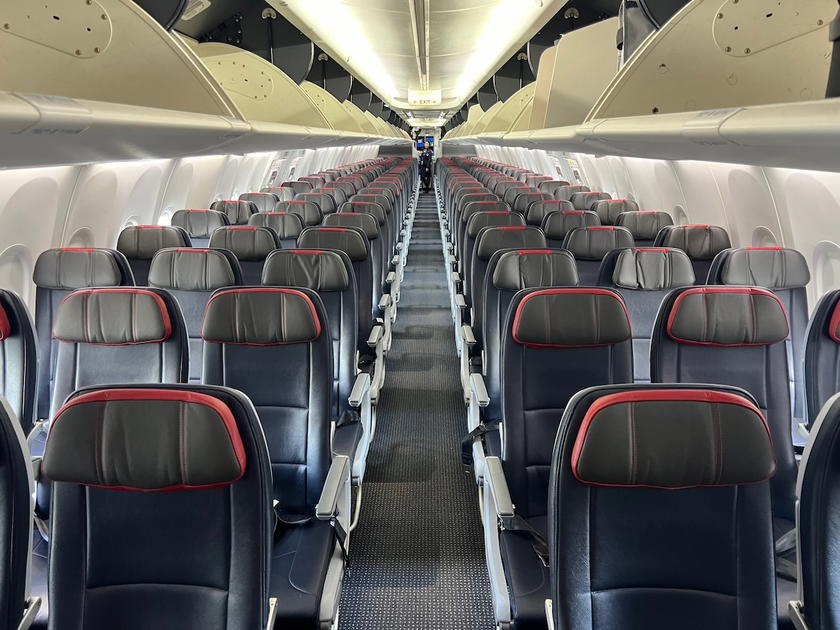
Bottom line
American Airlines has committed to no longer involuntarily denying passengers boarding. The idea is that when flights are oversold, the airline will ensure that passengers are only voluntarily denied boarding, rather than involuntarily being denied boarding.
This is being done through managers increasingly being involved in oversell situations, and being able to authorize higher compensation amounts, and even rebookings on sold out flights. This is a really positive change that should’ve been made a long time ago. But hey, better late than never (which, if American is looking for a new slogan…).
What do you make of American committing to no longer involuntarily denying passengers boarding?


CHA CHA CHA CHING!!! 💰🤑
Only if there’s solidarity with your fellow affected passengers; if anyone is too eager for a mere $200 gift card, they’ll forgo the larger remedies (thousands of dollars). So, help educate yourself and others on that reality. If the airline is gonna oversell, they should pay.
@1990_ My 20 year career w/AA started as a DFW Gate Agent way back in 1983
In those days, AA had the "no invols" policy that Ben is stating is now new.
If we don't get enough volunteers with the initial offer, then we keep increasing the offer until we find enough.
EVERYONE gets the final offer, for the very reason you bring up. As soon as we hit a certain passenger's...
@1990_ My 20 year career w/AA started as a DFW Gate Agent way back in 1983
In those days, AA had the "no invols" policy that Ben is stating is now new.
If we don't get enough volunteers with the initial offer, then we keep increasing the offer until we find enough.
EVERYONE gets the final offer, for the very reason you bring up. As soon as we hit a certain passenger's 'minimum', we want them to come up to the desk vs holding off to see if we'll increase the amount again.
@steve64 (From the trenches!) Lately, the incentives have been off. Reverting back to a proactive, well-compensated oversale strategy only really works when the agents are empowered. If AA brings back some DFW-1983-style, then it should be a win-win. *fingers crossed*
While it’s nice that American Airlines is trying to do better here, it really shouldn’t be up to the airlines’ discretion; we should have a better baseline for all carriers operating in the US, so that involuntary denied boarding, as well as significant delays and cancellations under their control, lead to specific financial recovery for affected passengers, a real duty of care, reimbursement for alternative transportation if needed, and rebooking even with competitors if they...
While it’s nice that American Airlines is trying to do better here, it really shouldn’t be up to the airlines’ discretion; we should have a better baseline for all carriers operating in the US, so that involuntary denied boarding, as well as significant delays and cancellations under their control, lead to specific financial recovery for affected passengers, a real duty of care, reimbursement for alternative transportation if needed, and rebooking even with competitors if they can recover faster. It’ll never be perfect, but leaving it up to the airline usually just harms the passengers.
This is going to be hard for American though. Capacity on flights is rather thin in general since the majority of their flights are on regional jets. They'll need to start beefing back mainline routes with full-size jets again...
All that 'day of departure' talk seems to be based on the assumption that there are multiple daily departures when, in some cases, missing a flight might mean a 48+ hour delay in arriving at one's destination. Furthermore, there are references to 'federal' compensation amounts but I have never seen that word mentioned in relation to 261...so I'm wondering whether it's an initiative only covering domestic/N. American travel as opposed to being deployed systemwide.
"Day Of Departure" refers to a specific group within the AA Customer Service Group who handle rebookings and reaccomodations "on the fly" (no pun intended) based on disruptions such as maintenance, weather, or equipment changes.
There should be stricter rules on not refunding or re-accommodating no-shows (with certain exceptions caused by the airline).
If the seat is fully paid for, it shouldn’t make a difference, if it remains empty or not.
Lollllllll American is so bad. Nothing is going to improve, ever, until the government puts SOME kind of laws in place to protect passengers.
Compare the reliability of European carriers to that of the US. If airlines have something to lose, suddenly they can make things work.
Beware of accepting an airline travel voucher. Air Canada's Denied Boarding Compensation conditions state :
"You may accept payment of denied boarding compensation in
the form of travel vouchers. Travel vouchers can only be used
towards payment of the base fare when you purchase an Air
Canada ticket for travel on Air Canada, Air Canada Express and
Air Canada Rouge".
Key is BASE FARE. AC's fare structure often includes...
Beware of accepting an airline travel voucher. Air Canada's Denied Boarding Compensation conditions state :
"You may accept payment of denied boarding compensation in
the form of travel vouchers. Travel vouchers can only be used
towards payment of the base fare when you purchase an Air
Canada ticket for travel on Air Canada, Air Canada Express and
Air Canada Rouge".
Key is BASE FARE. AC's fare structure often includes a nominal Base Fare, plus Carrier Surcharges, plus fees and taxes. A return ticket to Europe can comprise a Base Fare as low as C$1.00 so there will be little hope of ever using the voucher unless you are prepared to buy expensive premium fare class tickets.
Always take the CASH even if the voucher face value appears to be a better deal. CASH will buy a flight on any airline and has no sneaky rules. Watch for similar restrictions on AA's vouchers.
Sounds nice, but how's this going to work on performance-related issues that crop up at the last minute?
Delhi is a good example: a few degrees hotter than previously expected, and suddenly you're bumping 3 rows of passengers on a 787-9, just to make it over the Himalayas. Exact scenario happened last week for AA.
Are they going to go through radical compensation in this manner for that kind of situation? Also, what counts as...
Sounds nice, but how's this going to work on performance-related issues that crop up at the last minute?
Delhi is a good example: a few degrees hotter than previously expected, and suddenly you're bumping 3 rows of passengers on a 787-9, just to make it over the Himalayas. Exact scenario happened last week for AA.
Are they going to go through radical compensation in this manner for that kind of situation? Also, what counts as "next flight?" Would BA through Heathrow, make the cut?
Will the good folks at American Airlines explain to the potential volunteers that involuntary denied boarding (IDB) compensation happens is provided with a check as required by law and voluntary denied boarding (VDB) compensation usually is a bunch of very restrictive use travel vouchers, which expired in one year have blackout dates and may have logic defying usage rules.
At the end of the day, for the passenger getting bumped, it might just be better...
Will the good folks at American Airlines explain to the potential volunteers that involuntary denied boarding (IDB) compensation happens is provided with a check as required by law and voluntary denied boarding (VDB) compensation usually is a bunch of very restrictive use travel vouchers, which expired in one year have blackout dates and may have logic defying usage rules.
At the end of the day, for the passenger getting bumped, it might just be better to get a involuntary denied boarding rather than agree to getting some useless travel vouchers
I have received about 20 voluntary vouchers in my flying life from all of the big 3 US carries. None of them have ever had blackout dates or any usage rules. They all work just like cash and are far from "useless travel vouchers". The only thing you have correct is that they all expire in a year.
My latest one was $400 from United for arriving in ATW from ORD an hour later than I had planned in February. I love voluntary vouchers!
Ben, could you address this: "which expired in one year have blackout dates and may have logic defying usage rules." To my knowlege they must be used to book travel in a year, even if that travel is outside that year horizon. And, the last two points sound like BS to me.
As long as Airlines offer non-refundable and non-transferable fares, they shouldn't be allowed to oversell. If they are allowed to oversell, passengers should be allowed to transfer tickets to someone else on non-refundable tickets.
If they don't oversell, they'll have to charge more.
Transferring tickets to a third party would result in a huge increase in fraud.
The only way to stop involuntary boardings is not to oversell. That is never going to happen. Offering higher dollar amounts might reduce the number.
Given that I fly 3-5 times a month and never see VOLUNTARY bumps involuntary has to be exceedingly rare. I've given up on volunteering as I'm never needed and there I am boarding with Group 8 or 9 stuck behind dozens of passengers hoping there is a space for my...
The only way to stop involuntary boardings is not to oversell. That is never going to happen. Offering higher dollar amounts might reduce the number.
Given that I fly 3-5 times a month and never see VOLUNTARY bumps involuntary has to be exceedingly rare. I've given up on volunteering as I'm never needed and there I am boarding with Group 8 or 9 stuck behind dozens of passengers hoping there is a space for my carry on when I finally do get onboard. The juice isn't worth the squeeze. Not for a $300 or $400 voucher.
Now if they just let me board and came and got me if needed I'd volunteer. I also understand that doing that for some people would turn into a 20 minute cluster.
Aircraft changes and payload restrictions.
What’s bizarre is within the US if you change the aircraft to one with a smaller configuration, and consequently have to deny boarding and rebook a number of passengers, there is no requirement to compensate them, whereas EC261 makes it clear that compensation is due.
AA flier here, I always board with my group and tell them to get me if they need me to get off the bus. You’re right, it kinda never seems to happen, so waiting on the off chance, only to then have issues with the carryon, just not worth it.
The Gate Agent needs solutions quickly and is hardly going after you in the bus, if they can get someone who hasn’t boarded yet.
Probably chances are not bad to find volunteers in the last boarding groups either, as there will be fewer frequent travellers with status but more leisure travellers on a cheap ticket in those groups.
AA has such a long way to go.
Last week at DCA, the gate boarding dragon was actively antagonistic to first class pax. First she announced boarding, with no specifics, and first class started to enter the cattle line to present boarding passes. She then admonished everyone, saying "I NEVER CALLED FIRST CLASS!" So everyone backed out. 30 seconds later (literally) she announced first class boarding, and the man who was first in the...
AA has such a long way to go.
Last week at DCA, the gate boarding dragon was actively antagonistic to first class pax. First she announced boarding, with no specifics, and first class started to enter the cattle line to present boarding passes. She then admonished everyone, saying "I NEVER CALLED FIRST CLASS!" So everyone backed out. 30 seconds later (literally) she announced first class boarding, and the man who was first in the queue (who must have been 200 years old if he was a day) stood there smiling at her.
Her reaction? It was to yell at the man "I KNOW you heard me! Uh-uh. You HEARD me!" The man still stood there. Her: "You HEARD me announce first class, I KNOW you HEARD me!" It was grotesque.
Glad to hear about the involuntary denied boardings, but they have SO much to fix here.
such a sad state of service levels
Indeed. In any other environment (restaurant, office, the street) you could call out the dragon and tell her not to be so rude to an elderly person. In an airport, you’ll probably get arrested. :(
Their stated goal is certainly not being helped by the constant mechanical issues of their fleet. I have difficulty remembering one flight this year that wasn't delayed due to non weather events.
Thankfully, I have completed my business travel this year and very rarely use AA for my personal trips.
Bravo. All airlines should try to remove this inconvenience.
It is not about the money, but everyone who has an organised, if not tight, schedule knows what consequences ANY disruption brings.
I understand force majeure and "technical" issues, but to be denied boarding with fully paid, valid ticket... too much. And then they expect brand loyalty or whatever blah blah...
I'm a lightweight, maybe 20 segments max a year. I hear offers for voluntary maybe once a year. I've never witnessed an involuntary or know of anyone who experienced it. But, maybe that's, in part, because I book early, get a (even if paid) seat assignment. So, I'm on the plane when/if someone is told they're an "involuntary." From everything I've heard, it doesn't take a lot if $s to get volunteers.
When is American Airline going to “commit” to not treating their customers like garbage?
So, I think there ought to be a fine for every IDB. Maybe you reduce it if a last-minute aircraft swap is involved resulting in a large enough capacity reduction, but something like a $2000 cash fine per IDB and a floor on IDB cash compensation seems appropriate.
[I would also mandate unlimited transferability of any vouchers as well as the ability to partially redeem them without losing the remaining value.]
«I would also mandate unlimited transferability of any vouchers as well as the ability to partially redeem them without losing the remaining value.» Out of curiosity, I've read AA's policy on vouchers. Unless I read it wrong, you are able to use a $1100 voucher on a $700 ticket and still have $400 to use on another flight if used prior to expiration. It appears you could spent $300 each on three separate flights and...
«I would also mandate unlimited transferability of any vouchers as well as the ability to partially redeem them without losing the remaining value.» Out of curiosity, I've read AA's policy on vouchers. Unless I read it wrong, you are able to use a $1100 voucher on a $700 ticket and still have $400 to use on another flight if used prior to expiration. It appears you could spent $300 each on three separate flights and have $200 left for the fourth.
I hear such inconsistent reports on the rules. So, am I right, folks?
Vouchers shouldn't enter into the issue with IDB, since the airlines are mandated to pay the penalty in cash equivalents.
I guess an IDB passenger could go for vouchers if the amount offered is enough in excess of the required cash compensation. But if you don't like the expiration/conditions on the vouchers you can always just hold out for the money.
Agreed that the fines should be higher than they are!
A yes, so 1 seat oversell can hold an entire flight hostage... So they cancel the entire flight if they can't find one passenger?
@chris That's not a realistic situation.
While it was 40+ years ago, I used to be an AA Gate Agt. Most flights have some passengers asking if I'm taking volunteers when I've never made any type of announcement. Many flights where I do need volunteers, I don't even make an announcement because I already have enough. I've even have had passengers get mad at me when they ask if they can volunteer and I...
@chris That's not a realistic situation.
While it was 40+ years ago, I used to be an AA Gate Agt. Most flights have some passengers asking if I'm taking volunteers when I've never made any type of announcement. Many flights where I do need volunteers, I don't even make an announcement because I already have enough. I've even have had passengers get mad at me when they ask if they can volunteer and I say no because the flight isn't oversold today.
For many passengers, volunteering is like a side gig.
American denied my friend boarding saying she was "drunk." She wasn't. The plane was oversold and they didn't get enough volunteers, but she had no recourse. Jerks.
Bring back Rule 240, please.
Seems like a well intentioned change to me. I believe much of it can be managed on the revenue side by just steering the sales capacity more conservatively. There will always be operational changes through swaps / protections from other flights, but these an be managed with proactive customer service, appropriate compensation, and good flight alternatives. That's how it should be handled. Just put the customer first.
While the quoted memo states that the agents should continue "working that oversale" it doesn't say anything about raising the limit on voluntary offers. It's not clear whether this will make people happier with larger vouchers or result in a *we'll all be sitting her until **someone** volunteers to get off" delays.
Yikes, that works out to close to 1pct of flights with an involuntarily denial.