
Several weeks ago, I wrote about how Alaska Airlines wrongly denied a family boarding, and then kicked them off the next flight, with that second removal being due to a “clash of personalities” with the crew. There are a lot of details there, so please read those two posts before continuing to read. I won’t recap what happened, as this post will be long enough already.
Well, if you were curious what the outcome was, here you have it. Long story short, Alaska conducted a thorough investigation, and I find the response to be interesting.
I first published a post about this yesterday, but I’d like to update that. A lot of people disagreed with my take, saying I was giving the airline too much credit for their response. You know what… those people were right. I actually agree with the sentiment of what they were saying, I just didn’t express myself well, and I think the airline industry has a way of making us lower expectations. So let me try to take another stab at this, because I could’ve done a much better job analyzing this.
Alaska responds to denied boarding & flight removal saga
Following everything that unfolded in the stories linked above, OMAAT reader Christophe submitted a formal complaint with the airline, and also filed complaints with regulators in the United States and Canada, given the denied boarding and flight removal element of this.
Impressively enough, within a few days, he received a personal email from the CEO of Horizon Air (Alaska’s regional subsidiary), which read as follows:
Thank you for reaching out. Please let me do some research. We will be in touch soon. Thank you!
However, he heard absolutely nothing for weeks, and finally followed up roughly three weeks later. At that point, he received the following (very detailed) response from a “customer advocacy specialist” at Alaska, which read as follows:
Thank you for sharing your concerns with the U.S. Department of Transportation regarding your recent travel experience.
First and foremost, please accept our sincere apology for the frustration, inconvenience, and disappointment your family experienced during your travel from Missoula to Vancouver. We understand that traveling internationally with family members can be stressful under the best of circumstances, and the repeated difficulties you encountered with document processing, the disruption to your itinerary, the loss of your originally assigned First Class accommodations, and the ultimate need to make alternate travel arrangements understandably made for a very upsetting experience. We appreciate the opportunity to review the matter and respond to your concerns.
We would also like to offer a separate and sincere apology that your June 26, 2026 email to Alaska Airlines and Horizon Air leadership did not receive a response. After reviewing the handling of your correspondence, we found that your concerns were promptly escalated internally and became the subject of a detailed investigation involving Customer Care, Airport Operations, and Inflight leadership. Unfortunately, a miscommunication occurred during that review process, resulting in multiple leaders believing another member of the organization had already reached out to you directly. While your concerns were being investigated, no response was ultimately provided. We recognize that this understandably compounded your frustration and left you feeling unheard. On behalf of Horizon Air leadership, including our Chief Executive Officer, please accept our apology. We take concerns such as yours seriously, and we regret that this correspondence represents your first substantive response regarding these events. In addition to thoroughly investigating the issues you raised, we have shared your feedback with the responsible operational leaders so that we may learn from your experience and continue improving our processes and service delivery.
Our investigation confirmed that your family presented valid travel documentation and that Alaska personnel at Missoula worked extensively with our internal support teams to verify and process the required information. Multiple employees, including airport personnel and centralized support resources, devoted significant time to resolving repeated system-processing issues related to document verification. While our teams acted diligently and in good faith to facilitate your travel, we recognize that the delays and complications you experienced fell short of the level of service we strive to provide. We regret the inconvenience this caused and appreciate your acknowledgement of the efforts made by several Missoula employees who worked to assist your family throughout the day, including the employees you specifically commended in your correspondence.
With respect to your assertion that your family was involuntarily denied boarding under 14 C.F.R. Part 250, our review determined that the circumstances of this event do not meet the regulatory definition of involuntary denied boarding. DOT denied boarding compensation regulations are specific to oversales situations in which a passenger holding confirmed reserved space is denied transportation because more passengers hold confirmed reservations than there are available seats. 14 C.F.R. Part 250 expressly governs oversales and the compensation associated with those events. In this case, your inability to board the originally scheduled flight resulted from operational difficulties associated with processing travel documentation and the time required to resolve those issues prior to departure, not because the flight was oversold or because another passenger was given your seat as part of an oversale event. Accordingly, the denied boarding compensation provisions contained in 14 C.F.R. Part 250 were not applicable to this situation.
We also carefully reviewed your references to the Canadian Air Passenger Protection Regulations (“APPR”). While we understand your position that APPR compensation should apply, our review determined that the circumstances described do not constitute a compensable denied boarding event under those regulations. The APPR provisions governing denied boarding are intended to address situations where a passenger is denied boarding for reasons within the carrier’s control and not required for safety purposes, and are distinct from circumstances involving operational processing issues or subsequent transportation decisions made by a captain based upon onboard safety considerations. While we recognize that regulatory interpretations do not diminish the frustration your family experienced, our review concluded that the events at issue did not constitute a violation of either applicable U.S. or Canadian passenger protection regulations.
We understand your concern regarding the reassignment of your originally confirmed First Class seats. Our review found that, as the document-processing issue remained unresolved near departure time, your original itinerary could not be completed as scheduled and your party required reaccommodation on a later flight. Unfortunately, First Class inventory was no longer available on the replacement itinerary, resulting in travel being rebooked in a lower cabin of service. We recognize that this represented a substantial reduction from the experience you originally purchased and understand your frustration. Had the Alaska itinerary ultimately been flown, the applicable difference between the purchased and traveled cabins would have been refunded in accordance with our policies governing changes in class of service.
You also expressed concern that the same document-verification issue appeared again during boarding of the replacement flight. Our review confirmed that employees again had to coordinate with internal support resources before boarding could be finalized. We appreciate how discouraging it must have been to encounter additional documentation issues after already missing your original flight. Although the issue was ultimately resolved and your party was cleared for transportation, we recognize that this additional delay further compounded an already difficult day and understandably affected your confidence in our ability to complete your travel successfully.
We carefully reviewed your concern that your family’s removal from the replacement flight was retaliatory or related to your intention to submit a complaint regarding an employee. Our investigation does not support that conclusion. Based on the information gathered from the working flight attendants, the commuting flight attendant, station leadership, and the captain, the disagreement appears to have stemmed from confusion regarding seating assignments after your party boarded with boarding passes that may have held outdated seat assignments. The employees involved consistently reported that the commuting crewmember was attempting to accommodate your family while the crew worked to verify the correct seat assignments. While we recognize that you perceived the interaction differently, our review found no evidence that your request for an employee’s name or your intent to submit a complaint played any role in the subsequent transportation decision. Passengers are always free to express concerns and provide feedback regarding their travel experience.
Regardless of the initial cause of the seating dispute, the primary concern reported by the crew was the manner in which the interaction escalated and their resulting concerns about compliance with crew instructions. Under Alaska Airlines’ Contract of Carriage, passengers are required to comply with all crewmember instructions, and the carrier may refuse or discontinue transportation when, in the judgment of the captain or crew, a passenger’s conduct may interfere with the duties of employees, create a disturbance, or affect the safety or comfort of others. Because compliance with crewmember instructions is a fundamental safety requirement and a matter taken seriously throughout the aviation industry, the captain evaluated the information presented by the crew and determined that removal was appropriate under the circumstances. Our review found that decision was consistent with the authority afforded to operating crews under our Contract of Carriage and established safety procedures.
We recognize that you disagree with the crew’s assessment and that your account differs from the observations documented by employees involved in the event. However, based on the information available during our review, we found no evidence that the decision was retaliatory in nature; rather, it was based on the crew’s assessment of the onboard interaction and their resulting safety and compliance concerns.
Although we believe our employees acted in accordance with applicable regulations, company procedures, and the authority delegated to operating flight crews, we nonetheless regret the overall experience your family endured. We understand that you expected a smooth trip and that the events of that day caused significant frustration, inconvenience, disappointment, and loss of confidence in our service. We are especially sorry that our efforts to resolve the initial document-processing difficulties did not produce a better outcome and that multiple service failures combined to create such a negative travel experience for your family.
To help address the concerns raised and to make things right, we have taken several corrective and remedial steps. Internally, we have shared your experience with our technology and passenger record support teams for further review of the document-verification processes. We have also provided your feedback regarding the onboard interaction to Inflight leadership, and we have shared both your concerns and your commendations with management at Missoula.
While the unused Alaska Airlines tickets initially remained open and available for future travel in accordance with the applicable fare rules, as a customer service gesture we have elected to redeposit the Atmos points used to purchase reservations XXXXXX and XXXXXX, thereby restoring the full points value of those reservations to your account. Additionally, we have submitted a request to our Accounting Department to refund all taxes and fees associated with those reservations. Those refunds will be processed to the original form of payment, and while we anticipate processing within seven business days, posting timeframes may vary by financial institution.
In addition, although we must respectfully decline your request for reimbursement of the full cost of the Delta Air Lines tickets purchased following the events in Missoula, we recognize that your family incurred additional travel expenses as a result of the disruption. After reviewing the value of the unused Alaska Airlines transportation, we determined that the monetary value of the four First Class award tickets was $477 per passenger, with a total ticket value of $1,908. Based upon your stated replacement transportation cost of $2,538.00, we are providing reimbursement of the fare difference in the amount of $630.00 as a gesture of goodwill, despite the absence of supporting receipts or documentation.
Further, although we concluded that the Canadian Air Passenger Protection Regulations do not require compensation under these circumstances, we recognize that your family nevertheless experienced substantial inconvenience due to disruptions that originated within our operation. Accordingly, as an additional gesture of goodwill and notwithstanding our conclusion that no compensation was required under applicable Canadian passenger protection regulations, we have elected to provide compensation equivalent to what would have been payable for a significant airline-controllable delay. This results in an additional goodwill payment of $400 per passenger, or $1,600 total. Combined with the reimbursement described above, the total cash payment being provided is $2,230.
Accordinly, we have submitted a request to our Accounting Department for a payment in the amount of $2,230. We are also including discount codes for future travel for each member of your party. While no amount of compensation can undo the experience you described, we hope this resolution demonstrates our genuine desire to acknowledge the disruption your family experienced and our commitment to going well beyond what is required under applicable laws and regulations in an effort to restore your confidence in Alaska and Horizon.
As a customer service gesture, we’ve included four Discount Codes below for future travel on Alaska.
Thank you for providing the opportunity to review and respond to your concerns. We value your feedback, have shared the information gathered during this review with the appropriate internal teams, and remain committed to continually improving our processes and the service we provide our guests.
Christophe responded as follows:
Thank you for your response.
Regarding the initial flight, document verification glitches within your internal IT infrastructure fall squarely within carrier control and therefore fall under Canada APPR.
More importantly, I would like to formally reject the characterization of the onboard incident provided in your letter. The assertion that the commuting crew member was acting in an “accommodating” manner is factually incorrect, as is the claim that our party failed to comply with crew instructions.
To set the record straight:
1. The seating confusion was created entirely by the fact we boarded with incorrect and dated boarding passes.
2. The commuting employee did not attempt to “accommodate” us. In fact, the only reason the purser came to us was because she called her -not us- and stated to her directly: “You told me these three seats were empty.” My wife was still standing in the corridor at that time so how was she in any way “accommodating?” Although I am sure passengers were around and heard the discussion, absolutely no other Alaska employee could have heard it. As such, and unless you have enquired with nearby passengers, the version you are giving us is entirely based on the testimony of the two employees who were specifically the ones we were looking to report. Further, logic matters. Why would a family that spent the entire day fighting through system delays, and who finally made it onto their replacement flight, randomly decide to target and report an employee who was actively being “accommodating”?
3. My family complied fully, calmly, and immediately with every single instruction given by the flight crew. To date, Alaska Airlines has failed to identify a single, factual specific instruction that any member of my family disobeyed. Citing a general “crew compliance and safety assessment” after the fact is an attempt to recast an improper refusal to transport, triggered by our request for an employee’s name, as a passenger conduct issue.
The same Alaska employee quickly responded with the following:
Thank you for your reply and for taking the time to provide additional details regarding your experience. We recognize that these events had a significant impact on your family, and we appreciate the opportunity to address your concerns again.
First, regarding your position that the document-verification issues should be considered a carrier-controlled event under the Canadian Air Passenger Protection Regulations (APPR), we understand and respect your interpretation of the regulations. After a careful review, however, our position remains unchanged. The definitions and compensation provisions within the APPR distinguish denied boarding and other disruptions caused by reasons within a carrier’s control from circumstances involving operational processing and verification issues. Based on the facts available during our review, the document-processing difficulties encountered during your travel did not constitute a compensable denied boarding event under their regulatory definitions. That said, we fully recognize that the distinction between a regulatory determination and a customer experience may be of little practical significance from your perspective. For that reason, although we concluded that compensation was not required under the APPR, we nevertheless elected to provide a goodwill payment equivalent to the compensation amount that would have been payable for airline-controllable denied boarding. This was intended to acknowledge the substantial inconvenience your family experienced regardless of the regulatory outcome.
With respect to the onboard interaction on the replacement flight, we acknowledge that your description of the events differs substantially from the information provided by the employees involved and from the findings of our investigation. We understand that you disagree with our characterization of the interaction, particularly the conclusion that the commuting crewmember was attempting to assist with resolving the seating confusion and that concerns regarding compliance contributed to the captain’s decision. We do not discount your perspective, and we recognize that you strongly believe the sequence of events unfolded differently. Because our review necessarily relied upon the information available from those directly involved in the operation, we were unable to substantiate the conclusion that the removal was retaliatory in nature or related to your desire to obtain an employee’s name or submit a complaint. At the same time, we acknowledge the discrepancy between your account and the information gathered during our investigation.
Regarding your assertion that the seating confusion was caused entirely by the boarding passes issued to your family, we acknoweldged this in our previous email understand why this remains a significant point of concern. Our investigation confirmed that there were ongoing document-processing and boarding-related complications throughout the day, including prior issues involving travel documentation and seat assignments. We appreciate your view that these circumstances contributed to the confusion that later developed onboard.
As noted previously, our review found that the captain’s decision was based upon information relayed by the operating crew and their assessment of the onboard interaction at the time. We understand your concern that Alaska Airlines has not identified a specific instruction that any member of your family failed to follow. However, the decision was not based on a determination that a particular instruction had been expressly disobeyed. Rather, it was made in accordance with established safety procedures based on the working crew’s observations of the interaction as it unfolded, their concerns regarding the potential for further escalation, and the information presented to the captain at the time. The authority of the operating crew and captain to make safety-related transportation decisions necessarily depends upon their contemporaneous evaluation of circumstances as they are presented onboard and does not require a finding that a passenger has first refused a specific instruction.
We recognize that you disagree with that assessment and maintain that your family remained calm, cooperative, and compliant throughout the interaction, and your detailed account of the onboard interaction has not been disregarded. We fully recognize that your version of events differs from the conclusions reached during our investigation. Because of that discrepancy, your feedback and description of the incident have been shared with Inflight Management to ensure appropriate visibility of your concerns and to allow leadership to evaluate and provide any coaching, guidance, or retraining opportunities that are warranted. While we are unable to make disciplinary determinations based solely on conflicting accounts, we believe it is important that leadership remain aware of guest concerns and the perceptions created by these types of interactions.
And as a nice conclusion to this story, can I just point out what a class act Christophe is? He responded to that email politely with some personal details, and concluded with this:
Finally, I would like to share that I matched the compensation Alaska provided with a donation to Save the Children. I mention this not as a statement about the amount, but because it felt like the right way to close this difficult chapter by remembering that there are families facing circumstances far more difficult than a missed flight.
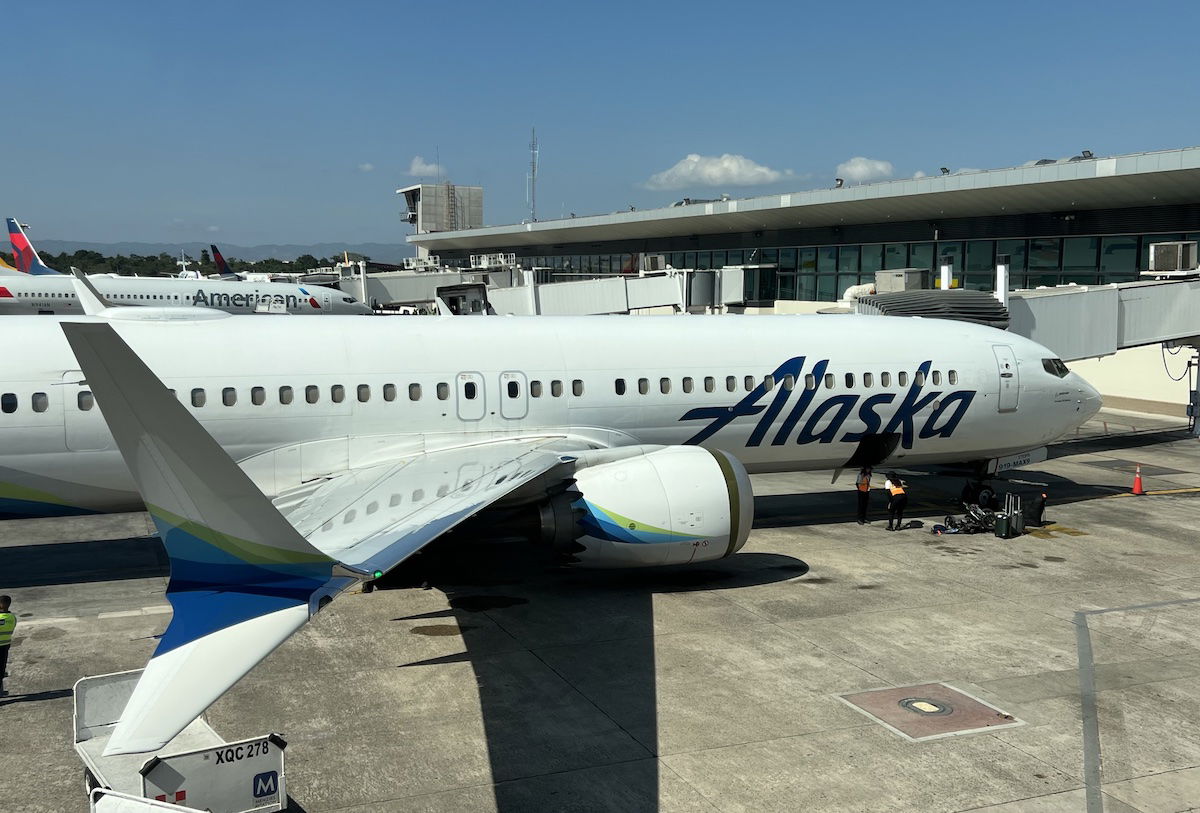
My take on Alaska’s handling of this frustrating situation
I think it’s important to acknowledge that across the board, airlines aren’t great at providing customer service when things go wrong:
- They receive a massive volume of complaints, and so many airlines have just automated their customer relations, relying heavily on AI
- Airlines will almost never admit fault for anything; if they do offer you something as compensation, they’ll almost always frame it as an unnecessary “gesture of goodwill”
- When you have a serious issue, it’s really hard to get the attention of the right person, and that’s why it can help to try to get some publicity to a story
I’m thinking back to what’s perhaps the most famous airline “complaint” ever, involving Dr. Dao being dragged off a United plane. Do you remember the kind of global backlash it took for United to actually apologize, rather than suggesting that Dao was simply being “reaccommodated” on another flight? And that was a case where everything was caught on video!
Airlines absolutely need to do better in these situations. I think since the industry overall fails at this so much, it makes me frame things through the lens of how they are likely to respond, rather than how I wish they’d respond.
With that in mind, here are my thoughts on this specific response:
- It’s disappointing that Alaska dropped the ball and forgot to respond after the Horizon Air CEO’s message, as that shows a lack of attention to detail and leadership
- Alaska’s response is very long, and while it acknowledges all of the issues, it does lack substance; it doesn’t actually say what will change
- Not to pat myself on the back too much here, though I suspect me writing about this probably caused Alaska to take it a bit more seriously, especially as the story got quite a bit of traffic and interaction; while I’d hope the airline would always be this thorough, I imagine that’s highly unlikely
- Unlike others, I don’t think this response was as “lawyered up” as some others are suggesting, especially based on how quickly the dialogue went back and forth, with the airline responding a second time with minimal delay (I could be wrong, though!)
- This situation really sums up the general power trips that flight attendants can go on without repercussions; Alaska acknowledges that their investigation is based on the crew’s perspective, and they can’t in any way point to what the passengers did wrong, other than suggesting the crew’s “concerns regarding the potential for further escalation,” which means that it’s not what someone did, but what they were concerned someone could do
- Essentially Alaska provided compensation similar to what would be required on regulatory grounds for a denied boarding, while maintaining the position that denied boarding compensation is for oversell situations, and not system glitches
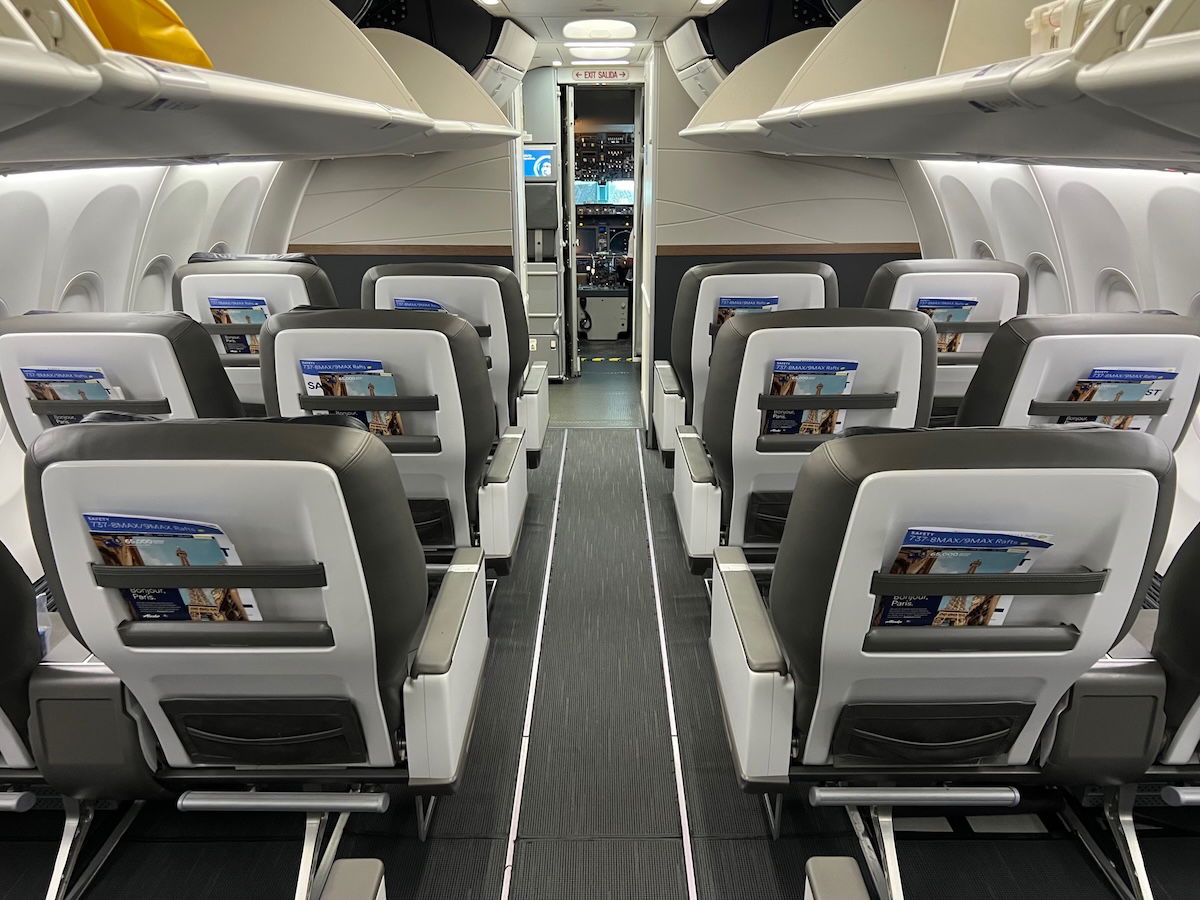
Bottom line
A family was denied boarding on an Alaska Airlines flight, only to then be kicked off the next flight by a flight attendant. This story obviously represented a massive failure on Alaska’s part in terms of technology (due to the initial passport issue), as well as in terms of service (due to the flight attendant removing a family for questionable reasons).
While Horizon Air’s CEO got involved within days of the incident, the company then dropped the ball for weeks, and forgot to respond. The company has now finally provided a thorough response, providing some compensation, and acknowledging all of the points, without actually accepting responsibility.
Unfortunately I think the biggest issue that remains is that when flight attendants kick people off planes, there’s not much in the way of repercussions. It becomes a “he said, she said” situation, and the company takes the employee’s side.
What do you make of Alaska’s response here?




"Unfortunately, a miscommunication occurred during that review process, resulting in multiple leaders believing another member of the organization had already reached out to you directly."
If the airline's CEO were instead a captain and pilot in command:
First Officer: "Sorry, I thought you said you were going to lower the gear . . ."
This! Alaska really showed how flawed their IT and internal communications are in their response.
Apples, oranges
What that means is anytime you complain, no matter how calm you are, you can be removed from the flight since, there is "potential for future escalation". Shameful. Also who in their right mind believes that the commuting employee was accommodating? Detailed response but it remains embarrassing for Alaska.
The crew must retain the right to remove passengers at their discretion. However, that does not absolve the crew from subsequent review and counseling over the exercise of that discretion.
@Sean So, you are essentially just saying whether it was a flight attendant going on a power trip or not just offload the passengers and potentially deal with the flight attendant later which most likely would never happen as what happened with this scenario. Can’t imagine an off duty flight attendant saying “but you promised me a row of empty seats”.
The removal has to have some rational basis. It's not unfettered discretion like Alaska seems to believe. Asking for the employees' names to write a complaint about them doesn't create a rational belief in a reasonable person that the passenger will pose a safety issue. The standard isn't whether any flight attendant can arbitrarily and subjectively claim that they merely think a passenger "could" create a safety issue. If that were the case, there wouldn't...
The removal has to have some rational basis. It's not unfettered discretion like Alaska seems to believe. Asking for the employees' names to write a complaint about them doesn't create a rational belief in a reasonable person that the passenger will pose a safety issue. The standard isn't whether any flight attendant can arbitrarily and subjectively claim that they merely think a passenger "could" create a safety issue. If that were the case, there wouldn't actually be ANY standard. Any removal, however arbitrary and capricious, could be justified after the fact merely by the flight attendant claiming she thought that a passenger "could" create a safety issue. Maybe the passenger looked at her the "wrong way," didn't say hello back, asked for an extra biscotti, sighed when told they were out of cream for the coffee, or got coffee spilled on himself then requested her name to report her. The fact that we even have to discuss this shows how out of control the FAs are and how the regulations need to be re-written.
I don't understand why the airline gets any brownie points in this episode.
1. They failed to respond until prodded presumably because none of the responsible wanted to take the blame and put their name behind it and it dropped on the floor until the customer followed up.
2. The response is detailed ONLY because it is a lawyer approved CYA letter not necessarily that the investigation was extensive. I see a lot of...
I don't understand why the airline gets any brownie points in this episode.
1. They failed to respond until prodded presumably because none of the responsible wanted to take the blame and put their name behind it and it dropped on the floor until the customer followed up.
2. The response is detailed ONLY because it is a lawyer approved CYA letter not necessarily that the investigation was extensive. I see a lot of boiler plate BS there with zero evidence that any investigation was actually done.
3. They knew they were liable for the compensation but didn't want it on the record and offered to settle it as customer good will.
4. Their response makes the customer's claim of retaliatory removal more credible even if they do not agree with it. The actions they reported of what the crew did fits perfectly with a retaliatory removal. They don't want to admit to that.
5. Without the compensation that was due anyway, their offer of paying the difference in fare made it the equivalent of making him purchase the value of those seats with cash at face value returning his award points. The correct redress would have been to refund his entire alternate ticket and pay the regulatory compensation. They shortchanged him on that.
6. And in everything they did, they were just doing what a normal airline is expected to do, not do relative grading because of some other airlines. Some airlines would have been more gracious/generous. So, I don't think they deserve commendation for that.
Well said, GV. I was even less harsh on this outcome than you. But, you’re totally right. Wish more folks stood up for consumers. We really need better air passenger rights legislation in the US. Please come back and keep speaking your mind about stuff like this!
Absolutely correct.
In Europe EC/UK 261 would consider this as denied boarding. Europe has far better protection. Not just overbooking.
The DOT only claims denied boarding is only in case of overbooking. However, if they were denied boarding despite having valid documents it should be paid. The DOT doesn’t even consider an aircraft change with a smaller configuration as oversales, which it is.
In addition an EUUK carrier or any operating from the EUUK, would...
In Europe EC/UK 261 would consider this as denied boarding. Europe has far better protection. Not just overbooking.
The DOT only claims denied boarding is only in case of overbooking. However, if they were denied boarding despite having valid documents it should be paid. The DOT doesn’t even consider an aircraft change with a smaller configuration as oversales, which it is.
In addition an EUUK carrier or any operating from the EUUK, would have to refund all additional costs.
As they were travelling to Canada it’s also covered by the APPR so I would suggest they contact the Canadian Dept of Transport. The USA Canada is international covered by the Montreal Convention, therefore they can claim damages.
You’re impressed by their response? Seriously? It looks like they only responded due to the DOT complaint, and they made sure they protected themselves and refused to acknowledge any regulatory wrongdoing. A simpler, more sincere apology was warranted.
The best ‘apology’ is in dollars. Glad that at least seems to have happened here, allegedly. The mere perfunctory words of a massive for-profit corporation mean near-nothing anyway.
AS is correct, it’s not a denied boarding situation under APPR since the APPR wording requires more passengers holding valid tickets than seats onboard (I.e. an intentional oversell).
AS already made the matter right, by paying the same compensation as if denied boarding did occur and compensation was owed for that. In my opinion that’s pretty standard, the Canadian airlines will settle APPR claims on the basis of “a goodwill gesture”.
I'm not an expert on CA's APPR, but AS makes a distinction between the US/CA denied boarding policies. Their description of the US regulation is sound: it applies to oversells only. But using their own words, the CA regulation applies "for reasons within the carrier’s control and not required for safety purposes". I don't see how acknowledged incorrect visa requirements in their internal systems is not applicable here. Certainly applying correct immigration policies to their...
I'm not an expert on CA's APPR, but AS makes a distinction between the US/CA denied boarding policies. Their description of the US regulation is sound: it applies to oversells only. But using their own words, the CA regulation applies "for reasons within the carrier’s control and not required for safety purposes". I don't see how acknowledged incorrect visa requirements in their internal systems is not applicable here. Certainly applying correct immigration policies to their flight management systems is entirely within their control, and a fairly basic requirement for airlines to transport passengers between countries.
Yes, they ultimately gave him the same compensation, but this letter was crafted to be read by a larger audience. They want not just the passenger, but all of us reading a letter they know will get covered widely, that they will not pay compensation when things don't go quite as badly as this one. So if another passenger misses a flight due to IT issues, they've not set a precedent that they're on the hook for it. Not sure if Canadian law will agree with their assessment, but they're going to make you fight for it.
Under APPR, denied boarding is a different category from compensation for a delay.
A delay “for reasons within the carriers control and not required for safety” is the wording associated with a delay in the final arrival time that results in cash compensation. If you look at the actual APPR wording, that phrasing is for delays. Denied boarding is a specific defined situation, very similar to the US DOT wording.
That is why they paid...
Under APPR, denied boarding is a different category from compensation for a delay.
A delay “for reasons within the carriers control and not required for safety” is the wording associated with a delay in the final arrival time that results in cash compensation. If you look at the actual APPR wording, that phrasing is for delays. Denied boarding is a specific defined situation, very similar to the US DOT wording.
That is why they paid out the compensation associated with a delay, and not the compensation associated with a denied boarding situation.
Denied boarding compensation is larger and immediately applies, compensation for a delay requires at least a 3 hour delay and is approximately half as much.
Alaska has done extremely well here.
Without doubt there is more corrective action taking place behind the scenes, whether on an individual basis with any employees identified as being catalysts in the situation, or on a wider policy or process level.
At the end of the day, sometimes processes break down. They acknowledge that and make restitution. Not sure what else could be done?
"Alaska has done extremely well here." Really?
From their point of view, maybe.
Bring in the lawyers, twisting themselves outa shape in a failed attempt to prove they were right, if a victim of uncontrolled and cascading circumstances, doesn't meet any standard of excellence in my opinion. All the while casting shade on the passengers recounting of events.
Alaska has done breathtaking deplorably here.
Also surprised/disappointed that Ben stepped in a...
"Alaska has done extremely well here." Really?
From their point of view, maybe.
Bring in the lawyers, twisting themselves outa shape in a failed attempt to prove they were right, if a victim of uncontrolled and cascading circumstances, doesn't meet any standard of excellence in my opinion. All the while casting shade on the passengers recounting of events.
Alaska has done breathtaking deplorably here.
Also surprised/disappointed that Ben stepped in a pile of you-know-what in reaching his conclusion to this saga.
The response is far too long. Rambling. It should have been significantly shorter with the offer of remuneration at paragraph 3.
The vast majority of people want short replies and you don’t need to keep apologising. They will look at the end to see if compensation was offered.
Yes, proceses can break but Alaska is hiding behind a technical definition of denied boarding and not owning up to their mistakes. Besides, it’s not like the process broke down due to some unanticipated cause. It was a poorly designed and broken process to begin with. Alaska hasnt done enough here in my books.
What an insulting response. I'm very happy I don't have to fly with US airlines, this makes even Lufthansa look like a company that cares about customers.
The main point of filing a complaint is to ensure that similar situations won't occur in the future. It's hard to imagine any structural change will occur when the airline essentially denies any wrongdoing (beyond the system glitch that started the chain of other failures).
It was clearly drafted by an attorney as if he were submitting a response to a court complaint. Very lengthy rationalizing about why they supposedly did nothing wrong. It should've been drafted by someone with better customer service communication skills. They can save all the denials and legal analysis for court, if and when a case is filed.
The family presented with valid travel documentation. Everything that occurred after that is entirely on Alaska Airlines.
Sounds like an Alaska IT issue was the root cause.
Own it and pay up!
this is complete egg on the face of Alaska Airlines. The fact that they did not respond until the customer filed a complaint with the DOT simply forced AS to issue lengthy, legal justifications which do not address the key issue which started the whole mess
"Regarding your assertion that the seating confusion was caused entirely by the boarding passes issued to your family, we acknoweldged this in our previous email understand why this...
this is complete egg on the face of Alaska Airlines. The fact that they did not respond until the customer filed a complaint with the DOT simply forced AS to issue lengthy, legal justifications which do not address the key issue which started the whole mess
"Regarding your assertion that the seating confusion was caused entirely by the boarding passes issued to your family, we acknoweldged this in our previous email understand why this remains a significant point of concern. Our investigation confirmed that there were ongoing document-processing and boarding-related complications throughout the day, including prior issues involving travel documentation and seat assignments."
AS' IT was and is entirely insufficient and instead of admitting that they screwed up and their employees' actions just added insult to injury, they engaged in a blow by blow legal defense.
They lost far more in goodwill by not admitting they were wrong in a timely manner and allowing the whole thing to blow up in the media.
In my humble opinion, the letter drafted by lawyers, and typed by AS, probably cost AS more than double what AS paid to the customer. I think AS mgmt is afraid of making waves with FF and FO unions.
And judging by the comments expressed here, it would appear it has taken a substantial hit on the airline.
@Ben: I am concerned with your response as it would appear you are effusive with your...
In my humble opinion, the letter drafted by lawyers, and typed by AS, probably cost AS more than double what AS paid to the customer. I think AS mgmt is afraid of making waves with FF and FO unions.
And judging by the comments expressed here, it would appear it has taken a substantial hit on the airline.
@Ben: I am concerned with your response as it would appear you are effusive with your praise for AS, to the extent that you really have downplayed the harm to the customer. Power trips by FA's is a big concern. With the AS letter taking a he said/she said approach, the customer is made to believe that you think he was wrong.
I find Alaska’s response infuriating. Deny any wrongdoing, no matter what - even if the facts are crystal clear.
That’s the problem with lack of consumer protections in the US market, compounded by the fact that it’s significantly more difficult to pursue a passenger’s rights in court. In the UK, for example, you’d just go to CEDR and have the issue quickly resolved.
Alaska looks much worse after this response.
A novel worth of 'while we understand how frustrating...' but falls flat in the substance.
How is correctly reviewing passports and visa documents 'beyond airline control?' It's not, it's squarely within what (should) be a core competency of an airline that operates intentionally.
In all seriousness I'm cancelling my Atmos Summit card at renewal; there's no need to seek out Alaska in the future for this level...
Alaska looks much worse after this response.
A novel worth of 'while we understand how frustrating...' but falls flat in the substance.
How is correctly reviewing passports and visa documents 'beyond airline control?' It's not, it's squarely within what (should) be a core competency of an airline that operates intentionally.
In all seriousness I'm cancelling my Atmos Summit card at renewal; there's no need to seek out Alaska in the future for this level of clownishness.
I got Atmos Ascent based on this blog recommendation. Both my experience with AS and this story - and how it was covered in this blog - means I will have less trust in this blog and look for alternatives.
You have a very low bar if this response “impressed” you.
Well, the bar is pretty low.
I'm quite surprised you were impressed with their response, Ben. I thought it was appalling - clearly there were multiple failures on their part and they totally failed to fess up to them. To completely muck up the coordination of their response to the customer just compounded things. It also shows just how appallingly weak US/CA flight protections are vs UK/EU!
He's been recently invited to various Alaska and Atmos events iirc, likely wants to not burn the bridge, so he needs to ingratiate himself to them. So even though actual unbiased journalism would recognize how bad of a response this is, he'll gladly say they did a good job.
I have to agree Alan. I’m not seeing anything to be impressed about. From the situation ALASKA caused, to dropping the ball on the initial complaint Christophe submitted, to the poor response excusing the behavior of the commuting employee and the flight attendant, this is not impressive.
You're impressed by the Airline circling the wagons when the'yve got nothing to circle about?
Lousy staff, lousy management all doing lousy jobs. I think this time it's ok if a few scalps are taken.
What are you a shill for AS? The letter was nothing but a voluminous set of denials and stonewalling. AS's lousy computer systems are 100% within their control. The refunds given far short of what the Canadian APPR regulations require.
Even their apology for not responding is half-assed. I don't believe any of it. They shoved this on a shelf hoping it would go away.
Alaska/Horizon word salad. A lot of words, a lot of apologies, but little accountability as they skirted the more important issues of regulatory compliance and union work rules for the crew.
In the end they settled with you for only the expenses and services under their control and called it "goodwill" as if they were doing you the favor. Kind of like "I punched you in the face, so I guess I will pay the...
Alaska/Horizon word salad. A lot of words, a lot of apologies, but little accountability as they skirted the more important issues of regulatory compliance and union work rules for the crew.
In the end they settled with you for only the expenses and services under their control and called it "goodwill" as if they were doing you the favor. Kind of like "I punched you in the face, so I guess I will pay the ER bill"
While I would guess that probably 99.9% of airline and customer interactions are benign or positive, this almost militaristic behavior towards passengers that don't immediately "fall in line" when there is a discrepancy in play is what rubs customers the most. Not everyone is a drunk, a psychotic or carrying a personality disorder when asking about the why's and where's of the situation.
This is why flight attendants must be brought under control. We clearly cannot rely on their word. If they are truly safety officials, they should be recorded 24/7 like cops. Otherwise, they are sky waitresses and should not have any independent authority.
Absolutely give yourself a pat on the back. It wouldn’t have gone this far without the attention it got. Alaska does not care about this family, they care about their reputation.
Ouch! If they cared about their reputation they would have instructed their lawyers to draft an entirely different letter.
^This. The squeaky wheel gets oiled. Ben's the real hero here.
@1990. “Ben’s the real hero here”
Hahaha. So brave, so brave.
Your sycophantic stroking of Ben is creepy. Ben can’t express an opinion without hedging it. But he’s a hero.
Evasive extra baloney . Each paragraph ought to be reduced to one sentence .
Let me paraphrase Alaska’s response. “We didn’t do anything wrong but you are making waves for us so here’s some cash so you’ll just f**k off.”
Written a pack of lawyers as a way of saying FU. That is why the have to keep reminding airline employees to quit calling customers "cattle." If the amount of billable lawyer hours had instead been used to compensate the injured parties, I might cut the airline some slack. But instead, the "leadership" seem to believe that the path to profitability lies in stealing the pennies off a dead man's eye, using lawyers to do the actual theft.
Geee, crew covered for each other and the passenger is just making things up.
The fact that there is zero accountability for flight attendants on power trips is the problem. The commuting flight attendant and her friend literally got away with screwing over a customer…and based on the fact that they apparently got away with it, further reinforcing the dysfunctional culture prevalent at US carriers.
There was nothing impressive about Alaska's response.
They basically said "we investigated ourselves and found no wrongdoing".
The journalistic standards have gone out of the window because Ben doesn't want to piss Alaska off and call them out for their terrible handling of this situation.
@Yolo Ben can’t if he wants to continue pumping their credit cards and telling us how good they are even right after these two articles. Ben cannot get them too pissed.
You're impressed by Alaska telling a customer to "f off"? By Alaska telling a customer, "we investigated ourselves and found we did nothing wrong"? By Alaska believing the lying crewmembers who got reported over the customer that these lying crewmembers terrorized?
What a lame-a** response, from Alaska and you.
Alaska allegedly paid-out. That’s what really matters, here. Yes, lots of words, most of which mean nothing.
Bottom line is that we really should have better air passenger rights legislation in the US so that stuff like this doesn’t happen, and if it does, there’s a much simpler process for baseline resolution and compensation.
@1990 - Paying out isn't all that matters because it doesn't prevent a similar situation from occuring again. If the airline feels like they've done nothing wrong, they're hardly gonna change their procedures in meaningful ways.
Ben, thank you for helping these folks and for being so transparent with all of us, and good on Alaska for their thoroughness and for providing ‘compensation similar to what would be required on regulatory grounds for a denied boarding.’ Hope lessons learned and all this can be avoided for others in the future.
I was shocked by Alaska's treatment of this family when I read the original post. I was even more shocked to now read their response. They admitted no wrongdoing despite their obvious and egregious service failures. Full of legalese and deflection and no accountability. What a wasted opportunity to make things right and show they care and value their customers. Big public relations failure. And shame on this blog's owner's to say they are impressed...
I was shocked by Alaska's treatment of this family when I read the original post. I was even more shocked to now read their response. They admitted no wrongdoing despite their obvious and egregious service failures. Full of legalese and deflection and no accountability. What a wasted opportunity to make things right and show they care and value their customers. Big public relations failure. And shame on this blog's owner's to say they are impressed by Alaska's response. Commercial interests are clearly clouding judgement and jeopardizing independence.
No company will ever admit to any wrongdoing for legal reasons.
I don't think you can realistically expect that.
Alaska basically compensated fully, which is all one would expect
Are you sure no company will ever admit to any wrongdoing?
This is a snippet from Wikipedia's page on David Dao's removal from a United flight in 2017 describing United's CEO public note on the incident.
"His note described the Dao incident as "truly horrific" and expressed an understanding of the "outrage, anger, disappointment" felt by many. He took full responsibility and apologized, adding that "No one should ever be mistreated this way."
Responsible...
Are you sure no company will ever admit to any wrongdoing?
This is a snippet from Wikipedia's page on David Dao's removal from a United flight in 2017 describing United's CEO public note on the incident.
"His note described the Dao incident as "truly horrific" and expressed an understanding of the "outrage, anger, disappointment" felt by many. He took full responsibility and apologized, adding that "No one should ever be mistreated this way."
Responsible people and companies will always own up to their actions.
@Regis Agree with you 100% on all counts
Yikes, Ben, you consider this a good response?
No wonder companies don't give a shit when they're not held to account.
I'd summarize the letter as Alaska admitting they failed in their service and therefore compensating the out of pocket costs of the family, but stating things in such a way that it wouldn't be seen in court as an admission of liability which might grow to include emotional distress, lost time, etc. It's a reflection of the risk of a runaway jury adding an additional two or three zeros to an award. The person who...
I'd summarize the letter as Alaska admitting they failed in their service and therefore compensating the out of pocket costs of the family, but stating things in such a way that it wouldn't be seen in court as an admission of liability which might grow to include emotional distress, lost time, etc. It's a reflection of the risk of a runaway jury adding an additional two or three zeros to an award. The person who wrote the Alaska response threaded the needle artfully, though I expect the family was further frustrated.
Christopher obviously had great knowledge of the rights he was entitled to, and obviously had the means, both time and money, to deal with the situation in an educated, professional and calm manner. While I applaud Christopher’s handling of the situation, I fear for the 99 percent of the ppl who won’t be treated with such respect.
He clearly does not. DOT overbooking compensation applies in overbooking situations - not in document processing situations. Don't like that nuance? You can't be in law, nor upper-level customer service, nor any management capacity. EU law and precedent isn't relevant here. Welcome to the U.S.A.
Only thing impressive here is that Ben is "impressed" by Alaska's response.
I'm surprised Alaska still wants to turn this into a multi-day story about how shambolic they are. They should have paid $20,000 and had him sign an NDA. This blog post alone is more than $20,000 in brand value damage to their brand. I live in SFO and it's a dog fight here. This is just another reason to book UA on one trip ($1000). If 20 people get that takeaway, that's $20,000.
I'm glad you're impressed but word speak for themselves. Alaska...unimpressive.
You're getting roasted here, Ben, and rightfully so. You could've done better to dig into Alaska's lawyered-up accountability-swerving response, as I imagine you'd want any journalist to do.
Alaska has demonstrated that there's nothing holding them accountable for treating customers like garbage, but hopefully Ben Minicucci sees the negative impact from their response and resets their customer-focused approach before they bleed off the only asset that keeps people flying with them.
You're getting roasted here, Ben, and rightfully so. You could've done better to dig into Alaska's lawyered-up accountability-swerving response, as I imagine you'd want any journalist to do.
Alaska has demonstrated that there's nothing holding them accountable for treating customers like garbage, but hopefully Ben Minicucci sees the negative impact from their response and resets their customer-focused approach before they bleed off the only asset that keeps people flying with them.
AS credit card shill doesn’t call out their bullshit. Not shocked.
Really unacceptable response from Alaska to deny the passenger's version of events and take the side of a clearly out-of-control flight attendant. If Alaska was serious about retaining this customer, they should've simply apologized for the experience, stated that their policy is to not discuss employee discipline matters, and offered substantially more monetary compensation. All they did was refund the points and pay part of his Delta flight. They're basically trying to deny any wrongdoing...
Really unacceptable response from Alaska to deny the passenger's version of events and take the side of a clearly out-of-control flight attendant. If Alaska was serious about retaining this customer, they should've simply apologized for the experience, stated that their policy is to not discuss employee discipline matters, and offered substantially more monetary compensation. All they did was refund the points and pay part of his Delta flight. They're basically trying to deny any wrongdoing while still offering the bare minimum to (in Alaska's view) clear our the passenger's damages and avoid a lawsuit. Of course, that might save Alaska a bit on a breach of contract claim but not a tort claim, and he should definitely sue for intentional infliction of emotional distress considering how the crew behaved. Hopefully there are other passengers on that flight who are reading along and who will also support the passenger's story by emailing Alaska independently.
I am with what a lot of the readers are saying that this is just a major corporation denying any real acknowledgement and compensation in a polite tone. They are just going to bat for their employees. This goes to the readers who actually defend U.S. airlines: U.S. cabin and ground crew can get away with a lot of the mistakes they made unlike in other parts of the world.
That comment about being...
I am with what a lot of the readers are saying that this is just a major corporation denying any real acknowledgement and compensation in a polite tone. They are just going to bat for their employees. This goes to the readers who actually defend U.S. airlines: U.S. cabin and ground crew can get away with a lot of the mistakes they made unlike in other parts of the world.
That comment about being promised an empty row of seats is just ridiculous and the only things that make it even more absurd is how the company did not directly address that comment and how it can and will be rectified along with Ben being impressed by what is actually a bad reply. The airline just pushed away any issues that took place onto the customer and how the airline is so good about going above and beyond and have perfect employees who can do no wrong at all.
This goes to show that the argument about which is the best U.S. airline is just dumb as even the best of them are just at the bottom when compared to the best global airlines which all of them are in Asia. The only thing premium about any U.S. airline is just how premium the age of the cabin crew are.
To the idiot at Alaska who wrote that ridiculously long and insulting response, here's what you should've written: "Thank you for bringing this matter to our attention. I would like to extend my sincere apologies that your recent experience with Alaska fell below the level of service that we strive for. I can assure you that the matter will be thoroughly investigated and the appropriate action will be taken. As a gesture of goodwill, I...
To the idiot at Alaska who wrote that ridiculously long and insulting response, here's what you should've written: "Thank you for bringing this matter to our attention. I would like to extend my sincere apologies that your recent experience with Alaska fell below the level of service that we strive for. I can assure you that the matter will be thoroughly investigated and the appropriate action will be taken. As a gesture of goodwill, I would like to offer you a refund of the miles you used to book your itinerary, a courtesy reimbursement of the $2500 you paid for your flight on Delta, and an additional 50,000 miles to use on future flights with us. Please let me know if that is an acceptable resolution to this matter. On behalf of the leadership at Alaska Airlines, I sincerely hope that we can welcome you back onboard for an experience that reflects our commitment to exceptional service."
The airline's double-talk letter fools no one . It was written by the "Double-Talk Dept."
Actually, I think it was the Customer Service AI or might as well have been. No, the responses both leave a bad taste in my mouth.
Reading all 3 posts (so far) I does NOT make me want to fly AS.
The response from Alaska demonstrates incompetence and poor customer service from start to finish.
Their letter is ultimately a denial of any fault, but the IT, the customer service, and the crew behavior are all entirely within the airline’s control. They know that just as the readers do.
But worst of all, as is rightly called out in the comments, it sounds strange to say this response is impressive in any positive light. Just...
The response from Alaska demonstrates incompetence and poor customer service from start to finish.
Their letter is ultimately a denial of any fault, but the IT, the customer service, and the crew behavior are all entirely within the airline’s control. They know that just as the readers do.
But worst of all, as is rightly called out in the comments, it sounds strange to say this response is impressive in any positive light. Just like saying Atmos is a great program anymore. The value prop of the entire program has been gutted from earn to burn, and the trickle of changes are decimating it even further.
The response from AS after the follow-up states that investigation was completed promptly and then it was just contacting the customer part is what fell through the cracks. But in this case Christophe would have seen compensation deposited to his bank account and miles re-instated, right? My understanding is that it did not happen.
So..yes. Credit to Ben for bringing this story to light and forcing airline to respond in some way - but...
The response from AS after the follow-up states that investigation was completed promptly and then it was just contacting the customer part is what fell through the cracks. But in this case Christophe would have seen compensation deposited to his bank account and miles re-instated, right? My understanding is that it did not happen.
So..yes. Credit to Ben for bringing this story to light and forcing airline to respond in some way - but I agree with those who think the response is far from satisfactory.
After reading the Alaskan response, I felt really unfair yet I felt relieved that i am not this customer. I can't really imagine how badly they felt when they received this non sense response from Alaska but he must be so well rounded mentally to let this go... I would be very worried when I fly Alaskan if ever and I would actively avoid it if possible.
Based on this response there are a...
After reading the Alaskan response, I felt really unfair yet I felt relieved that i am not this customer. I can't really imagine how badly they felt when they received this non sense response from Alaska but he must be so well rounded mentally to let this go... I would be very worried when I fly Alaskan if ever and I would actively avoid it if possible.
Based on this response there are a few interesting points I wish Ben discussed more instead of being simply impressed by Alaskan, which is quite sad to be honest...
1. So if an airline company messes up and denies boarding, the denies boarding doesn't apply??? What kinda tilted interpretation is that? Any lawyers here can help us understand the rules better?
2. If a crew member lies in a customer service failure investigation, Alaska will side with the crew without further investigations? And this is even when the CEO is involved???
3. Alaska is saying that anyone can be kicked off if the crew thinks the passenger MIGHT be disruptive even if the passenger did not violate any rules and followed the instructions? And the airline doesn't want to get involved even if the crew is on power trip? Basically it gives unlimited power to crews and Alaska is ok with that... I feel like this is really power of abuse at the whole airline level, not just one or two crew members. I don't know the airline crew members got unlimited power because they wanna feel good about themselves. This was given to them for safety of the flying people, it can't be used an excuse to address customer service failure. If someone had a really bad day because of the airlines failure, should the crew at least try to be understanding and help the poor family? Where is the common human compassion?
I think the reality that everyone else thought everyone else was going to loop back to the most important person in the scenario--the customer--tells you what you need to know about Alaska's culture. In a customer-centric culture, no one thinks that it's everyone else's job to get back to the customer.
i understand that Alaska wants to avoid establishing a precedent as to regulatory interpretation that will surely apply to many cases beyond the present one - a bit slimy but in the same way that basically all big corps are slimy.
the real insulting piece is the credulous acceptance of the implicated crewmembers' implausible version of events, paired with the bait-and-switch between the first response's lengthy paragraph on non-compliance with crewmember instructions to the...
i understand that Alaska wants to avoid establishing a precedent as to regulatory interpretation that will surely apply to many cases beyond the present one - a bit slimy but in the same way that basically all big corps are slimy.
the real insulting piece is the credulous acceptance of the implicated crewmembers' implausible version of events, paired with the bait-and-switch between the first response's lengthy paragraph on non-compliance with crewmember instructions to the second response's insistence that the decision didn't rest on any noncompliance with crewmember instructions, but rather the employees' self-reported feelings about the passenger's potential future noncompliance (which, again, are highly suspect as reported) - total gaslighting written to make a system built on complete impunity for FA bad faith and lies sound reasonable.
Funny how a corporation and their unionized workforce can accuse each other of bad faith during contract negotiations, yet close ranks when subjected to external criticsm.
We all have a mental picture of Christophe and his family because we know he is from Switzerland. Would reactions be different, if we were told it was Swaziland? (Yes, I know, Eswatini.)
Yes, and rightly so!!
A shambolic repsonse written by a team of lawyers from AS to match a shambolic customer experience. Rather than saying “Wow - we totally screwed this up”, they’re basically saying “well give you a little money” while not really acknowledging that they did anything wrong. A complete CX fail. No credit to AS management whatsoever, and buyer beware.
RE: A shambolic response written by a team of lawyers from AS to match a shambolic customer experience...
..and aided by A.I. The response reads more like the results of a lawyer's request to ChatGPT: "How do we get out of this mess without admitting guilt, but with awarding them some, but not all, of the compensation they request?"
I thought the donation to Save The Children just added insult to injury.
IMHO
The response fails for me on two fronts: it reads like a corporate post-mortem instead of a truly empathetic customer-focused message, and the compensation isn't adequate for the harm they caused. A proper response doesn't outline all the areas where the customer is wrong: in half the space, they could have said something along the lines of "regardless of reliance on government-imposed relief, we want to make things right for the delays and treatment you...
The response fails for me on two fronts: it reads like a corporate post-mortem instead of a truly empathetic customer-focused message, and the compensation isn't adequate for the harm they caused. A proper response doesn't outline all the areas where the customer is wrong: in half the space, they could have said something along the lines of "regardless of reliance on government-imposed relief, we want to make things right for the delays and treatment you faced". Instead it feels like they're arguing with the customer over legalese and who's right and wrong point by point, when ultimately there's no argument that in the main the airline messed this up in a pretty major way.
In terms of compensation, I think in this case they should have provided a "true" full refund, compensating them for all of the costs across both airlines. They massively screwed up here, and I think it's reasonable to START WITH them not having to pay anything for this part of the travel, with some kind of consideration on top (even in the form of AS travel credit, but only after they've absorbed ALL costs of this mangled trip).
United Breaks Guitars. 'Nuff said.
Maybe my expectations are too low but I don’t think this is that bad of a response?
They basically said:
1) you’re right we failed to process the documents, that’s on us and we escalated it internally to fix
2) you’re not covered under denied boarding law because that’s very specific cases, but we’re going to give you money anyways
3) it’s not our policy to pay for replacement airfare but we’re also doing that...
Maybe my expectations are too low but I don’t think this is that bad of a response?
They basically said:
1) you’re right we failed to process the documents, that’s on us and we escalated it internally to fix
2) you’re not covered under denied boarding law because that’s very specific cases, but we’re going to give you money anyways
3) it’s not our policy to pay for replacement airfare but we’re also doing that anyways
4) you were booted off the plane because the flight crew thought you were disruptive. All we have is their word and your word, so there’s nothing we can do.
The legalese is annoying to read but there’s no shot any of the big 3 are doing anything more than this. Maybe if we had stronger consumer protections they’d get a better outcome but I’m not sure what OMAAT readers are expecting? Like did yall think Alaska was going to fire the flight crew and cut a check for $20,000?
Just to reiterate. Alaska denied boarding to a passenger because of own incompetence. It then continues to mistreat the passenger.. The complaint of the passenger gets lost. Then the airline only compensate this passenger out of good will.
Doing the same mistakes in Jpan would lead to the CEO bowing publicly and admitting shame and mistakes. In Europe EU261 and a lot of other consumer protection rights would have meant a much larger pay out.
...Just to reiterate. Alaska denied boarding to a passenger because of own incompetence. It then continues to mistreat the passenger.. The complaint of the passenger gets lost. Then the airline only compensate this passenger out of good will.
Doing the same mistakes in Jpan would lead to the CEO bowing publicly and admitting shame and mistakes. In Europe EU261 and a lot of other consumer protection rights would have meant a much larger pay out.
But hey, in the USA such a behavior of a big company gets lauded for generosity, while they did not a jota more than the absolute minimum required by contract law anywhere else in this world.
Do you people not recognize what happens?
@Ben I wonder what you had said if you change Alaska with LH or BA.
Its interesting, I mean so much wordage a bit long winded with the responses but I think I get what they were/are doing: they admitted glitches were happening across the board whatever day and this was an extreme result, but by writing that response which may be known to go public they're basically telling all those others affected, no go. Plausible deniability and basically dont try or if you do, they have no mandate to...
Its interesting, I mean so much wordage a bit long winded with the responses but I think I get what they were/are doing: they admitted glitches were happening across the board whatever day and this was an extreme result, but by writing that response which may be known to go public they're basically telling all those others affected, no go. Plausible deniability and basically dont try or if you do, they have no mandate to correct since their reimbursements and financial comp were a gesture of goodwill. to me this is so obvious. but why, if this were escalated, couldn't an attorney, if they disagreed, get more $$ out of them? and why didn't they just write a check for like $5-10k on top of refunds and attach an NDA? prob bc they knew it would go public. and they're now telling all dont bother trying. bc I assume solo travelers dealt with this left and right during this glitch. I could care less for the dumb "we donated funds" part, who cares, but I now have maybe a silly/dumb already answered q: why dont commercial passenger jets have cameras? then no hearsay would happen if question is crew vs passenger accounts of misdeeds? am I missing something? police body cam mandates have literally removed most police over zealous impropriety why cant cabins have basic cameras? while the entire industry particularly gate agents and cabin crew have gone through hell during covid, one of Biden's biggest flaws was his union pro thing that got the entire industry huge huge raises. and if theres a case her for punitive damages, why is it so difficult? I dont get if the family is wealthy enough to donate $2.5k to a charity why they wouldn't just either go more public in news or actually litigate. I mean if attorneys saw value since their comp would be % of gain. Alaska did a lot of preemptive maneuvers for future stuff with their response.
My bet is the family never got the name of the commuting employee and got removed instead. I assume fear of escalation is the passenger would ask for the name again. So the removal is the direct consequence of them asking for accountability and complaining. How is this not textbook retaliation? How can Alaska defend this?
Appalling stuff from the airline. All the legal jargon.
Well done AS.
Not at all impressed by Alaska Airlines' response.
I had an incident with Qatar flying from MLE to SEA on an AA points business reward and, while swapping aircraft DOH-SEA the replacement 777 had no honeymoon seats so QR swapped seats but screwed up just my new ticket. I had to by a last minute Y ticket to fly together. To this day QR has never refunded even the out of pocket J fare. We even had 6 hr layover in DOH and...
I had an incident with Qatar flying from MLE to SEA on an AA points business reward and, while swapping aircraft DOH-SEA the replacement 777 had no honeymoon seats so QR swapped seats but screwed up just my new ticket. I had to by a last minute Y ticket to fly together. To this day QR has never refunded even the out of pocket J fare. We even had 6 hr layover in DOH and they did nothing to solve the problem.
IN COMPARISON ALASKA DID DO BETTER THAN QR. BUT NOT ACCEPTABLE.
It's a heck of a long way from providing real customer service/compensation for all the stress and trauma caused by their incompetent handling of a passport issue and ensuing horrid treatment by power tripping FA(s?).
I'm just paying for a flight on AS and seriously thinking why bother? Hmm
I think at this point in the history of the world we can just assume
1. No corporation will admit fault due to legal reasons
2. They're willing to let it end with the least cost.
There doesn't even need to be lengthy response anymore because it's probably not going to satisfy the customer who were essentially insulted. Yes we've become a cold world.
They can just all say the same thing....
I think at this point in the history of the world we can just assume
1. No corporation will admit fault due to legal reasons
2. They're willing to let it end with the least cost.
There doesn't even need to be lengthy response anymore because it's probably not going to satisfy the customer who were essentially insulted. Yes we've become a cold world.
They can just all say the same thing. "we got your complaint. We're offering you 3 of the 5 possible compensation. Accept or escalate. By escalating you may get nothing". Just treat it like a loot box. Real customer service is dead anyway. It will get right to the point. Those just looking for something free will get it. Filters out the real complaints.
Hello Ben!
Long time reader ( almost 20 years). I have usually found you balanced , informed and on the money. But I must admit, was quite surprised that you found this a good way on handling it. Tonyour ooi t, if the situation was getting publicized and that’s the reason they even responded, then it’s more problematic that the by basically said, we are ok with power trips by our staff. The fact they...
Hello Ben!
Long time reader ( almost 20 years). I have usually found you balanced , informed and on the money. But I must admit, was quite surprised that you found this a good way on handling it. Tonyour ooi t, if the situation was getting publicized and that’s the reason they even responded, then it’s more problematic that the by basically said, we are ok with power trips by our staff. The fact they said the captains decision was correct due to the information presented to him, but did not address how to eliminate the issue of incorrect retaliatory actions being perpetuated by crew, they said. Because the captain is the one who did and it’s not his fault therefore the matter is done
Again. Very surprised that not the concern you have expressed
Ps. Also the only way to comment is to subscribe to your emails? That’s. . Sad
Stunning incompetence from beginning to end. Among the many other reasons raised by this situation NEVER to fly Alaska Airlines again, the fact that the initial response to the passengers never reached them because "a miscommunication occurred during that review process, resulting in multiple leaders believing another member of the organization had already reached out to you directly," just puts icing on the cake. Let's hope that Alaska pilots' communication with the control tower is...
Stunning incompetence from beginning to end. Among the many other reasons raised by this situation NEVER to fly Alaska Airlines again, the fact that the initial response to the passengers never reached them because "a miscommunication occurred during that review process, resulting in multiple leaders believing another member of the organization had already reached out to you directly," just puts icing on the cake. Let's hope that Alaska pilots' communication with the control tower is a little less faulty. And how many thousands of dollars did Alaska spend to save the measly sum that would have adequately recompensed these poor travelers? Penny-wise, pound-foolish in action. I hope the family sues.
IMO you are way too kind to Alaska Airlines.
Alaska's primary motivation appears driven by minimizing their legal exposure. Providing their version of why they have no liability or minimal liability.
The core problems relate to Alaska's internal systems and processes that could not accommodate the actual valid document requirements and apparently do not have appropriate management personnel that can resolve problems in real time. That this problem occurred a second time on the same...
IMO you are way too kind to Alaska Airlines.
Alaska's primary motivation appears driven by minimizing their legal exposure. Providing their version of why they have no liability or minimal liability.
The core problems relate to Alaska's internal systems and processes that could not accommodate the actual valid document requirements and apparently do not have appropriate management personnel that can resolve problems in real time. That this problem occurred a second time on the same PNRs is inexcusable - once it happened on the first flight, it should have been dealt with ahead of time for the second flight.
These problems are entirely within Alaska's responsibility. A caring non-legal response should have acknowledged this problem. And Alaska, if it wants to be a global airline, needs to promise that it will improve its systems and processes to be able to deal with document problems in real time. And not deny passengers boarding. I know from personal experience that many checkins for international itineraries for non-U.S. citizens fail on Alaska Airlines, and need manual intervention and support. It's not acceptable for Alaska to be a member of OneWorld and not to have adequate personnel and processes to accommodate travel that the relevant governments allow.
I wish Alaska would own the problem and take responsibility. I find it an unacceptable response that they don't.
Further, I think Alaska should take a stronger position regarding the behavior of the crew on the second flight. The airline should not be prioritizing cabin space for non-rev passengers and should not enable power trips. I recognize that the passengers were stressed. Ultimately, they were stressed by Alaska's actions, and Alaska should have warned the crew and given them better accommodation and not defended the crew in this case.
This is not a positive example for Alsaka and is not an example of Alaska Cares.
Ben, after re-reading the two earlier posts on this for you to say you’re impressed by Alaska’s response to this is patently absurd. It’s a we didn’t really do anything wrong to bad for you dressed in legalese almost certainly coming from a place of how much traction the original story had gotten both on your site, on Reddit, and who knows where else. For Alaska to do anything but say we’re sorry, we screwed...
Ben, after re-reading the two earlier posts on this for you to say you’re impressed by Alaska’s response to this is patently absurd. It’s a we didn’t really do anything wrong to bad for you dressed in legalese almost certainly coming from a place of how much traction the original story had gotten both on your site, on Reddit, and who knows where else. For Alaska to do anything but say we’re sorry, we screwed up, and let’s make you whole again is just disingenuous BS.
And while I know my post here doesn’t really lend anything more to the conversation at hand perhaps one more voice to the pile will help Alaska understand their response both to the situation at the time and their response now has just soured another customer on them. But I’m sadly not optimistic as it seems in this day and age nobody can take any responsibility for being wrong.
Alaska was in a tough spot (knowing also their response would likely end up in a blog read by tons of FAs) and its clear that if they had any real reason to blame the passengers they would have done so aggressively (and refuse compensation).
I'm sure management have little doubt that the FAs and their IT systems are at fault here but there is no incentive to recognize it, particularly in a period...
Alaska was in a tough spot (knowing also their response would likely end up in a blog read by tons of FAs) and its clear that if they had any real reason to blame the passengers they would have done so aggressively (and refuse compensation).
I'm sure management have little doubt that the FAs and their IT systems are at fault here but there is no incentive to recognize it, particularly in a period of tensions between management and FAs at horizon. Between the lines they concede they cant take disciplinary action but some will go for retraining. As close as it gets to recognizing who is to blame.
At the end of the day I have no doubt these two employees are well known to everyone else at Alaska now and they will certainly carry this with them that reputation on all the flights that they will continue to take, one will always be know for hoarding 3 seats and the other for an inexcusable power trip..Good luck on promotions etc.. so yes in its own way OMAAT has strongly contributed to make this right.
thumbs down Alaska!
Ben, I think you should reevaluate your statement to your readers. I agree with the many who question your support of AS’ responses. It’s all corporate / legal BS on AS’ part, and I think you know it. Nothing short of some introspection and a follow-up opinion from you is appropriate. Your updated words will be telling.
"......we have shared your feedback with the responsible operational leaders so that we may learn from your experience and continue improving our processes and service delivery."
Sound exactlly lihe the response you would get from a complaint about a shitty hotel stay you had!
Means zero, as it nothing is likely to change.
Garbage response from a garbage airline.
Decades back, one of the teams reporting to me was the Office of the CEO of DHL. They received the extreme escalations like the missing dress made of Amex cards. I signed off on the highest sensitivity responses.
Personally, this response shows me that Alaska needs a total housecleaning from right below the CEO on down.
There is not a single thing in this entire response that...
Garbage response from a garbage airline.
Decades back, one of the teams reporting to me was the Office of the CEO of DHL. They received the extreme escalations like the missing dress made of Amex cards. I signed off on the highest sensitivity responses.
Personally, this response shows me that Alaska needs a total housecleaning from right below the CEO on down.
There is not a single thing in this entire response that is acceptable. And no, you don't have to play the CYA game for legal protection, that's the lazy man's game.
Well, if Alaska is reading this blog (and the comments section), the customer sentiment is extremely clear.
It is indeed refreshing to see frequent flyers backing-up their fellow passengers. Also true, I am yet to notice anyone specifically shilling for Alaska on here. Like, imagine if this had happened with Delta or United… We’d likely see a tsunami of defending the indefensible.
In Delta's case, the tsunami would be 80% one person.
What just happened? You changed your opinion and republished the post? Your take yesterday was very pro-Alaska but now it’s softer.
It’s crazy you would do that.
@ Mart -- I addressed in the introduction what I was doing. Some people asked me to revisit my stance, and I did. I acknowledged that I should've had a different tone and was probably too easy on the airline (even though it wasn't my intent), so I did that.
It would have been nice to have a separate post without changing the content that everyone was referring to. It really reflects badly on you. Now people won't know what you wrote originally and why people were responding this badly....
I thought Alaska was known for having Polar Bears, not Corporate Weasels.
Kudos for taking a second look at this, but honestly, Alaska's response is just so underwhelming. You would do well to actually call out where they went wrong.
A shorter and to the point response would've been much better: "We messed up, you did everything right, and our mistakes caused you this hassle and additional cost. You should've been boarded and flown to your destination, so here's the compensation for it. We are going to...
Kudos for taking a second look at this, but honestly, Alaska's response is just so underwhelming. You would do well to actually call out where they went wrong.
A shorter and to the point response would've been much better: "We messed up, you did everything right, and our mistakes caused you this hassle and additional cost. You should've been boarded and flown to your destination, so here's the compensation for it. We are going to fix our IT so that this never happens again."
Another reason why their reply was so "detailed" and long was because they were actively trying to deflect and skirt around, rhetorically, they did the thing by going "ummm ackshually, we didn't technically violate this random clause".
And the actual interesting details to clarify weren't clarified. You cannot say FAs had a valid reason to remove passengers for safety reasons without actually specifying what the reason is. As an airline, if there are genuine passenger safety concerns, then you need to share them, so that you prevent other passengers from potentially causing similar safety issues.
FAs or airline crews and or anyone working in aviation cannot arbitrarily remove passengers from an aircraft or deny them boarding just because. They need to be able to articulate a specific reason. They have wide discretion but it cannot just be because "I said so" or some exoteric fear or a fantasy of an unspecified escalation. There is a contract here between two parties and one party cannot simply void it for no reason.
Regis gets it, you have to be able to specify what behavior has potential for safety hazards. Because if it's really tied to safety, then it's in the best interest for other FAs and passengers to watch out for it.
For example, people know to look out for erratic passengers near the emergency doors because that's something that's specific and publicized as dangerous. That's how safety rules and regulations work. You don't get to hide...
Regis gets it, you have to be able to specify what behavior has potential for safety hazards. Because if it's really tied to safety, then it's in the best interest for other FAs and passengers to watch out for it.
For example, people know to look out for erratic passengers near the emergency doors because that's something that's specific and publicized as dangerous. That's how safety rules and regulations work. You don't get to hide behind the guise of "safety" and not clarify it.
the story is clear. The FA was concerned about future escalation. No actual wrongdoing by the passengers, no warning to them, nothing but this perception and then a removal. If you really want to give the benefits of the doubt to the FA then you can say it's about a sentiment of perceived future danger but more likely just a retaliation. Thats the lowest bar Iv ever seen to get a passenger removed (although there...
the story is clear. The FA was concerned about future escalation. No actual wrongdoing by the passengers, no warning to them, nothing but this perception and then a removal. If you really want to give the benefits of the doubt to the FA then you can say it's about a sentiment of perceived future danger but more likely just a retaliation. Thats the lowest bar Iv ever seen to get a passenger removed (although there are tons of borderline cases on IG). It's crazy because it means any FA can remove anyone without any cause whatsoever. I seriously doubt management believes their FAs but they wont turn their back on them publicly.
The root cause of all the bad experiences by this family is the fact that Alaska Airlines f-ed up the travel document verification, not once (which caused a delay for the family to get to the gate), but at least twice (that caused the missed flight, and then again when boarding the rebooked flight)! It is amazing that they straightened it out the first time but unable to clear the family for the entire trip...
The root cause of all the bad experiences by this family is the fact that Alaska Airlines f-ed up the travel document verification, not once (which caused a delay for the family to get to the gate), but at least twice (that caused the missed flight, and then again when boarding the rebooked flight)! It is amazing that they straightened it out the first time but unable to clear the family for the entire trip in the system. That screw up led to all the other screw ups by Alaska Airlines, and they need to acknowledge that by paying the family the entire replacement cost (DL tickets), not subtracting the assumed original AS ticket cost BS, on top of refunding the mileage used and cost to purchase the original first class tickets + compensations.
Perhaps it is time to require airlines to install cameras onboard (multiple, not just at the front near the cockpit), for security and for instances like this when you have he says she says situation.
In addition to all the other excellent points raised, does anyone feel like the line "despite the absence of supporting receipts or documentation." just sounds wrong? Like a corporate version of "I don't know if you actually paid that but I'll take your word for it, here's a few bucks now go away".
This is the airline that uses both a computer and some sort of tablet when checking you in. That shows just how dysfunctional their IT systems are and this story only reiterates it.
From my own experience, there is a disconnect between today's approach to customer care vs past glory days that AS will need to rectify before the tides fully turn and they become known like the United of the Dr. Dao days.
I agree with the bulk of responses here. The situation was caused by Alaska's IT glitch...and everything that happened afterwards is a result of that initial failure. It would have been nice to hear that the glitch that started this whole debacle has been fixed!
The lawyer who wrote this did not consider, or understand, the optics. Apologies to the lawyers in the room, but I don't think the legal issues here are nearly as...
I agree with the bulk of responses here. The situation was caused by Alaska's IT glitch...and everything that happened afterwards is a result of that initial failure. It would have been nice to hear that the glitch that started this whole debacle has been fixed!
The lawyer who wrote this did not consider, or understand, the optics. Apologies to the lawyers in the room, but I don't think the legal issues here are nearly as important as the PR issues.
As other readers have commented, I am not impressed with Ben's take.
Like many mentioned, this is an IT failure followed by a service failure. I work in IT and familiar with Alaska’s corporate inner workings. Most airlines are but they are the biggest penny pinchers with little investment on tech. It also doesn’t help that they are based in the Seattle area where there is a brutal competition for talent. They have one of the highest turnover rates and in an industry of lifers, meeting someone...
Like many mentioned, this is an IT failure followed by a service failure. I work in IT and familiar with Alaska’s corporate inner workings. Most airlines are but they are the biggest penny pinchers with little investment on tech. It also doesn’t help that they are based in the Seattle area where there is a brutal competition for talent. They have one of the highest turnover rates and in an industry of lifers, meeting someone that has stayed there for more than 3 years is rarity.
The only reason why Alaska usually doesn’t have an epic tech-related operational meltdown like AA, DL, UA or WN have experienced is their limited network and hubs that are blessed with better weather compared to the rest of the country. Recovery is easier.
Btw, this would be clearly within EU 261’s scope in Europe. Denied boarding due to airline’s incorrect reading of visa requirements in Timatic etc has been ruled to be denied boarding and fully within the airline’s control.
I have followed this story and I am saddened by it. Both as a former Flight attendant and as someone you joyfully flies Alaska once a month between Tampa and San Diego in both First & Premium.
I truly believe Christophe's version of events. I am deeply saddened that an airline that I have yet to have a disappointing experience with refuses to accept what this very patient and reasonable customer is stating. I...
I have followed this story and I am saddened by it. Both as a former Flight attendant and as someone you joyfully flies Alaska once a month between Tampa and San Diego in both First & Premium.
I truly believe Christophe's version of events. I am deeply saddened that an airline that I have yet to have a disappointing experience with refuses to accept what this very patient and reasonable customer is stating. I will share that in the past year I have wrote a number of letters to Alaska praising crew members that have made my travel so pleasant, and it takes Alaska a long time to respond.
But Jeez Alaska ! admit that your people screwed up ! you came through with financial compansation, admit your crew F-ed Up !
Alaska knows their reply will be published by Lucky so they decided to come up with word salad instead of going straight to the point… that they screwed up and they are sorry. Very disappointed at Alaska. Next time, have PR write replies without using an attorney.
Ben,
Please address 2 questions.
1.) If this happened to you and your family would you be satisfied by the Alaska response?
2.) What do you think a reasonable person would be satisfied by in this situation? Meaning what would it take a reasonable person to fly Alaska airlines again after this debacle?
My answers:
1.) No
2.) First I'd want to know the IT issue was fixed so this didn't happen...
Ben,
Please address 2 questions.
1.) If this happened to you and your family would you be satisfied by the Alaska response?
2.) What do you think a reasonable person would be satisfied by in this situation? Meaning what would it take a reasonable person to fly Alaska airlines again after this debacle?
My answers:
1.) No
2.) First I'd want to know the IT issue was fixed so this didn't happen again. (something I'm not sure has been clarified in their response). Second I would want an apology from the deadheading FA OR an apology from Alaska on behalf of the FA stating they were in the wrong deboarding the family. Third, a full refund of whatever I used to pay for the Alaska tickets. Finally I'd want a refund of my alternate travel.
I'd even take 3 out of 4.
Yes, perhaps you're blog triggered a reaction. And sincere kudos!
But like so many other issues over the years, you refuse to reach out directly for a statement from the other side.
I'd think you've made so many industry contacts, it would be fairly easy to do.
I’m sure he’ll grill the CEOs in his upcoming, exciting new video interviews!!!!
The Alaska responses are pretty clearly AI generated: Fake caring and concern, seemingly very detailed, but really just saying, "Nope! Sucks to be you." They are very easy to use - just put in a few prompts like "create a reason to deny all claims (doesn't matter if they are valid); high sycophancy level; sound authoritative" and the AI does the rest. AI agents can also respond very rapidly - another giveaway. We all know...
The Alaska responses are pretty clearly AI generated: Fake caring and concern, seemingly very detailed, but really just saying, "Nope! Sucks to be you." They are very easy to use - just put in a few prompts like "create a reason to deny all claims (doesn't matter if they are valid); high sycophancy level; sound authoritative" and the AI does the rest. AI agents can also respond very rapidly - another giveaway. We all know AS and other airlines take ages to generate real responses. And no one should be surprised that flight attendants go on power trips and abuse their authority. If I traded my youth for cheap trips to Reno I'd probably do the same thing.
had the same thought, but they don't show the linguistic patterns as the large lab chatbots do by default. this would have to be something home-cooked to some degree. my best guess is that it's really human generated, probably by someone trained in law even if not acting as a lawyer in this role. either way, though, they own what they sent and it's shameful wagon-circling.
*the ~same~ linguistic patters
Tl;dr: Alaska is saying is they're sorry and they have regrets and because the incident blew up, they are going to offer the bare minimum in form of compensation.
That is why we need laws to protect the consumer.
What a shit show.