

Here’s a topic that I’ve written about in passing endlessly, but which I’ve never dedicated a post to, so I think it’s time. Can we just take a moment to talk about the complete collapse of hotel brand standards over the years? What’s going on, what’s driving this change, and how should us consumers adjust our travel planning because of this?
In this post:
Hotel brands mean very little at this point
Going back many years, hotel brands were rather consistent. When you booked a Grand Hyatt or Sheraton, you sort of knew what you were going to get. That’s not to say that all properties were the same (some hotels may be newly opened, while some might soon be undergoing a renovation), but the idea is that you roughly knew what to expect.
Nowadays that’s simply not the case anymore, and there’s so much inconsistency, even within each brand. The irony is that the number of hotel brands has exploded, so you’d assume that means it’s easier to associate specific hotels with specific properties. For example, in 2000, Hilton had around six hotel brands. Now in 2026, Hilton has nearly 30 hotel brands. Despite that, there’s less consistency within each brand than ever before.
The explanation for this is very simple — ultimately us guests and loyalty program members are not the customers of the major hotel brands, but instead, we’re the product being sold to prospective hotel investors. Hotels are mostly individually owned, and then the hotel groups get a cut on revenue for managing the property, having it in their loyalty ecosystem, etc. More hotels equal more money, essentially.
With major hotel groups being desperate for growth, the reality is that the actual hotel owners are in the driver’s seat. Does the major hotel group want the owner to invest money in aspects of the experience? Well, the owner will just threaten to go with another brand, and then eventually the hotel brand will cave.
The examples of this are endless, but just to give a few examples that come to mind:
- The exclusive Ritz-Carlton Reserve brand, which has long marketed itself as having properties in “remote locations handpicked for their lush, unspoiled landscapes,” is now opening a property in Shanghai
- The Hyatt Centric brand promotes itself as having hotels “at the center of prime destinations,” yet the Hyatt Centric Campestre León is far from the city center, and next to a Walmart and a bunch of fields (thanks to Robert D for flagging this)
- The JW Marriott brand has historically been about offering luxurious, large scale convention hotels, but then it’s also how Marriott’s first 20-tent safari lodge in Africa was branded
Just to give a couple of examples, even among existing Ritz-Carlton Reserve properties, the brand’s Niseko property, Higashiyama, really feels like it was intended to be a limited service hotel when built, and was then rebranded at the last minute.

For that matter, while the Ritz-Carlton Turks & Caicos has beautiful views, does this really look like what you’d expect from a luxury property?

So to sum it up, the explanation for what we’re seeing is very simple — hotel groups want to grow, and there’s a lot of competition for signing contracts with developers, so the hotel brands are willing to be flexible on standards in the name of growth. After all, that’s how they make money, and they’re obviously not worried about losing customers because of this.
It also has to be acknowledge that with interest rates not being particularly low, appetite for newly built properties is limited. As a result, hotel groups are largely relying for conversions for growth, and those are inherently going to be less consistent without major investments.
How I navigate this problem as a consumer
More than ever before, I simply don’t assume that a hotel is of a certain caliber simply because it belongs to a particular hotel group or brand. So while a certain type of branding may get me to look at a hotel in the first place, I increasingly look at all the pictures of the property, read reviews, and try to do my own research, before selecting a hotel. I will add that I have two exceptions to my skepticism.
First, I think there are some really small hotel brands that still very much care about quality over growth. These are largely passion projects that aren’t publicly traded, where it’s all about having a product that they’re proud of.
Now, I have to say, I think there’s sort of a critical mass where that just goes out the window. For example, all the brands I can think of that have such high standards are ones that have fewer than a dozen properties — I’m talking brands like Airelles, Capella, Oetker Hotels, etc.
Second, while the physical quality and amenities do differ greatly across properties at just about all major brands, there are some that consistently do a great job with service, and that’s worth something. For example, among the major hotel groups, Four Seasons is probably the brand with the most consistent service standards.
That’s because they really put a lot of effort into how they manage their hotels and train employees. I imagine that’s largely because they can’t use a loyalty program as a crutch to fill rooms — they need to win business with every stay.
Is every Four Seasons perfect? Of course not! It’s a huge brand. But for a hotel group of its size, I think it does the best job with consistently delivering high quality service.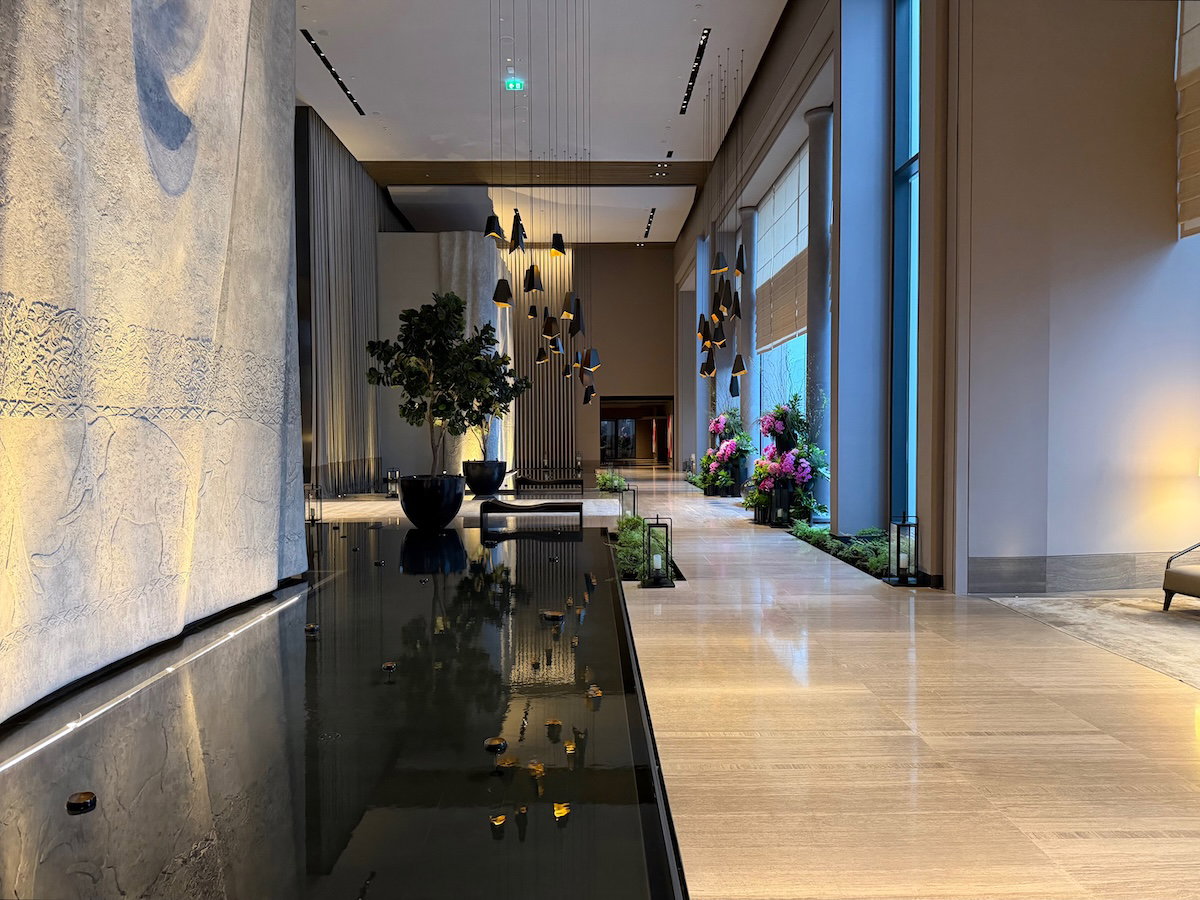
Bottom line
Hotel brands have become so incredibly inconsistent over the years. The irony is that hotel companies have created so many more brands, so you’d think it would be easier to pick the right branding for a hotel. But it almost feels like the more brands there are, the less consistency there even is within each brand.
A brand all about remote locations? Stick it in the middle of one of the world’s biggest cities! A brand about being in the heart of the action? Put it next to a suburban Walmart and fields. That’s just how things go nowadays…
What do you make of the trend we’ve seen with hotel brand dilution?




What is equally confusing is figuring out which hotel brand actually gives you breakfast or not. That is frustrating.
Delta? You mean like the faucet? Oh, the Marriott brand of hotels? Airline? What? Never heard of it… /s
As David Rose put it, "I like the wine, not the label".
End of the day, a hotel is either a nice, well maintained property or it's not. It either provides good value for money at its price point, or it does not. They can slap whatever brand they want on the outside, whatever. Maybe the consistency makes a difference to the 100+ night a year road warrior, but in general, the idea of loyalty to a hotel brand never made much sense to me.
You're missing the point. It's not loyalty so much as expectations. Admittedly this matters less in the internet review age, but part of the appeal of a Hampton Inn (which actually has largely maintained its standards) is you know what you're going to get
"It's not loyalty so much as expectations."
Nailed it.
Names of brands set expectations. Simple concept but carried out horribly by Marriott.
I donno, James. It’s not a Big Mac. I think Peter both ‘got the point,’ and also added more points… I’ve stayed at plenty of Hampton Inns, but can’t tell you that much unique about it. DoubleTrees? Cookies. Ok. Got me there.
Peninsula, Airelles and Belmond own much of the real estate for their hotels, which explains a lot (although LVMH can't figure out what it is doing with Belmond).
Hotel companies that trade publicly (Marriott, Hilton, IHG, Accor) also face significant market pressures to demonstrate constant growth at the expense of a sustainable, long-term business. That element is not unique to the hotel business. It plagues businesses such as fashion, where the pressure for growth ultimately...
Peninsula, Airelles and Belmond own much of the real estate for their hotels, which explains a lot (although LVMH can't figure out what it is doing with Belmond).
Hotel companies that trade publicly (Marriott, Hilton, IHG, Accor) also face significant market pressures to demonstrate constant growth at the expense of a sustainable, long-term business. That element is not unique to the hotel business. It plagues businesses such as fashion, where the pressure for growth ultimately erodes craftsmanship and exclusivity.
I am most depressed by what's going on with Four Seasons and Rosewood, each of which has a single brand that has suffered greatly with massive over-expansion. I haven't given up on Aman yet (having had extraordinary recent stays at Amanzoe and Amanruya, with Aman Sveti Stefan booked for next month), although its new city hotels do not interest me at all.
All of this makes me appreciate independent hotels whose business is really hospitality.
You are absolutely correct about this. This was for example sooo true for DoubleTree Hotels in Germany, there where three (now two) and they varied so widely that it was unbelievable. The one in Hannover has a good soft product, location & mostly hard product but the bathrooms are straight out of the 1960s. The one in Berlin is great, they have the best executive lounge in germany (yes Ive been to the Conrad in...
You are absolutely correct about this. This was for example sooo true for DoubleTree Hotels in Germany, there where three (now two) and they varied so widely that it was unbelievable. The one in Hannover has a good soft product, location & mostly hard product but the bathrooms are straight out of the 1960s. The one in Berlin is great, they have the best executive lounge in germany (yes Ive been to the Conrad in Hamburg) offering full meals in the evening, a great hard product and a somewhat varying soft product (but I blame that on Berlin). The one in Frankfurt was an absolute desaster, there I was downgraded twice, only one of two elevators worked for years, air conditioning was regularly broken and most staff was untrained and at times cheeky.
The real problem is franchising, which is the real driver for hotel profits. But the hotel franchisor often doesn't have control over these franchisees, so they cheap out.
The franchisor absolutely *can* have control over the franchisee, they just realize that the franchisee is the one paying the bills at the brand, which is what is making it difficult. I don't know how to change that as long as the largest brands are asset-light (and especially in business hotels where you need a critical mass to get any real "loyalty"), but that is the reality of the hospitality world today.