Tough Question: What Is A Five Star Hotel, Really?

We see a lot of marketing used in the hotel industry, and increasingly, it all feels like it means very little. This is largely due to the continued relaxing of brand standards that we’re seeing, as the major hotel groups want to grow at all costs. For example, you have limited service hotels that are actually pretty full service, and you have hotels that market themselves as boutique, while having hundreds of rooms.

In this post, I thought it would be interesting to discuss the marketing around five star hotels. What is a five star hotel, actually, and how does it differ from a luxury hotel?
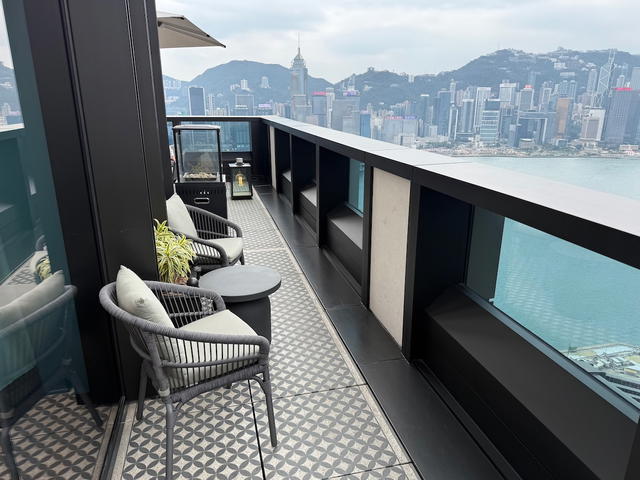
Hotel star ratings are mostly baloney

Admittedly there’s no right or wrong answer as to what constitutes a five star hotel, because we don’t all have the same agreed upon metrics for what makes a hotel great. Sure, you have organizations like Forbes and AAA that might give hotels five stars, but at times they use some odd metrics to decide on these ratings (like whether there’s a phone next to the toilet).

Similarly, you have other star ratings out there not based on the absolute quality of a hotel, but rather based on how the hotel compares to expectations. That’s what you’ll find on TripAdvisor, and for that matter, in my reviews that’s how I go about giving star ratings to hotels. When someone on TripAdvisor gives a Ritz-Carlton two stars, it’s not because they’re suggesting it’s equivalent to a Motel 6, but rather because it didn’t meet their expectations.

There are many ways to go about rating hotels

If you ask me, hotel star ratings suffer from the same issue as so many other areas of society that we have to rate. For example, if you take an Uber ride, it’s expected that you’ll give the driver five stars. If a driver consistently gets three stars, they’d be fired. Yet to me, three stars would be average, and giving everyone five stars simply for getting you to your destination in one piece defeats the point of having a rating system, and makes it tough to recognize those who go above and beyond.

Hotels have the same problem. In theory hotels can be one to five stars, yet it seems like almost every hotel wants to consider itself four or five stars, which makes it very hard to differentiate between brands. The major hotel groups love to refer to most of their brands as being “luxury,” “upper upscale,” or “upscale,” even for limited service properties. Yes, admittedly a Hyatt Place is more luxurious than a Knights Inn, but is it actually “upscale?”

Given the “star inflation” that we’ve seen over the years, we’ve seen some people refer to the Burj Al Arab in Dubai as being seven stars (many people claim the hotel markets itself that way, but it’s not the case).

Many people call the Burj Al Arab a seven star hotel

The top-heavy star ratings with hotels also make one wonder how exactly various brands can be differentiated on a star basis. Take Marriott, for example. What are the star ratings for your typical Ritz-Carlton, EDITION, JW Marriott, Autograph Collection, Marriott, Courtyard, etc.? My general take is that:

  • Properties like Ritz-Carlton and EDITION are five stars
  • Brands like JW Marriott are “upper upscale,” and are four stars (I’d say 4.5 stars, but that’s not really a thing)
  • Brands like Marriott, Westin, etc., are “upscale,” and are four stars
  • Brands like Aloft and Courtyard are more mid-range properties, and are three stars

Of course the quality of individual properties can vary significantly, but that’s how I view the brands in general. But this also gets at the issue — essentially all hotels belonging to major hotel groups are either three, four, or five stars, leaving little room to differentiate them.

How do I define a five star hotel?

If you ask me, there’s a nuanced difference between a five star hotel and a luxury hotel. By my standard, a five star hotel is one that sort of “checks all the boxes” on paper, but doesn’t necessarily provide a personalized or exceptional experience, which for me, is what defines a hotel as luxury.

For example, I’d say a 300 room Ritz-Carlton might be a five star hotel, but might not be a true luxury hotel. When it comes to five star hotels belonging to the major hotel groups, I’d say that:

  • Hilton has Conrad, LXR, and Waldorf Astoria
  • Hyatt has Alila and Park Hyatt
  • IHG has Regent and Six Senses
  • Marriott has EDITION, Ritz-Carlton, St. Regis, and Luxury Collection

Of course let me acknowledge that there’s huge variance in terms of the quality of hotels within each brand. For example, the Hyatt Regency Tashkent, Uzbekistan, markets itself as a five star hotel. It has historically been the city’s best hotel, and by Tashkent standards, it definitely is five stars. But I think we’d agree that if it were next door to the Four Seasons George V Paris, no one would think the two hotels are comparable.

The Hyatt Regency Tashkent is the city’s best hotel

Conversely, there are some hotels belonging to five star hotel brands that really don’t feel luxurious. Nonetheless I think there are certain amenities, services, and features you expect at a five star hotel, that you don’t get at other hotels.

One minor example that comes to mind is daily turndown service. A vast majority of five star hotel brands offer daily turndown service to all guests, while it’s extremely rare to see that at a four star property. It’s a minor thing I can point to that easily captures the difference.
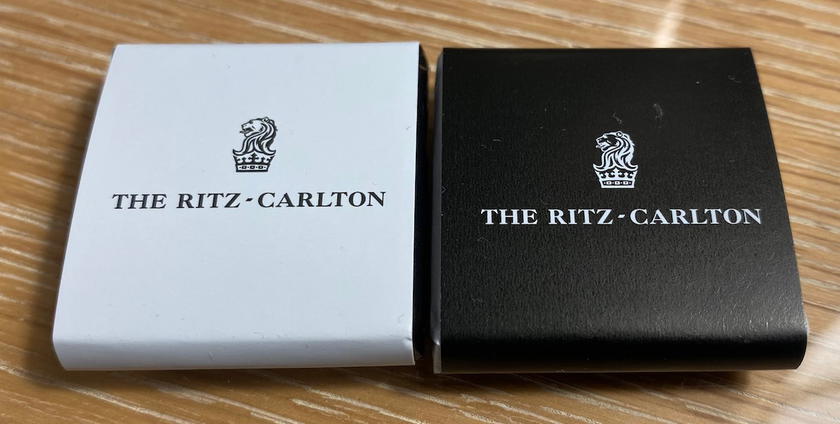
Ah, turndown service chocolates!!

Let me also be clear that five star hotels aren’t necessarily better than non-five star hotels. I’d often rather stay at a 50-room boutique four star hotel than a 400+ room five star hotel. My point isn’t to suggest that luxury hotels are good and all other hotels are bad, but rather to just generally share a framework for how I go about labeling a hotel as being five stars (even if it’s a hotel that doesn’t personally appeal to me).

The Ritz-Carlton Turks & Caicos is five stars, but is it luxury?

Bottom line

There’s no right or wrong answer as to what constitutes a luxury or five star hotel. Personally, I think the major hotel groups take too many liberties with how they market their hotel brands. Suggesting that most brands have four or five stars, and are “luxury” or “upper upscale,” makes it tough to differentiate between them.

If you ask me, each major hotel group has two or three five star brands, with the rest falling somewhere below that. I tend to think that all luxury hotels are five stars, while not all five star hotels are luxury.

With how the hotel industry has evolved, I think the bigger takeaway is that we should just stop caring about star ratings, and instead judge each hotel on its own merit, given the inconsistency within each brand.

I appreciate how France has the “Palace” hotel concept, whereby the country’s top hotels are judged by some pretty consistent standards. It’s a bit more reputable than the “World’s 50 Best Hotels” list.

I’m curious to hear from OMAAT readers — what do you consider to be a five star hotel, four star hotel, etc.?

Conversations (73)
The comments on this page have not been provided, reviewed, approved or otherwise endorsed by any advertiser, and it is not an advertiser's responsibility to ensure posts and/or questions are answered.
Comment as a member

Membership is free and takes no more information than commenting as a guest. Earn status points for good contributions, and see fewer ads as your status grows.

Type your response here.

If you'd like to participate in the discussion, please adhere to our commenting guidelines. Anyone can comment, and your email address will not be published. Register to save your unique username and earn special OMAAT reputation perks!

  1. Loading comments…
Recent Comments
The latest from the OMAAT community.

The comments on this page have not been provided, reviewed, approved or otherwise endorsed by any advertiser, and it is not an advertiser's responsibility to ensure posts and/or questions are answered.

Anthony Guest

There is no five star hotel in our world. There was, and we enjoyed staying in them. Over the years, we have seen them decline. 1. Property - wear and tear 2. Staff - not up to the standard in service, or in knowledge - yes labor shortages, hiring who one can to maintain a staff We prefer an old property that has kept its shine. The hotel is spotlessly clean. Despite the shortage of knowledge on the staff, we can find a few who know the area and what is going on inside the hotel. 5 star is a waste of our funds. Good hotels that keep their shine are worth more than any magazine or agency saying its 5*. For example, the restaurant scandal in France and Paris, buying their stars. That has simmered down now, but the trading for stars didn't stop. Use one's best judgement, never mind the Fake Stars.

0
‼ 0
iamhere Guest

This article is based completely on opinion and does not clearly define the star system. I am not referring to "stars" that people give when reviewing or the stars given from certain organizations. The stars are based on having certain services or not. I think a little research on what those stars actually represent would have made this article stronger. On a side topic is that of various brands having more services in other markets than in the US and/or Europe. Take Four Points or Courtyard in Asia for example.

0
‼ 0
JDM Guest

There is a standard classification scheme in many European countries (24) which has defined characteristics for each category. It is the Hotelstars Union. One star: WLAN internet access in public areas and in the rooms 24-hour availability, digitally or by telephone 8-hour physical availability at the hotel OR 24-hour self-check-in and check-out Restaurant (except for breakfast-only-establishments) Continental breakfast with allergen-friendly products Cashless payment Room Daily room cleaning (cancellation option) Towel change on demand and bed linen change at least once a week All rooms with shower/WC or bathtub/WC and mirror Wash lotion or shower gel AND shampoo, bath towel Blackout facilities 1 seat Table, desk or similar workstation Storage facilities Monitor with TV programme in an appropriate size for the room conditions with remote control Hygiene articles available on demand Additional baby cot on demand International socket adapter, chargers with cable and/or adapter 5 star: 24-hour reception service Bar or lounge area with service (at least 7 days a week) Breakfast buffet with waiter service or equivalent breakfast menu Breakfast menu in room service Restaurant open 7 days a week Minibar and 24-hour food and drinks in room service Valet parking service, concierge, luggage service Ironing, shoe shine and sewing service Shuttle service or limousine service Evening turndown service Room Single beds min. 0.90m mattress width Double beds min. 1.80m mattress width Full blackout option Desk with 0.6m² surface area, lighting & power socket Safe in the room Iron or steamer and ironing board on demand / ironing room Bathrobe and slippers in the room

0
‼ 0
snory Member

Thailand Ministry of Tourism and Sport does have a standard and scoring matrix for 1-5 stars rating based on almost 400 evaluation criteria each with different weighting score. The hotel needs to achieve at least 95% overall score on applicable criteria to be considered passed for each rating. (Different star rating has different applicable evaluating criteria of course) The standard was updated 10 years ago so it might not have included some modern development/norms but I think it is pretty comprehensive including location, lobby, facility, restaurant, room, amenities, service, parking, hallway, and separated criteria for suite-level room and executive floor. Unfortunately, all documents are in Thai. https://www.dot.go.th/storage/06_01_2019/PRuL43DwxIFLPX7MiGGC1o1XuRb1G8PV0a7cSvZR.pdf

0
‼ 0
Throwawayname Guest

As others have said, the star rating classification is based on measurable criteria and applies in a substantial number of jurisdictions, the only problem being that each country (and sometimes even each state/region) will have its own criteria. In some cases, hotels may even be actively avoiding meeting one or two of those criteria in order to dodge the increased cost/bureaucracy that comes with being a 5-star (or whatever) property - e.g. the higher levels of municipal tourism tax on overnight stays. The fact that a hotel meets some criteria doesn't mean that it actually provides a better customer experience - in fact, conference rooms and associated facilities often lift the star rating while degrading the experience for the individual guest. It must be lots of fun checking in behind 50 people who've just arrived on a coach chartered by the 23rd East African Microbiology Convention - if you're really lucky, you might even overhear some exciting conversations about lab analyses of human excrement. Against that backdrop, your subjective classification, or indeed anyone else's, along the lines of 'if it's an Ibis it's 2 stars, but if it's a Mandarin Oriental it's definitely 5' is particularly unhelpful because it further usurps a rating scale which only has any meaning within a tightly-defined context (e.g. after having stayed in maybe 60 different hotels in various parts Spain, I have a reasonable idea of what to expect when I see the plaque by the main entrance denoting the star rating). I suggest that you stick to your personal review ratings which, quite appropriately, do not seem to be an attempt to classify/'define' the hotels in question.

0
‼ 0

Save posts to read later

Saving posts is a member feature. Become an OMAAT member to build a reading list you can come back to from any device.

Become a member
Meet Ben Schlappig, OMAAT Founder
5,883,136 Miles Traveled

43,914,800 Words Written

47,187 Posts Published