Human Error Blamed For Pakistan Plane Crash

On May 22 a Pakistan International Airlines Airbus A320 crashed on approach to Karachi, killing 97 people. While there were some theories as to what happened, it typically takes a while for investigations to be completed, to determine with any certainty what really happened.

An investigation into the crash of PIA 8303 has been conducted for the past several weeks, and today Pakistan’s Federal Minister for Aviation, Ghulam Sarwar Khan, has revealed the interim findings of the investigation in a presentation to Parliament. Unfortunately this is getting quite political, and the findings are being disputed.
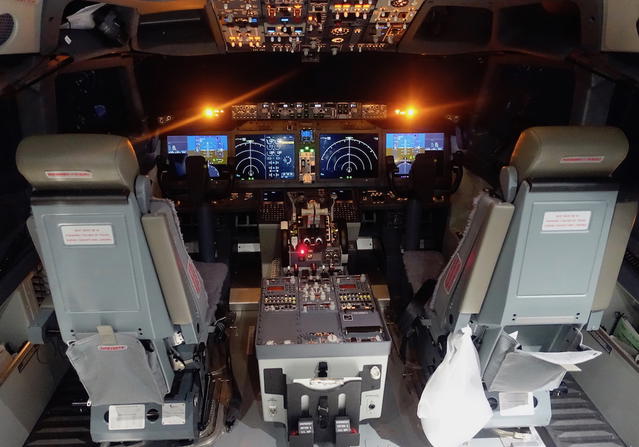
Pilots & ATC blamed for PIA crash

The PIA A320 crash is being blamed entirely on human error, with no technical aircraft faults having been found. According to the report, both pilots and air traffic controllers didn’t follow proper protocols, though a majority of the blame is being placed on pilots. According to the report:

  • The pilots exhibited “overconfidence and lack of concentration”
  • The pilots “ignored instructions of the air traffic controllers”
  • The air traffic controllers “did not inform the pilots about the engine colliding”
  • The pilots weren’t focused, as the black box reveals that “the pilots were discussing corona throughout the flight, they were not focused, they talked about corona and how their families were affected”
  • The pilots approached the airport three times as high as they should have, and ignored flight deck alarms
  • The pilots lowered the landing gear 10 miles before landing, then inexplicably raised it again about five miles before landing; the air traffic controllers told the pilots to abort their landing, but the pilots insisted on continuing
  • The engines dragged along the runway for several thousand feet, and then the plane lost engine power while climbing again
  • The last words from the pilots were “oh God, oh God, oh God”

These findings are more or less in line with what was initially believed based on flight data and ATC audio, so for many this won’t come as a surprise.

40% of PIA pilots have fake licenses

During the same presentation it was revealed that 40% of pilots at PIA were flying aircraft with fake licenses. These pilots weren’t given the exams themselves and didn’t have the proper flying experience.

As Pakistan’s Minister for Aviation explained, “pilots are also appointed on a political basis, unfortunately. Whilst appointing pilots, merit is ignored.”

The problem is that claims like this have literally been made for years. And if you’re the Minister for Aviation, shouldn’t it kind of be your job to make sure that doesn’t happen? According to the Minister for Aviation, now the government plans to “restructure” PIA and return it to it’s “days of glory.” Yeah, I’m sure it’ll happen this time around…

There’s controversy surrounding the findings

Bilawal Bhutto Zardari, Chairman of Pakistan’s Peoples Party, argues that pilots are being turned into scapegoats here, and that the Minister for Aviation should accept blame for the crash:

“Imran Khan used to say if there’s train crash the railway minister should be sacked; if there’s a plane crash the aviation minister should be sacked.

Now he blames the pilot and air traffic control for the PIA crash. Victim blaming and scapegoatism must end. We demand an independent inquiry. The minister must go.”

Meanwhile the Pakistan Air Lines Pilots Association (PALPA) is also disputing these findings, arguing that none of the four members of the Pakistani Air Accident Investigation Board were rated to fly the Airbus A320. A spokesperson said:

“We have no clue about it, we have not even seen the report. We have not at all been included in this, not even as a silent observer. None of [the investigators] are rated on this plane or know this plane.”

On the one hand, you’d think a pilot rated on the type of plane that crashed would be involved in the investigation. Furthermore, it’s ridiculous that apparently so many PIA pilots don’t have proper licenses.

On the other hand, it might be a bit of a stretch to suggest that a Minister for Aviation should be blamed if a plane crashes, while pilots are being turned into “scapegoats,” even if it’s pilot error.

Bottom line

It’s so tragic that nearly 100 people lost their lives in a PIA plane crash last month, which is the deadliest crash in the country in almost a decade. A preliminary report puts the blame squarely on human error, with the pilots being most at fault.

However, this is being disputed, with both the opposition party and pilots union suggesting the investigation wasn’t fair.

(Featured image courtesy of Anna Zvereva)

Conversations (23)
The comments on this page have not been provided, reviewed, approved or otherwise endorsed by any advertiser, and it is not an advertiser's responsibility to ensure posts and/or questions are answered.
Comment as a member

Membership is free and takes no more information than commenting as a guest. Earn status points for good contributions, and see fewer ads as your status grows.

Type your response here.

If you'd like to participate in the discussion, please adhere to our commenting guidelines. Anyone can comment, and your email address will not be published. Register to save your unique username and earn special OMAAT reputation perks!

  1. Loading comments…
Recent Comments
The latest from the OMAAT community.

The comments on this page have not been provided, reviewed, approved or otherwise endorsed by any advertiser, and it is not an advertiser's responsibility to ensure posts and/or questions are answered.

jetjock64 New Member

Ole and bruh, you don't know what you're talking about. Ole, it's perfectly legitimate in the accident investigation business to assess fault (you call it "blame"), especially human error, where it is identified as a cause. Placing fault (or "blame" as you put it) is one of the main ways that fixes are put in place--to help prevent future accidents. bruh, you're wrong in saying the ATC guy made a mistake; he did not. In fact the controller did everything he possibly could, except climb into the cockpit, to keep the plane safe, but his efforts were overcome by gross pilot incompetence. The accident had nothing to do with any lack of decorum as you put it but lack of skill and professionalism in conducting the approach. A corrupt and incompetent aviation ministry and government doesn't help either.

0
‼ 0
Wilhelm Guest

Unfortunately, in many countries nepotism and corruption are so endemic that it can cost lives. While I can’t verify that 40% of Pakistani pilots licences are fake it would not surprise me. There is a significant Pakistani diaspora in my country, and they are indeed over represented in a variety of financial crimes. This includes, but is not limited to tax fraud, fake employment contracts to circumvent min salary requirements for non-EU labour and working despite being on disability benefits. The vast majority of the Pakistani diaspora here are honest, decent people, but coming from a country with such a culture does show in the statistics.

0
‼ 0
Nick W Guest

"On the one hand, you’d think a pilot rated on the type of plane that crashed would be involved in the investigation." That bit is completely misleading and you should remove it. The original investigating board of four from the AAIB didn't include any A320 pilots, but co-opted an additional eight including two A320 pilots and an A320 engineer for the purposes of the investigation; plus additional technical cooperation from Airbus.

0
‼ 0
David Guest

Some on here spending too much time watching the chattering skulls on cable tv. Is it possible for you to have a discussion about something without Trump popping into your head? Geez broaden your mind a little

0
‼ 0
Garry Margolis New Member

Many years ago, when I was an inexperienced international traveler on my first solo European lecture tour, I scheduled myself on PIA from Paris to Frankfurt because it departed mid-morning, unlike the LH and AF flights that were either early morning or evening. The DC-10 flew from New York overnight and then, after the Paris-Frankfurt leg, continued to Cairo, Khartoum, and Karachi. After I boarded, the sari-clad flight attendant seemed somewhat groggy — she had apparently worked the first leg from New York. She handed out orange juice boxes, but then took them away from the through passengers because they had already been fed breakfast. After we landed in Frankfurt, the aircraft continued to Cairo, Khartoum, and Karachi... with my luggage onboard! The PIA baggage rep told me they would send it to me, and I gave him my multi-stop itinerary. I argued him out of payment to cover toiletries and underwear. Of course, being inexperienced, my lecture slides and notes were in my luggage, so I had to make my subsequent presentations off the top of my head. My next stop was in Barcelona. I called PIA from there and was told the bag would be sent to my stop in Brussels and would be delivered to my hotel. That was seven days after it had gone on vacation to Pakistan. I arrived in Brussels, went to my hotel, and, of course, the bag wasn't there. I had to go back to the airport to claim it. Fortunately, nothing was missing. I vowed never to fly PIA again. In those days, one couldn't always fly from Point A to Point B every day, particularly in Asia and the South Pacific, so we became adept at studying the Official Airline Guide and planning our itineraries. Several years later, without asking me, my company's travel agent changed my Beijing-Tokyo flight reservation from JAL to PIA, which I discovered the day before I left when the ticket was delivered to me. I canceled the ticket, rebooked with my own agent, and told my company to fire me if that wasn't acceptable. I made enough of a stink that they changed their policy and allowed international travelers to book their own flights with their own agents.

0
‼ 0

Save posts to read later

Saving posts is a member feature. Become an OMAAT member to build a reading list you can come back to from any device.

Become a member
Meet Ben Schlappig, OMAAT Founder
5,883,136 Miles Traveled

43,914,800 Words Written

47,187 Posts Published