
There are lots of great business credit cards, but I’d argue that the portfolio of Chase Ink Business credit cards are among the best out there. They have just about everything I look for in credit cards — great welcome offers, big category bonuses, and useful perks.
In this post, I’d like to specifically focus on the exceptional rental car coverage offered by these cards. Rental car coverage can be a valuable credit card perk, but it’s typically associated with premium cards. What’s so great here is that even the no annual fee cards in this lineup offer such coverage.

Before we get into that, let’s briefly talk about what makes Chase Ink Business credit cards so great in general.
Link: Learn more about the Ink Business Preferred® Credit Card, Ink Business Cash® Credit Card, or Ink Business Unlimited® Credit Card
Why Chase Ink Business cards are awesome
There are three Chase Ink Business credit cards that earn travel rewards, and they’re all incredibly lucrative. What’s most noteworthy is that they’re excellent complements to one another, rather than substitutes.
The Ink Business Preferred® Credit Card (learn more) has a $95 annual fee, which is reasonable for a well-rounded business card. There are lots of reasons to get the Ink Business Preferred, including a massive welcome bonus, up to 3x points in select categories (for up to $150,000 of combined purchases per cardmember year), cell phone protection, and full access to Chase Ultimate Rewards points.
Both the Ink Business Cash® Credit Card (learn more) and Ink Business Unlimited® Credit Card (learn more) have no annual fee, and offer huge welcome bonuses. The Ink Business Cash is worth getting because it offers up to 5x points in select categories (on the first $25,000 per cardmember year), while the Ink Business Unlimited is worth getting because it offers 1.5x points on all business purchases, making it a great card for everyday spending.
It’s hard to beat the value offered by these cards, so if you’re not yet in the Chase Ink Business credit card ecosystem (and are eligible), there’s no reason not to be.
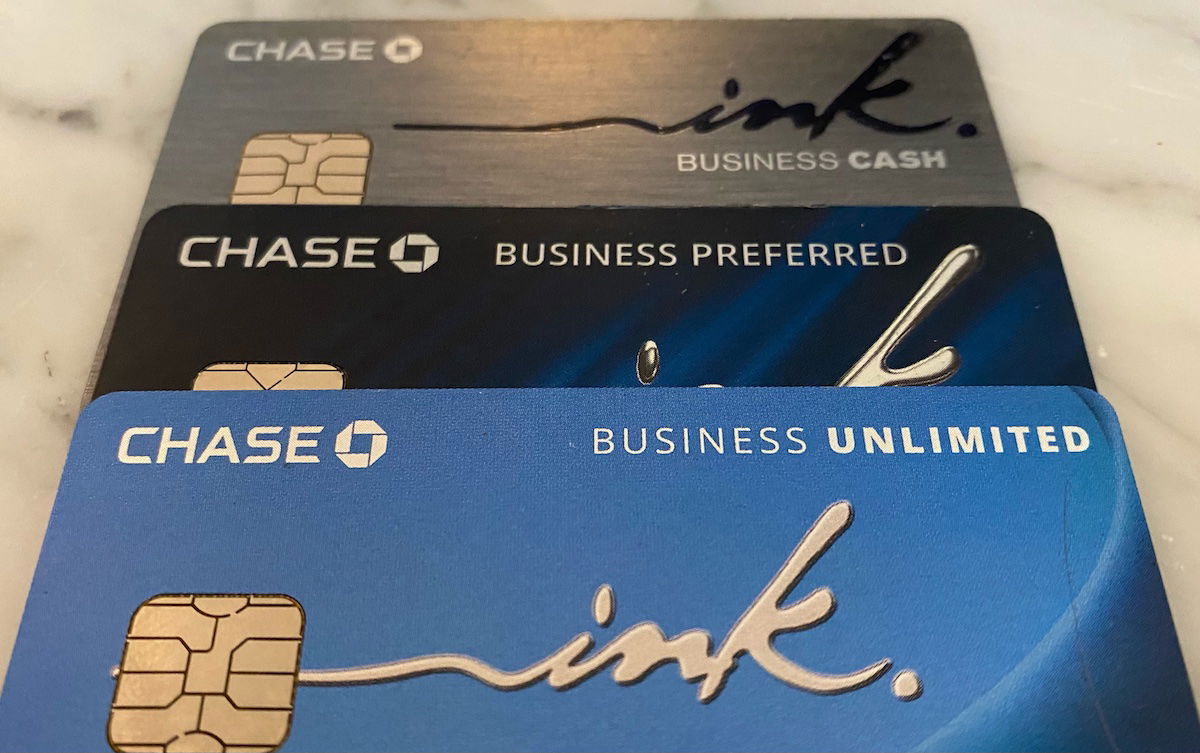
Chase Ink Business card rental car coverage details
In this post, I’d like to focus on one of the most useful perks offered by all three of these cards, as it’s rare to get this kind of benefit on no annual fee cards.
One common credit card benefit that people look for is auto rental CDW (collision damage waiver). What’s pretty remarkable is that the Ink Business Preferred Card, Ink Business Cash Card, and Ink Business Unlimited Card, all offer primary rental car coverage.
Getting this level of coverage from a no annual fee card is rare, so I think the Ink Business Cash Card and Ink Business Unlimited Card are excellent options for anyone who wants a no annual fee business card that offers solid rental car coverage. My preference would still be to use the Ink Business Preferred, since it offers up to 3x points on travel spending, and a rental car would qualify as that.
It’s worth understanding that a collision damage waiver benefit is different from rental car insurance. A collision damage waiver policy provides reimbursement for damages due to collision or theft, up to the actual cash value of most rental vehicles.
This includes physical damage and/or theft of covered rental vehicles, loss-of-use charges assessed by the rental company while the damaged vehicle is being repaired, and reasonable towing charges related to a covered loss.
This policy doesn’t cover any injuries or damage to other cars, so this isn’t the same thing as having a rental car insurance policy (which is something that virtually no card offers).

Chase Ink cards offer primary rental car coverage
The Chase Ink cards offer primary rental car coverage when renting for business purposes, which means you don’t have to file a claim with any other source of insurance before you can receive coverage under this benefit. Furthermore, the cards also offer primary coverage if renting outside your country of residence for personal reasons, or if you don’t have automobile insurance.
The only time that coverage would be secondary is if you’re renting in your country of residence for personal reasons and have automobile insurance, in which case the coverage only supplements insurance or reimbursement from any other sources.
Chase Ink card rental car coverage eligibility
In order to be eligible for the Chase Ink rental car benefit, you need to initiate and complete the entire rental transaction using your card that is eligible for the benefit, and you need to decline the rental company’s collision damage waiver or similar provision. If you were to accept the waiver offered by the rental company, you would not be eligible for this benefit.
It’s also worth emphasizing once again that in order to get primary coverage you need to either be renting for business reasons (anywhere globally), or renting outside your country of residence for personal reasons, or not have automobile insurance.
It’s fine if you redeem Chase Ultimate Rewards points for your rental through Chase Travel℠, as long as you charge any remaining cash portion (such as taxes or fees) to your eligible card.

When & where Chase Ink card rental car coverage applies
Cardmembers who are also the primary person listed on the rental agreement are entitled to this benefit, along with any additional drivers permitted to drive, according to the rental agreement.
The benefits are only valid for rentals of up to 31 days, and certain types of cars are excluded, including expensive, exotic, and antique automobiles, certain vans, vehicles that have an open cargo bed, trucks, motorcycles, mopeds, motorbikes, limousines, and recreational vehicles.
Let me also emphasize that this coverage only applies if renting from a rental car agency, so it wouldn’t apply for a car sharing service, like Turo.
How to file a Chase Ink card rental car coverage claim
After an incident has occurred, you’ll want to contact the benefits administrator, which you can do by dialing the number on the back of your card, and they can connect you.
Incidents should be reported as soon as possible, though must be reported no later than 60 days following the date of the incident. You’ll then have to submit the following paperwork:
- The completed and signed auto rental collision damage waiver claim form, which must be postmarked within 100 days of the incident
- A copy of your receipt or monthly billing statement showing that the entire vehicle rental was charged to and paid for with your eligible card
- A written confirmation from your employer that the rental was primarily for business purposes
- If the rental was for personal use, a statement from your insurance carrier showing the costs for which you are responsible and any amounts that have been paid toward the claim (if you have no applicable insurance, provide a notarized statement to that effect)
- A copy of the declaration page from your primary automobile insurance carrier if the rental was for personal use
Also, enclose all the documents you received from the rental car company. You should ask the rental company for these documents immediately at the time of the theft or damage or when you return the vehicle to the company:
- A copy of the accident report form and claim document (this should indicate the costs you are responsible for and any amounts that have been paid toward the claim)
- A copy of the entire auto rental agreement
- A copy of the repair estimate or itemized repair bill
- Two photographs of the damaged vehicle, if available
- A police report, if obtainable
Once the documents are submitted, you’ll typically be paid within 15 days.

Bottom line
The rental car coverage offered by the Ink Business Preferred Card, Ink Business Cash Card, and Ink Business Unlimited Card, is among the best you’ll find on any business credit card. It’s especially noteworthy on the two no annual fee cards, since it’s rare you see such a benefit on a no annual fee card. Best of all, this benefit doesn’t just cover business rentals, but also covers personal rentals when outside your country of residence.
You’ll want to consult your cardmember agreement if you’re thinking of using this benefit, so you can be sure you know every little detail, and also since these benefits are always subject to change. This is one of those benefits you’ll hopefully never need, but if you do, it’ll sure come in handy.
Have you ever used a credit card’s rental car coverage? If so, what was your experience like?




Very thorough article, but I think you missed one important detail. For any cardholders who live in New York State, coverage is always secondary. Never primary. That's how it is for the personal Chase cards like the Sapphire Reserve at least. And I suspect that applies to their business cards too. If I'm mistaken about this, please let me know.
That’s only partly correct (Per ChatGPT):
"The New York limitation applies to Chase consumer-card rentals within the U.S.; Sapphire coverage remains primary abroad. More importantly here, Ink business-card coverage remains primary for qualifying business rentals—even for New York residents. A personal U.S. rental on an Ink is secondary, but that’s generally true nationwide.
For a New York resident:
Chase Sapphire personal cards: coverage is generally secondary for rentals within the United States if you...
That’s only partly correct (Per ChatGPT):
"The New York limitation applies to Chase consumer-card rentals within the U.S.; Sapphire coverage remains primary abroad. More importantly here, Ink business-card coverage remains primary for qualifying business rentals—even for New York residents. A personal U.S. rental on an Ink is secondary, but that’s generally true nationwide.
For a New York resident:
Chase Sapphire personal cards: coverage is generally secondary for rentals within the United States if you have personal auto insurance. This New York-specific limitation was added to Chase consumer cards in 2024.
Rentals outside the United States: coverage remains primary, even for New York residents.
Chase Ink business cards, business-purpose rental: coverage is primary in the U.S. and abroad, including for New York residents. Chase explicitly advertises Ink coverage as primary when renting for business purposes. (Chase Ink Preferred)
Chase Ink card, personal rental within the U.S.: secondary if you have personal auto insurance—but that’s generally true for Ink cardholders nationwide, not uniquely New Yorkers.
If you have no applicable personal auto insurance: the card benefit can effectively become primary."