United MileagePlus is one of the most useful frequent flyer programs for US-based travelers. As a Star Alliance member, United miles can be redeemed on over two dozen partner airlines for routes across every major region in the world. United’s own metal covers an enormous domestic and international network, and its Polaris business class product is genuinely competitive on long-haul routes. For anyone who flies United with any regularity, or who wants to use Star Alliance for international premium cabin travel, building a MileagePlus balance is worth the effort.
There are two distinct paths to earning United miles with credit cards. The first is the co-branded United card portfolio, issued by Chase, which ranges from the no-fee Gateway Card all the way to the $695 Club Card. Each tier offers a different mix of perks, and for many United flyers, the co-branded cards deliver benefits like free checked bags, priority boarding, and lounge access that a transferable points card simply cannot replicate. The second path is earning transferable points and converting them to MileagePlus, which often delivers a better per-dollar earn rate for non-United spending.
This post covers the full United co-branded card lineup first, including which card makes the most sense at each price point, and then covers the best non-co-branded alternatives for those who want to build a United balance through transferable points. The right answer for most serious United flyers is some combination of both.
Compare credit cards for United

Chase Sapphire Reserve®
Earn 100,000 bonus points
- 4x points on flights and hotels booked direct
- 3x points on Dining
- $300 Annual Travel Credit
Earn 8x points on all purchases through Chase Travel℠, including The Edit℠ and 4x points on flights and hotels booked direct. Plus, earn 3x points on dining worldwide & 1x points on all other purchases
- Earn 100,000 bonus points after you spend $6,000 on purchases in the first 3 months from account opening.
- Get $3,000 in annual value with Sapphire Reserve.
- Earn 8x points on all purchases through Chase Travel℠, including The Edit℠ and 4x points on flights and hotels booked direct. Plus, earn 3x points on dining worldwide & 1x points on all other purchases
- $300 annual travel credit as reimbursement for travel purchases charged to your card each account anniversary year.
- Access over 1,300 airport lounges worldwide with a complimentary Priority Pass™ Select membership, plus every Chase Sapphire Lounge® by The Club with two guests. Plus, up to $120 towards Global Entry, NEXUS, or TSA PreCheck® every 4 years
- Get up to $150 in statement credits every six months for a maximum of $300 annually for dining at restaurants that are part of Sapphire Reserve Exclusive Tables.
- Count on Trip Cancellation/Interruption Insurance, Auto Rental Coverage, Lost Luggage Insurance, no foreign transaction fees, and more.
- Get complimentary subscriptions to Apple TV and Apple Music for a minimum of one year when activated by June 22, 2027, a value of $288 annually.
- Member FDIC
Earn 100,000 bonus points after you spend $6,000 on purchases in the first 3 months from account opening.

Chase Sapphire Preferred® Card
Earn 75,000 bonus points
- 5x total points on travel purchased through Chase Travel℠
- 3x points on dining
- 2x points on travel purchases
- 5x on travel purchased through Chase Travel℠
- 3x on dining
- 3x on vacation homes
- 3x on gas & EV charging
- 3x on top streaming services
- 3x on online groceries (excluding Walmart, Target, and wholesale clubs)
- 2x on all other travel purchases
- 1x on all other purchases
- Earn 75,000 bonus points after you spend $5,000 on purchases in the first 3 months from account opening.
- Enjoy benefits such as 5x on travel purchased through Chase Travel℠, 3x on dining, 3x on vacation homes, 3x on gas & EV charging, 3x on top streaming services and online groceries (excluding Walmart, Target, and wholesale clubs), 2x on all other travel purchases, 1x on all other purchases
- Earn up to $100 in statement credits each account anniversary year for hotel stays through Chase Travel
- Count on Trip Cancellation/Interruption Insurance, Auto Rental Collision Damage Waiver, Emergency Evacuation and Transportation and more
- Get a year of complimentary Apple TV when activated by December 31, 2026 - a value of $156.
- Complimentary DashPass which unlocks $0 delivery fees & lower service fees for 12 months when you activate by 12/31/27. Plus, a $10 promo each month on non-restaurant orders.
- Receive one statement credit of up to $120 every four years as reimbursement for the application fee charged to your card for a Global Entry, TSA Precheck® or NEXUS application.
- Transfer points to leading airline and hotel loyalty programs
- Member FDIC
Earn 75,000 bonus points after you spend $5,000 on purchases in the first 3 months from account opening.

United℠ Business Card
Earn up to 100,000 bonus miles and 2,000 PQP
- Earn 8x total miles on eligible United flights
- Annual Travel Credit
- Anniversary Bonus Miles
8x total miles on eligible United flights.
2x miles on all other eligible United® purchases. 2x miles on dining including eligible delivery services, at gas stations, office supply stores, and on local transit and commuting.
Learn more from these OMAAT posts:
- Earn up to 100,000 bonus miles and 2,000 PQP after you spend $5,000 on purchases in the first 3 months your account is open.
- $150 Annual Fee.
- 8x total miles on eligible United flights.
- 2x miles on all other eligible United® purchases. 2x miles on dining including eligible delivery services, at gas stations, office supply stores, and on local transit and commuting.
- 1x mile on all other purchases. Plus, employee cards at no additional cost - miles earned from their purchases accrue in your account so you can earn rewards faster.
- Receive a 5,000-mile "better together" bonus each anniversary when you have both the United℠ Business Card and a personal Chase United® credit card.
- Enjoy a free first checked bag - a savings of up to $200 per roundtrip (terms apply), 2 United Club℠ one-time passes per year, and priority boarding privileges.
- Save 10% or more when booking flights with miles. Premier members save even more.
- Member FDIC
Earn up to 100,000 bonus miles and 2,000 PQP after you spend $5,000 on purchases in the first 3 months your account is open.
United Club℠ Card
Earn up to 100,000 bonus miles
- Earn 11x total miles on eligible United flights
- United Club℠ Access
- Earn PQPs Towards Status
11x total miles on eligible United flights and 5x miles on all other eligible United® purchases.
2x miles on dining and all other travel.
1x mile on all other purchases.
Learn more from these OMAAT posts:
- Earn up to 100,000 bonus miles
- 11x total miles on eligible United flights and 5x miles on all other eligible United® purchases
- 2x miles on dining and all other travel
- 1x mile on all other purchases
- Unlimited United Club℠ access for you and a guest - a $750+ value per year
- Free first and second checked bags - a savings of up to $440 per roundtrip (terms apply) - and Premier Access® travel services.
- Earn up to 20,000-miles in award flight discounts annually
- Save 10% or more when booking flights with miles. Premier members save even more.
- Member FDIC
Earn up to 100,000 bonus miles
Earn 90,000 bonus miles after you spend $5,000 on purchases in the first 3 months from account opening.
Earn an additional 10,000 bonus miles when you add an authorized user within the first 3 months your account is open.

United Quest℠ Card
Earn up to 90,000 bonus miles + 500 PQP
- 10x total miles on eligible United flights
- 2x miles on dining
- Free first and second checked bags
NEW! 10x total miles on eligible United flights and 4x miles on all other eligible United® purchases
1x mile on all other purchases
Learn more from these OMAAT posts:
- Earn up to 90,000 bonus miles after qualifying activities and 500 PQP after first purchase
- 10x total miles on eligible United flights and 4x miles on all other eligible United® purchases
- 2x miles on dining, select streaming services, and all other travel
- 1x mile on all other purchases
- Get a jump start on earning Premier status with 1,000 Card Bonus PQP each year, awarded within 8 weeks of February 1, starting in the calendar year following your account open date.
- Free first and second checked bags--a savings of up to $440 per roundtrip (terms apply)
- Receive a $200 United® travel credit and 10,000-mile award flight discount on each account anniversary
- Save 10% or more when booking flights with miles. Premier members save even more.
- Member FDIC
Earn up to 90,000 bonus miles and 500 PQP
Earn 500 Premier qualifying points after your first purchase and 80,000 bonus miles and after you spend $4,000 on purchases in the first 3 months your account is open.
Plus 10,000 bonus miles when you add an authorized user in the first 3 months your account is open.

United℠ Explorer Card
Earn up to 80,000 bonus miles
- Earn 9x total miles on eligible United flights
- First Free Checked Bag
- Two United Club Passes Annually
9x total miles on eligible United flights and 3x miles on all other eligible United® purchases.
2x miles on dining, and hotel stays when booked with the hotel.
1x mile on all other purchases
Learn more from these OMAAT posts:
- Earn up to 80,000 bonus miles
- $0 introductory annual fee for the first year, then $150
- 9x total miles on eligible United flights and 3x miles on all other eligible United® purchases.
- 2x miles on dining and hotel stays when booked with the hotel. 1x mile on all other purchases.
- Free first checked bag - a savings of up to $200 per roundtrip. Terms Apply. Plus, Group 2 priority boarding on United® flights.
- 2 United Club one-time passes per year - over a $100 value
- Over $500 in partner credits each year
- Save 10% or more when booking flights with miles. Premier members save even more.
- Member FDIC
Earn up to 80,000 bonus miles
Earn 70,000 bonus miles after you spend $3,000 on purchases in the first 3 months your account is open.
Earn an additional 10,000 bonus miles when you add an authorized user within the first 3 months your account is open.

United Gateway℠ Card
Earn up to 50,00 bonus miles
- 5x total miles on eligible United flights
- Earn 2x MileagePlus miles on gas station purchases
- No Foreign Transaction Fees
5x total miles on eligible United flights and 2x miles on all other eligible United® purchases
2x miles at gas stations, on local transit and commuting
1x mile on all other purchases
Learn more from these OMAAT posts:
- Earn up to 50,000 bonus miles
- 0% intro APR for the first 12 months from account opening on purchases & no annual fee.
- 5x total miles on eligible United flights and 2x miles on all other eligible United® purchases
- 2x miles at gas stations, on local transit and commuting
- 1x mile on all other purchases
- 25% back as a statement credit on purchases of food, beverages and Wi-Fi on board United-operated flights and on Club premium drinks when you pay with your Gateway Card
- Earn 2 first standard checked bags after you spend $10,000 in a calendar year
- Save 10% or more on flights booked with miles after spending $10,000 in a calendar year
- Member FDIC
Earn up to 50,000 bonus miles
Earn 40,000 bonus miles after you spend $1,000 on purchases in the first 3 months your account is open. Plus, 0% intro APR for 12 months from account opening on purchases. Learn more.
Earn an additional 10,000 bonus miles when you add an authorized user within the first 3 months your account is open.

Bilt Palladium Card
50,000 Bilt Points + Gold Status offer
- 2X points on everyday purchases
- Earn up to 1.25X points on rent and mortgage payments
- $400 Bilt Travel Hotel credit
Earn up to 1.25X points on rent and mortgage payments with no transaction fee, and 2X points on everyday spend.
Learn more from these OMAAT posts:
- Earn up to 1.25X points on rent and mortgage payments with no transaction fee.
- 2X points on everyday spend
- $400 Bilt Travel Hotel credit. Applied twice a year, as $200 statement credits, for qualifying Bilt Travel Portal hotel bookings.
- $200 Bilt Cash (awarded annually). At the end of each calendar year, any Bilt Cash balance over $100 will expire.
- Welcome bonus (subject to approval): 50,000 Bilt Points + Gold Status after spending $4,000 on everyday purchases in the first 90 days + $300 of Bilt Cash.
- Priority Pass ($469/year value). See Guide to Benefits.
- Bilt Point redemptions include airlines, hotels, future rent and mortgage payments, Lyft rides, statement credits, student loan balances, a down payment on a home, and more.
- Earn additional points through Bilt Neighborhood Benefits™ when you use your card at Bilt's network of 50,000+ merchant partners.
Welcome bonus (subject to approval): 50,000 Bilt Points + Gold Status after spending $4,000 on everyday purchases in the first 90 days + $300 of Bilt Cash. Up to $100 of Bilt Cash earned rolls over to the next year.

Bilt Blue Card
$100 of Bilt Cash offer
- Earn up to 1.25X points on rent and mortgage payments
- No Annual Fee
- No Foreign Transaction Fees
Earn up to 1.25 points on rent and mortgage payments with no transaction fee, and 1 point on everyday spend.
Learn more from these OMAAT posts:
- Earn up to 1.25X points on rent and mortgage payments with no transaction fee.
- 1X points on everyday spend.
- Welcome offer: $100 of Bilt Cash when you apply and get approved. At the end of each calendar year, any Bilt Cash balance over $100 will expire.
- Bilt Point redemptions include airlines, hotels, future rent and mortgage payments, Lyft rides, statement credits, student loan balances, a down payment on a home, and more.
- Earn additional points through Bilt Neighborhood Benefits™ when you use your card at Bilt's network of 50,000+ merchant partners.
- Other benefits: No foreign transaction fees, Cellular Wireless Telephone Protection, Purchase Assurance, MasterRental Coverage (See Guide to Benefits)
Welcome offer: $100 of Bilt Cash when you apply and get approved. At the end of each calendar year, any Bilt Cash balance over $100 will expire.

Bilt Obsidian Card
Earn $200 Bilt Cash when you apply and get approved.
- Earn up to 1.25X points on rent and mortgage payments
- 2X points on travel
- No Foreign Transaction Fees
3X points on your choice of grocery (up to $25K/year then 1x) or dining. Your 3X category choice remains in effect for the entire calendar year.
2X points on travel
1X points on everyday spend
Learn more from these OMAAT posts:
- Earn up to 1.25X points on rent and mortgage payments with no transaction fee.
- 3X points on your choice of grocery (up to $25K/year) or dining. Your 3X category choice remains in effect for the entire calendar year.
- 2X points on travel
- 1X points on everyday spend
- Welcome offer: $200 of Bilt Cash when you apply and get approved. At the end of each calendar year, any Bilt Cash balance over $100 will expire.
- $100 Bilt Travel Hotel credit. Applied twice a year, as $50 statement credits, for qualifying Bilt Travel Portal hotel bookings.
- Bilt Point redemptions include airlines, hotels, future rent and mortgage payments, Lyft rides, statement credits, student loan balances, a down payment on a home, and more.
- Earn additional points through Bilt Neighborhood Benefits™ when you use your card at Bilt's network of 50,000+ merchant partners.
Welcome offer: $200 of Bilt Cash when you apply and get approved. At the end of each calendar year, any Bilt Cash balance over $100 will expire.
United credit cards overview
Before getting into the full lineup, here’s the quick comparison:
| Card | Annual fee | Rewards rate | Checked bag | Lounge access | Companion certificate |
|---|---|---|---|---|---|
| Personal United Cards | |||||
| United Club℠ Card | $695 | 4x United purchases; 2x all other travel and dining; 1.5x everything else; 1 PQP per $15 spent, capped at 28,000 PQPs per year | First and second bags free for you + one companion | Complimentary United Club membership, including participating Star Alliance lounges, for you and eligible travel companions | None |
| United Quest℠ Card | $350 | 10x total miles on eligible United flights; 4x miles on all other eligible United® purchases; 2x all travel, dining, and select streaming; 1x everything else; 1 PQP per $20 spent, capped at 18,000 PQPs per year | First and second bags free for you + one companion | None | None |
| United℠ Explorer Card | $0 first year, then $150 | 2x United purchases, dining, and hotels; 1x everything elseNo PQPs | First bag free for you + one companion | Two United Club passes per year | None |
| United Gateway℠ Card | $0 | 2x United purchases, gas stations, and local transit; 1x everything elseNo PQPs | Two checked bag certificates after $10,000 annual spend | None | None |
| Business United Cards | |||||
| United℠ Business Card | $150 | 2x United purchases, local transit and commuting, gas stations, office supply stores, and restaurants; 1x everything elseNo PQPs | First bag free for you + one companion | Two United Club passes per year | None |
| Transferable Point Cards for United | |||||
| Chase Sapphire Reserve® | $795 | 8x Chase Travel℠; 4x flights booked directly with airlinesTransfers 1:1 to United MileagePlus; no PQPs | None | Priority Pass | None |
| Chase Sapphire Preferred® Card | $95 | 5x Chase Travel℠; 3x dining, streaming, gas and EV charging, select vacation rentals, and online groceries; 2x all other travel; 1x everything elseTransfers 1:1 to United MileagePlus; no PQPs | None | None | None |
| Bilt Palladium Card | $495 (Rates & Fees) | 2x on all eligible purchases, plus the opportunity to earn 4% back in Bilt Cash; earns on rent and mortgage paymentsTransfers 1:1 to United MileagePlus; no PQPs | None | Priority Pass – A maximum benefit amount and certain restrictions and limitations apply. Please review (the Mastercard Guide to Benefits) for details. | None |
Co-Branded United Cards
The five United co-branded cards form a logical progression from no annual fee entry point to premium lounge-access product. All are issued by Chase, meaning standard Chase application rules apply, including the 5/24 guideline. Importantly, United card bonus eligibility is assessed per card: you are eligible for any United card’s welcome bonus as long as you do not currently hold that specific card and have not received a new cardmember bonus on that exact product within the past 24 months. Holding the Explorer does not prevent you from earning the Quest bonus, and so on.
Top Pick: United Quest℠ Card
The United Quest Card is the sweet spot in the United co-branded lineup with its $350 annual fee, and the card I would recommend to most frequent United flyers. The welcome bonus is up to 90,000 MileagePlus miles plus 500 PQPs after meeting spend requirements.
That bonus is broken down as such:
- Earn 500 Premier qualifying points after your first purchase and 80,000 bonus miles after you spend $4,000 on purchases in the first 3 months your account is open.
- Earn 10,000 miles after adding an authorized user within the first 3 months of account opening.
The earn structure is the strongest of any United co-branded personal card below the Club tier: 10x total miles on eligible United flights, 4x miles on all other eligible United® purchases, 2x on all other travel, dining, and select streaming, and 1x on everything else. The 10x on United flights is what makes this card worth carrying for a frequent flyer, and the broad 2x categories make it more competitive than the typical airline co-branded card for everyday spending.
Where the Quest Card stands out is the ongoing benefits stack. The card deposits $200 in United TravelBank cash every year with no spending requirement, directly applicable to any United or United Express ticket purchase. On top of that, the card provides an annual 10,000-mile award discount for any itinerary including at least one United-operated flight, starting at the first account anniversary. For anyone who redeems miles on United at least once a year, those 10,000 miles essentially eliminate the remaining $150 net annual fee at my valuation. The combination of the TravelBank cash and the award discount means most frequent United flyers recoup the entire annual fee before counting any other benefits.
Additional perks include free first and second checked bags for the primary cardmember and one companion, priority boarding, 25% back on inflight food, beverages, and Wi-Fi, up to $180 in annual Instacart credits, up to $150 in JSX credits, up to $150 in Renowned Hotels and Resorts credits, up to $100 in annual rideshare credits, and a Global Entry, NEXUS, or TSA PreCheck credit every four years. PQP earning is capped at 18,000 per year at one PQP per $20 spent, making this a meaningful but not primary path to elite status.
Verdict: The best all-around United co-branded card. The $200 annual TravelBank cash and 10,000-mile award discount together justify the annual fee for virtually any United flyer who redeems miles at least once a year. The welcome bonus is strong, the earn structure is the best below the Club tier, and the perks package is extensive.
Link: Learn more about the United Quest℠ Card
Runner-Up: United℠ Explorer Card
The United Explorer Card is Chase’s most popular United co-branded card, and for good reason: it delivers a strong perks package at a $0 introductory annual fee for the first year, then $150. The welcome bonus is 70,000 MileagePlus miles after $3,000 in spending within three months, worth $770 at my valuation, making the first year essentially free with the annual fee waived for the first year.
Add an authorized user within the same first 3 months, and you’ll receive an additional 10,000 miles, making the bonus a total of 80,000 miles.
The earn structure earns 2x on United purchases, dining, and hotels, with 1x everywhere else. That is not going to win any awards for non-United spending, but the bonus categories are at least broader than most airline co-branded cards at this price point. The card also includes primary rental car CDW coverage, which is a meaningfully valuable benefit for anyone who rents cars with any frequency.
The Explorer’s most distinctive ongoing perk is the two United Club passes deposited annually, valued at $118. For an occasional United flyer without status, access to the United Club on two trips per year is a genuine quality-of-life improvement and a perk the Quest Card does not offer at any level. Other benefits include one free checked bag for the cardmember and one companion, priority boarding, 25% back on inflight purchases, up to $120 in annual Instacart credits, up to $100 in United Hotels credits, up to $100 in JSX credits, up to $60 in annual rideshare credits, and a Global Entry, NEXUS, or TSA PreCheck credit every four years.
The United Explorer card does not include the Quest’s $200 TravelBank cash or 10,000-mile annual award discount as standard benefits. Both require spending thresholds: $100 in TravelBank cash requires $10,000 in annual card spending, and the 10,000-mile award discount requires $20,000. For infrequent spenders on the card, the Quest’s no-spending-requirement benefits are more reliable. For someone who prefers a lower annual fee and values the United Club passes, the Explorer is the right choice.
Verdict: The right card for the occasional United flyer who wants perks without committing to a high annual fee. If after a year you want more benefits, the Quest Card is the natural upgrade.
Link: Learn more about the United℠ Explorer Card
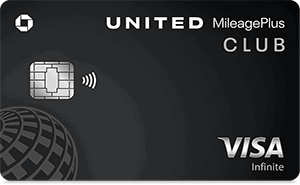
United Club℠ Card
The United Club Card is United’s most premium personal credit card, and it is built around two things: full United Club membership and maximum PQP earning. The card includes a complimentary United Club membership, which provides access to United Club lounges and participating Star Alliance lounges worldwide for the primary cardmember and eligible travel companions. At a standalone United Club membership cost of $650 to $700 per year, the lounge access alone more than makes up for the $695 annual fee for a frequent United flyer.
The earn structure is the strongest in the United co-branded lineup: 4x on United purchases, 2x on all other travel and dining, and 1.5x on everything else. The 4x on United purchases is exceptional, and the 1.5x floor on non-bonused spending is the highest base rate of any United co-branded card. PQP earning is one PQP per $15 spent, capped at 28,000 PQPs per year, meaning a dedicated spender could theoretically reach Premier 1K status on card spending alone.
The United Club Card also offers free first and second checked bags, priority boarding, 25% back on inflight purchases, and no foreign transaction fees.
Verdict: The right card for frequent United flyers who want United Club access and are willing to pay for it. If you fly United enough to value lounge access on most trips and want to accelerate toward Premier status through spending, this card is worth it. For everyone else, the Quest Card delivers better overall value at a lower fee.
Link: Learn more about the United Club℠ Card
United Gateway℠ Card
The United Gateway Card is United’s no annual fee entry point, and it is a solid product for what it is. The limited-time welcome bonus is up to 50,000 MileagePlus miles after $1,000 in spending within three months, worth $550 at my valuation. The earn structure offers 2x on United purchases, gas stations, and local transit, with 1x everywhere else, plus no foreign transaction fees, which is unusual for a no-fee airline card.
The bonus includes 40,000 miles after you meet the spend requirement and 10,000 miles after you add an authorized user within the first 3 months of account opening.
The perks are minimal: 25% back on United inflight purchases, standard travel and purchase protection, and two free checked bag certificates after spending $10,000 on the card in a calendar year. There are no United Club passes, no automatic free checked bags, and no TravelBank cash.
The Gateway Card is most useful as either a true entry point for someone who wants a United card with no fee commitment, or as a downgrade option from the Explorer if you want to maintain account history without paying an annual fee after the first year. For most people considering a United co-branded card, the Explorer is the better choice: the first-year fee waiver makes it effectively free to start, the welcome bonus is significantly larger, and the perks package is far more valuable.
Verdict: Acceptable as a no-fee option or downgrade target, but the Explorer Card is a meaningfully better starting point given its first-year fee waiver and much stronger welcome bonus.
Link: Learn more about the United Gateway℠ Card
United℠ Business Card
The United Business Card is an excellent option for small business owners who fly United with any regularity. The welcome bonus is the strongest in the personal and business United lineup at up to 100,000 MileagePlus miles plus 2,000 PQPs after $5,000 in spending within three months, worth $1,100 at my valuation. That bonus, combined with the $150 annual fee, makes the first year an exceptional value proposition.
The bonus comes as 90,000 miles after meeting the spend requirement and 10,000 miles after adding an authorized user within the first 3 months of account opening.
The earn structure offers 2x on United purchases, local transit and commuting, gas stations, office supply stores, and restaurants, with 1x on everything else. For a business that spends in those categories, the 2x earn is useful, though as with all United co-branded cards, there are better options for everyday business spending if maximizing points per dollar is the priority.
Perks include free first checked bag for the cardmember and one companion, two United Club passes annually, priority boarding, 25% back on inflight purchases, and a $125 United TravelBank cash credit earned after making five qualifying United travel purchases of $100 or more in a calendar year. The card also offers up to $120 in Instacart credits, up to $100 in rideshare credits, up to $100 in United Hotels credits, and up to $100 in JSX credits. A nice unique perk: if you hold both the United Business Card and a personal United card simultaneously, the Business Card deposits a 5,000-mile anniversary bonus each year, creating an incentive to keep both products.
Verdict: The best welcome bonus in the United portfolio and a strong case for any United-flying small business owner. Hold alongside the Explorer or Quest for the 5,000-mile anniversary bonus pairing benefit.
Link: Learn more about the United℠ Business Card
Transferrable point cards for United Miles
United MileagePlus is a transfer partner of Chase Ultimate Rewards and Bilt Rewards, both at a 1:1 ratio. That means every point earned on a Chase Ultimate Rewards or Bilt Rewards card can potentially become a United mile. For spending outside of United purchases, these transferable points cards often earn at a meaningfully higher rate than any co-branded United card, and they offer the flexibility to redirect points to other programs if a better redemption opportunity appears elsewhere.
The trade-off is clear: transferable points cards do not include the United-specific perks that make co-branded cards worth holding, such as free checked bags, priority boarding, lounge access, or TravelBank credits. The right strategy for most frequent United flyers is to hold at least one co-branded United card for the perks, and use a transferable points card for the majority of everyday spending to maximize miles accumulated.
Best premium option: Chase Sapphire Reserve®
For the frequent traveler who wants to maximize United miles on airfare purchases specifically, the $795 annual fee Chase Sapphire Reserve is the strongest option. The card earns 4x Ultimate Rewards points on flights booked directly with airlines, which transfer 1:1 to United MileagePlus, representing a 4x earn rate on every dollar of airfare. For comparison, the United Quest Card earns 10x on eligible United flights, and the Club Card earns 4x only on United metal. The Reserve earns 4x on all airlines, not just United, making it the superior card for multi-airline flyers who want to funnel everything into MileagePlus.
The Reserve also earns 8x when booking through Chase Travel℠, though there is often an opportunity cost to portal bookings in terms of forfeiting airline miles and elite status credits. The $300 annual travel credit, Priority Pass access, and comprehensive trip protection round out a premium card that is compelling on its own merits beyond the United miles angle. Points transfer to United at 1:1 and typically post within minutes.
Verdict: The best card for earning United miles on airfare across all airlines, not just United. Pair with a United co-branded card for the checked bag and boarding perks on United flights.
Link: Learn more about the Chase Sapphire Reserve® Card
Best beginner option: Chase Sapphire Preferred® Card
For someone just getting started building a United MileagePlus balance through transferable points, the Chase Sapphire Preferred is the right entry point. The card earns 5x on Chase Travel℠, 3x on dining, streaming, gas & EV charging, select vacation rentals (through Airbnb, VRBO, and more), and online groceries, 2x on all other travel, and 1x on everything else, with all points transferable to United at 1:1. The welcome bonus of 75,000 Ultimate Rewards points after $5,000 in spending is worth $825 in United miles at my valuation, the strongest first-year value of any $95 annual fee card in this roundup.
Primary rental car CDW, trip cancellation and interruption insurance, trip delay coverage, and baggage protection are all included. For a new United miles collector who is not yet ready to commit to a premium annual fee, the Preferred builds a meaningful balance while providing genuine travel protection.
Verdict: The ideal starting card for building United miles through transferable points.
Link: Learn more about the Chase Sapphire Preferred® Card
Best for paying for housing: Bilt Palladium Card
The $495 annual fee Bilt Palladium Card occupies a unique position in any United miles strategy: it is the only card that allows you to earn transferable points, including United MileagePlus miles, on rent and mortgage payments. For someone paying $2,000 per month in rent, the Bilt mechanics can generate 24,000 or more United miles per year purely from housing payments, on top of whatever is earned through card spending.
The Palladium earns 2x Bilt Rewards points on all eligible purchases plus the opportunity to earn 4% back in Bilt Cash (Up to $100 of Bilt Cash earned rolls over to the next year.) Those 2x Bilt Points transfer to United at 1:1, exceeding the earn rate of every United co-branded card on non-United purchases. The card also includes a Priority Pass membership and transfers to 20 partners, meaning United miles are just one of many potential uses for the points earned.
The Bilt Palladium is best understood as a complement to a Chase or United co-branded card, not a replacement. It fills the housing payment gap that no other card addresses, earns competitively on everyday spending, and provides United access through transfers. For a renter who already holds the United Explorer or Quest for the co-branded perks, adding the Palladium for everyday and housing spending is a natural and powerful combination.
Verdict: The path to United miles on housing payments. For renters who want to maximize their MileagePlus balance, this card adds a meaningful and otherwise inaccessible source of miles. Pair with a United co-branded card for checked bag and boarding perks.
Link: Apply for a Bilt credit card (Rates & Fees)
Which United credit card should you choose
The decision between a co-branded United card and a transferable points card is not an either/or question for most travelers. The two types of cards serve different functions, and the strongest United miles strategies almost always involve holding at least one of each.
When a co-branded United card makes sense
If you fly United with enough frequency to check bags or want to board early, a co-branded card pays for itself quickly. United charges $40 for a first checked bag, meaning a round trip for two people with bags is $160 in savings with a United card that offers free first checked bags. That alone recovers the Explorer’s effective first-year fee of $0. For someone who takes four or more round-trip flights on United per year, the free bag benefit on the Quest or Explorer is worth several hundred dollars annually. Priority boarding, inflight purchase discounts, and lounge access (on the Club Card or via passes on the Explorer and Business Card) are perks that a transferable points card will never replicate.
When a transferable points card makes more sense for earning
For everyday spending outside of United purchases, no co-branded United card earns as efficiently as the best transferable points cards. The Explorer earns 1x on everything outside its 2x categories. The Quest earns 2x on travel, dining, and streaming, and 1x on everything else. Meanwhile, the Chase Sapphire Preferred earns 3x on dining and 2x on all travel, and those points transfer to United at 1:1. The Freedom Unlimited earns 1.5x on all non-bonused spending and feeds into the same Ultimate Rewards pool. For building a United balance from everyday spending, the transferable points path is simply more efficient at every price point.
The optimal combination for most United flyers
Hold one United co-branded card for the perks. Use a transferable points card for the majority of spending. The specific combination depends on your travel frequency and annual fee tolerance. For someone flying United a handful of times per year: United Explorer Card for the perks plus Chase Sapphire Preferred for everyday spending. For a more frequent United flyer: United Quest Card for the perks plus Sapphire Reserve for airfare and Sapphire Preferred or Freedom Unlimited for dining and everyday spending. For a renter: add the Bilt Palladium to any of the above combinations to capture housing payment miles that would otherwise be earned at zero.
How to maximize MileagePlus Miles
Use United’s transfer partners strategically
MileagePlus miles can be redeemed on over 40 airline partners in addition to United metal. The most valuable partner redemptions include Star Alliance carriers like Lufthansa first class and ANA business class, where United’s Excursionist Perk allows free one-way stopovers on multi-city itineraries. Award pricing on United can be dynamic, so searching for saver-level availability and locking it in quickly is important. Cardmembers with a co-branded United card receive access to expanded award availability, including extra saver and standard award space not visible to non-cardmembers.
Time large transfers to maximize value
Both Chase Ultimate Rewards and Bilt Rewards run periodic transfer bonuses to United MileagePlus. Transferring 50,000 points during a 25% bonus nets 62,500 United miles instead of 50,000, with no additional cost. If you have a specific redemption in mind and award space is available, timing a transfer to a Bilt Rent Day bonus or a Chase transfer promotion can meaningfully increase the effective value of your points before conversion.
Earn PQPs through spending for elite status
If you are close to a MileagePlus elite threshold, card spending on United co-branded cards earns PQPs that count directly toward status. The Club Card at one PQP per $15 spent with a 28,000-PQP annual cap is the most aggressive path to status through spending, potentially reaching Premier 1K with sufficient spend. The Quest Card at one PQP per $20 with an 18,000-PQP cap is more accessible. PQPs from the welcome bonus on the Quest Card (500) and Business Card (2,000) provide a meaningful head start in the first year.
Pair a personal and business United card for the anniversary bonus
Holding the United Business Card alongside any personal United co-branded card earns a 5,000-mile anniversary bonus each year the cards are paired. At my valuation of 1.1 cents per mile, that is $55 in annual value for simply holding both cards, which more than covers incremental complexity. For someone who already has the Explorer or Quest for personal travel, adding the Business Card for eligible business spending and collecting the up to 100,000-mile welcome bonus is an excellent value proposition.
What to know about United miles
United miles are most valuable for Star Alliance premium cabins
MileagePlus miles deliver the best value when redeemed for international premium cabin travel, particularly on Star Alliance carriers. United’s dynamic pricing on its own metal can make domestic coach redemptions mediocre, but partner redemptions at saver-level pricing for Lufthansa, ANA, Swiss, or Singapore Airlines frequently deliver well above my base valuation of 1.1 cents per mile. Building your United balance with specific partner redemptions in mind, rather than accumulating miles without a plan, is the most effective approach.
United’s dynamic award pricing requires flexibility
United moved to dynamic award pricing on its own metal, meaning the same flight can cost very different amounts of miles depending on demand and timing. Saver-level award space still exists but requires searching in advance and across multiple routing options. Partner awards on Star Alliance carriers are not dynamically priced by United but depend on the partner releasing award space, which varies by carrier and route. Flexibility in travel dates and routing significantly increases the chances of finding high-value redemptions.
Chase 5/24 applies to all United co-branded cards
All five United co-branded cards are subject to Chase’s 5/24 guideline, meaning applicants who have opened five or more new card accounts in the past 24 months are typically not approved. If you are close to the 5/24 limit, prioritize Chase cards, including United co-branded cards, before applying for cards from other issuers. United co-branded business cards do not add to your personal 5/24 count, but are still subject to the rule when applying.
Co-branded perks require paying for United tickets with the card
Most United co-branded perks, including free checked bags and priority boarding, require that the ticket be purchased with the United credit card to activate. Booking with a different card and expecting to receive the perks at the gate does not work. If you are splitting payments between a co-branded card for the perks and a transferable points card for the earn rate, you need to pay for the ticket itself with the co-branded card to unlock the checked bag and boarding benefits.
Bottom line
United MileagePlus is one of the most useful frequent flyer programs for US-based travelers, and the credit card ecosystem supporting it is genuinely strong. The co-branded United card lineup offers something meaningful at every price point: the Gateway Card for no-fee access, the Explorer Card as the best value entry point with its first-year fee waiver, the Quest Card as the all-around best value for frequent United flyers, the Club Card for lounge access devotees, and the Business Card with the strongest welcome bonus in the entire portfolio.
The United Quest Card is my top recommendation for most United flyers. The $200 annual TravelBank cash and 10,000-mile award discount together recover the annual fee for virtually anyone who flies United and redeems miles at least once a year, and the welcome bonus of up to 90,000 miles plus 500 PQPs makes the first year exceptional. Add the United Business Card for the up to 100,000-mile welcome bonus and the 5,000-mile annual pairing bonus if you have qualifying business activity.
For everyday spending beyond United purchases, route that spending through a Chase Ultimate Rewards card. The Sapphire Preferred is the right starting point, the Sapphire Reserve the upgrade for premium travelers, and the Freedom Unlimited the no-fee companion that handles non-bonused spending at 1.5x. For renters, the Bilt Palladium adds United miles on housing payments that no other card can generate. The combination of one United co-branded card and one transferable points card is the foundation of any serious MileagePlus earning strategy.



Membership is free and takes no more information than commenting as a guest. Earn status points for good contributions, and see fewer ads as your status grows.
There are currently no responses to this story.
Be the first to respond.