

I wish I could say I’m surprised by this development, but it seems like this was bound to happen, and some really bad luck along the way didn’t help either…
Tata Group focuses on curbing Air India’s record losses
In late 2021, Air India was privatized by Tata Group, which was Air India’s initial owner when the company was first founded. Since then, executives at the company have been working hard to transform the airline. The issue is that this has been no small task.
As I said from the beginning, it would almost be easier to start an airline from scratch than to fix Air India, given the extent to which the airline was broken, particularly when it comes to passenger experience.
To Air India’s credit, the airline has been trying to turn things around, and the announcements have been impressive. Air India placed one of the largest aircraft orders ever, committed to reinventing the passenger experience, and genuinely wanted to grow, taking back market share that has gone to Gulf carriers over the years.
However, well over four years after being privatized, Air India doesn’t actually have that much to show for this transformation. This past financial year, the airline reported a record $2.8 billion loss. As I see it, this comes down to several factors.
For one, while Air India has started to improve its passenger experience, with new cabins and new lounges, the reality is that most long haul passengers are still experiencing the carrier’s old product. For that matter, the airline has also had some bad luck, from the crash of flight AI171, to Pakistani airspace issues, to increasing jet fuel costs, all of which have posed a challenge for profitability.
That brings us to the latest development. Bloomberg is reporting that Tata Group is tired of funding the losses at Air India, and has instructed management at the airline to focus on reducing losses rather than growing. This reportedly primarily revolves around deferring new aircraft deliveries, with around 500 more planes on order, and scaling back both domestic and international expansion plans. It also involves focusing on stabilizing operations, and even cutting costs.
Let me of course emphasize that this is according to people familiar with the matter, but no official announcement has been made yet.
Was this inevitable, or did Air India management screw up?
I think this situation raises the question of whether Air India’s revitalization was bound to play out this way, or if management made serious strategic blunders. Keep in mind that Air India CEO Campbell Wilson is stepping down this year, though the claim is that this has been planned since 2024.
Personally, I’m of the mind that of course Air India was going to suffer massive losses for years, given that you can’t reinvent an airline overnight. You first need to greatly expand operations, and massively reinvent the passenger experience, before you get a return on your investment, especially for an airline that has historically had such a bad reputation.
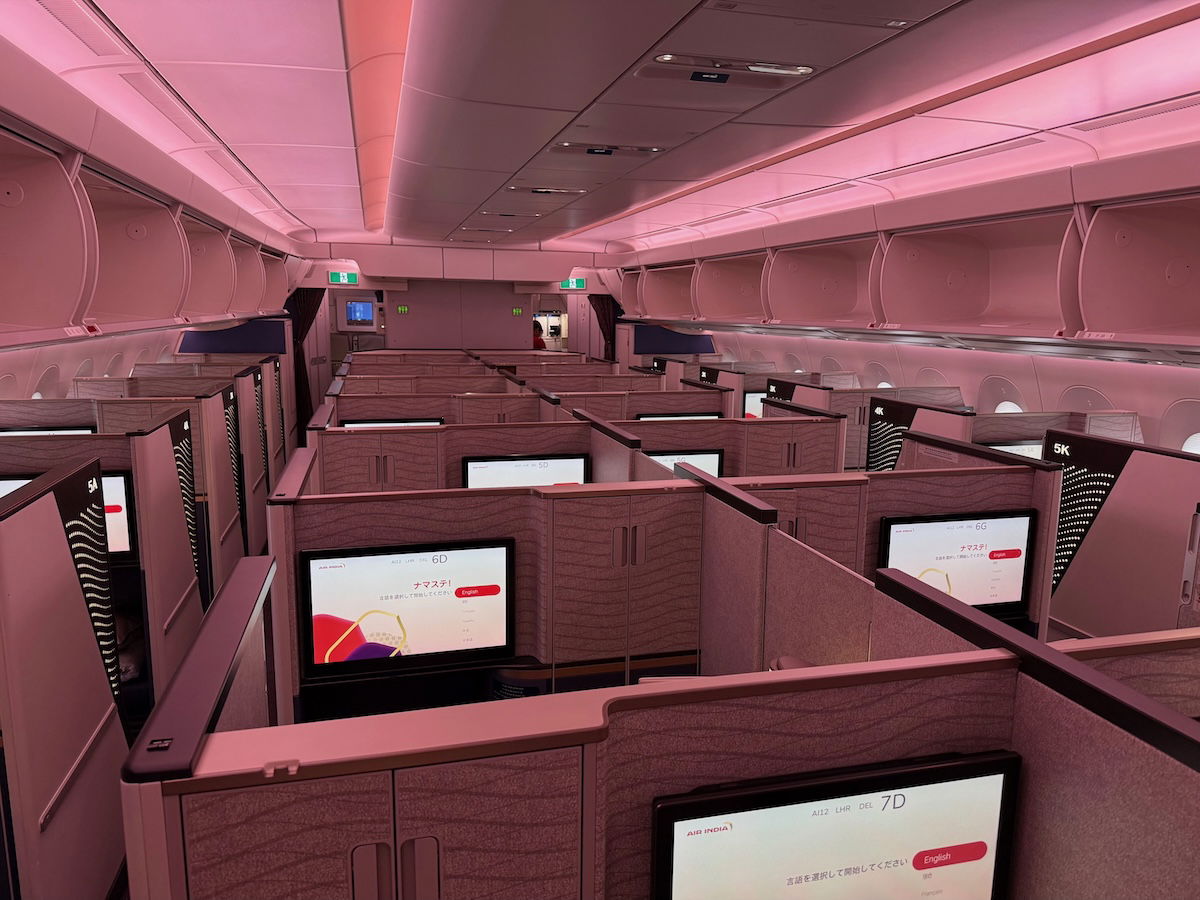
Customers start considering an airline more regularly when they actually consistently offer a certain type of experience, rather than just being promised something on one flight, or years down the road. Like, I had a lovely flight in Air India’s A350 business class, but I also recognize that if I flew most Air India routes to or from the United States, it would be a different story. So I can’t say I’m surprised by this outcome, though admittedly Air India has also had bad luck, with everything from the Dreamliner crash, to the regional airspace situation.
Structurally, there are reasons that Air India failed when it was owned by the government. At the same time, those structural issues weren’t going to be solved overnight with privatization, and it seems like Tata Group almost regained control of Air India out of pride rather than because it was actually a great investment with a ton of upside. I mean, even under the best of circumstances, airlines aren’t exactly high margin businesses.
I’m curious to see how this all plays out. I don’t think there’s necessarily anything wrong with cutting back on growth, but I hope the airline prioritizes offering a consistently high quality passenger experience, and that cost cutting doesn’t come in the form of cutting back on soft product, cabin retrofits, etc.
Bottom line
Tata Group, Air India’s owners as of several years ago, aren’t happy with the carrier’s losses. Air India reported a record loss of around $2.8 billion the last financial year, which is much bigger than the company’s owners were expecting.
They now reportedly want Air India to focus on controlling losses, which could come in the form of curbing growth and cutting costs.
While I give management credit for the direction the company has been headed, it’s not surprising to me that the airline hasn’t been fully transformed overnight, given what a monumental task that is. When you undertake a project of this size, you’re going to incur some massive losses upfront, with the hope of long term success. It’ll be interesting to see how this all plays out.
What’s your take on Tata Group getting tired of Air India’s losses?




Dz, couldn’t agree more.
The Tata family has a collective net worth of around $400B, so it appears they do know at least something about how to run a business.
Ben, you may wanna checkout LALF... I believe Matt has nominated you for CEO...
(Hope you're feeling better, btw!)
They could do worse.
Nasty trolling, bro.
Bullshit comment
Growth mode? Yes, it is/was a growing cancer. What it needs is radiation. The sun's rays arent powerful enough.
As unfortunate as it is, I think Lucky called it with a new airline starting from scratch being easier to turn around than AI. To be honest, I'm surprised SQ went along with this plan: they had a pretty good thing going with the very-well-run Vistara!
“We didn’t get there from birth and worked for it, with a little luck song the way”
One of the biggest myths out there.
I see that I have struck a nerve or two. Just one addition to my comment: I never claimed that I was born in a developed country nor that I live in a developed country. The name “Kent” and success are not exclusive to the Caucasian man from the developed world. Good day.
Kent-Tami knew a prince in Nigeria and won the lottery!! Yay.
Don't feed the troll.
Pompous twit. What are you even doing here if you never fly commercial? You’re full of shit. Piss off.
Unhinged comment.
"We fly private", imagine meeting someone who even looks down upon the Emirates First Class peasantry in this day and age
"We didn't get there from birth". Outside of USA and few other developed countries, most people flying private would infact be there by birth lottery than hard work. You don't hard work your way from nothing to Private, you need a bit of luck. You refer to luck yourself twice in...
Unhinged comment.
"We fly private", imagine meeting someone who even looks down upon the Emirates First Class peasantry in this day and age
"We didn't get there from birth". Outside of USA and few other developed countries, most people flying private would infact be there by birth lottery than hard work. You don't hard work your way from nothing to Private, you need a bit of luck. You refer to luck yourself twice in your comment, and then mix that grounding with delusion by asking others to do the same. For every one that made it, there are 1000s who didn't (probably flying F, J or even Premium Y, eeew)
Being from a developed country is having done pretty well at the birth lottery thing!
Really? That’s your idea of an “unhinged comment?” Have you read the juvenile moronic comments further down the page from frequent visitors? I sometimes wonder if they aren’t the author’s creation to stir up activity since only inbreds would have such low IQs capable of generating such filth. In comparison, this comment is arrogant, yes, but hardly unhinged.
Well they seem to have a BFF with Air Canada's Aeroplan.
That once admired FF plan now sees absurd award routings forcing a India connection to popular straightforward direct routes like SYD-NRT/HND which take a little over 9 hours on competitor airlines.
Aeroplan sticks a completely unnessasary DEL connection into that, more than doubling the flight time. (Of course they ramp up the number of miles accordingly).
Take a look at a...
Well they seem to have a BFF with Air Canada's Aeroplan.
That once admired FF plan now sees absurd award routings forcing a India connection to popular straightforward direct routes like SYD-NRT/HND which take a little over 9 hours on competitor airlines.
Aeroplan sticks a completely unnessasary DEL connection into that, more than doubling the flight time. (Of course they ramp up the number of miles accordingly).
Take a look at a map or globe of the world to see the absurdity of this, and similar, routings!
Aeroplan has lost the plot!
Instead of buying new airplanes, you would think they want to replace all the broken parts in their existing planes first? Fix up what you have, right the ship, before adding more large debt onto your book.
I guess cutting fuel to a planes engines could be considered cost cutting too.
RIP.
To DaveS. I think you were the only passenger. Sniff yourself first. Then write.
Dave s is a hateful troll bigot.
Dave - maybe you're perpetually flatulent?
I have a flight on them (first time ever flying Air India) next February from Delhi to JFK in J. Booked it with 80,000 United miles and thought that was good value. It is one of their newer planes with a good business class layout (unlike the one from BOM to JFK). Frankly at this point as long as the flight goes and it is this equipment I couldn't care less about any cut backs. Worst case I can survive 17 hours.
I thought they already were on cutting cost mode, cause their service is just like that lol
It’s almost like AI is trying too hard. I recently flew them LHR to BLR in J and they brought out so much food that a third of it literally wouldn’t fit on the table.
Ridiculous claim. Did they pour the food in your lap or head or both.
India's economy is going to collapse with the AI wave, I wish them the best though.
An Air India wave? Tell us more! /s
Hi Alert, your sh!tty spelling gave you away. It's s-c-o-r-p-i-O-n, no "a."
Thanks for more of your racism. Your mom, who is upstairs right now making "girl food" (your description) would be proud.
You must be one the klan members.
I had the misfortune of transferring from Air India -> Finnair at DEL and the transfer experience is the worst I've had anywhere in the world. You cannot enter departures without a boarding pass but if the check in for your second flight isn't open then you cannot get a boarding pass. I had to wait two hours to get into the departures area. The "transfer desk" isn't even signposted, just some desks with people...
I had the misfortune of transferring from Air India -> Finnair at DEL and the transfer experience is the worst I've had anywhere in the world. You cannot enter departures without a boarding pass but if the check in for your second flight isn't open then you cannot get a boarding pass. I had to wait two hours to get into the departures area. The "transfer desk" isn't even signposted, just some desks with people sitting behind and you have to work out for yourself that they might handle transfers. Never again will I transfer at DEL
You could not do online check in and get the boarding pass ? If you cannot check in for some reason, the current itinerary on the mobile screen is acceptable.
DEL has some minor security irritants but never had issue transferring. And they have arrival and pre security PP lounges, which is pretty rare around the world.
I don't think it's even possible to obtain electronic boarding passes for international flights departing India.
That's incorrect - I've done that several times, repeatedly, successfully. Bunch of suspect claims on this thread.
@Sarthak, I have 0/2 attempts and been told that it's routinely blocked if not fully prohibited... and I'm definitely not in a rush to try again soon.
Its very poor management. JAL recovered from a very bad position in similar timelines.
Every single time when there was a situation that required support, it was mostly a bad experience. Their transfer desk at BOM is poorly manned. Meanwhile you see scores of AI personnel just loitering around.
Its a well intentioned airline in need of proper management.
Side note, Ben, you are clearly the least "eccentric" travel blogger out there, and that's a huge asset for you
nah Ben is pretty weird too but that keeps everything interesting!
I recently flew them in premium economy, it was a really solid experience. Everything was spotless, service was good etc.
You were probably the only passenger.
About 45% load factor in the cabin. I think business class was a bit busier, Y factor probably about the same as ours.
Then no Indians on your flight.
India is the world's largest democratic country. East Indians populate the majority of high-tech staff in Silicon Valley. Heck, Google and Microsoft CEOs are East Indians. Yet, I have no positive perception towards India solely based on its caste system. A couple of years ago, a congress woman introduced a bill that eliminated caste system practice in her district. She was crucified by the Indian community and stunned by the reaction. The bill got no...
India is the world's largest democratic country. East Indians populate the majority of high-tech staff in Silicon Valley. Heck, Google and Microsoft CEOs are East Indians. Yet, I have no positive perception towards India solely based on its caste system. A couple of years ago, a congress woman introduced a bill that eliminated caste system practice in her district. She was crucified by the Indian community and stunned by the reaction. The bill got no traction. I do not want to live in a culture in which people anchor at the financial echelon via birthright in the form of nepo babies, like the Bushes and the Trumps, while others with intelligence, skills and talent are languished at the bottom with no opportunity to advance. For years, I do not see India will advance itself further and higher than where it is today the same way that MBS' Neom illusion will be open for business, in its original plan, in my lifetime. I spent summer 1994 in Malaysia (KL and Penang), Singapore and Vietnam. The Singaporean host informed me that his government, the founding father Lee Kwan Yew, would never invest in any project without earning profits. Well, this year SQ announced it lost nearly $1B in its currency ($900M) in its investment of Air India. Two cultures contrast each other at extreme ends of the pendulum and cannot be mixed like oil and water. Human resources, especially leadership, determines the country's destiny. For any business and government entity to function efficiently and effectively, the culture of leadership and rank and file must change before all else. The below link clearly explains Indian's culture that pulls the country backward. A reader of the article on India and China posted an exceptional commentary on Indian culture and government bureaucracy.
In the grand theater of global geopolitics, India stands as a colossal paradox, a nation brimming with potential yet perpetually ensnared in the webs of external influence and internal disarray. Despite its aspirations to sovereignty and superpower status, India finds itself inexorably positioned as an ally, servant, or subject to more dominant forces. This predicament is not merely a quirk of history but a structural inevitability, rooted in systemic patronage, institutional decay, and a fragmented national ethos. To understand this, one must dissect the layers of dysfunction that undermine India's autonomy, from its military and legal apparatuses to its fractured polity and duplicitous foreign policy. At the heart of India's vulnerabilities lies a pervasive culture of patronage, where appointments and promotions in critical institutions are dictated not by merit but by caste affiliations, religious loyalties, or political connections. This malaise is starkly evident in the nation's armed forces: the Indian Air Force, Army, and Navy, once envisioned as bulwarks of national defense, have devolved into second-tier entities plagued by inefficiency and favoritism. The police force fares even worse, resembling less a guardian of public order than a cadre of well-armed enforcers, often complicit in extortion and brutality. The rule of law, ostensibly enshrined in India's democratic framework, exists more as an aberration than a norm, enforced sporadically and selectively, contingent upon the whims of those in power. Constitutional observance, too, is a matter of expedient interpretation, bending to the prevailing winds of political expediency rather than upholding universal principles. This internal rot extends to India's polity, which remains profoundly fractured along linguistic, regional, and ideological fault lines. Unlike cohesive nation-states that rally around shared objectives, India grapples with a conspicuous absence of unity of purpose. National goals are obscured by parochial interests, and the federation's centrifugal forces, exacerbated by disputes between the center and states, undermine any semblance of coherent governance. Compounding this is India's myopic obsession with China, a fixation that has proven both distracting and humiliating. In the early 21st century, as India preened over its burgeoning middle class, the largest in the world at the time, China methodically transformed itself into the globe's manufacturing powerhouse. Today, a quarter-century later, India scrambles to emulate that model, its ambitions thwarted by the very divisions that allowed China to surge ahead unencumbered. Foreign policy, ostensibly a domain of strategic acumen, reveals another layer of duplicity. India operates a bifurcated machinery: the official channel, spearheaded by the eloquent and assertive External Affairs Minister S. Jaishankar, projects a veneer of diplomatic sophistication. Yet, paralleling this is an unofficial apparatus dominated by sensationalist media figures such as Arnab Goswami and Palki Sharma. These television personalities, far from embodying journalistic integrity, peddle a brand of outrage journalism that is loud, brash, and bereft of nuance. Their broadcasts, marred by grammatical lapses, mispronunciations, and a cavalier disregard for news prioritization, routinely flout international norms by labeling adversaries with inflammatory epithets like "terrorist" states. This selective indignation conveniently sidesteps India's own domestic afflictions: rampant drug addiction, entrenched sexism and gender discrimination, dowry-related femicides, caste-based atrocities of the most grotesque variety, political corruption, police malfeasance, and virulent religious bigotry. In stark contrast, China's more regimented society, albeit authoritarian, prioritizes order and progress, unburdened by such pervasive chaos. Historical grievances further illuminate India's propensity for self-sabotage. The 1962 Sino-Indian War, often invoked as a symbol of Chinese aggression, was in fact precipitated by India's own provocations. By permitting U.S. forces to train Tibetan insurgents on Indian soil, New Delhi actively abetted harassment against Chinese interests in Tibet, inviting the retaliatory incursion it now laments. Decades later, echoes of this hubris resurfaced in the 2020 Galwan Valley clash, where General M.M. Naravane's forces attempted a surprise maneuver amid the COVID-19 pandemic, only to suffer a decisive defeat. Once again, blame was swiftly apportioned to China, absolving India of its tactical miscalculations. These episodes underscore a deeper truth: India's lack of unified language, laws, customs, and political priorities renders it ill-equipped for sustained confrontation or cooperation, unlike China's disciplined, if harsh, regime. The culmination of these frailties is evident in contemporary realpolitik. Under Prime Minister Narendra Modi, India now seeks rapprochement with China not from a position of strength, but desperation, clutching at Beijing's coattails to shield its Hindu nationalist government from mounting Western scrutiny over human rights and democratic backsliding. This pivot, born of vulnerability rather than vision, epitomizes India's enduring subordination. Until it confronts its internal fissures and forges a truly cohesive identity, India will remain ensnared in the orbit of others, forever the ally, servant, or subject in a world it aspires to lead. The path to genuine independence demands introspection, reform, and unity, qualities that, for now, remain elusive.
Woah. That was actually a good-read. Sincerely, thank you for taking the time to share your nuanced thoughts on all sorts of things here.
Thank you, AI Word Salad
AI perhaps, but the point about spoilt, under-achieving-rich-kid Brahmin nepo-babies is absolutely true.
Well said A.I.
This must be the longest
This must be the longest
Comment ever posted on this blog.
Caste system is simultaneously irrelevant to 10s of millions of Indians (while still being the reality of 100 of millions), usually the richest and most educated do not care about it, at all. Upwards of 100s of millions would be mixed caste at this point. Its the same as discrimination against black people in USA, its simultaneously the reality of a vast majority while being irrelevant in the best parts of society. We don't classify...
Caste system is simultaneously irrelevant to 10s of millions of Indians (while still being the reality of 100 of millions), usually the richest and most educated do not care about it, at all. Upwards of 100s of millions would be mixed caste at this point. Its the same as discrimination against black people in USA, its simultaneously the reality of a vast majority while being irrelevant in the best parts of society. We don't classify USA as the land of slavery anymore, so why does India get the caste tag?
I don't know whether this is chatgpt or something, but I do believe that India is a deeply problematic country and society, and not in ways that can be fixed by achieving a higher per capita GDP figure.
Which country doesn’t have deep problems? On second thought, don’t mention it. Otherwise, Trump may stumble across this blog, discover a country, then discover that this said country does not have any problems, and then plan about invading them to bring them to our level.
I love how any article on Air India is sure to bring out the children in our society that clearly got left behind.
@PeteAU and @Throwawayname are right. The AI second paragraph definitely misses on a few issues (e.g. Arnab Goswami and his ilk are very much targeted at domestic, not international audiences!), but the Brahmin nepo-baby and pervasive societal issues are real.
AI was going to be a beast to turnaround under normal circumstances but the current high fuel price environment is hurting a lot of Asian airlines (and economies) including in the Middle East particularly hard.
AI's turnaround was built on the idea that it could start to carry alot of the int'l passengers that have been connecting through the Middle East.
The ME airlines are deeply discounting in order to keep their operation...
AI was going to be a beast to turnaround under normal circumstances but the current high fuel price environment is hurting a lot of Asian airlines (and economies) including in the Middle East particularly hard.
AI's turnaround was built on the idea that it could start to carry alot of the int'l passengers that have been connecting through the Middle East.
The ME airlines are deeply discounting in order to keep their operation going in the midst of fear of transitting the Middle East so fares are low.
A settlement of the Iran war might provide more security for ME airlines but fuel prices will remain high for years in order to refill depleted reserves around the world.
Euro airlines are fairly well hedged through 2026 so there will continue to be a shift in Europe/US to India traffic to Euro airlines and from Indian and ME airlines while US airlines, to the extent they can serve India will also benefit from a stronger competitive position.
and, given Indigo's issue, this isn't just an AI issue. It is a huge step backwards for the growth and maturity of aviation in India which should make us all sad.
Wow, again. Tim, you got through that without mentioning Delta or United. I’m impressed. Looking forward to your next post on Seeking Alpha (if that’s the same Tim Dunn over there.)
So someone familiar with the Indian commercial aviation industry please comment: how in the world is there only one major international airline from India? If more Indians were regular customers of Indian airlines the ME3 would never have gotten even close to as big as they are.
(Also, leave it to Air India to not be able to capitalize on literal bombs falling on your competitors' airports)
Because the Tata group is no different from the government?
Honestly I don't think India has enough high yield originating passenger demand to justify more than one international airline. You have multiple domestic airlines obviously, but for international, a lot of the premium fares are coming from other countries rather than India itself. Yes, India has wealth and premium demand but I would imagine more of the airfare dollars are from outside India pax rather than India-based pax and those passengers outside India are going...
Honestly I don't think India has enough high yield originating passenger demand to justify more than one international airline. You have multiple domestic airlines obviously, but for international, a lot of the premium fares are coming from other countries rather than India itself. Yes, India has wealth and premium demand but I would imagine more of the airfare dollars are from outside India pax rather than India-based pax and those passengers outside India are going to preference Middle Eastern or their own country's airlines.
Also, it is not trivial to capitalize on an acute event like what's happening in the middle east. Other than putting out what would be perceived as questionable / opportunistic marketing, they can't accelerate the hard product transformation and other aspects of the airline that are necessary to truly capitalize on the temporary drop in demand for ME carriers.
While I personally wouldn't fly a Middle Eastern carrier to India at the moment, I still wouldn't fly Air India. I would rather fly United (my preferred airline) or any other US carrier or Air France than flying Air India even though they offer a nonstop from my city to Delhi.
That's a crazy hypothesis. India has an enormous population plus a massive diaspora, and it only attracts a tiny number of tourists relative to its size- just 9 million last year, a quarter of what Greece got.
I am not interested in visiting India anytime soon, but, having flown the airline in both J and W, I would definitely consider travelling with AI between Europe and the Far East, particularly given their attractive pricing...
That's a crazy hypothesis. India has an enormous population plus a massive diaspora, and it only attracts a tiny number of tourists relative to its size- just 9 million last year, a quarter of what Greece got.
I am not interested in visiting India anytime soon, but, having flown the airline in both J and W, I would definitely consider travelling with AI between Europe and the Far East, particularly given their attractive pricing and award availability in premium cabins.
Many cultural factors and industry specific factors. India's aviation industry has always been kneecapped by govt regulation and taxation, its not a very healthy industry.
India has plenty of high yield customers, they fly with the ME3 who are defacto Indian carriers and are the exact inverse of Indian carriers culturally (businesses in India need to focus on a lower price point in order to scale, ME3 focus only on high). Combined with their subsidies,...
Many cultural factors and industry specific factors. India's aviation industry has always been kneecapped by govt regulation and taxation, its not a very healthy industry.
India has plenty of high yield customers, they fly with the ME3 who are defacto Indian carriers and are the exact inverse of Indian carriers culturally (businesses in India need to focus on a lower price point in order to scale, ME3 focus only on high). Combined with their subsidies, vertical integration and geography they have been very difficult to co-exist with. International flag carriers don't really compete with each other in home markets due to network differences, however here they almost share a geography. Any global carrier would have difficulty with ME3 right next to them (imagine if one of them was based in Canada and another in Mexico, you could legitimately use them as a US3 substitute for international travel to Europe)
In the 21st century, it is primarily the ME3 competition coupled with better products on European airlines for ex-DEL/BOM/BLR traffic.
The other factor is India's distributed populations across a rhombus shaped mass. Unless you fly our of DEL/BOM, you need to connect. As India is not a wide east-west rectangular country like US/Canada, DEL is not an optimal hub for majority of Indians. If they have to connect why not use ME3 who provide better...
In the 21st century, it is primarily the ME3 competition coupled with better products on European airlines for ex-DEL/BOM/BLR traffic.
The other factor is India's distributed populations across a rhombus shaped mass. Unless you fly our of DEL/BOM, you need to connect. As India is not a wide east-west rectangular country like US/Canada, DEL is not an optimal hub for majority of Indians. If they have to connect why not use ME3 who provide better product/services and more frequency not to mention clearing immigration and customs at O&D ports ?
Perhaps 6E with their 60 A350 planes can base them in the other 5-6 big population centres outside of DEL/BOM and the turn will tide slightly although 6E is not considered a good airline by most Indians except for connectivity.
If AI could have a 100 new wide body aircraft at it's disposal and have connectivity to Europe and North America out of all 6-8 major cities I suspect ME3 would lose bug chunks of their business from the country.
I’ve heard their lounges smell of Indian food. Couldn’t explain why that would be the case though…
Well, Indian food is delicious, so I’d sure hope so. Not an Air India lounge, but the Encalm Prive lounge at DEL T3 has some of the best masala dosas I’ve ever had. Man, now you got me hungry…
@Tony what’s the point you’re trying to make? Don’t be shy, spit it out.
AFTER EATING TASTY INDIAN FOODS PLEASE DONT COMPLAINT ABOUT FOOD OR THE AIRLINE WHICH PROVIDED CATERING
It is catch 22. They need newer planes for fuel efficiency and newer interior if they want to charge higher fares. So they do need new planes delivered, at least a couple dozens, along with refurbishing older planes to new interior.
They can defer the narrow body fleet delivery as they have enough already. Except for the XLRs which can free up 787-8 to be used on longer routes.
They also need to have a proper refurbish or just repair program to fix planes daily with quick turnaround. Whether mechanical or the in cabin, the tech ops have been horrendous.
Just like AA.
Not a great time to be an international Indian carrier, that's for certain. I imagine the same results would've transpired if TATA had started their own airline, and even with the Gulf carriers struggling, I think the airspace issues and fuel costs would prove too much for them
Tata had their own airline.
Getta loada these tatas…
Uh Vistara?
Emirates has to be thrilled India can’t get its act together. How much less profit would EK have if air India was remotely competent?
I wouldn't fly AI over EK unless it's the only option.
And personally for where I would fly in India, EK has better itineraries anyway.
I've seen Air India pricing business class between Europe and SIN/KUL/BKK lower than EK premium economy.
Air India’s losses are also seriously denting Singapore Airlines’ profitability. Terrible investment.
It’s the mentality of India that hurts this airline! Quality service simply is not in the vocabulary and practice of this company. You couldn’t give me a free ticket in F or C class to fly it. And as for Y class, that would never be an option!
The government needs to let it totally fail, and let anyone who wants to offer services from XYZ to any and all points in the country to do so!
I agree that mentality of India is hurting AI but lack of quality in service is an AI thing not an Indian thing, there were very highly rated airlines (one by Tata itself) and 3 of India's hospitality brands are considered the best in the world, half step higher than a Four Seasons would be