

I commend United Airlines for all of its innovation as of late, particularly when it comes to the passenger experience. Along those lines, the airline recently took delivery of its first Airbus A321XLR, which is the new long range, narrow body jet that’s becoming increasingly popular with airlines.
This plane has all-new cabins, including a new business class (which isn’t as good as on wide body planes, but also, that’s to be expected). Several weeks ago, we unofficially learned about another new product that may be introduced on these planes. There’s now an update, as the airline has officially announced it — however, I’m not sure it’s as positive of a development as we’re being led to believe.
United plans a unique A321XLR economy seating concept
United’s Airbus A321XLRs are officially configured with 152 seats, with 20 seats in business class, 12 seats in premium economy, and 120 seats in economy. That’s a fairly low capacity plane, but United wants to get that number down to 150 seats, by eliminating two seats in economy.
How does the airline plan to accomplish that? Well, the plan is essentially to block two seats in economy (specifically, Economy Plus), by introducing an intra-Europe business class style hard product. The idea is that given the 3-3 configuration, one row of six seats would have two center seats blocked, and as long as there’s a physical divider in there so the seats can’t be used, that would technically get the capacity down to 150 seats.

Funny enough, while the details of this were only leaked some number of weeks back, this had been hiding under our noses all along. If you look at the initial United A321XLR seat map shared by JonNYC back in September 2025, you’ll see that the row immediately behind the exit row appears to have two blocked seats.
United says it will put these seats on sale later this year, and it remains to be seen how they’ll be monetized. Presumably these seats will get the same service as everyone else, so if they’re otherwise Economy Plus, will they be available at an extra cost over standard Economy Plus seats, available on a first come, first served basis, or what?
For now, this feature will be exclusive to the A321XLR, though the airline is also “exploring offering these types of seats on other aircraft types in the future.” Here’s how United Chief Commercial Officer Andrew Nocella describes this decision:
“We’re investing nose-to-tail across our fleet and giving customers choice and value in every cabin. The XLR is our newest aircraft and not only offers all-aisle access lie-flat seats in United Polaris® but now also includes seats in Economy Plus with extra leg and elbow room. Our customers are going to love all these new options.”
Is United really going to fly A321XLRs with four flight attendants?!
United is trying to market this as something that’s motivated by improving the passenger experience, but let’s be clear about what’s going on here — this is about reducing flight attendant staffing.
Under FAA regulations, airlines need to have a minimum of one flight attendant for every 50 seats. So a 150-seat plane needs three flight attendants, and a 152-seat plane needs four flight attendants. The added twist is that if planes have suites with doors, they require an extra flight attendant, meaning those numbers then go to four or five flight attendants.
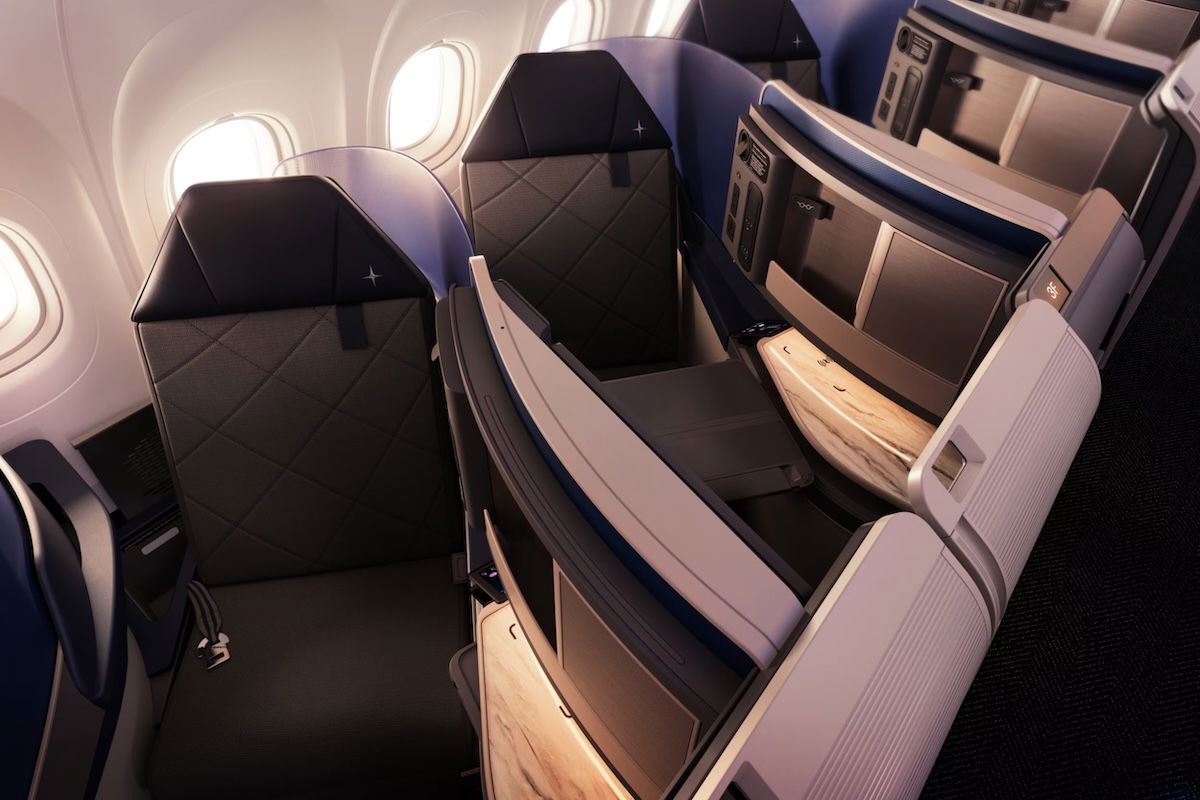
Obviously United doesn’t want to pay for an extra flight attendant for just two extra seats. But here’s the elephant in the room — does United really plan to fly the A321XLR with just four flight attendants?!
If a half decent customer experience matters, logically you’d want to staff this plane with at least five flight attendants. Think about it — these planes will be operating long haul, international routes. You need two flight attendants to work the business class cabin, with one in the galley, and one in the aisle.
That leaves two flight attendants to serve 12 premium economy passengers and 118 economy passengers. If that’s actually the staffing level United is aiming for on a consistent basis, get ready for the worst service in United’s international fleet.
The reality is that the economics of these narrow body planes on long haul flights are challenging, and I get how costs have to be controlled, especially with flight attendants now having a costly new contract.
Is that what’s actually going on here? Well, United suggests that it will have five flight attendants on most A321XLR routes, but not all. United plans to use these planes exclusively for long haul flights (these aren’t intended as domestic transcon planes), so I do find it kind of wild to schedule flights with fewer than five flight attendants.
In theory, there would be value to getting these planes certified down to four seats, so that in the event that a crew member calls in sick at the last minute, the airline can still fly the plane with four flight attendants in an emergency. At the same time, consistently giving up two revenue seats for such a possibility seems quite costly, unless the airline thinks it can generate significantly more revenue with these seats. However, that’s not what’s going on here, as the airline has confirmed it will staff some flights with four flight attendants.
American’s A321XLRs have 155 seats, so they’re required to have five flight attendants minimum, and if I’m not mistaken, they’re often staffed with six flight attendants.
Bottom line
United Airlines is planning a unique concept for its Airbus A321XLRs, whereby the airline will block two center economy seats, and essentially create an intra-Europe business class style hard product. While United suggests that this is intended to improve the passenger experience, the goal is to get the seat count down from 152 seats to 150 seats, so that minimum staffing can be reduced from five flight attendants to four flight attendants.
This isn’t just being done as a worst case scenario contingency plan in case one flight attendant calls in sick. Instead, the airline does in fact plan to staff some of these A321XLR flights with just four flight attendants. For flights where that’s the case, expect service to be really slow.
What do you make of United’s unique A321XLR seating concept?




AA did something like this before on their 737s, in a couple rows just behind the exit rows. And Frontier does this with their Upfront Plus seats.
So, how about that nobody complains when UA will install three seat business class without even good food?
how many F/A does Iberia use?
i have heard very good service remarks on Iberia's XLR
So, UA uses the 752 on some TATL routes. With 176 sests, I assume that they use 4 FAs. If true, then UA will fly these new planes with the same 4 FAs and 15% less seats. While a 4th FA (rather than 3 at 150) is required because of doors, it wouldn't seem that doors affect FA service loads. Thus, a 321xlr with 4 for 150 is better than the current 752 with 4 for 176. UA wins (no 5th FA), and the pax win (37.5 pax per FA rather than 44).
Both the 757 and A321XLR will be staffed with 5 flight attendants.
So, same number of FAs (and same number of lavs, btw) on both planes, with the new ones having 26 less seats. So, for me, the bottom line is: the 321xlr offers clear improvements over the 752. Wider seats in all classes, less pax per FA (and lav). So, the bad news is, while pax/FA ratios have improved nicely, they could have improved even more.
It's fine.
Sling some slop for business, get a drinks service done in economy, set up a place for people to get up and snag extra drinks, absolutely no one will book towards/away over the 'missing' 5th FA.
and once again, the topic of United and XLR economics and the resident United basher comes on to reply to everything.
Tim, the reason the XLR doesn't work for Delta is pretty simple: their Atlantic JV gives no credit for flying a narrowbody across the Atlantic -- an issue United and AA JVs don't have. I get it... you hate to say delta is bad at negotiating with their pilots -- which they are...
and once again, the topic of United and XLR economics and the resident United basher comes on to reply to everything.
Tim, the reason the XLR doesn't work for Delta is pretty simple: their Atlantic JV gives no credit for flying a narrowbody across the Atlantic -- an issue United and AA JVs don't have. I get it... you hate to say delta is bad at negotiating with their pilots -- which they are (ALPA seems to own Delta at every turn to include Delta management's awful negotiations that have resulted in the cancellation rate going through the roof). But your alternative realities to obscure reality just make you look dumb.
He’s a failed, forced “retired” analyst who lacks all analytical objectivity. No surprise.
If DL didn’t do it or think of it first, can’t possibly be good in his mind.
Self-service snack bar in back. The extra FA isn’t needed.
seriously?
and passengers can help themselves to food and beverage from the galley?
Initial meal service may be a bit slow, but then yes, there will be food and beverages at the snack bar. Better than flying biz on a tight DL 767.
Have you ever flown JetBlue with their Mint section? It was great! FAs did one service in cabin, then PAXs helped themselves in the Mid and Aft galleys with snacks and drinks, all you want. Mint is First Class. FA provides for them. I loved it!
Isn't that what the thieves do in their lounges?
Agreed. Reduce the number of flight attendants . Keep full service in the premium cabins and scale back in main cabins with enough for safety .
Implement pre service during boarding and self services in flight.
I’m going to assume the “short flights” means for the rare occasions it flies transcons? They say it’s a dedicated transatlantic aircraft but I wouldn’t be surprised to see it operate a few domestic runs here and there.
I just hope these seats are available for free for 1K and GS members
A literal quote from the press release: "United will operate the A321XLR with five flight attendants on most transatlantic flights, consistent with its practice on the Boeing 757 it is replacing."
Transatlantic flights going East tend to be overnight. Food is thrown at passengers, trays collected then lights out and FAs seem to disappear. Four FAs might mean service is a bit slower so you get to sleep a half hour later. Coming back is a different story. Do you carry 4.5 FAs, four for East and five for West bound flights?
@ Dan -- Well, they'll definitely staff the same number of flight attendants in both directions. I imagine the decision of whether to staff five comes down to rest requirements, which vary based on the exact block time of the flight.
The press release specifies 5 flight attendants, the same as the 757s which have more seats.
I mean if you’re already having to dead head and pay for 1 FA going eastbound just for the FA to work the westbound, might as well just fully staff the eastbound too?
Bad news? Not at all. Who cares if there are 4 or 5 FAs? They don’t don’t anything anyway. I’d much rather have a choice of more desirable seats. I loved when AA did this on their 737s (those really were the days). Did I ever say, gee I wish there was another FA? Absolutely not.
@ Brian -- American 737s were operated in markets where there was no real main cabin service. On long haul flights, there's the expectation of main cabin service, including meals being served.
UA has hot meal service on full size trays today on BOG/MDE/UIO routes on 737s.
@ Matt -- Right, but the A321XLR has 16 extra premium seats, and a much more extensive meal service in the premium cabin as well. I guess we'll wait for some firsthand reports when this plane is actually flying.
I was speaking in reference to the Y cabin...UA has ovens in the Y galleys of their entire mainline fleet unlike DL/AA.
Always trying to cause more drama just to get clicks.
Many of these flights are barely going to be longer than a domestic transcon. I don’t hear everyone getting their panties in a wad over SFO-BOS or SEA-IAD red eyes being operated with a 737-8.
you do realize that UA does not have premium configured 737-8s while the XLRs and coastliners will have a premium configuration?
@ Rrapynot -- Right, there's no full meal service in economy on a domestic flight, while there is a meal service on a long haul flight.
not sure why this article had to be brought back to life; we have known for years that the economics of narrowbody TATL flights are poor and UA has simply confirmed that with its intention to staff the aircraft with just 4 FAs which is worse than AA.
We'll see later this week how much settling w/ UA's FAs will cost the company but UA has been living off the interest free loans its employees...
not sure why this article had to be brought back to life; we have known for years that the economics of narrowbody TATL flights are poor and UA has simply confirmed that with its intention to staff the aircraft with just 4 FAs which is worse than AA.
We'll see later this week how much settling w/ UA's FAs will cost the company but UA has been living off the interest free loans its employees have been making to the company.
rebel can and certainly will come along and post endless drivel trying to convince us how great UA is - and yet they are not much more than overweight and underperforming.
If they were really interested in a consistent premium experience, these aircraft would have 5 FAs on every flight and a 6th on some.
@ Tim Dunn -- "not sure why this article had to be brought back to life"
Because United actually announced this, so it's no longer just speculation.
yes... but we knew it including thanks to you highlighting it.
United overstaffs planes all the time anyway so they'll probably have 5 FAs. It will probably only do 4 when loads are light. Tim is just being dramatic as usual.
Maybe before reposting, it would be good to update with United's statement on having 5 flight attendants on most TATL flights as on the 757s.
https://www.united.com/en/us/newsroom/announcements/cision-125474
most. yeah right
@ CPH-Flyer -- I specifically noted that in the post:
"United suggests that it will have five flight attendants on most A321XLR routes, but not all."
@Ben
Yeah, OK that was pretty well hidden. Lol.
I think the two seat blocked has an entirely different reason. These aircraft might also end up flying some domestic runs when they are being repositioned, and they want to staff them with 3 FAs for those flights. Lock the doors open before passenger boarding and do the domestic hops with 3 FAs.
For domestic, min staffing will be 4. TATL will still be 5.
@ GKK -- United doesn't have plans to fly this plane on any domestic routes in the long run, though. The airline specifically states the followinf:
"United will operate the A321XLR with five flight attendants on most transatlantic flights, consistent with its practice on the Boeing 757 it is replacing."
That states plainly that some transatlantic flights will be operated by four flight attendants, right? Just not "most?"
@ Ben -- How much do you think repositioning flights are factoring into UA's decision? Take the current 757 fleet as an example: UA somewhat regularly operates a 757 on EWR-ORD so the aircraft can turn around to fly ORD-SNN, ORD-DUB, etc. I'd guess that (1) they would much prefer staffing EWR-ORD with 4 vs. 5 FAs and (2) average load factor in Y will be below 98% (i.e., they're not actually foregoing that much revenue by only selling 118/120 Y seats).
So just based on number of FA it’s a bad idea? UA is trying out a number of things to see what sticks
United has consistently excelled at tailoring cabin interiors to the market and getting those products certified and installed on schedule. On international flights, United offers 50% more lie-flat business-class seats/flight than the competition and 25% more Economy Plus seats/flight than Delta.
Four flight attendants is the FAA minimum for this configuration, although United typically staffs international flights with one to three additional flight attendants. As Ben pointed out, operating above the minimum crew requirement provides...
United has consistently excelled at tailoring cabin interiors to the market and getting those products certified and installed on schedule. On international flights, United offers 50% more lie-flat business-class seats/flight than the competition and 25% more Economy Plus seats/flight than Delta.
Four flight attendants is the FAA minimum for this configuration, although United typically staffs international flights with one to three additional flight attendants. As Ben pointed out, operating above the minimum crew requirement provides greater operational reliability and, when loads are lighter, additional flexibility is available.
United also has decades of experience serving close-in TATL markets nonstop, particularly from EWR. The A321XLRs in this configuration will allow the airline to launch additional, more profitable TATL and TLAT service from EWR and other hubs, especially KIAD. Combined with the long-range Coastliner A321neos, these 50 A321XLRs should provide United with a significant competitive advantage across multiple markets.
stop with the deflection. We're not stupid.
3 FAs plus 1 (total of 4) for suite equipped aircraft IS the FAA minimum for 150 seats. for more than 150 seats, it would have been 5 FAs.
UA said NO SALE.
as for profits, please do tell us why UA makes less money flying more ASMs than DL flying the Atlantic.
We are still waiting for you to tell us how UA went from a higher...
stop with the deflection. We're not stupid.
3 FAs plus 1 (total of 4) for suite equipped aircraft IS the FAA minimum for 150 seats. for more than 150 seats, it would have been 5 FAs.
UA said NO SALE.
as for profits, please do tell us why UA makes less money flying more ASMs than DL flying the Atlantic.
We are still waiting for you to tell us how UA went from a higher profit than DL in 1Q2025 to a $1.6 billion earnings deficit by the end of the year.
given that UA has paid far more for fuel than DL so far this year and UA is FINALLY settling w/ labor, UA's costs will go up even faster.
Don't say anything UA does is for profit - because the contrary is much more likely to be the case.
United is hitting on all cylinders. It's just a matter of time.
Fleet size 2016/2025:
UA: 737/1,066. +329/45%
AA: 930/1,013 +83/9%
DL: 832/989 +157/19%
UA: 1,128 aircraft, (236 WB), 180 WB/475 NB on order (15.2 average fleet age)
AA: 1,030 aircraft, (137 WB), 19 WB/270 NB on order (14.3 average fleet age)
DL: 987 aircraft, (179 WB), 85 WB/266 NB on order (14.8 average fleet age)
US domestic market...
United is hitting on all cylinders. It's just a matter of time.
Fleet size 2016/2025:
UA: 737/1,066. +329/45%
AA: 930/1,013 +83/9%
DL: 832/989 +157/19%
UA: 1,128 aircraft, (236 WB), 180 WB/475 NB on order (15.2 average fleet age)
AA: 1,030 aircraft, (137 WB), 19 WB/270 NB on order (14.3 average fleet age)
DL: 987 aircraft, (179 WB), 85 WB/266 NB on order (14.8 average fleet age)
US domestic market share 2016/2025
DL: 16.4%/17.8%, +1.4%
AA: 17.2%/17.3%, +0.1%
SW:18.2%/16.9%, -1.3%
UA: 13.0%/16.6%, +3.6%
Since 2016 UA grew from 102 to 140 int’l destinations while DL shrank from 105 to 94 int’l destinations. UA overtook DL in the Atlantic and Latin America and is larger in the Pacific than DL & AA combined.
TATL destinations 2016/2025 : UA: 22/42 , DL: 32/34, AA: 21/20
TPAC destinations 2016/2025: UA: 23/32, DL: 15/8 , AA: 8/7
TLAT Destinations 2016/2025: AA: 92/97, UA: 57/66 , DL: 58/52
Worldwide destinations 3/20/26
UA: 404
AA: 353
DL: 311
AA is staffing the XLR with one more FA than UA for an almost identical number of seats.
DL makes $1.6 billion in earnings flying fewer ASMs.
UA is a bloated mediocre airline that tries to throws its flab around and still can't win at anything.
other than mediocrity
I almost forgot. All the United A321 XLRs and Coastliners will have Starlink wifi which receives 90+ NPS. It's a game changer and big differentiator.
Tim has mistaken their legal minimum crew from what they may actually do - which he doesn't know because they haven't done it. UA regularly has 5 FAs on domestic 737 flights and on domestic A321NEOs, so they overstaff - they may also over staff on these flights. Also with 150 seats with 4 FAs that is still a better staffing ration than 4 on a 737. The FAA minimum here is all about evacuation...
Tim has mistaken their legal minimum crew from what they may actually do - which he doesn't know because they haven't done it. UA regularly has 5 FAs on domestic 737 flights and on domestic A321NEOs, so they overstaff - they may also over staff on these flights. Also with 150 seats with 4 FAs that is still a better staffing ration than 4 on a 737. The FAA minimum here is all about evacuation speed not customer service in flight. Tim is just being mediocre with his analysis and throwing flab about because he can't win any arguments because people use data and facts.,
While I am a loyal United flier, I really hope they do not staff these planes with four FA's. I'm not a big fan of the narrowbody TATL flights (nice as it is to avoid connecting in FRA), but they can sometimes be a convenient option.
However, beyond the challenges this presents for the passenger experience in terms of service levels, it also reinforces a negative behavior and culture with the Flight Attendants. When...
While I am a loyal United flier, I really hope they do not staff these planes with four FA's. I'm not a big fan of the narrowbody TATL flights (nice as it is to avoid connecting in FRA), but they can sometimes be a convenient option.
However, beyond the challenges this presents for the passenger experience in terms of service levels, it also reinforces a negative behavior and culture with the Flight Attendants. When you are overworking and understaffing FA's on flights like this, combined with raised passenger expectations, language barriers, and the cultural differences you see more often on international flights, you are setting FA's up to fail. They will be more likely to have a bad attitude, get frustrated easily, feel like their hands are tied and there's no way to offer a great experience, and thus provide a consistently worse passenger experience.
It is ridiculous to expect FA's to do a better job and go above and beyond, when you are putting them in a bad situation because you want to squeeze more money out of these flights. This is something I feel lots of executives really don't understand. They expect their frontline employees to go above and beyond ("we gave them massive pay raises!! stop complaining!!" - not acknowledging the lack of pay increase over the past few years and the impact of inflation on affordability - so really they're just now keeping pace with cost of living changes), all while cutting perks, increasing workloads, and largely saving any profits for their own compensation as well as shareholders.
again, full defensiveness from someone that you can't admit let alone accept what is obvious to everyone else.
No matter how badly they try to dodge and obfuscate, UA has made the decision to staff its premium configured 321NEOs with 4 FAs - in line with B6 rather than AA which will offer more premium service.
If UA wanted to maximize space and service together, it would have never put seats on the plane it...
again, full defensiveness from someone that you can't admit let alone accept what is obvious to everyone else.
No matter how badly they try to dodge and obfuscate, UA has made the decision to staff its premium configured 321NEOs with 4 FAs - in line with B6 rather than AA which will offer more premium service.
If UA wanted to maximize space and service together, it would have never put seats on the plane it had no intention of filling.
UA decided when it ordered the plane that the economics would work with 4 FAs but then the FAA decided an extra FA was required becuase of the suite doors issue.
Since UA has very little experience with suite doors - it only has a couple widebodies with them - they clearly didn't know what they were getting themselves into from a regulation standpoint.
and the majority of passengers to TATL cities that UA serves with narrowbodies that no other airline serves with widebodies do not come from NYC but rather a number of cities that also have widebody service to Europe. and thus require a connection to the cities that UA uniquely serves with narrowbodies - whether the 757 now or the XLR in the future or the MAX 8.
Other airlines that offer a widebody to narrowbody connections within Europe simply offer a higher level of service.
the real issue which some people can't grasp has been discussed by Cranky Flier. UA's EU partner hubs are too far east - concentrated in Central Europe - so UA cannot carry - even through an alliance - many connections that AA and DL and their alliance partners - can carry via their partner hubs which are further west in Europe.
So UA, which always suffers from a bad case of FOMO, has committed to a plane that will offer inferior service to the majority of passengers and will have higher costs than widebodies.
There are mutiple reasons why UA's TATL profits consistently trail DL's and one of them is simply JV partner hub locations which forces UA to do things - including operating narrowbodies over the Atlantic - because it could not serve those markets otherwise.
because the economics of TATL narrowbody flying are so poor, UA will cheapen it with inferior FA staffing.
It's not hard for anyone that really understands the airline industry to grasp.
First, these planes will in large part be replacing existing service with dated planes that is proving to be profitable (or at least economically viable) to United. Yes, they will unlock new routes as well due to fuel efficiency gains but the economic model has already been tested by United and works for them. I'm not even saying this is a great model for all airlines, or that every passenger likes this (I don't love...
First, these planes will in large part be replacing existing service with dated planes that is proving to be profitable (or at least economically viable) to United. Yes, they will unlock new routes as well due to fuel efficiency gains but the economic model has already been tested by United and works for them. I'm not even saying this is a great model for all airlines, or that every passenger likes this (I don't love narrowbodies for long-haul travel), but acting like this is a terrible business model for United is just ridiculous.
Second, I suspect in many cases there are passengers coming from smaller US cities with no direct widebody service to Europe. Imagine a second/third tier US city. Their options would be connect to US airline hub, to fly to European hub, to then fly to second tier European city. OR, fly to Newark (or Dulles), to then fly directly to the second tier European city. For an older leisure traveler that isn't a frequent flier and wants to minimize the difficulty of their logistics, it makes sense to choose a 1 layover option over a 2 layover option. These planes aren't big so they don't need that many people to have that scenario to fill these planes in the summer.
Finally, I am quite certain the FA staffing / door issue was known to United as evidenced by the leaked seat map showing 2 middle seats blocked. Now, they may not have decided on how they wanted to address it (and possibly they are still debating) - in terms of having an extra FA normally but with flex to drop to 4 should they have a staffing issue or trying to structurally staff with 4 and monetize the two rows without an occupied middle - but I'm sure they were aware of the issue and the economics overall still worked for them for this plane. Otherwise they would have dropped the doors if it was a complete dealbreaker on the economics.
first, some of these will replace existing flights but the 757's range is significantly reduced in the winter when there are strong headwinds and that will be the case w/ these planes as well.
second, there really is no evidence that this or any other route is profitable; we as the public simply do not have that information. We do konw that UA UA makes about 25% less of its TATL system than DL...
first, some of these will replace existing flights but the 757's range is significantly reduced in the winter when there are strong headwinds and that will be the case w/ these planes as well.
second, there really is no evidence that this or any other route is profitable; we as the public simply do not have that information. We do konw that UA UA makes about 25% less of its TATL system than DL does because that information is public even if some people want to pretend it is not real or accurate. There are reasons why UA's profits are lower than
DL's despite flying more ASMs and I suspect narrowbody TATL ops either w/ the 757 or 321NEO family is part of the reason. It speaks volumes that DL, one of the most profitable airlines in the world, says it cannot make enough money w/ the 321NEO across the Atlantic. DL and UA do have pretty comparably sized widebody operations across the Atlantic.
it makes far more sense that UA's interest in these secondary and tertiary cities is because they cannot really compete for these markets from the US because their JV partner hubs are so far east in Europe.
it is doubtful that UA knew the FA requirement at the time it DESIGNED the configuration for the aircraft; the published LOPA came later. THe chances are high that UA had to react and decided to just block two seats.
If they wanted to improve the customer experience, there are a number of things they could have done by removing a block of 3 economy seats and get more money in the process.
and the chances are high that the economics for UA don't work to put 5 FAs because of the types of routes they will fly the plane to - secondary and smaller cities while AA will use it much more to larger cities where there is a larger premium pool of passenger - like B6.
Let's see what UA ultimately does but it sounds very much like they have made up their mind to use just 4 FAs which will produce a very substandard level of service to AA's XLRs and to any airline's widebodies, including UA's.
Smart move by United thinking ahead to maximize the seat space while keeping then minimum number of required F/As at four avoiding the door requirement. The lower passengers count will increase the range and allow direct service to more of these thin close-in TATL & TLAT destinations that otherwise require an arduous connection and additional flight. The EWR connecting hub enables this by adding exponentially more city pairs. UA has decades of experience with these...
Smart move by United thinking ahead to maximize the seat space while keeping then minimum number of required F/As at four avoiding the door requirement. The lower passengers count will increase the range and allow direct service to more of these thin close-in TATL & TLAT destinations that otherwise require an arduous connection and additional flight. The EWR connecting hub enables this by adding exponentially more city pairs. UA has decades of experience with these markets using the 757, and the A321XLR with lie-flat suites, Premium Plus and Economy Plus will only enhance the customer experience. No wonder UA is buying 50 of these aircraft as it will be a huge competitive advantage in NYC.
One awaits the barrage of negativity which is bound to come your way from our very good friend Walter Mitty Dunn. He would appear to be apoplectic with rage because others do not share his unsubstantiated views.
so, UA intended to staff the XLR with 4 FAs which could have been possible until the FAA required a "door monitoring FA" in addition to usual mental staffing because of suite doors.
Now, UA is pulling 2 seats from its XLRs so it doesn't have to add one more FA - 5 total - for 150+ seats.
AA, in contrast, is staffing its XLRs with 5 FAs with almost identical seats as UA has...
so, UA intended to staff the XLR with 4 FAs which could have been possible until the FAA required a "door monitoring FA" in addition to usual mental staffing because of suite doors.
Now, UA is pulling 2 seats from its XLRs so it doesn't have to add one more FA - 5 total - for 150+ seats.
AA, in contrast, is staffing its XLRs with 5 FAs with almost identical seats as UA has on its XLRs - but AA is blocking no seats.
Widebodies - even for UA - have better staffing, more room, and more customers get aisle seats than any narrowbody can ever offer.
There is nothing premium about the XLR esp. as flown by UA
Walter, it is fair for one to prefer a widebody for long haul travel (who doesn’t?), but that’s different from saying the A321XLR is not what you people call premium. Lay flat suites, direct aisle access and PE seating are your so called premium features regardless of whether they are installed on a narrowbody or a wide bodied aircraft, yes?
The staffing and seat count discussions are more complicated than your post suggests and some...
Walter, it is fair for one to prefer a widebody for long haul travel (who doesn’t?), but that’s different from saying the A321XLR is not what you people call premium. Lay flat suites, direct aisle access and PE seating are your so called premium features regardless of whether they are installed on a narrowbody or a wide bodied aircraft, yes?
The staffing and seat count discussions are more complicated than your post suggests and some of the claimed motivations appear speculative rather than confirmed. Can you provide that confirmation please?
4 vs 5 FAs is not speculative.
Either UA will staff the same plane with similar number of seats with 4 or 5 FAs.
AA is flying the XLR and staffing them with 5 FAs.
Lots of people love to dish on AA but they are making the right call on staffing the XLR.
UA is acting like B6, a carrier that continues to circle the toilet drain and has no widebodies as an option.
AA for the win here. UA is going cheap.
Some of what ‘TeflonTim’ Dunn posts is undoubtedly factual. However, the certainty with which he attributes motives and future outcomes that have not yet been demonstrated is pure speculation on his part.
As he is unwilling to support his speculative posts with actual facts, some of what he says should be treated with scepticism. One has to wonder if the widely posted sacking from Delta was because of this very reason?
There is definitely a psychosis to the guy…rational people don’t act “like that”
Total Disrespect is a great name for a metal band.
Wow, Walter, you must be seriously rattled by my requests for facts to support your posts. I never expected that you would have stooped to these depths of desperation. In the past it has been commented upon that the login “Tim Dunn” and “Jessica”, are one and the same. I now believe that suspicion could well be correct.
The second paragraph displays all the idiosyncratic statements so typical of a Walter Mitty Dunn post. All...
Wow, Walter, you must be seriously rattled by my requests for facts to support your posts. I never expected that you would have stooped to these depths of desperation. In the past it has been commented upon that the login “Tim Dunn” and “Jessica”, are one and the same. I now believe that suspicion could well be correct.
The second paragraph displays all the idiosyncratic statements so typical of a Walter Mitty Dunn post. All puff with absolutely no proof whatsoever of substance.
The paragraph starting “As he is unwilling”, is scandalously untrue. One has always provided actual facts when asked and been more than willing to admit any mistakes. Unlike the Tim Dunn author, who will neither provide checkable information nor admit to his constant failure to provide checkable references.
The proof of a failure by the login Jessica/Dunn, to provide factual information can be found in the final sentence:
“One has to wonder if the widely posted ban from VFTW was because of this very reason”?
As I have never accessed VFTW, I have never logged into VFTW, I have never registered with VFTW, I never have posted on VFTW, how in heavens name could I have been banned from it?
This Jessica post would appear, from my standpoint, to be a miserable attempt to stir up the sh1t, simply because they have been proven to have covered themselves with their own sh1t. This post stinks with untruths Tim Dunn.
In the event that Ben is willing to provide me with irrefutable proof that the subject Jessica post is not the work of Tim Dunn, then I will post an unreserved apology for suggesting it.
Jessica and TD sound so much alike. How many aliases are posters allowed to have on OMAAT? Is it proportional to clicks generated?
Why would they need a third attendant in back?
The self service snack bar won't roll their eyes and is more convenient than trying to find a FA hiding in their pillow fort.
LTD says, "so to summarize...DL... does not plan to use any premium configured narrowbody across the Atlantic"
So if DL passengers wish to fly to close-in TATL thin markets like FAO, FNC, BIO, SCQ, GLA, etc. they can enjoy, for instance, the 7:45 flight to AMS to their eight hour layover for a 2 hour Transavia flight to FAO or a 7:40 AMS layover to catch your 1:30 KLM flight to GLA.
Check out these...
LTD says, "so to summarize...DL... does not plan to use any premium configured narrowbody across the Atlantic"
So if DL passengers wish to fly to close-in TATL thin markets like FAO, FNC, BIO, SCQ, GLA, etc. they can enjoy, for instance, the 7:45 flight to AMS to their eight hour layover for a 2 hour Transavia flight to FAO or a 7:40 AMS layover to catch your 1:30 KLM flight to GLA.
Check out these itineraries. https://www.delta.com/flightsearch/search-results?cacheKeySuffix=e093604b-0c11-445c-aa58-29a5d10afbc8
Enjoy those 24 nightmares or take a 7:20 direct flight on UA in a lie-flat suite, PP or EP seat. Tough choice.
Not a single soul has suggested that a connection from NYC is superior to a nonstop even on a cramped domestic configured 737.
I specifically said that dozens of cities do have nonstops to Europe via widebodies connecting to narrow bodies. And the schedules for those connections are as good or better than a connection via EWR
As usual, you fail to address the key issues which is UA’s understaffing of an aircraft they...
Not a single soul has suggested that a connection from NYC is superior to a nonstop even on a cramped domestic configured 737.
I specifically said that dozens of cities do have nonstops to Europe via widebodies connecting to narrow bodies. And the schedules for those connections are as good or better than a connection via EWR
As usual, you fail to address the key issues which is UA’s understaffing of an aircraft they want to sell as premium and on which other airlines will do a better job
Thank you for being true to your Teflon coated self
Rebel, you have my sympathy old bean, it is becoming increasingly difficult to understand the context of the reams of gobbledygook posted by ‘TeflonTim’. Sorting the wheat from the chaff is hard enough, however, when he throws into the mix those paragraphs of unsubstantiated conjecture one looses the will to live. (Do you think that why Delta fired him?)
It would be helpful if he was willing to offer evidence to support his theories, but...
Rebel, you have my sympathy old bean, it is becoming increasingly difficult to understand the context of the reams of gobbledygook posted by ‘TeflonTim’. Sorting the wheat from the chaff is hard enough, however, when he throws into the mix those paragraphs of unsubstantiated conjecture one looses the will to live. (Do you think that why Delta fired him?)
It would be helpful if he was willing to offer evidence to support his theories, but sadly he repeatedly refuses and therefore fails to prove his argument. Ben benefits thought as his nonsense promotes more clicks and clicks eventually convert into interesting flight and hotel reviews.
so to summarize the article, the FAA is requiring an additional FA above minimum staffing for all aircraft - widebody and narrowbody - with suites with doors.
UA -as well as AA - designed their XLRs with just over 150 seats which would have required 5 FAs - 4 (1 for each 50 seats or part thereof and 1 as a "required suite door checker).
UA decided it wasn't worth adding an extra...
so to summarize the article, the FAA is requiring an additional FA above minimum staffing for all aircraft - widebody and narrowbody - with suites with doors.
UA -as well as AA - designed their XLRs with just over 150 seats which would have required 5 FAs - 4 (1 for each 50 seats or part thereof and 1 as a "required suite door checker).
UA decided it wasn't worth adding an extra FA for just a couple seats so they are going to block a couple but are choosing middle seats near the exit row, not exactly where a hgher level of service could easily be provided.
AA, IN COMPLETE CONTAST, is flying its XLRs with 5 FAs.
B6, faced w/ the same rule, is flying its Mint LRs with the doors locked open.
DL's transcon NEOs - it does not plan to use any premium configured narrowbody across the Atlantic - proposed less than 150 seats so COULD staff its transcon NEOs (once it gets the seat certified) with 4 FAs but, since those aircraft are not in service, we have no idea how DL will staff them.
the issue is simply that UA does not believe that there is economic value in putting 5 FAs on the XLR so is removing a seat or two is the way they will get the seat count down.
Narrowbody transatlantic premium configured aircraft will always have less space than widebodies.
Making the decision to staff them with minimum FAA staffing for suite equipped aircraft means that UA is making the decision, like B6, to have lower quality service on its XLRs than it can offer on its widebodies or other airlines including AA can offer on any of its internationally configured aircraft.
UA clearly is facing the financial pressure of higher fuel prices and having to settle with multiple labor groups and is cutting service as a result.
There seems to be a tendency here to treat speculation as established fact.
We know United is blocking seats. We do not yet know how United intends to staff the aircraft in actual service. We also do not know why management made the decision.
The conclusion that United is cutting service because of fuel prices and labour contracts is an inference, not something demonstrated by either the article or any publicly available statement from the airline.
If it quacks like a duck and looks like a duck it is a duck a duck
…. Oh dear, dear only you would know that ducky.
‘TeflonTim’, ‘Walter Mitty’, etc, etc, are names which you so well deserve old sock.
Wow the Timcel really is having mental issues lately
Why do 155 seats require five flight attendants? Shouldn't that be four?
The doors at J seats envoke the 'plus one FA' rule.
Is it possible these will be used for FA rest seats on longer flights? Does this aircraft have a crew bunk somewhere?
"We are here primarily for your safety". Until there is not enough of us.
No blocked middle seats won’t work. What happens when standby passengers need to be accommodated ? They’re not going to voluntarily bump passengers so someone can have an empty middle seat.
Of course they will.
A321XLR is a terrible flight experience for international flights. Not enough bathrooms for BC or coach, almost impossible for FAs to provide good service and a much tighter seat.
The A321XLR is a mistake. Avoid.
XLR is a beautiful aircraft; ability to route to secondary airports (think, EWR-OPO, instead of EWR-LIS-OPO), much more fuel efficient, and newer cabins (lie-flat is far better than recliners or mere economy.) I get it, some changes take getting used to, but I wouldn’t attack the entire model, unless you’re just a Boeing-plant.
Maybe true, but I prefer waiting a few minutes to pee over a three hour connection for a 50%+ longer travel day.
Agree....give me a widebody anyway!
Miami, please consider the following successful carriers using the XLR. Airlines which are generally doing the best for comfort and product design are Iberia and Air Lingus.
Iberia is often cited as one of the strongest early benchmarks. It has business class fully flat seats in a proper 2 seat layout. In economy they specified modern slimline seats with reasonable pitch for a European long-haul carrier.
It stands out as being a well balanced configuration,...
Miami, please consider the following successful carriers using the XLR. Airlines which are generally doing the best for comfort and product design are Iberia and Air Lingus.
Iberia is often cited as one of the strongest early benchmarks. It has business class fully flat seats in a proper 2 seat layout. In economy they specified modern slimline seats with reasonable pitch for a European long-haul carrier.
It stands out as being a well balanced configuration, not too dense and clearly designed for transatlantic comfort. Early impressions are that it represents the closest to a mini wide body feel in the A321XLR category.
Iberia is probably the most premium A321XLR operator so far.
Aer Lingus is another strong example especially for North Atlantic missions.
Again, business class has Lie-flat seats on the XLR transatlantic configuration. Economy has decent spacing, it is more comfort focused than an ultra dense layout. It benefits from being designed specifically for the Ireland to North America routes and it prioritises endurance comfort. It is however still a narrow body aircraft, so there is less space than on a wide body aircraft. But the space available is well optimised. This is another very solid long haul narrowbody example done right. The U.S. carriers have a lot to do to improve upon these early successes.
@ben AA staffs JFK-EDI flights and premium transcon routes with five flight attendants on the 321XLR.
Why not just increase a row of Premium Economy and potentially increase revenue or reward loyal frequent flyer / cheap upgrades ?
I had this thought as well but the issue is probably pitch. They'd have to convert some Economy Plus seats to Economy to compensate.
And the first 2 rows of economy plus are also exit rows
Snack bar.
Think about it Sel.
What is worse when turbulence hits …. 4 x 80-90lb FA loose objects bouncing around the cabin, or, 4+ x 200lb, drunken pax loose objects causing mayhem during the turbulence?
Your claim that you'd: "Never fly US Airlines, darling!" is absolutely true if you think American FAs weigh a mere 90lbs.
But Ronnie, I was (for once) trying to be kind to the U.S. FA’s. If I had posted that when U.S. FA’s are born they are probably delivered by Mac Semitrailer, I just might have upset someone …. :-)
Afterthought: Perhaps that post should have started with a trigger warning ….
“Sarcastic Post Alert”.
Followed by:
“If anyone is affected by this post counselling can be obtained by contacting Dr 1990, at the following address” ….
The snack bar is the extra FA. Much better qualified too, as it won’t go hide on its phone in the back or wear some ugly lanyard asking for a new contract. It knows its place as a sky waitress.
Does anyone love you?
I put it to the ‘X-pests’ who post herein ….
If B6 and other airlines around the world can make this aircraft work successfully for them, why thee‘eck are the so called Big3 making such a pigs ear of it?
Do you need to come and instigate drama on every single post? Just stop it.
Oh! Dear me ADR, does the truth upset your delicate constitution or mindset?
The truth might hurt but the pain is all self inflicted, yes?
I'm at 2 Helpful Votes and you're at Zero. The whole 17th century Brit shtick has gotten old. Just shut up.
Yes Sir, ADR …. and just how many helpful votes have you accumulated this year? Additionally, how many clicks have you added to Ben’s click count?
Do be brief and show some respect …. :-)
Oh no, please don’t fight, you two… -_-
I like you both, but for different reasons.
Thank you for your kind words 1990. For my part, please be assured that I am not fighting with anyone. I may well be accused of mocking the afflicted but it is all in a good cause. Look see one’s post has generated seven more clicks for Ben.
The more clicks Ben gets, there more reviews we all get to enjoy. It’s a win, win situation as “Helpful votes” only boosts the ego of the recipient. While click generation means everyone can enjoy our efforts.
Is everyone completely forgetting about the snack bar?
Your math is wrong here on minimum staffing requirements. UA’s non-XLR A321s hold 200 passengers and have a minimum crew of 4 FAs. So in theory if they could get the XLR down to 150, they COULD staff it with three, but service would be a mess. Not to mention that the XLR has been loaded into FA manuals with minimum crew of 4 for months
Exactly! The simple math in every example was way off!
Did you read the article? Suite doors in business require an extra flight attendant.... So 3+1 for 150 passengers.
I don't see why this is "bad news". The minimum FA number that's less than what AA will offer. But AA will also offer a more packed, less premium offering. Sorry, but I'll go for option A: the 150 seat aircraft with one fewer FA. I can wait an extra 4 1/2 minutes for my can of Coke Zero. And if you're flying up front, your every need will still be catered to by a dedicated FA. So, no need to have a meltdown over this concept.
Get real people.
Well said.
The alternative to these direct flights in these thin markets is an intra-European connection to a narrow body flight. DL is missing a huge opportunity to use XLRs out of BOS, but that is assuming they could get lie-flat suites approved which is a big assumption. Too bad.
DL recognizes that the market for secondary and tertiary cities is far too small to come close to filling even a narrowbody from major NE hubs including NYC. They will rely on connections.
So, a large portion of the people will be connecting. DL and its JV partners have widebody service from a dozen or more cities throughout the US which happen to be the next largest markets so the percentage of traffic that...
DL recognizes that the market for secondary and tertiary cities is far too small to come close to filling even a narrowbody from major NE hubs including NYC. They will rely on connections.
So, a large portion of the people will be connecting. DL and its JV partners have widebody service from a dozen or more cities throughout the US which happen to be the next largest markets so the percentage of traffic that can travel via a connection somewhere at a DL or JV partner hub is actually a pretty high percentage of the market.
and you still don't grasp that the discussion is about the level of service that can be offered on narrowbodies which DL believes to be inferior. Narrowbodies have worse per seat economics in part because they can carry virtually no cargo.
but let's be clear that UA has demonstrated by using MAX 8s to Europe that it is not focused on a consistent premium experience but rather moving volumes of passengers even as it whines about needing to acquire other industry assets so it can grow its domestic system - still the 4th largest in the US
AA is using XLRs because it doesn't compete well in most of continental Europe or outside of LHR. UA has no such excuse.
DL has the big picture in fuill view and is executing well against it. UA continues to think that size matters when they clearly cannot turn it into any kind of advantage and, in the case of TATL narrowbodies, they will be at a disadvantage.
It is you who doesn't understand that this direct service is instead of an additional connection in these thin markets. UA well understands these markets as they have decades of experience with them. Your straw man dog don't hunt.
I understand that there are not near as many passengers that will benefit from nonstop service vs. a connection in Europe from cities that already have a nonstop to Europe.
I also understand that it doesn't matter how much better it would be if there was nonstop service, it doesn't matter if the onboard service is inferior and other options including with a widebody on the longest segment makes more money.
we could have a...
I understand that there are not near as many passengers that will benefit from nonstop service vs. a connection in Europe from cities that already have a nonstop to Europe.
I also understand that it doesn't matter how much better it would be if there was nonstop service, it doesn't matter if the onboard service is inferior and other options including with a widebody on the longest segment makes more money.
we could have a whole lot more nonstop service if we flew smaller aircraft on a nonstop basis but if the service is worse than alternatives and airlines can't make as much money, then it makes no sense to push those supposedly nonstop flights.
and, the issue is the lower FA staffing which UA is pushing - lower than AA - which says the economics of these flights aren't good enough to support even more FA for UA
"we could have a whole lot more nonstop service if we flew smaller aircraft on a nonstop basis but if the service is worse than alternatives and airlines can't make as much money, then it makes no sense to push those supposedly nonstop flights."
"We"? Too funny.
Actually, it is obvious that you don't understand, but UA is in a bit of a different (preferable) situation in that has a connecting hub in NYC....
"we could have a whole lot more nonstop service if we flew smaller aircraft on a nonstop basis but if the service is worse than alternatives and airlines can't make as much money, then it makes no sense to push those supposedly nonstop flights."
"We"? Too funny.
Actually, it is obvious that you don't understand, but UA is in a bit of a different (preferable) situation in that has a connecting hub in NYC. More spokes on the hub is a virtuous financial cycle. But all airlines benefit from more customers in the FFPs and using their credit cards. Hasn't that been DL's secret weapon? Oops.
yes, we as in the traveling public.
"I" could fly a Cessna 172 for 1500 miles with the right tanks and yet not produce a better experience if it is 6 hours of no lavs, no standing up and costs per to provide than a connecting commercial airline ticket.
UA's assets are not the assets you think they are.
UA's ego and need to be larger is actually a liability.
And you still can't...
yes, we as in the traveling public.
"I" could fly a Cessna 172 for 1500 miles with the right tanks and yet not produce a better experience if it is 6 hours of no lavs, no standing up and costs per to provide than a connecting commercial airline ticket.
UA's assets are not the assets you think they are.
UA's ego and need to be larger is actually a liability.
And you still can't grasp the bottom line which is way up in the comments section that AA is staffing their XLRs w 5 FAs while UA intends to use 4.
THAT is the biggest liability but we know you won't admit it because you can't possibly admit that anyone does anything better than UA even if everyone in the world can see it.
The "biggest liability"? Using the same number of F/As for 150 passengers as DL uses for 194 passengers on its A321s? Better luck with your next straw men TT.
you still can't grasp that DL isn't trying to sell international premium cabin service on its domestic configured aircraft.
and UA has more seats on its domestic 321NEOs than DL has - but the same number of FAs.
The clear issue is that UA is trying to use the same number of FAs to offer what is supposed to be premium cabin service on international flights that UA (and other airlines) use on domestic configured...
you still can't grasp that DL isn't trying to sell international premium cabin service on its domestic configured aircraft.
and UA has more seats on its domestic 321NEOs than DL has - but the same number of FAs.
The clear issue is that UA is trying to use the same number of FAs to offer what is supposed to be premium cabin service on international flights that UA (and other airlines) use on domestic configured aircraft.
Knocking 50 seats off the aircraft and then flying it for multiple more hours in a premium configuration ADDS the need for FAs - which UA won't spend the money to do
BUT AA WILL.
You clearly have a pathological inability to admit the truth if it says anything negative about UA - and you are to be pitied.
the real world isn't fooled and isn't swayed by your dumb false equivalencies.
Torturing logic won’t change the superior value proposition of a seven hour direct flight in a lie-flat suite, PP or EP seat over an eight hour flight, a two hour connection and another two hour backtracking flight on a different airline with all the added potential problems that entails. Sorry, your dog can’t smell much less hunt.
I don't really understand the TD's thought process of "there's not enough originating traffic at EWR to fill these planes so people will have to connect anyways".
Well sure, yeah, but are the airports they're connecting from airports that have transatlantic service already? If not, surely I would much prefer a ABC-EWR-OPO than ABC-JFK-LIS-OPO? If anything going from two connections to a single connection is a bigger deal than going from single connection to non-stop.
I don't really understand the TD's thought process of "there's not enough originating traffic at EWR to fill these planes so people will have to connect anyways".
Well sure, yeah, but are the airports they're connecting from airports that have transatlantic service already? If not, surely I would much prefer a ABC-EWR-OPO than ABC-JFK-LIS-OPO? If anything going from two connections to a single connection is a bigger deal than going from single connection to non-stop.
Grant,
there are about two dozen cities in the US that have nonstop service to Europe and also to most if not all of the cities in Europe that UA serves nonstop from the US with domestic configured narrowbodies.
Most of those 2 dozen cities that have nonstop service to Europe are served by widebodies to Europe so, even if there is an intra-Europe connection, the majority of the flight is on an...
Grant,
there are about two dozen cities in the US that have nonstop service to Europe and also to most if not all of the cities in Europe that UA serves nonstop from the US with domestic configured narrowbodies.
Most of those 2 dozen cities that have nonstop service to Europe are served by widebodies to Europe so, even if there is an intra-Europe connection, the majority of the flight is on an internationally configured widebody. Those 2 dozen cities constitute most of the demand to Europe outside of NYC and in many cases, NYC is not even a majority.
The concept of using narrowbody domestic configured aircraft by UA (and Canadian airlines also do it) is to try to carry all of the traffic on their own metal and not part of an alliance but do so with a lower quality product esp. for the vast majority of passengers that do have a choice of connecting in Europe via a widebody or via EWR via a domestic to domestic configured aircraft.
and the issue is here is that the XLR is an INFERIOR product to a widebody and UA makes it even more inferior by staffing it worse than AA which operates an almost identically configured aircraft.
As much as the UA nut jobs want to argue otherwise, UA is doing exactly what many feared would be the case w/ narrowbody TATL "premium" aircraft - tight, understaffed and economically still unviable for the airline which is why UA won't invest in the 5th FA.
Grant says, “I don't really understand the TD's thought process”
I suspect only LTD understands it.
“I would much prefer a ABC-EWR-OPO than ABC-JFK-LIS-OPO”
Exactly, along with everyone else.
What is the logic behind requiring an extra FA simply because a 'suite' has a door?
the FAA doesn't have to make sense but their requirement was clearly a curve ball to the industry since some airlines are choosing to lock their suite doors open or cut the number of seats in order to not add an addiitonal FA
but Ben's point is still the real important one. If UA decided before the FAA ever "spoke" on suite doors to have only 4 FAs, how can anyone even think this is...
the FAA doesn't have to make sense but their requirement was clearly a curve ball to the industry since some airlines are choosing to lock their suite doors open or cut the number of seats in order to not add an addiitonal FA
but Ben's point is still the real important one. If UA decided before the FAA ever "spoke" on suite doors to have only 4 FAs, how can anyone even think this is a comparable experience to a widebody?
not only do extra economy seats on a widebody "subsidize" business class service levels but they provide the extra FA which the FAA requires for door verification.
and you would think that some seat manufacturer or two is working at electronic door locking systems that can be verified centrally by FAs to try to convince the FAA that an extra FA is not needed to verify that suite doors are locked open for critical phases of flight
Walter Mitty posts:
“Since some airlines are choosing to lock their suite doors open or cut the number of seats in order to not add an addiitonal FA”
One asked, which airlines Walter?
Walter goes on to post:
“Not only do extra economy seats on a widebody "subsidize" business class service levels but they provide the extra FA which the FAA requires for door verification”.
Again one has to ask the simple questions, which airlines...
Walter Mitty posts:
“Since some airlines are choosing to lock their suite doors open or cut the number of seats in order to not add an addiitonal FA”
One asked, which airlines Walter?
Walter goes on to post:
“Not only do extra economy seats on a widebody "subsidize" business class service levels but they provide the extra FA which the FAA requires for door verification”.
Again one has to ask the simple questions, which airlines and how does one prove that statement?
Yet again Walter’s last hotchpotch of a paragraph needs clarification. Which seat manufacturers is he referring to?
P.S. Walter’s spelling mistakes, not mine, ‘onest Rodney …. :-)
Just about every widebody operated by US airlines on int'l flights is staffed higher than FAA minimums in order to provide a high level of service.
The FAA requirement about an extra staffing for suite door equipped aircraft also applies to widebodies and yet the extra staffing which airlines are much more willing to pay provides the necessary FAA to verify suite doors.
sorry if the math goes over your head.
My curiosity was more to do with why a suite with a door needs 5 mandatory crew and a suite without is fine with 4.
I imagine there must be a tangible reason that the FAA mandates this instead of 'just cos'.
Not comparing wide body with narrow body.
I would imagine the FAA requirement for an extra FA when suites have doors has to do with evacuations.
It's easy enough for existing crew to validate doors are locked in the open position for takeoff and landing - can do that at the same time as you validate cross-body seatbelts which don't warrant more crew.
However, in an evacuation, you may need additional crew to help manually open doors if they're stuck and passengers aren't sure how to operate them, etc. etc.
Once again Walter Mitty Dunn, earns himself the title of Numpty of the Day.
Walter once again you have failed to answer a single question …. Obviously, reading, comprehension and writing “Goes over your head”.
Do read my post and for once in your life, grow up and answer the questions!
Evacuations have to be accomplished in 90 seconds. Doors might slow that down and F/As speed it up.
I didn't know about the extra flight attendant requirement for seats with doors so I was thinking that United planned on flying these planes with 3 attendants only, which seemed crazy considering the 20 person business class. It's one thing for standard first class with 16 seats where the meal service is streamlined somewhat and it can be managed by one attendant, while there are 2-3 attendants in the back doing just drinks and snacks....
I didn't know about the extra flight attendant requirement for seats with doors so I was thinking that United planned on flying these planes with 3 attendants only, which seemed crazy considering the 20 person business class. It's one thing for standard first class with 16 seats where the meal service is streamlined somewhat and it can be managed by one attendant, while there are 2-3 attendants in the back doing just drinks and snacks. I'm in agreement here that this leaves questions about the service levels and makes the plane less appealing from a passenger perspective. Perhaps the thought is that they will still staff it with 5, but with irregular operations they can get away with 4, so this gives them more flexibility.
Here's what to do with the four slightly better seats: give them to elites who constantly p and m that airlines sell F/J upgrades rather than hold them back for free upgrades fir them.
Is ‘moan’ a bad word now?
(Maybe in Ohio…)
Why do Yanks get the shits every time there’s only two FAs in Y? It’s ok guys, you won’t die if you have to wait an extra 10 mins for a water bottle.
Intra-Europe “business” class (3-3 economy seat with the middle blocked), should never be referred to as “business” class. It’s merely economy “plus”…
Recliners (2-2) shouldn’t even be called “business” (or “first”). Call it “premium” economy.
Actual “Business” or “First” should be lie-flat. True international “First” is front-of-plane, exclusive 1-2 rows, big suite with door/curtain, exceptional service.
Let’s set a new global semantic standard, please.
remember this is the replacement for UA's 757s which UA - uniquely among US carriers - is still using on TATL flights and which have 2X2 business class w/ no premium economy. AA ditched its 757s during the pandemic while DL no longer uses premium configured 757s on TATL flights and will use no narrowbodies to Europe other than in less than 8 hour markets where the where the majority of capacity on all carriers...
remember this is the replacement for UA's 757s which UA - uniquely among US carriers - is still using on TATL flights and which have 2X2 business class w/ no premium economy. AA ditched its 757s during the pandemic while DL no longer uses premium configured 757s on TATL flights and will use no narrowbodies to Europe other than in less than 8 hour markets where the where the majority of capacity on all carriers is on domestic configured aircraft.
and the notion that UA will have something special for a row behind the exit row is laughable at best.
and let's not forget that UA also uses domestic configured 737s on some TATL flights that are near 8 hours long because of... FOMO
as Ben notes, this will further cheapen what was already going to be a lower class product than on widebodies where the extra number of economy seats helps "subsidize" service for premium cabins.
Honestly, you have a decent point on the B752 (which would in future be A321xlr) flying that UA does on routes where DL flies 767s into those markets. Now, the A321xlr will not be 2x2 J and also have Premium Econ, but whatever.
You bringing up the 737 TATL flying makes no sense because they fly these routes:
EWR-GLA
EWR-PDL
EWR-FNC
EWR-SCQ
EWR-GOH (even if that isnt strictly trans-atlantic)
These...
Honestly, you have a decent point on the B752 (which would in future be A321xlr) flying that UA does on routes where DL flies 767s into those markets. Now, the A321xlr will not be 2x2 J and also have Premium Econ, but whatever.
You bringing up the 737 TATL flying makes no sense because they fly these routes:
EWR-GLA
EWR-PDL
EWR-FNC
EWR-SCQ
EWR-GOH (even if that isnt strictly trans-atlantic)
These routes have no other US competition - only EWR-PDL has any (JFK-PDL on Azores - also a narrowbody), where the alternative for a passenger wanting to go to those locations would be to do a 1-stop (and often backtrack) in Europe.
Is flying a B738 for 7-hours fun? No, but it offers a non-stop option and people may prefer that than a 1-stop in a nicer plane.
Daniel,
it is a domestic configured aircraft on a longhaul flight
As noted, the number of passengers on these flights from EWR is far from enough to fill the aircraft so a large number of passengers are connecting anyway.
and the point is about the TATL experience. multiple airlines fly narrowbody domestic configured aircraft to Iceland so the issue is Ireland and east. You cannot argue that you want to be premium...
Daniel,
it is a domestic configured aircraft on a longhaul flight
As noted, the number of passengers on these flights from EWR is far from enough to fill the aircraft so a large number of passengers are connecting anyway.
and the point is about the TATL experience. multiple airlines fly narrowbody domestic configured aircraft to Iceland so the issue is Ireland and east. You cannot argue that you want to be premium focused and then have a substantial percentage of your flights on domestic configured aircraft.
and even to Aero's point, if narrowbody TATL was such a good idea, the Euro legacies would be committing to narrowbody premium configured TATL aircraft - but of the 4 US airlines that fly widebodies to Europe, 2 of them plan to use XLRs which is a far higher ratio than the percentage of Euro legacies.
“substantial percentage of your flights on domestic configured aircraft.”
Your definition of substantial is inconsistent with the English Language.
Daniel says, "Honestly, you have a decent point on the B752 (which would in future be A321xlr) flying that UA does on routes where DL flies 767s into those markets."
There are only a couple of these markets, and DUB is a perfect example. DL has one flight/day while UA flies a 772 at the peak times and a 752 off-peak when demand doesn't warrant a wide body. In most of the markets like SNN,...
Daniel says, "Honestly, you have a decent point on the B752 (which would in future be A321xlr) flying that UA does on routes where DL flies 767s into those markets."
There are only a couple of these markets, and DUB is a perfect example. DL has one flight/day while UA flies a 772 at the peak times and a 752 off-peak when demand doesn't warrant a wide body. In most of the markets like SNN, FAO, FNC, BIO, SCQ, GLA, etc. Delta simply doesn't compete/serve them at all in those markets. I would imagine Europeans in those destination cities love those direct flights to NYC.
The A321XLR is going to be a tremendous competitive weapon in close-in TATL markets.
You are 100% correct 1990.
Why the U.S. carriers think themselves so important that they have to rename seating just to confuse their proletariat, is beyond logic.
I know! We are MEGA so let’s reinvent the wheel just to show our perceived superiority over the rest of the world.
Bonkers, bleeding bonkers. A real load of plonkers Rodney! …. :-)
:-)
very good article and validates much of what I have been saying about narrowbody premium configured aircraft.
even more remarkable is that UA is apparently willing to put 5 FAs on the coastliner which will be subject to the same staffing requirements but will undoubtedly have weaker service.
makes
no
sense
"... a new business class (which isn’t as good as on wide body planes, but also, that’s to be expected)...
and...
very good article and validates much of what I have been saying about narrowbody premium configured aircraft.
even more remarkable is that UA is apparently willing to put 5 FAs on the coastliner which will be subject to the same staffing requirements but will undoubtedly have weaker service.
makes
no
sense
"... a new business class (which isn’t as good as on wide body planes, but also, that’s to be expected)...
and worst service in UA's international network by trying to have 4 FAs provide service w/ 4 FAs on an aircraft with an intentionally high percentage of premium passengers.
and that is before considering that the seats are going to be tight not just in the premium cabin but ony 1/3 of economy passengers will have access to an aisle; no widebody does as poorly.
perhaps there is good reason why AA is now looking at a large widebody order.
Says the Delta defender whose airline will also have five F/As on their transcon A321s because of their interior installation dysfunction and having 44 recliners instead of lie-flat seats. Poor Tiny Tim.
The A321XLRs enable direct service to markets that would otherwise require a connection. UA/CAL has been doing this successfully for years from EWR with the 757. The XLR is superior with lie-flat suites, PP & EP. It is the TATL equivalent of the...
Says the Delta defender whose airline will also have five F/As on their transcon A321s because of their interior installation dysfunction and having 44 recliners instead of lie-flat seats. Poor Tiny Tim.
The A321XLRs enable direct service to markets that would otherwise require a connection. UA/CAL has been doing this successfully for years from EWR with the 757. The XLR is superior with lie-flat suites, PP & EP. It is the TATL equivalent of the direct TPAC 787 flights that bypass hubs like NRT now. DL is missing a huge opportunity in BOS. Too bad.
Seriously, Rebel - I don't mean to put words in Tim's mouth but come on, he isn’t arguing that the A321XLR can’t open new routes or that it isn’t useful for point-to-point flying. The criticism is about the trade-offs particularly a narrowbody packed with a high premium mix, fewer total FAs than you’d expect for that level of premium demand, and a cabin that is still fundamentally more constrained than a widebody. Bringing up Delta’s...
Seriously, Rebel - I don't mean to put words in Tim's mouth but come on, he isn’t arguing that the A321XLR can’t open new routes or that it isn’t useful for point-to-point flying. The criticism is about the trade-offs particularly a narrowbody packed with a high premium mix, fewer total FAs than you’d expect for that level of premium demand, and a cabin that is still fundamentally more constrained than a widebody. Bringing up Delta’s A321 transcons doesn’t really land as a counter. It's a different airline, has different product desig and it doesn’t address the core question of whether concentrating a lot of premium seats on a narrowbody while keeping staffing relatively tight is actually good for service consistency. Anyhow, Tim's point still stands - airlines are pushing more premium-heavy narrowbody configurations, and the tension between revenue optimization and onboard service quality is exactly where the debate is and unfortunately your reply serves only as a blight on intellectual integrity and really sidesteps that and goes straight to airline loyalty banter.... grow up.
thank you, Darryl.
the same person that can't tell us how UA managed to financially outperform DL in 1Q2025 and yet ended up w/ a $1.6 billion earnings deficit for the year despite a $1 billion labor cost advantage clearly is incapable of figuring out that 5 FAs on a domestic configured narrowbody with a FC cabin of 44 seats is better staffing than UA on a 150 seat aircraft with 20 business class...
thank you, Darryl.
the same person that can't tell us how UA managed to financially outperform DL in 1Q2025 and yet ended up w/ a $1.6 billion earnings deficit for the year despite a $1 billion labor cost advantage clearly is incapable of figuring out that 5 FAs on a domestic configured narrowbody with a FC cabin of 44 seats is better staffing than UA on a 150 seat aircraft with 20 business class seats with 4 FAs.
as noted above, AA is staffing its XLRs with 5 FAs which is what is undoubtedly necessary to deliver decent TATL service on a premium configured narrowbody.
and there reports of service on DL's 44 FC seat NEOs and it has been pretty good. LALF just did a LAX-ATL flight on a Delta One equipped 350 and spoke highly of it. ATL-LAX is one of the few markets in the country that has as many "levels" of service - international business class, a high domestic FC aircraft - which is good for upgrades - and standard domestic narrowbody service.
Darryl says, "The criticism is about the trade-offs particularly a narrowbody packed with a high premium mix, fewer total FAs than you’d expect for that level of premium demand, and a cabin that is still fundamentally more constrained than a widebody."
Check your premises. In the vast majority of the markets the choice isn't between an XLR with lie-flat suites, PP & EP vs a wide body. It's a choice between a direct flight in...
Darryl says, "The criticism is about the trade-offs particularly a narrowbody packed with a high premium mix, fewer total FAs than you’d expect for that level of premium demand, and a cabin that is still fundamentally more constrained than a widebody."
Check your premises. In the vast majority of the markets the choice isn't between an XLR with lie-flat suites, PP & EP vs a wide body. It's a choice between a direct flight in a lie-flat suite, PP, EP and a connection to a narrow body flight from a European hub and backtracking to most of these cities. Six hours of travel vs 12 hours and a connection.
But nice try and hopefully your arguments will 'grow up' and mature.
@ Tim Dunn -- We're waiting to learn which EWR-LAX frequencies UA operates with 737-900ERs, please!! These are the important details!
Personal speculation: FAA minimum (which is what UA is going for) is typically used for staffing domestic flights. If the flight is marketed as Polaris, they often will add one more FA for service.
@ ptahcha -- Correct, but as I understand it, United doesn't actually plan to fly the A321XLR domestically, but instead, it'll use the A321neo Coastliners for that?
They will presumably be flying only shorter TATL routes, so may have some additional availability beyond there and back in each 24 hours.
Perhaps UA will use them for some Domestic flights in those hours, like EI?
IIRC long haul flights (which the XLRs will be operating) require augmented staffing beyond FAA minimums, calculated as a multiplier of the minimum staffing level. I don't remember the exact formula, but I think this means UA would only need to augment an XLR from a base of 4 FAs (rather than 5 FAs). So in practice there would be more than 4 FAs onboard the aircraft for many / most flights the XLRs actually fly.
The "elephant in the room" is the elephant on the flimsy suspension bridge at the golden triangle hotel in Thailand .
It’s not a ‘hotel,’ you uncultured swine.
It’s a Four Seasons “tented camp”… /s
United certainly "blocked" all reasonableness with it's money-making fees , which are all worse than a shell-game . Whoever heard of paying fees for this-and-that ?
"Whoever heard of paying fees for this-and-that ?"
Welcome to 2001.