Australia Opening Borders, Freeing Citizens

Australia will finally start letting citizens travel again as of next month! Well, they might not be able to travel between states, but they’ll be able to travel abroad.

Australia lifting travel ban

Around the start of the pandemic, Australia closed its borders, as part of the country’s zero tolerance approach towards coronavirus. Not only did this prevent foreigners from entering Australia, but it also prevented Australians from leaving the country, aside from some very narrow exceptions. Furthermore, anyone who entered the country has had to quarantine in a facility for 14 days.
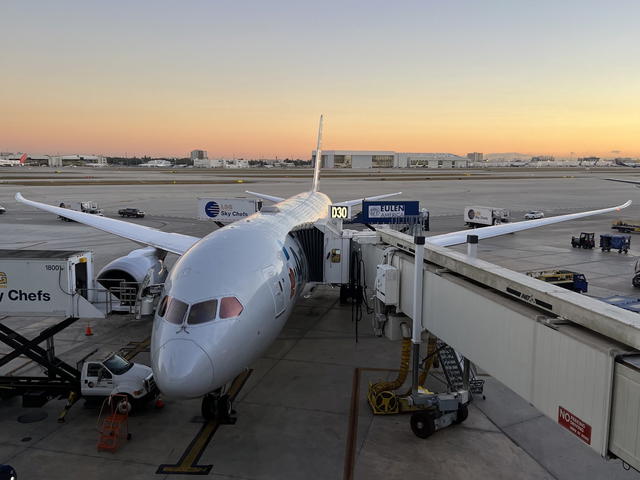
This will finally be changing. Australian prime minister Scott Morrison has announced that Australia will reopen its international borders as of November, coinciding with 80% vaccination rates being reached. No, that doesn’t mean foreigners will be allowed to enter Australia, but rather it means that vaccinated Australians will be allowed to leave the country and then return.

Morrison is framing this as a huge victory, stating that “it’s time to give Australians their lives back.” In fairness, this does represent an improved timeline — previously the goal was for Australia to reopen its borders by Christmas.

Upon return to Australia, the hope is that the 14 day quarantine in a facility can be replaced by a seven day home quarantine. However, the logistics are still being worked out there.

Furthermore, the challenge is that individual states can still make their own rules, and there are varying opinions among politicians among what approach should be taken. For example, recently the premier of Queensland seemed baffled that anyone would want to leave Australia, posing the question of where people would even want to go.

This doesn’t mean Australia will open for tourism

While Australia will soon allow citizens to leave the country, we still don’t know when foreigners will be able to visit Australia. Australia has been one of the few countries in the world to prohibit citizens from leaving, even with the understanding of having to quarantine on the way back. For now that’s the only restriction being lifted.

Australia’s government has been all over the place when it comes to its plan for reopening to tourists, and it’s anyone’s guess when that will be allowed. With how things are going (which I’ll share my thoughts on below), I feel like it’s going to happen sooner rather than later, given the huge impact the current restrictions have on Australia’s tourism sector, and at this point Australia likely isn’t going to be able to overcome its outbreak.

My take on Australia’s border reopening

At the beginning of the pandemic I very much respected the Australian government’s approach to handling the pandemic. The country did everything it could to keep coronavirus out and protect its citizens, which works great in the short term. However, the government apparently missed the memo that coronavirus isn’t going anywhere, and it’s something that eventually has to be lived with.

Frankly this is playing out exactly as I expected. Australia wasn’t going to be able to manage the spread of coronavirus forever, and at this point Australia has by far its worst outbreak since the start of the pandemic. Not only are cases at an all-time high (by a long shot), but the delta variant also spreads so much more easily, making this even harder to get under control.

It’s no surprise that now that the zero coronavirus strategy has failed (which was always going to happen eventually), the government is ready to “give Australians their live back.” And of course conveniently this comes right before an election.

In reality this isn’t doing a whole lot to give people their lives back, in my opinion — vaccinated people are just allowed to leave the country once again, with a mandatory quarantine on the return (though possibly shorter and at home). We still don’t know when borders will reopen.

For that matter, on some level Australia is now just a collection of states, with each state having its own policies. Shortly Australians may be able to travel abroad, but won’t be able to travel between states. This mess is far from over.

To be clear, I think many countries (and in particular the United States) messed up their coronavirus response, but I think the Australian government was unique in its arrogance of thinking it could “beat” the virus and keep it out forever. To this day, this is something that some politicians in Australia are doubling down on.

Bottom line

Australia plans to reopen its borders as of November 2021, as the country reaches an 80% vaccination rate. No, that doesn’t mean tourists will be allowed to enter Australia, but rather it means that Australians will be allowed to leave the country, with a mandatory quarantine still required on the return.

With Australia dealing with its worst coronavirus outbreak to date (by far), I’m curious how the timeline evolves for visitors once again being allowed.

What do you make of this latest update to Australia’s border policies?

Conversations (105)
The comments on this page have not been provided, reviewed, approved or otherwise endorsed by any advertiser, and it is not an advertiser's responsibility to ensure posts and/or questions are answered.
Comment as a member

Membership is free and takes no more information than commenting as a guest. Earn status points for good contributions, and see fewer ads as your status grows.

Type your response here.

If you'd like to participate in the discussion, please adhere to our commenting guidelines. Anyone can comment, and your email address will not be published. Register to save your unique username and earn special OMAAT reputation perks!

  1. Loading comments…
Recent Comments
The latest from the OMAAT community.

The comments on this page have not been provided, reviewed, approved or otherwise endorsed by any advertiser, and it is not an advertiser's responsibility to ensure posts and/or questions are answered.

Mh Diamond

Despite not living in or being a citizen of Australia, congrats on a well-informed article. The title is misleading though, as you later clarify in the article that it's not a full "opening of borders", just a potential removal of some restrictions, in line with the policy announced previously. Certainly the article is a better overview than a lot of Australian observations on US systems would be. As for the comments below, they seem to be sadly mired in parochialism or political bias, as is often the case with discussion here on the topic.

2
‼ 0
platy Guest

OMAT is probably the best frequent traveller website of the bunch. That said, your knowledge of matters Australian continues to be superficial and misguided. Please consider some counterpoints. “Australia will finally start letting citizens travel again as of next month!” There is no active entity, “Australia”. What you are trying to say (I assume) is that the federal government (Prime Minister Morrison) has made a statement of intent to relax border restrictions starting in November 2021. Understanding and identifying the respective roles of the federal and state governments is highly relevant to any commentary on Australia’s COVID response. (This is of note because it is a few weeks earlier than originally mooted in the national plan to relax COVID measures as vaccination rates for the over 16s reach certain targets (namely 70% and 80%) based on modelling commissioned by The Doherty Institute (as extensively discussed in posts replying to your last blog on Australia). This also requires the consent of respective state governments. Accordingly, this was to be discussed during a meeting of Australian national and state leaders in one of their regular meetings last Friday (1 October), although overtaken by the political events in the state of NSW (the NSW resigned in anticipation of being called to face allegations of corrupt conduct before the Independent Commission Against Corruption before 18 October 2021. “Well, they might not be able to travel between states, but they’ll be able to travel abroad” This statement is misleading and has the potential to spread misinformation, so feeding certain prejudiced positions and ignorant perceptions about Australia’s response to COVID. As a general principle, restrictions on travel are determined by nomination of COVID “hotspots”. Such hotspots can be localised to, say, a Local Government Area, effectively a city, or even a whole state. The concept of a hotspot is designed to limit the need for those living outside areas where there is identified community spread of COVID from having to comply with travel (and other) restrictions. But then it gets a little more complicated. There are also other relevant definitions, which include, using the example the state of QLD, “interstate areas of concern” and also “Border Zones”, the latter designed to temper restrictions on those, who happen to live close to a state border. Now your statement can be correct (if one state recognises an entire state as a hotspot), but the reality is far more complex and designed to allow a more targeted approach to domestic travel restrictions. Please refer to the government website to self-educate on such matters – that page links to those for each state: https://www.health.gov.au/news/health-alerts/novel-coronavirus-2019-ncov-health-alert/coronavirus-covid-19-restrictions/coronavirus-covid-19-domestic-travel-restrictions-and-remote-area-access “Around the start of the pandemic, Australia closed its borders” This is again, misleading. Australia initially closed its borders to those arriving from specified countries, just as other countries did and within the same timeframe as those other counties. The first wave of COVID within Australia was mostly seeded by arrivals from the USA. Australia, of course, did later close its borders, albeit with a system of exemptions. For context, note the contents of this summary of global border restrictions: https://theconversation.com/closed-borders-travel-bans-and-halted-immigration-5-ways-covid-19-changed-how-and-where-people-move-around-the-world-157040 “Australia closed its borders as part of the country’s zero tolerance approach towards coronavirus.” That is absolutely incorrect. Step back to March 2020. The federal government’s policy was to “flatten the curve”, in other words to try to manage the impact of COVID within the limits of medical resources. This article typifies the message of the day: https://www.abc.net.au/news/2020-03-27/coronavirus-options-to-end-lockdown-explained/12090270 “Not only did this prevent foreigners from entering Australia, but it also prevented Australians from leaving the country, aside from some very narrow exceptions” Let’s be accurate. Borders were not completely sealed off. Over 500,000 Australians returned to their country during the pandemic based on Australian Bureau Statistics data on arrivals and departures. A system of various exemptions was set up to enable continued travel. You can self-educate using the government website: https://covid19.homeaffairs.gov.au/travel-restrictions “Furthermore, anyone who entered the country has had to quarantine in a facility for 14 days.” Not quite true. Exemptions were made for various groups. These are summarised on the government website. https://www.health.gov.au/news/health-alerts/novel-coronavirus-2019-ncov-health-alert/coronavirus-covid-19-travel-and-restrictions/coronavirus-covid-19-advice-for-international-travellers#recommended-quarantine-exemptions-for-some-industry-workers “Australian prime minister Scott Morrison has announced that Australia will reopen its international borders as of November, coinciding with 80% vaccination rates being reached.” This is where it gets interesting. Firstly, you need to quote the vaccination rates accurately – they are defined against the population aged 16 or over as a hangover from a time when only the 16-year-old plus cohort was eligible for vaccination – it thereby does not take into account the 12 to16 year old who are now eligible or vaccination. So, 80% vaccination rate is not 80% of Australians. The true rate is perhaps 10 percentage points less, the 80% target is really less than 70%. Based on the experiences of other countries this will be insufficient to limit COVID without maintaining restrictions which the government’s Doherty Report refers to as PHSM (Public Health and Social Measures and TTIQ (Test, Trace, Isolate Quarantine). “No, that doesn’t mean foreigners will be allowed to enter Australia, but rather it means that vaccinated Australians will be allowed to leave the country and then return.” Yep. “Morrison is framing this as a huge victory, stating that “it’s time to give Australians their lives back.” In fairness, this does represent an improved timeline — previously the goal was for Australia to reopen its borders by Christmas.” Yep. “Upon return to Australia, the hope is that the 14 day quarantine in a facility can be replaced by a seven day home quarantine. However, the logistics are still being worked out there.” Yep. "Furthermore, the challenge is that individual states can still make their own rules, and there are varying opinions among politicians among what approach should be taken." Let’s adopt a reality-check here. Vaccination rates are not equally distributed. Within the state of NSW they vary from lows around 38% (double dosed) of the over 16s in vaccine resistant Local Government Area such as Byron and as high as 75-77% (double dosed) of the over 16s in the affluent and demographically older LGAs of Hornsby and The Hills Shire on the North Shire of Sydney. Different states also return different vaccination rates. NSW is sitting on 66.5% (doubled dosed over 16s) and QLD on 48%. So, NSW will reach an 80% target whilst other states could be still on just 60% or so. This may reflect the fact that Delta VOC hit NSW first and the federal government directed vaccine supply preferentially to NSW. You can see the detailed vaccine rates on this website: https://www.smh.com.au/interactive/2021/coronavirus/vaccine-tracker/ This will inevitably mean it could be opportune to open the borders in NSW before other states when applying the 80% (over 16s target). No responsible state premier is going to open their international borders at 60% vaccination rate. “For example, recently the premier of Queensland seemed baffled that anyone would want to leave Australia, posing the question of where people would even want to go. “ T hat has been discussed ad nauseam in your recent blog article. Incidentally, when the travel bubble with NZ was in play Qantas launched flights between my home town of Cairns direct to Auckland using an A330. A group of us bought tickets to support the initiative. These flights were removed from the schedule within a few hours of us buying the tickets due to lack of customers, despite the Australian government bankrolling 50% of the fares (we paid USD365 each way for a 5-hour business class sector). The demand was just not what people were expecting. “Australia has been one of the few countries in the world to prohibit citizens from leaving” Not exactly. Refer to the above comments on the exemption system. “Australia’s government has been all over the place when it comes to its plan for reopening to tourists, and it’s anyone’s guess when that will be allowed.” In your July article you upheld Singapore as the shining example to expose the Australian’s government’s strategy as “kind of bananas”. Presumably you are aware that the Singapore Government reimposed COVID restrictions. Incidentally, you might find this article of interest: https://www.insider.com/meet-the-couples-separated-malaysian-singaporean-border-unable-to-meet-2021-9 “ at this point Australia likely isn’t going to be able to overcome its outbreak.” What does that mean? There is a plan to manage COVID based on vaccination combined with PHSM and TTIQ measures. Most states and territories have (virtually) zero COVID, but are periodically challenged by outbreaks due to movement of some people, such a truck-drivers (who are very regularly tested). The outbreak in NSW has probably peaked – the one VIC maybe not. State premiers will inevitably attempt to limit COVID through PHSM and TTIQ measures until vaccination rates climb beyond their assigned targets and vaccinations can take on the main burden of limiting COVID. “ the government apparently missed the memo that coronavirus isn’t going anywhere, and it’s something that eventually has to be lived with.” You are entitled to your personal opinion – but why do you persist in repeating these childish mythologies about Australia’s response to COVID? The federal government has put forward a plan, although it notes “The Plan is based on the current situation and is subject to change if required”. It’s here: https://www.pm.gov.au/sites/default/files/media/national-plan-to-transition-australias-national-covid-19-response-30-july-2021.pdf The federal government is seeking to bring forward the timeline. Having dithered on vaccine procurement and roll out, vaccination rates are climbing at a healthy rate and on track to reach targets within weeks rather than months. Borders will be opened up as vaccination rates rise, subject to the ongoing state of COVID globally. “Australia wasn’t going to be able to manage the spread of coronavirus forever” The Australian Government and the various state governments HAVE managed COVID. The plan is to relax restrictions as vaccination rates enable vaccines to take the burden of management of the epidemic. Meanwhile various travel restrictions continue in most of the countries of the world: https://www.iatatravelcentre.com/world.php “and at this point Australia has by far its worst outbreak since the start of the pandemic. Not only are cases at an all-time high (by a long shot), but the delta variant also spreads so much more easily, making this even harder to get under control.” Sure, but let’s add some perspective here. The current daily case rates are roughly the same as Singapore, which has five times less population than Australia and 79.7% of its population fully vaccinated to Australia’s 45%. “It’s no surprise that now that the zero coronavirus strategy has failed (which was always going to happen eventually), the government is ready to “give Australians their live back.” No, you are arguing against your own delusional perception. There isn’t a zero COVID strategy. The federal government’s plan does not target such a goal. The modelling being used to inform the federal and various state governments does not target such a goal. In any case, however you attempt to frame it, Australia’s COVID strategy hasn’t failed. Total deaths in Australia sit at 1,321 compared with over 700,000 in the USA. Most states and territories of Australia are currently (virtually) COVID free with life going on as normal. Most of us (but not all) have enjoyed relatively unrestricted lives for most of the duration of the pandemic. Yes, international travel has been impacted for some – but to most Australians that is irrelevant (only 57% of Australians have a passport compared with 76% UK citizens) “And of course conveniently this comes right before an election”. Yep – PM Morisson will push his agenda vociferously over the next few months. “In reality this isn’t doing a whole lot to give people their lives back, in my opinion” Announcing bringing forward a relaxation in border restrictions for vaccinated locals is in itself a small step – but to be fair on the PM, it is part of a bigger plan. “For that matter, on some level Australia is now just a collection of states, with each state having its own policies.” On some level? Your understanding is evidently very vague. Australia is a Commonwealth based on a federation of states. Certain matters are legally entrusted to the federal government and certain others to the state government. Health care comes under state powers, so it is inevitable that each state government will do the job it is legally obliged to do – champion the health care of that state. “Shortly Australians may be able to travel abroad, but won’t be able to travel between states.” To note my earlier comments about how domestic travel restrictions are managed by state governments. You are being adopting a position which is ignorant and melodramatic. “This mess is far from over.” COVID is far from over. Vaccination rates in the USA have stalled. The UK still has a complicated traffic light system as part of its inbound travel restrictions. Japan still restricts entry to non-Japanese residents arriving from a long list of countries (including the USA): https://www.mofa.go.jp/ca/fna/page4e_001053.html “ I think the Australian government was unique in its arrogance of thinking it could “beat” the virus and keep it out forever. “ Spoiler alert, Lucky – it didn’t (think it could “beat the virus and keep it out forever). So, you are ascribing arrogance against a construct of your own delusion. IMHO denigrating Australia for its excellent achievements in managing COVID has become something of an obsession for some. When you analyse this nonsense, you find mostly misinformation, poor levels of understanding, little critical analysis and an almost absent attempt to do any actual research on the underlying facts and figures (although these are readily available with a cursory online search to anyone with even the most basic data mining skills). It is extraordinary that the fake narrative continues despite counterpoint facts and figures being presented (for example in response your other recent article on Australia). But then, if you’re 700,000 dead it might be unsurprising that some try to excuse the stunning failures of governance and stupefying selfish attitudes of some in the community than enable such by making false claims about the successes of other countries. Incidentally, and of relevance to frequent flyers, it appears that Qantas is going to take an each-way bet on those initial November flights by opening all seats up as classic awards.

4
‼ 0
Alan Diamond

Fortunately Australia is entering the spring/summer season unlike the USA. Here is an excellent, albeit grim statistical analysis of the situation in the US. MSM should be doing this same analysis and confronting the government for answers rather than simply parroting the govt's agenda. https://boriquagato.substack.com/p/covid-heads-north-for-the-winter?r=pf2n0&utm_campaign=post&utm_medium=email&utm_source= Australia's goal of 80% vaccination is not going to resolve the problem as you will see from the US data in the northern states. Rather than continuing to preach vaccination as a solution it is time to reevaluate the data and actually follow science.

0
‼ 0
StephanieMaher New Member

Potatoman and Hutch are exactly right. The plan wasn't "Zero COVID" in perpetuity - it's "Zero COVID" until we can get the population vaccinated. The real failure is the 'vaccine strollout' (as it has been called over here). "Zero COVID" makes a lot of sense as a short-term approach while you wait for the population to get vaccinated.

1
‼ 0
Ethan Guest

I would love it if the government would expand the definition of “immediate family”. I would love to visit my elderly parents in Australia, but they don’t count as “immediate family”, so I’m not eligible for an exemption to visit.

0
‼ 0

Save posts to read later

Saving posts is a member feature. Become an OMAAT member to build a reading list you can come back to from any device.

Become a member
Meet Ben Schlappig, OMAAT Founder
5,883,136 Miles Traveled

43,914,800 Words Written

47,187 Posts Published

Keep Exploring OMAAT