
The past few weeks we’ve seen a fierce battle for control of Starwood, as Marriott and Anbang have been bidding against one another:
- Last November, Marriott agreed to purchase Starwood, with each share of Starwood stock being worth 0.92 Marriott shares plus $2 in cash
- Then in March, Chinese insurance group Anbang made an offer of $78 in cash per share, which Starwood accepted
- Then days later, Marriott made an offer which Starwood accepted, where each share of Starwood stock was worth 0.8 Marriott shares plus $21 in cash
- Then this Monday, Chinese insurance group Anbang made an offer of $82.75 in cash; while it wasn’t immediately accepted, Starwood’s Board of Directors indicated it is “reasonably likely to lead to a superior proposal”
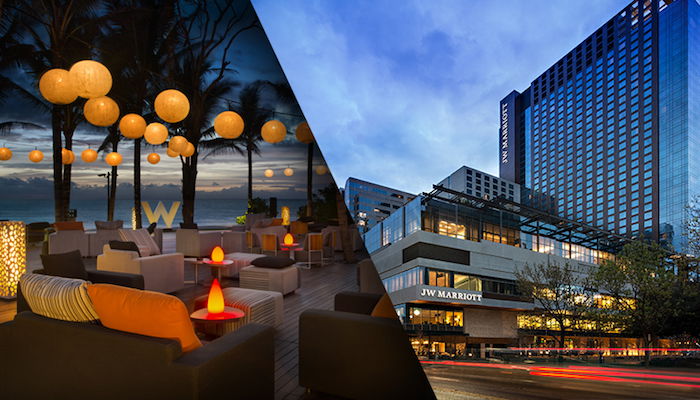
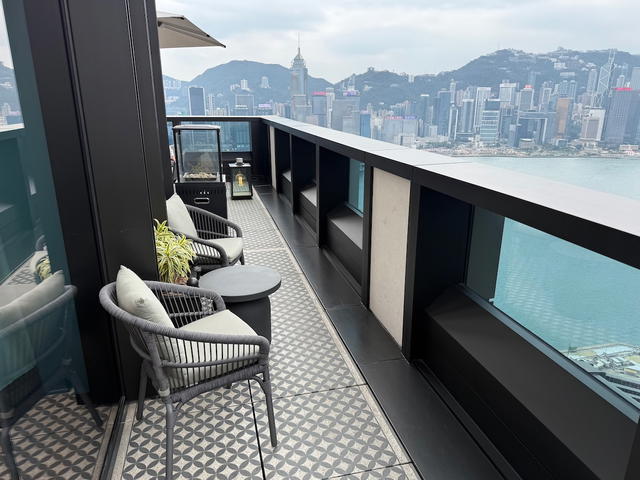
While publicly and officially the Starwood board is still recommending the Marriott merger, it looks like Anbang is the likely winner, since Marriott isn’t willing to go higher on price… at least in theory. Marriott would still walk away with a breakup fee of up to $468 million, so they wouldn’t walk away empty handed.
When it was clear that Marriott couldn’t win on price, Marriott instead turned to non-pricing terms to create doubt regarding Anbang:
Starwood stockholders should give serious consideration to the question of whether the Anbang-led consortium will be able to close the proposed transaction, with a particular focus on the certainty of the consortium’s financing and the timing of any required regulatory approvals.
What’s interesting is that most Starwood loyalists (including me) are hoping the Anbang offer comes out on top, even though we know almost nothing about the company. Why?
- We’ve seen what consolidation has done to the airline industry, and we don’t want to see the same happen to the hotel industry; it would eliminate a competitor, and competition is good for consumers
- Based on what we know, it seems like Anbang is simply trying to diversify and globalize their investments, so they very well may let Starwood still run pretty independently
- This could be either a good or bad thing, but if anything Anbang might have lower expectations of ROI than a publicly traded company in the US, given that it sure seems like they’re about diversifying their investments rather than simply getting the highest return possible
But there’s a lot of mystery surrounding Anbang, and it’s the subject of a New York Times article which was published yesterday. Like the fact that Anbang’s fax number is for a dentist’s office, and two of Anbang’s shareholders have websites with porn and gambling links.
Anbang isn’t the most transparent company out there, as they’ve grown exponentially over the past few years, without much information on where that money came from:
At a time of growing demands for transparency in business and finance, some experts say it is striking that an opaque Chinese insurer is forging headline-grabbing deals in the United States, especially in an election year that has put China’s economic influence under scrutiny as never before.
Anbang, founded only in 2004, exploded in size two years ago, as those same 37 companies poured billions of dollars into its coffers.
“Any time somebody in China magically snaps their fingers and has a lot of money, in this case a colossal amount of money, that sets off red flags for me,” said Christopher Balding, associate professor of finance and economics at Peking University’s campus in Shenzhen, a city in southern China. “It’s in their interest to share information to say ‘we come in peace,’ but there’s just not that culture of information-sharing. In China, when people are hiding this amount of information, it’s for a reason.”
Just how hidden are many of the shareholders making up Anbang?
For example, one Anbang shareholder — a coal mining company in China’s western region of Xinjiang — is owned by another mining company, Zhongya Huajin, that listed a Zhuo Ran as its first legal representative, though that person has since resigned.
Zhongya Huajin shares an official website address with a different Anbang shareholder, a Beijing real estate company. Collectively, those companies own nearly 4.6 billion shares of Anbang, or more than 7 percent. The companies could not be reached for comment, and their common website now contains only links to pornography and gambling services.
Check out the full New York Times article for more, as it’s a fascinating read.
Bottom line
It’s interesting to read more about Anbang, given how many of us (blindly) support a takeover by them rather than Marriott. I really enjoyed this article, since it talked a bit more about Anbang, or rather just reaffirmed how mysterious they are. So perhaps I’m crazy, but I still prefer a takeover from an unknown company over a Marriott takeover.
Even if Anbang were to ruin Starwood (which I hope they won’t), I still think the industry would be better off with Marriott and Starwood separate. If the two were to merge, then we’d likely see the same thing we previously saw in the airline industry. I bet we’d see further consolidation among Hilton, Hyatt, IHG, etc., and that’s not good for consumers.
Do your opinions about Anbang change after reading this article?
(Tip of the hat to @gobears99)


Membership is free and takes no more information than commenting as a guest. Earn status points for good contributions, and see fewer ads as your status grows.