

The United Kingdom has the world’s highest taxes for airline passengers, known as the Air Passenger Duty (APD). In this post, I’d like to look at how the APD works — what is it, how much does it cost, when does it apply, and are there any tricks to minimizing it? The UK adjusts the APD every April, so I like to make a post at that time covering all of the latest costs associated with this.
What is the UK Air Passenger Duty?
The UK’s Air Passenger Duty is a steep tax levied on any flight originating in the UK — this means that if you’re simply transiting the UK between other countries on one ticket then you shouldn’t be on the hook for this. Rather it’s charged based on having a journey originating in the UK (even if it’s the return portion of a ticket), regardless of where you’re connecting.
Suffice to say that the UK APD is controversial:
- It’s a tax against those traveling from the United Kingdom, rather than those who simply connect in the United Kingdom, as the latter group doesn’t have to pay this
- High taxes negatively impact demand for air travel, since it makes flying more expensive; airlines serving the UK have long fought against this tax, since it raises the cost of airline tickets
For some historical context, the UK APD was first introduced in 1994 and was intended to raise money for the government. When it was first introduced, the tax was £5 for destinations within Europe, and £10 for destinations outside of Europe (as you’ll see below, it has gone way up).
Over the years the tax has almost been viewed as an environmental tax, intended to encourage other forms of transportation. Then again, those are pretty limited if you’re traveling long haul from the UK. From an environmental standpoint, there are two issues with this:
- It does nothing to encourage airlines to invest in more efficient aircraft, since you’d think that would be a consideration in terms of emissions
- If this is about the environment, you’d think transit passengers would be on the hook for this, since they have an even bigger environmental impact when taking two flights
How much is the UK Air Passenger Duty?
The UK Air Passenger Duty amount is broken down based on the distance you’re flying, and the class of service you’re flying in. There are four different pricing bands, and here’s the pricing as of April 1, 2026:
- For domestic flights (only within England, Scotland, Wales, and Northern Ireland), the APD is £8 (~$11) in economy, and £16 (~$21) in a premium cabin
- For international flights of up to 2,000 miles (short haul), the APD is £15 (~$20) in economy, and £32 (~$42) in a premium cabin
- For international flights of 2,001 to 5,500 miles (long haul), the APD is £102 (~$135) in economy, and £244 (~$322) in a premium cabin
- For international flights of more than 5,500 miles (ultra long haul), the APD is £106 (~$140) in economy, and £253 (~$334) in a premium cabin
Now, there are some further details to be aware of:
- For these purposes, a premium cabin would include anything other than economy, so it includes premium economy, business class, and first class
- If you upgrade your seat the higher UK APD applies, which is why many airlines will request a co-pay when upgrading a flight out of the UK (to account for this cost)
- The distance isn’t measured between your origin and destination, but rather between London and the capital city of the country you’re traveling to
- The distance isn’t measured by the distance of your nonstop flight from the UK, but rather by your final destination on your itinerary (assuming continuous travel with no stopovers of more than 24 hours); in other words, the same APD applies whether you fly from London to New York nonstop, or from London to Paris to New York, even though the former itinerary has a much longer nonstop flight out of London
- The UK APD is in addition to any airport taxes and fees, so this isn’t even all you’ll pay in taxes and fees when originating in the UK

When does the UK Air Passenger Duty apply?
Understandably there’s confusion about under what circumstances the UK Air Passenger Duty applies, so let me try to break it down as simply as possible:
- The UK APD applies based on whether you have a flight itinerary originating in the UK; an itinerary is considered to be originating in the UK if you’re on the ground there for more than 24 hours
- The UK APD doesn’t apply for any flights to the UK, as it’s purely a departure tax
- The UK APD doesn’t apply to people who are simply connecting in the UK for under 24 hours on a single ticket
- The UK APD doesn’t apply to children under the age of 16
Let me give some examples, and with each, I’ll explain whether or not the UK APD applies:
- Are you flying from London to Los Angeles? You’ll have to pay the long haul APD
- Are you flying from Los Angeles to London? You won’t have to pay the APD
- Are you flying from New York to London to Paris, and are connecting in London for under 24 hours? You won’t have to pay the APD
- Are you flying from Dubai to London to New York, and are connecting in London for under 24 hours? You won’t have to pay the APD
- Are you flying from London to Amsterdam to Los Angeles, with a connection of under 24 hours in Amsterdam? You’ll pay the long haul APD
- Are you flying from London to Amsterdam to Los Angeles, with a connection of over 24 hours in Amsterdam? You’ll pay the short haul APD
Hopefully that covers most scenarios. As you can see, the APD is calculated based on the final destination of your ticket departing the UK, with continuous travel within 24 hours.
When do you pay the UK Air Passenger Duty?
The UK Air Passenger Duty is collected by airlines directly at the time of booking. So when you book a ticket that’s subjected to the APD, you can expect that your ticket price will include the APD. This isn’t something you have to pay at the airport, or after the fact, for example.
What’s the difference between the UK APD & fuel surcharges?
There’s often confusion about the distinction between the UK Air Passenger Duty and fuel surcharges, given that UK airlines are known for charging both, and it’s also why award tickets originating in the UK can cost so much. Just to clear that up:
- The UK APD is a government-imposed fee that can cost up to £253 on a one-way flight
- Fuel surcharges are imposed directly by airlines, and are a junk fee that has nothing to do with the government
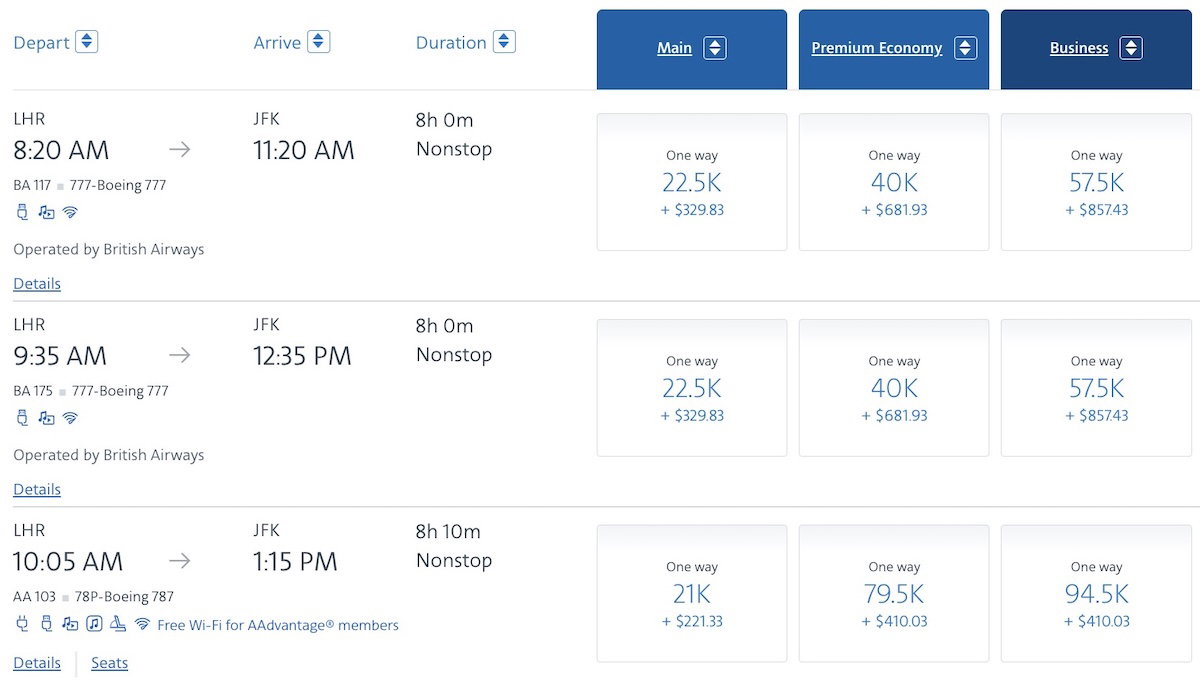
While only some airlines add fuel surcharges (like British Airways), all airlines have to charge their passengers originating in the UK the Air Passenger Duty. Just to give an example of that, say you’re redeeming American AAdvantage miles for business class travel between London and New York (we are just focused on the cash amounts here, and not the mileage amounts).
If you book for travel on American, there are no fuel surcharges, and you’d pay a total of $410.03, which accounts for the UK APD, as well as all the airport taxes and fees (which are on top of the UK APD). Meanwhile, if you were to book British Airways instead, there would be fuel surcharges, and you’d pay $857.43. As you can see, in this case, the fuel surcharges are $447.40.
Since this often creates confusion, let’s look at flights in the other direction, from New York to London. If you were to book American, you’d pay just $5.60 in taxes and fees (there are no fuel surcharges or UK APD). Meanwhile, if you booked British Airways, you’d pay $733.50, meaning that the fuel surcharges are $727.90. Yes, fuel surcharges are higher originating in the US than the UK, but there’s still no UK APD here.
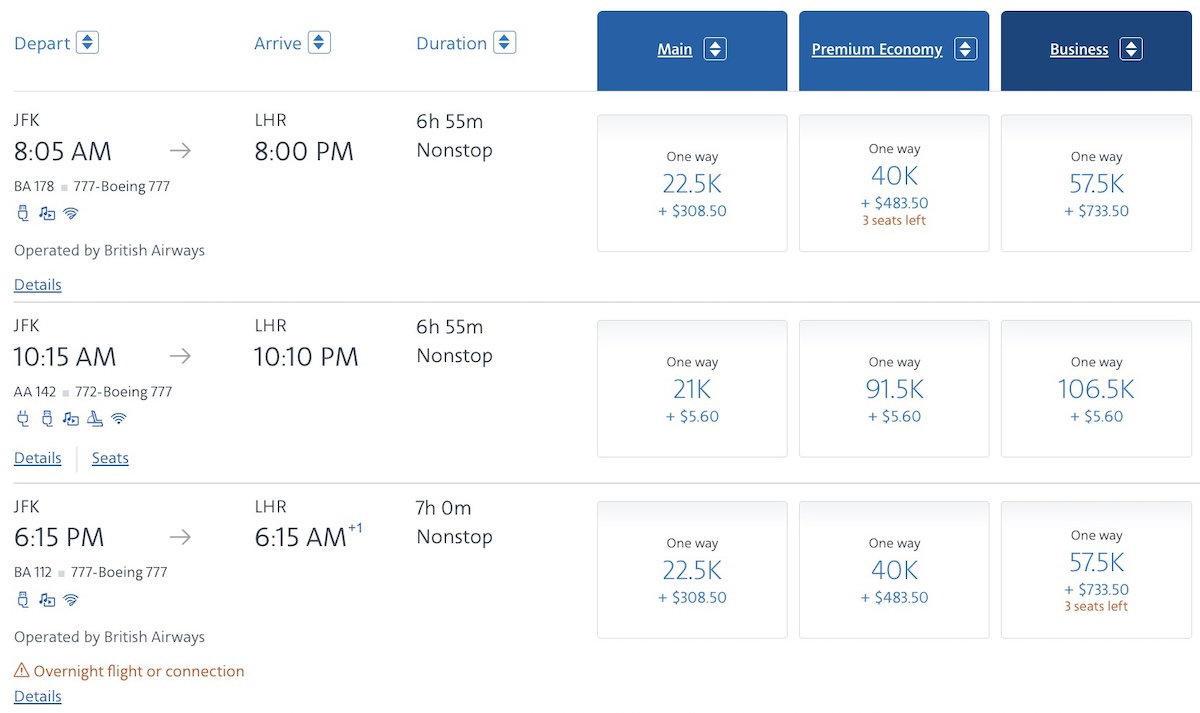
Hopefully, that clears up any confusion regarding the distinction between the UK APD and fuel surcharges.

Are there any ways to minimize the UK APD?
There’s no real way to “beat” the UK Air Passenger Duty, though there are some ways to minimize it, or at least be strategic about it. Different people will have different takes on the extent to which these strategies are worth it, but I figure they’re at least worth pointing out. Let me give a few examples.
Plan your stopover strategically
For example, say you’re redeeming British Airways Avios to fly roundtrip from New York to Paris via London, and you plan to have a stopover of more than 24 hours in London in one direction. If you’re going to do that, I’d highly recommend having your stopover in London on the outbound, rather than the return. Why? Because you’d only pay the short haul APD (£32), rather than the long haul APD (£244).
At the point in your itinerary where you’ve been in London for over 24 hours, you’ll be embarking on an itinerary of under 2,000 miles (to Paris), rather than an itinerary of over 2,000 miles (to New York).
Furthermore, if you want to visit London but only briefly, try to plan a stopover of just under 24 hours. That way you can avoid paying the UK APD altogether, all while still visiting the UK for a bit.
Mix economy & business class
When booking award tickets, some people like to travel one direction in business class and one direction in economy class, to splurge without redeeming too many miles. If you’re traveling to & from the UK and are using this strategy, ideally fly business class on your flight to the UK, and economy on your flight from the UK.
For one direction of travel, this would lower your APD from £244 to £102.
Fly out of Inverness
While Inverness is part of the United Kingdom, the Scottish Highlands and Islands are exempt from the UK APD. This is part of an agreement that dates back all the way to 1994, so it’s a nice little loophole. The catch is that not many people would naturally be starting there, and Inverness has fairly limited service.
For example, if you fly from Inverness to London to Charlotte using American AAdvantage miles in business class, you’d pay just $124.13 if your transatlantic flight is on American, while you’d pay just $558.23 if your transatlantic flight is on British Airways.
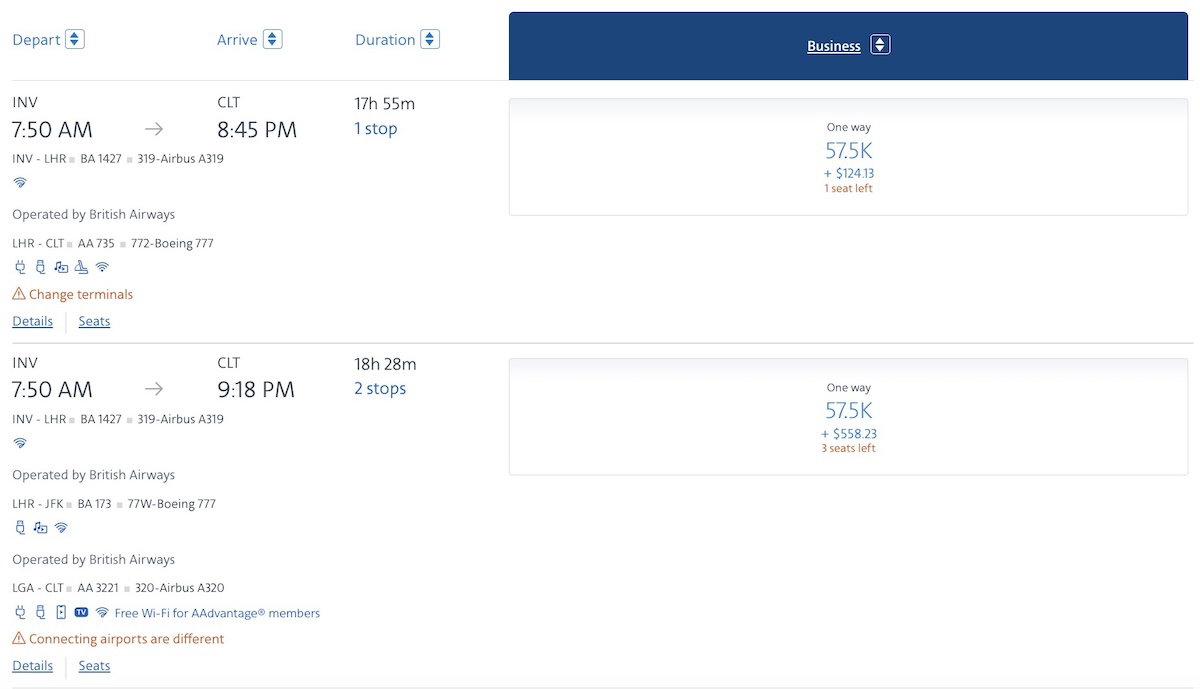
Meanwhile if you just took those same flights from London to New York, without originating in Inverness, you’d pay a total of $410.03 on American or $857.43 on British Airways, accounting for the UK APD.
Position yourself to another country
You can avoid the UK APD by flying out of a country other than the UK, and that could potentially save you quite a bit, especially on a business class ticket. There are a few ways to go about this:
- Some people will position themselves to Dublin to start their itinerary, because flights from Ireland aren’t subjected to the UK APD (and as a bonus, flights out of Ireland are often cheaper than flights out of the UK, even taking that out of the equation); in some cases flights between the UK and Ireland can cost under $20, so this could save you some significant money
- Some frequent flyer programs allow stopovers, including Air Canada Aeroplan, Air France-KLM Flying Blue, and Alaska Atmos Rewards, so you can use those strategically; for example, you could fly from London to New York via Amsterdam with a stopover of just 24 hours there, and then you’d only have to pay the short haul APD rather than the long haul APD

Bottom line
The UK Air Passenger Duty is the world’s highest tax that’s levied on airline passengers. This applies to passengers with itineraries originating in the United Kingdom, and the tax ranges from £15 for an international short haul economy flight, to £253 for an international premium cabin long haul flight.
Hopefully the above provides a useful summary of how this works, and if anyone has any questions, please let me know. While the UK APD can’t be avoided altogether, there are most definitely ways to minimize it.
What has your experience been with the UK APD?




I am a retired United Airlines employee having worked at LHR for approx 35 years.
As one of the perks, I now have the privilege of travelling on my airline, free of charge, however, the Air passenger international duty charge is now up to $395.20 pp in Business class or $224.80 pp in economy class.
Back in March I listed my husband and myself, and two eligible travel companions to travel in business...
I am a retired United Airlines employee having worked at LHR for approx 35 years.
As one of the perks, I now have the privilege of travelling on my airline, free of charge, however, the Air passenger international duty charge is now up to $395.20 pp in Business class or $224.80 pp in economy class.
Back in March I listed my husband and myself, and two eligible travel companions to travel in business class, LHR/IAH/EZE, however, we received seats in economy on the sector LHR/IAH as business was full, and I have now been advised that even though I travelled in economy, because I listed in business class, I will not receive the difference in the cost from business to economy. For me it was approx $600.00 as only one of us was sat in premium economy with the others in basic economy.
Please can you explain to me how this is justified?
I am not opposed to paying the relevant UK departure tax, however, if I get assigned a seat in economy class, why am I not paying the departure tax relevant to my assigned seat and not to my preferred listing, and have been advised that I'm not entitled to any refund. If I am not sat in business class it's because that class of service is full, and the tax is already being paid by a business class passenger, and ALSO being paid by me, sitting in economy.
I think the first two ideas are more resonable than positioning yourself. Strategic planning and mix cabin. There's less time wasted in the trip for these two. I also think that such things change with people's decisions. If suddenly people strategically planned their trips and did not pay the high taxes or tourism significantly dropped then they would consider a change.
I work for BA. And we get charged this when using our staff standby benefits. Whats even worse is we have two options of buying a business standby or an Economy standby. When we pay the business standby we pay the premium taxes. If it turns out the cabin is full and we get a economy seat, we still fly with paying the premium tax. It does not get refunded because we actually fly in economy.
APD for private jets goes as high as £1141 per person.
As well as the Scottish Highlands and Islands. long haul from Northern Ireland is also exempt.
Oh, we ‘understand’ it; we just don’t ‘like’ it.
I’ll bet you don’t 1990Bot, you cannot pay with points. Besides, what else can we expect from the loony champagne socialist government of ill repute?
Another way to avoid is take the Chunnel to Paris, enjoy a day or two in that beautiful city, and then fly out of CDG.
That's not going to work well if you're flying in business or first. The 'air passenger solidarity tax' is now €120 for long haul premium classes (though premium economy does get away with just €40).
I think i beat the Apd. I do not fly to Uk nor transit there. Actively avoiding. If id fly shorthaul from Europe.
Solution is Simple. Stay in America, lots of places with nature, history and culture right here across the states.
I always prefer to spend £250 on a positioning flight, a hotel room and half a day in Madrid/Tunis/Prague/Italy (Amsterdam is miserable and France also has a similar tax to the tune of €100) than give it to the taxman.
100%! With you all the way. I avoid Heathrow whenever possible which is tough as a West Coast Oneworld regular who is also trying to avoid second tier US airports that dont have decent AA lounges (I'm looking at you BOS/CLT/PHX/SFO). Some of my fun options have been flying via CMN on RAM to LAX from MXP, Helsinki on AY from OSL (although I truly HATE their business class seat), Aer Lingus from DUB. Madrid...
100%! With you all the way. I avoid Heathrow whenever possible which is tough as a West Coast Oneworld regular who is also trying to avoid second tier US airports that dont have decent AA lounges (I'm looking at you BOS/CLT/PHX/SFO). Some of my fun options have been flying via CMN on RAM to LAX from MXP, Helsinki on AY from OSL (although I truly HATE their business class seat), Aer Lingus from DUB. Madrid on IB to LAX. You dont just save on APD...the cost of the tickets can sometimes be 50% of the LHR - LAX J fare
Never been to Morocco but my next award redemption is from RAK- not only have I avoided the APD, but zonal pricing meant that I also saved a few thousand miles on an eastbound ticket compared to starting in the UK!
The UK is a tax a tax mess. This article proves all those wrong who say taxes do not alter people's behaviors. Of course they do.
The thing is that unless you are booking a points flight, regardless of the tax, flights from the UK are no more pricier than most other European countries, as there are so many routes /airlines so pretty competitive.
I'm not sure about Y (not that it's easy to compare stuff like baggage fees etc), but this just isn't true about the other classes. €600 rtn fares aren't unheard of for premium economy from BUD/BEG to China, and SAS also have similar deals to N. American destinations from Germany and elsewhere. That's just not possible to offer from the UK. Similarly, Avianca currently have a sub-€800 one-way business class OSL-GRU fare which actually includes...
I'm not sure about Y (not that it's easy to compare stuff like baggage fees etc), but this just isn't true about the other classes. €600 rtn fares aren't unheard of for premium economy from BUD/BEG to China, and SAS also have similar deals to N. American destinations from Germany and elsewhere. That's just not possible to offer from the UK. Similarly, Avianca currently have a sub-€800 one-way business class OSL-GRU fare which actually includes a connection via LHR on SAS. The same flights minus the SAS connection start at £2k!
The justification for the Air Passenger Duty, as the name suggests, was originally to tariff an airline for the privilege of exporting a passenger from the United Kingdom. The environmental stuff only came much later.
What about?..."the world’s 'lowest' tax that’s levied on airline passengers"
Question: if you are transiting for less than 24 hours on two PNRs is there a way to claim your tax back?
There is another catch that was mentioned in passing that may have evaded some readers.
If you fly on two tickets (two booking locators really) and change flights in the UK (except INV, as mentioned) you will be hit twice:
Example:
Airline A: EU-LON-EU
Airline B: LON-USA-LON
You pay once the LON-EU tax on airline A on the return and you pay the LON-USA tax on airline B on the way out, even...
There is another catch that was mentioned in passing that may have evaded some readers.
If you fly on two tickets (two booking locators really) and change flights in the UK (except INV, as mentioned) you will be hit twice:
Example:
Airline A: EU-LON-EU
Airline B: LON-USA-LON
You pay once the LON-EU tax on airline A on the return and you pay the LON-USA tax on airline B on the way out, even if you are merely transiting (less than 24 hrs) through one of the LON airport (e.g. LGW).
The other catch is that premium travel is subject to a higher taxed. Someone who associates the tax with security fees has to wonder whether business or first class represents a higher risk than economy class, as the service (or rather lack thereof) is the same.
For above reasons I avoid transiting through UK airports if I can.
I visit the UK a few times a year on my own dime. I always book an open jaw and fly back to the USA out of Spain. I find a cheap easyJet flight down to Barcelona usually for under $50 and spend a few days in Barcelona. I see it as a bonus.
I flew this week MIA-FCO-LHR-DUS, one-way taxes went down from about 1200$ to about 250$. This ain’t about discouraging air travel, it’s about helping out a broke country’s government looking for ways to raise cash.
A lot of US foot traffic now using the Inverness trick so much so that they have built a Marriott Courtyard hotel and planning in for a Hilton property both within walking distance of the terminal.
@Ben - Sorry this is unrelated, but apparently TAP is launching flights to Orlando in the end of October. They apparently announced this a month ago, but I never heard of it (even as an Orlando based avgeek) until today because I saw itineraries on Google Flights with TAP out of MCO. I figured you might be interested since you have links to the region. It's crazy how much more service MCO has gotten on mainline European carriers in recent years!
State sponsored extortion.
That 2001st mile is a real doozy
Ben, do you know where in London they're measuring from? For example, LCY-LCA is 2,020 miles per GCMap, and I reckon London to Cyprus is a popular routing. (I acknowldge that Nuuk is 2,028 miles from LCY, but to my knowledge there's not much demand on that segment.) ((Honorable mentions to Batumi, Georgia, at 2,062 miles, and Alexandria Egypt at 2,067 miles.))
UK Air Passenger Duty (APD) distance bands are measured from London to the capital city of the destination country, rather than the distance between the departure airport and the destination airport.
The statue outside Charing Cross station is where all distances from London are measured.
The blight of Blighty.