
I’ve written many times about EU261, whereby passenger are entitled to cash compensation in the event of travel disruptions that meet certain thresholds. While this policy is from the European Union, Switzerland has adopted the legislation as well, and the United Kingdom also has its own version of this (referred to as UK261).
I recently wrote about how SWISS denied a compensation claim for someone, by arguing that a mechanical issue doesn’t qualify for EU261. This directly contradicts what courts have found in the European Union. Well, a SWISS spokesperson has reached out to correct my story, so let me share what I’ve learned.
SWISS says technical issues don’t qualify for compensation
The EU261 structure for flight delay compensation requires airlines to compensate passengers in the event of travel disruptions, except in “extraordinary circumstances.” When these regulations were first published, the text didn’t in detail address every possible scenario of what may qualify as an extraordinary circumstance.
However, over the years, court cases in the European Union have firmed up these policies, and have set the precedent for what qualifies for EU261 compensation, and what doesn’t. In the case of the European Union, the rules are clear — a delay or cancelation from a mechanical or technical issue on an aircraft does qualify for compensation, as it isn’t classified as an extraordinary circumstance.
However, SWISS argues that this isn’t the law in Switzerland. According to the airline, in Switzerland, technical irregularities with an aircraft do count as extraordinary circumstances. The reason is because technical problems don’t arise due to inadequate maintenance, and therefore, couldn’t be avoided even with all reasonable measures.
Here’s how the airline explains this to me:
The European Court of Justice’s case law, according to which technical problems only very rarely constitute extraordinary circumstances, is not binding for civil courts in Switzerland. There are even rulings in Switzerland that do not consider the Passenger Rights Regulation applicable at all in a case like this, due to the journey originating from the US (as a non-EU country) to Switzerland.
The European Court of Justice’s case law often deviates significantly from the actual wording of the Passenger Rights Regulation. This practice is not binding in Switzerland. We adhere to the text of the regulation and comply with the applicable law when processing compensation claims.
Now, it’s worth emphasizing that SWISS’ claim would only potentially hold up for an itinerary not originating in the European Union. That’s because if an itinerary does originate in the Europe Union, then the European Union’s version of EU261 would apply, regardless of Switzerland’s interpretation. At least that’s my understanding, because Switzerland adding its own version of EU261 wouldn’t be relevant.
SWISS responds to EU261 compensation stance
The whole reason all of this came up is because last week I wrote about how someone shared that SWISS denied their EU261 compensation claim, with an airline representative claiming the following (and this was after the person followed up, pointing out the explanation didn’t make much sense):
Your flight has been reviewed and as advised previously, your flight was cancelled due to a result of Rudder Servo Fault due to vulnerability of the 737 main rudder servo valve to causing uncommanded reversals was indeed a significant concern. I hope you can understand we have no control over such circumstances.
Let me emphasize that:
- The explanation borders on being incoherent (to put it politely)
- SWISS doesn’t operate Boeing 737s
- Rudder servo valve issues on the Boeing 737 did cause some fatal accidents back in the 1990s
Anyway, in my post I suggested that SWISS representatives were making up lies to avoid paying out compensation claims. The airline isn’t happy with me making that claim. As a SWISS spokesperson states:
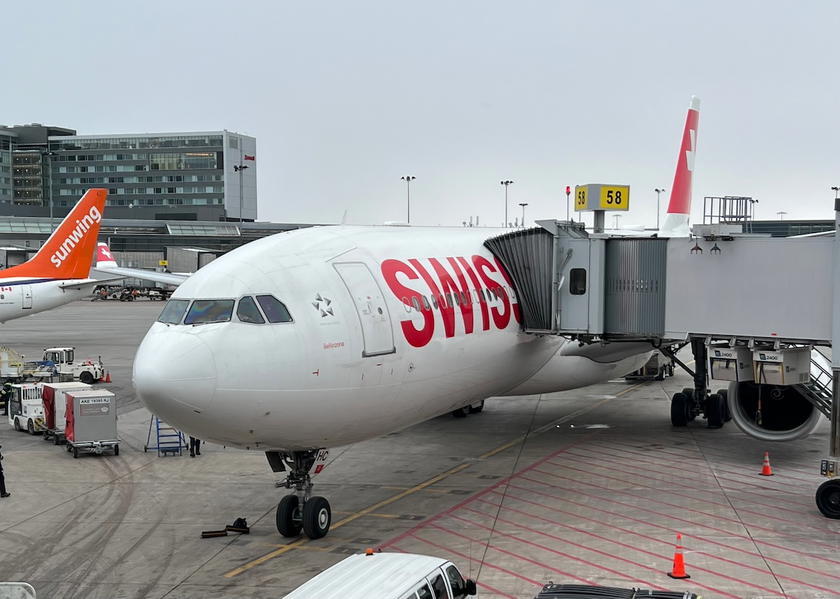
In the original response from our customer service, there was a typographical error. The technical details regarding the ‘main rudder servo valve’ were correct and can be verified in our maintenance protocols. However, the aircraft type should have been ‘Airbus A330-343′ or abbreviated ‘333‘, and not ‘737‘.
So, in reality, no one “made up bizarre lies”, but simply swapped two digits by mistake – this is the entire story here.
We of course regret that this inaccuracy caused confusion and would like to apologize for it. However: Your allegations that our employees systematically ‘lie’ and ‘make up excuses’ are just plain wrong. That there were apparently problems with a certain rudder on some aircraft of the type ‘B737’ decades ago is purely coincidental and has of course no connection with the actual case of an A333 from May 2024 at all.
Accusing our employees of deliberately using this as an excuse seems, quite frankly, rather absurd.
Anyway, I’ll respectfully apologize to SWISS here. I wasn’t aware of SWISS’ stance that it doesn’t have to pay compensation for mechanical issues, unlike all other airlines where EU261 applies. I was surprised to learn this, and I’m not enough of an expert on any law (let alone international law) to tell them that they’re wrong.
Now, I do think most people could understand how one could arrive at the conclusion that airlines do sometimes lie to consumers. I mean, I’ve personally encountered this more often than I can count, and that doesn’t even reflect the data points I hear from others…
I’m not going to sit here and claim that “lie” was a typographical error, and what I really meant to write was “SWISS loves to help its customers.” 😉
Bottom line
EU261 offers some of the most consumer friendly aviation regulations you’ll find anywhere in the world. While Switzerland does follow EU261 rules, the country reportedly has a different interpretation regarding what constitutes extraordinary circumstances.
Most significantly, as Star Alliance carrier SWISS interprets it, EU261 cash compensation doesn’t apply if an issue is caused by a mechanical or technical fault. I’m not making any judgment call here, but am just passing on the claim that I learned…
Were you aware of this distinction with EU261 compensation in Switzerland?


Membership is free and takes no more information than commenting as a guest. Earn status points for good contributions, and see fewer ads as your status grows.