
If you’re a frequent flyer, odds are that you’ve encountered an aborted takeoff, whereby the plane accelerates down the runway, only to slow down, and eventually come to a stop. In some cases this can feel like a non-event, while in other cases it can feel much scarier, depending on the speed at which the takeoff is aborted.
However, here’s something you don’t often see — a SWISS Airbus A220 aborted its takeoff three times in a row, before finally returning to the gate to see what was going on, as reported by Blick. The explanation is actually quite logical, but that doesn’t make the whole ordeal any less unusual.
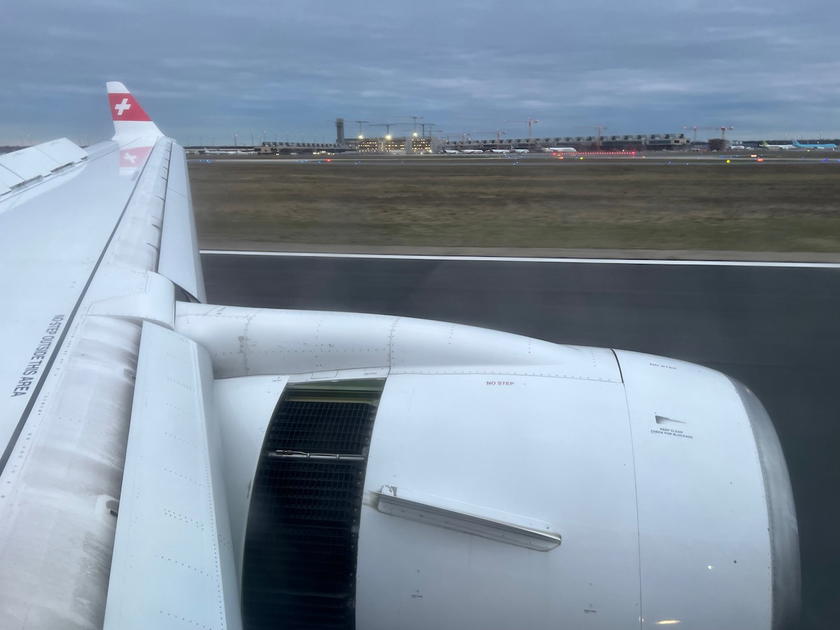
SWISS Airbus A220 aborted Zurich takeoff three times
On Tuesday, November 17, 2026, SWISS flight LX2110 was scheduled to operate from Zurich (ZRH) to Malaga (AGP), with a 9:35AM departure. The flight was operated by an Airbus A220-300 with the registration code HB-JCM.
The plane pushed back and taxied out to the runway right on schedule. The pilots began the takeoff roll, but then quickly applied the brakes, causing the plane to come to a stop, while still at a slow speed. The pilots took a moment to run checklists, and then decided on another takeoff attempt, only for the same thing to happen again!
After the second aborted takeoff, the captain reportedly informed passengers that the thrust levers had popped out during the takeoff roll, and that was the reason for the aborted takeoff. However, rather than returning to the gate, they decided to attempt an additional takeoff roll.
Once again, the takeoff was aborted. At that point the captain explained that nothing like this had ever happened to him before in his 12 year career, and that the plane would be returning to the gate.
There ended up being a plane change, and then the A220 with the registration code HB-JCO was assigned to operate this flight — it ended up taking off at 1:29PM and landing at 3:52PM, around 3.5 hours behind schedule.
So, what explains this trio of aborted takeoffs?
A SWISS spokesperson confirmed the incident happened, though noted that the takeoffs were aborted at a low speed of around 50 kilometers per hour (around 30 miles per hour).
What explains the aborted takeoffs? Well, it was because as the plane accelerated for takeoff, the automatic thrust control system automatically deactivated. To explain this as simply as possible, as I understand it, on the A220 when the auto-thrust is armed and the thrust levers are moved forward for takeoff, the auto-thrust then takes over, and moves the levers forward without manual intervention.
In other words, one of the pilots keeps their hands on the auto-thrust levers and “moves” with them, but doesn’t actually apply any force. Pilots are trained this way, and to not manually apply force. In the event that the crew tries to stop the auto-thrust lever motion, a pressure switch detects this, and then disengages the auto-thrust, to allow for a manual override.
In this case, the auto-thrust incorrectly detected resistance, when the pilots weren’t attempting to apply it. According to the airline, the system that monitors the aircraft’s technical status in real time was unable to identify the cause of the error, as no errors were displayed in the system. So at first, the pilots likely wondered if they had accidentally applied force.
However, once technicians had a look at the plane, it was discovered that the switch for disabling the automatic thrust control on the original aircraft was stuck, and this caused the automatic thrust control to shut down during takeoff attempts.
So while this can understandably seem scary to passengers, this wasn’t even a direct safety issue. After all, the pilots could’ve also manually moved the throttles. However, you also don’t want to take off when you know there’s an issue with the throttles, since that’s not exactly a best practice.
Bottom line
A SWISS Airbus A220 attempted a takeoff from Zurich three times in a row. While I’ve had two consecutive aborted takeoffs, I’ve never had three, and I can’t imagine that happens all too often.
While this is unusual, it sounds like this was handled well, and I can see why the pilots kept trying. This wasn’t a critical safety issue, but instead, just an incorrect detection of inputs, in a way that wouldn’t really pose a risk to the flight. At the same time, you don’t want to knowingly take off with a fault switch.
What do you make of this SWISS aborted takeoff trio?


Membership is free and takes no more information than commenting as a guest. Earn status points for good contributions, and see fewer ads as your status grows.
There are currently no responses to this story.
Be the first to respond.