
On the evening of January 2, 2024, two aircraft collided at Tokyo Haneda Airport (HND), leading to a major accident with fatalities. In the few days since this incident, a lot of details have emerged about what happened, and it almost feels like the more we know, the more questions there are about how something like this could happen. There are some pretty surprising details emerging…
Japan Airlines A350 & Japan Coast Guard plane collide
This incident happened at 5:47PM on Tuesday, January 2, 2024, and involves two aircraft:
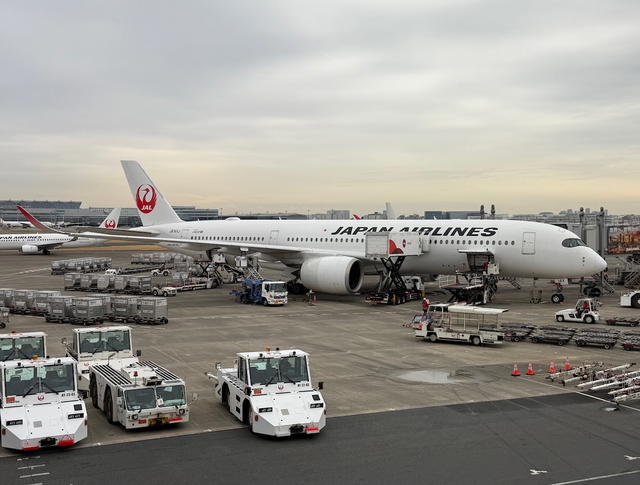
- A roughly two-year-old Japan Airlines Airbus A350-900 with the registration code JA13XJ; this plane was operating flight JL516, which was just landing on Haneda Airport runway 34R after completing an 80-minute flight from Sapporo
- A roughly 16-year-old Japan Coast Guard Bombardier DHC-8-300 with the registration code JA722A; this plane was supposed to be departing Haneda Airport runway 34R right after the Japan Airlines A350 landed
Long story short, the two aircraft were on the runway at the same time, and collided. The below video shows the explosion that occurred from the impact, as the A350 continued barreling down the runway on fire (while you can barely see the much smaller turboprop).
On the Japan Airlines A350, all 359 passengers and 20 crew members managed to evacuate. While there were no human fatalities, at least 17 people from the A350 have been injured, and it’s not clear how serious those injuries are. Unfortunately (this breaks my heart), there were two animals in the cargo hold that also didn’t survive.
There were six people onboard the Japan Coast Guard aircraft. Tragically, five of them have lost their lives, while one is in critical condition. Ugh, that’s just awful… my thoughts are with those onboard and their families.
It’s absolutely shocking to look at what was left of the Japan Airlines A350 the morning after the accident, after the fire raged on for hours. It’s such a testament to how well built aircraft are, that everyone could safely evacuate the A350, despite there being an impact at over 100+ miles per hour, plus this plane ultimately burning to the point of a hull loss.
This accident represents the first-ever hull loss of an Airbus A350, as well as the only hull loss of a Japan Airlines aircraft in the last 40 or so years.
Japan Airlines has a fleet of A350-900s that exclusively operate domestic flights, and they’re in a high density configuration with 369 seats. The airline has 16 of these Airbus jets, with an additional two jets on order. This is separate from the A350-1000 that Japan Airlines will soon start flying, as its new flagship long haul jet.
The Japan Airlines’ A350s evacuation wasn’t without issue
Looking at video footage of the evacuation, I’m impressed that most people left their carry-on items behind, as they’re supposed to. That can be the difference between life and death, and it’s where Japan’s culture of following rules comes in handy. There’s video footage from inside the aircraft during the evacuation, and as you’d expect, it’s scary.
There were a variety of issues and challenges with the evacuation:
- The emergency announcement system stopped working during the evacuation, so flight attendants had to scream and use megaphones to communicate with passengers and one another
- Only three of the eight emergency exits were used for the evacuation, as the crew evaluated which exits could safely be used based on the location of the fire
- While the A350 is certified to be evacuated within 90 seconds, the plane only completed its evacuation 18 minutes after it came to a stop; that sure makes you wonder why this was so delayed
The crew deserves credit for getting everyone off the plane safely. They evacuated a burning A350 with no fatalities, and they did so with no public announcement system, and with only being able to use three exits. Furthermore, the crew members were the last people off the aircraft, and the captain apparently passed through the entire cabin to make sure there was no one left, before he got off the plane himself.
What caused the accident at Tokyo Haneda Airport?
Of course investigations involving a hull loss can take months or even longer, as there’s a lot to learn from these situations. However, we already know a lot about what happened.
The arriving Japan Airlines A350 had received landing clearance for runway 34R, so the plane had permission to land. Meanwhile the departing Japan Coast Guard DHC-8 had only been given clearance to taxi to runway 34R and hold short, and not to enter it. Specifically, here’s the relevant transmission:
Air traffic controller: “JA722A, Tokyo tower, good evening, number one, taxi to holding point C5.”
Pilot: “Taxi to holding point C5, JA722A, number one, thank you.”
The pilot of the Japan Coast Guard plane confirmed the instruction to wait at the holding point, so one has to wonder how the plane ended up on the runway. As you can see, this isn’t a case where the controller gave incorrect instructions, or where instructions weren’t read back correctly. Did the pilots get thrown off by being told they’re “number one,” for some reason, or what possible explanation is there?
Here’s the most shocking part of this. The Japan Coast Guard plane wasn’t just taxiing onto the runway right as the Japan Airlines A350 was landing, but rather it had been sitting on the runway for over 40 seconds, before it was rear-ended by the landing Japan Airlines A350. You can hear some of the ATC audio and see a depiction of that below.
That makes this situation even more shocking. Did no one realize something was off, whether it was the air traffic controllers, pilots of the Japan Airlines A350, or pilots of the Japan Coast Guard aircraft?
There is one other major factor that plays into this. The Haneda Airport warning lights that indicate if a runway is clear were out of service at the time of this accident. This has been the case since December 27, 2023, so it started several days before the incident. There was a NOTAM about this (this is a notice to pilots that they’re supposed to read prior to operating a flight), so it’s something pilots should have known.
The Japan Coast Guard aircraft was about to perform a flight to deliver aid following Japan’s earthquake. One has to wonder if the pilots were rushed and exhausted, didn’t fully read the NOTAMs, and then interpreted being “number one” plus the lack of runway warning lights as an indication that they were cleared for takeoff?
Bottom line
A Japan Airlines Airbus A350 and a Japan Coast Guard Bombardier DHC-8 collided on runway 34R at Tokyo Haneda Airport. The A350 managed to be evacuated with no human fatalities, while tragically five of the six people on the Japan Coast Guard aircraft died.
The Japan Airlines A350 had been given permission to land, while the Japan Coast Guard turboprop entered the runway without permission, and sat there for over 40 seconds before being hit.
As this accident is investigated, the big question is why this happened. Why did the Japan Coast Guard plane taxi onto the runway without permission? Why didn’t anyone notice that a plane was sitting on the runway for over 40 seconds without permission? Why did it take so long for the plane to be evacuated?
What do you make of this Tokyo Haneda Airport incident?


Membership is free and takes no more information than commenting as a guest. Earn status points for good contributions, and see fewer ads as your status grows.