
There’s an exciting update for Hong Kong International Airport (HKG), as it has just become a much more competitive global aviation hub.
Hong Kong’s third runway project finally complete
On November 28, 2024, Hong Kong Airport’s three-runway system was finally commissioned, marking a new milestone in Hong Kong’s aviation development. This project wasn’t cheap, and cost 141.5 billion HKD (18.1 billion USD). However, it was completed on schedule and within budget, which is pretty rare for airport projects.

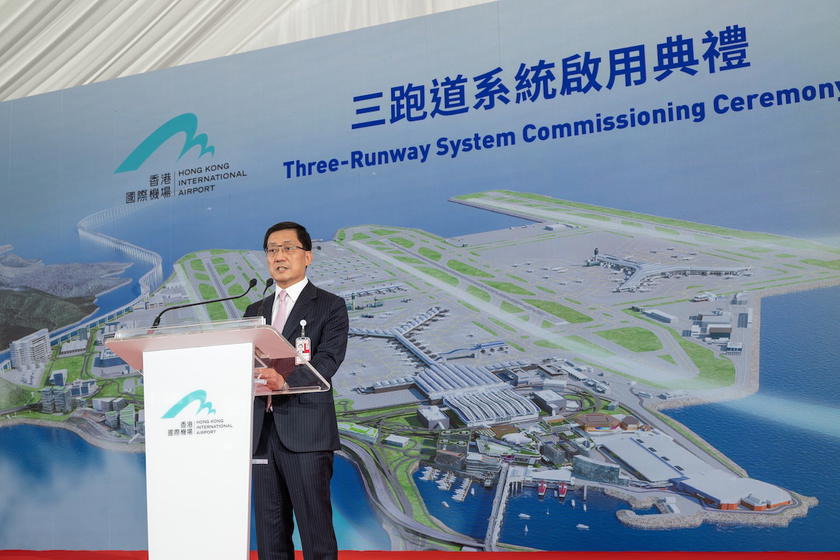
Historically Hong Kong had two parallel runways, though in 2016 we saw construction started on a third parallel runway, intended to greatly expand the airport’s capacity for arriving and departing flights. Construction on the third runway, located in the north part of the airport, was actually completed in late 2022.
However, once that project was complete, work had to be performed on the center runway, including leveling the runway pavement to tie in with connecting taxiways, constructing new runway entry and exit taxiways, building new wraparound taxiways at both ends of the runway, and more. The work on the center runway has now been completed.
This means that for the first time, all three runways can be used at the same time. These are runways 7L/25R, 7C/25C, and 7R/25L (the number stands for the runway’s heading with a zero missing, and then the “L” stands for left, the “C” stands for center, and the “R” stands for right).
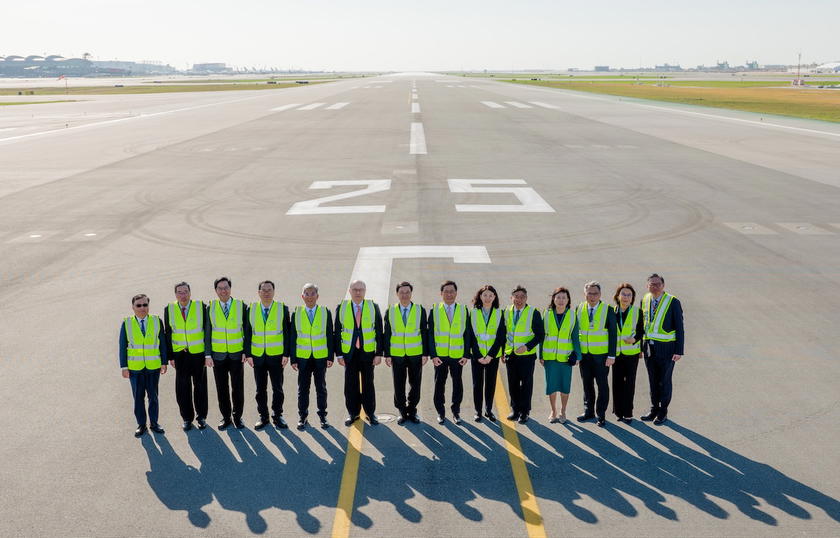
Here’s how Hong Kong Airport Authority Chairman Fred Lam describes this development:
“The 3RS will significantly enhance the overall capacity of the airport, further expanding our extensive air traffic network and consolidating our position as an international aviation hub. The commissioning of the 3RS will provide impetus for the Airport City development and support Hong Kong’s economic growth. Leveraging Hong Kong’s unique strengths, the Airport City will be a world-leading new landmark, attracting visitors from all around the world and driving Hong Kong’s economic development.”
How Hong Kong Airport’s capacity will increase
We’re going to gradually see capacity at Hong Kong Airport increase. That makes sense, when you consider that you can’t just greatly increase airport capacity overnight — we’re still seeing terminal construction projects at the airport, plus existing airlines can only slowly ramp up capacity.
For that matter, Hong Kong’s passenger numbers haven’t even recovered to pre-pandemic levels, so the airline has had a setback of at least five years in terms of growth.
The goal is that by 2035, Hong Kong Airport will increase its annual passenger capacity to 120 million (from 80 million) and increase annual cargo capacity to 10 million tons (from five million tons). Furthermore, the total number of airplane movements with the third runway can increase from 69 per hour to 102 per hour, so that a roughly 48% increase.
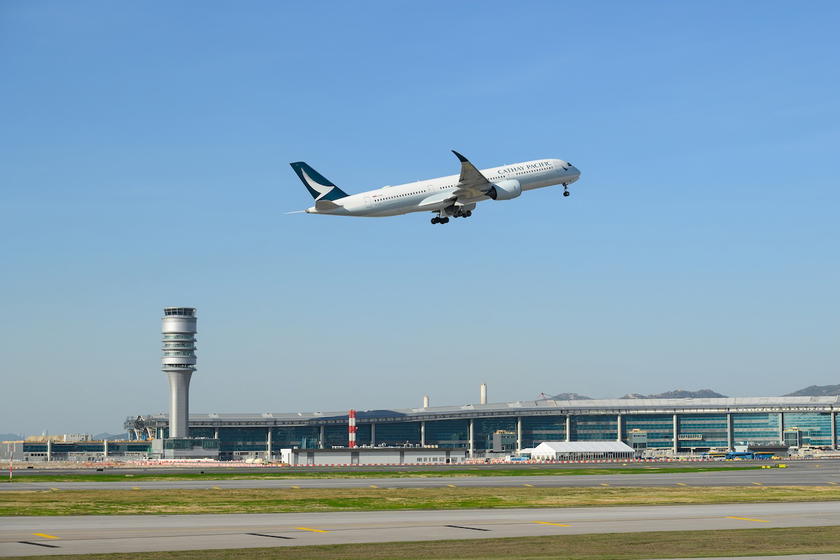
I’m a huge fan of Hong Kong Airport, and it’s one of my favorite airports in the world. It’s also an airport that keeps improving, from terminal expansion, to runway expansion, to cool avgeek features, like the amazing Sky Bridge. So I’m very much rooting for the airport and for Hong Kong.
Admittedly Hong Kong has changed quite a bit over the past decade. While I think Mainland China getting more involved hasn’t been great for Hong Kong’s reputation as a free business hub, we have seen a greater focus on the concept of the Greater Bay Area, where people take ferries to Hong Kong, and then fly from there. I imagine that’s where much of the increased demand for the airport will come from.
Bottom line
Hong Kong Airport’s three-runway system is finally live, meaning the airport finally has three operational runways. In the long run, this will allow cargo capacity to double, passenger capacity to increase by 50%, and the number of hourly takeoffs and landings to increase by nearly 50%. We’ve been watching this project happen for nearly a decade, so it’s super exciting to see it finally complete.
What do you make of Hong Kong completing work to get three runways operational?


Membership is free and takes no more information than commenting as a guest. Earn status points for good contributions, and see fewer ads as your status grows.