
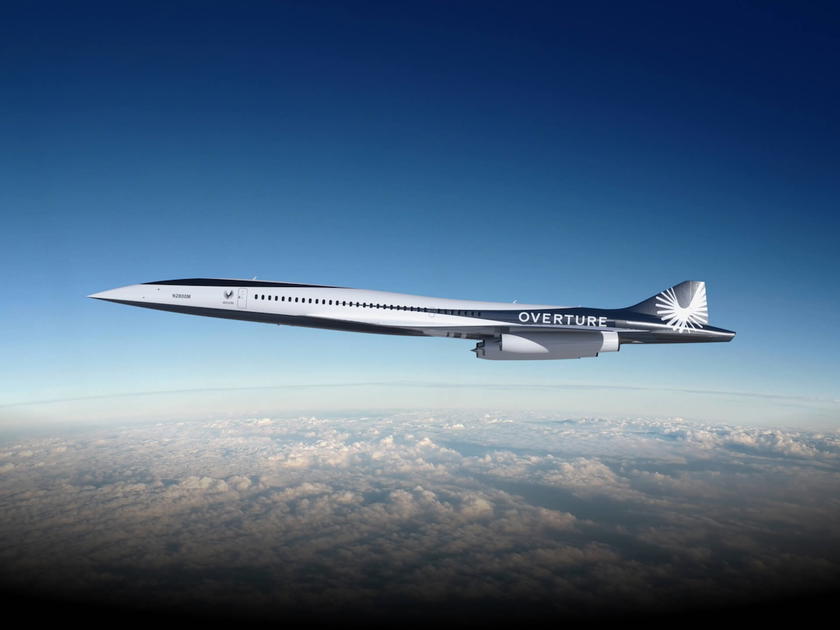
Boom is an aeronautics company that has been working on bringing back supersonic passenger air travel. The company’s main product is the Boom Overture, which is essentially intended to be the modern day Concorde.
The company was founded back in 2014, and the goal is that the Boom Overture could be carrying passengers before the end of the decade. While this is no doubt an ambitious project, a major milestone was reached yesterday.
Boom Supersonic’s XB-1 crosses the speed of sound
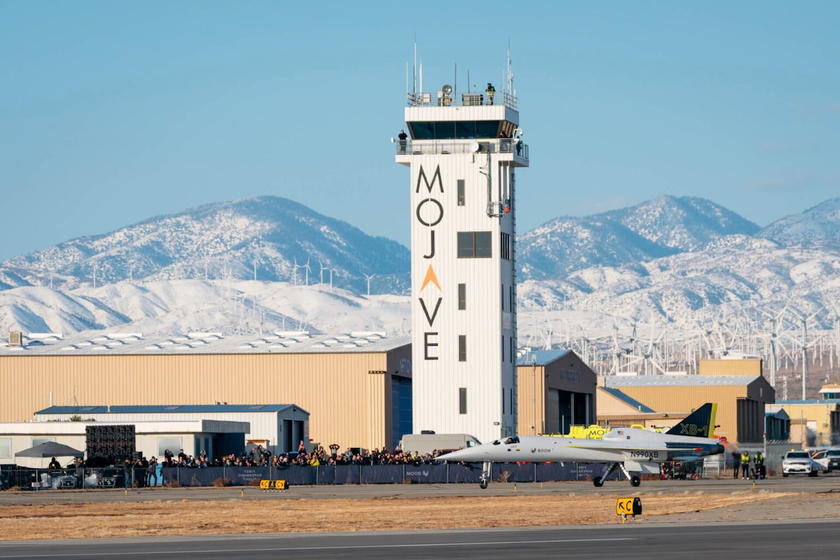
On January 28, 2025, Boom’s demonstrator aircraft, the XB-1, operated a historic flight. Specifically, this was the first civil supersonic jet made in American to break the sound barrier. The flight took place at the Mojave Air & Space Port in California.
The flight was flown by Boom Chief Test Pilot Tristan “Geppetto” Brandenburg, and the XB-1 entered the supersonic corridor and reached an altitude of 35,290 feet, before accelerating to Mach 1.122 (or 750 miles per hour), breaking the sound barrier for the first time. As mentioned above, this is pretty amazing, because historically supersonic aircraft have been developed by militaries and governments. So this is the first time we’ve seen an independently developed jet break the sound barrier.
Here’s how Blake Scholl, Boom’s Founder and CEO, describes this:
“XB-1’s supersonic flight demonstrates that the technology for passenger supersonic flight has arrived. A small band of talented and dedicated engineers has accomplished what previously took governments and billions of dollars. Next, we are scaling up the technology on XB-1 for the Overture supersonic airliner. Our ultimate goal is to bring the benefits of supersonic flight to everyone.”
How does this test flight get us any closer to supersonic commercial passenger travel? According to the company, here are the technology features proven through XB-1’s test program that will also apply to Overture:
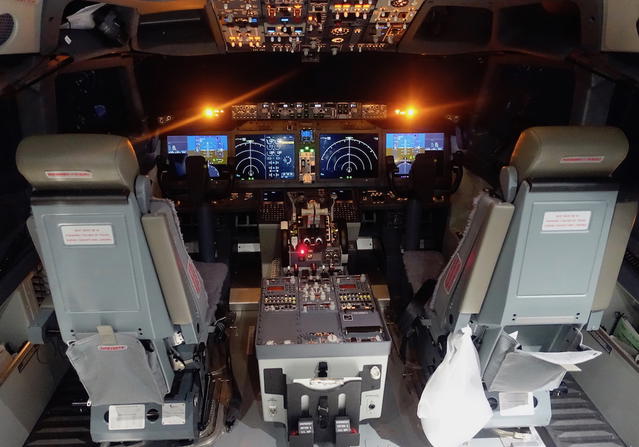
- Augmented reality vision system — XB-1 and Overture both have a long nose and a high angle of attack for takeoff and landing, which makes it difficult for pilots to see the runway in front of them, so both aircraft leverage an augmented reality vision system to enable excellent runway visibility, without the weight and complexity of a moveable nose
- Digitally-optimized aerodynamics — engineers used computational fluid dynamics (CFD) simulations to explore thousands of designs for XB-1, and the result is an optimized design that combines safe and stable operation at takeoff and landing with efficiency at supersonic speeds
- Carbon fiber composites — both XB-1 and Overture are almost entirely made from carbon fiber composite materials, resulting in a sophisticated aerodynamic design with a strong, lightweight structure
- Supersonic intakes — XB-1’s engine intakes slow supersonic air to subsonic speeds, efficiently converting kinetic energy into pressure energy, allowing conventional jet engines to power XB-1 from takeoff through supersonic flight, and learnings from the development of XB-1’s specialized intakes are being applied to Overture and its purpose-built turbofan engine, Symphony
Let’s see if the Boom Overture becomes a reality
First and foremost, credit to the Boom team for how far they’ve gotten with this project. It’s incredibly impressive to see a private company developing a supersonic jet in this way. That’s a huge accomplishment, and that can’t be overstated. The company is also very well funded, including with investments from Saudi Arabia.
All that being said, suffice it to say that a lot more work needs to happen before the Boom Overture is flying. Boom has proven that it can develop a supersonic aircraft of some sort. Now the question is if Boom can build a passenger-sized supersonic jet that’s commercially viable, that gets support from regulators, and that could actually be carrying passengers by the end of the decade (or at least any time in the foreseeable future).
I’m certainly rooting for Boom, though to point out the obvious, there are major hurdles to overcome:
- Boeing announced the 777X concept in 2013, and that’s expected to enter service in 2026 at the absolute earliest; that was “only” an update to an existing jet from one of the world’s largest aircraft manufacturers, so the timeline just seems highly optimistic
- The manufacturer of the Concorde never made money on the plane; most orders for the Concorde were never followed through on
- Given the range of the jet and the need for supersonic flight to be overwater, the actual markets where this is a viable concept are limited; sure, there’s New York to London, but aside from that, there aren’t that many city pairs, especially with many longer Pacific crossings not being possible
- I don’t think there’s a need for supersonic travel in the same way there used to be; premium travel has improved so much in terms of comfort, Wi-Fi connectivity, etc., so time spent traveling isn’t “wasted” in the same way as before
- With environmentalism being an increasingly important topic for airlines, I just don’t see how this concept fits into that, even if it’s much more fuel efficient than the Concorde was
I’d absolutely love to see the Boom Overture flying before the end of the decade with passengers. If the company can actually pull this off, I’ll be mighty impressed.
Bottom line
Boom has managed to make supersonic flight a reality with its XB-1 demonstrator aircraft. The goal is of course to get the Boom Overture flying eventually, which would become the modern day version of the Concorde.
The Boom team should be proud of what they’ve accomplished so far, though there’s still a huge, uphill battle, with turning this demonstrator aircraft into a passenger aircraft in a commercially viable way, with full support from regulators and airports.
What do you make of the Boom XB-1 operating a supersonic flight, and of the prospect of the Boom Overture becoming a reality?


Membership is free and takes no more information than commenting as a guest. Earn status points for good contributions, and see fewer ads as your status grows.