
An Asiana heavy jet approaching San Francisco International Airport (SFO) seemed to have an unusually low approach, which is a story that will bring back memories of a 2013 accident at the same airport (thanks to @Hopinarndthwrld for flagging this)…
Asiana jet descends to 275 feet above San Francisco Bay
This incident happened on Sunday, February 23, 2025, and involves Asiana Airlines flight OZ212, operating from Seoul Incheon (ICN) to San Francisco (SFO). The flight was operated by a five-year-old Airbus A350-900 with the registration code HL8382.
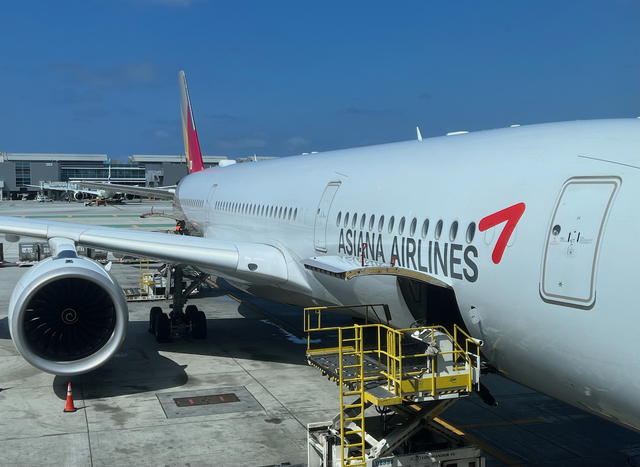
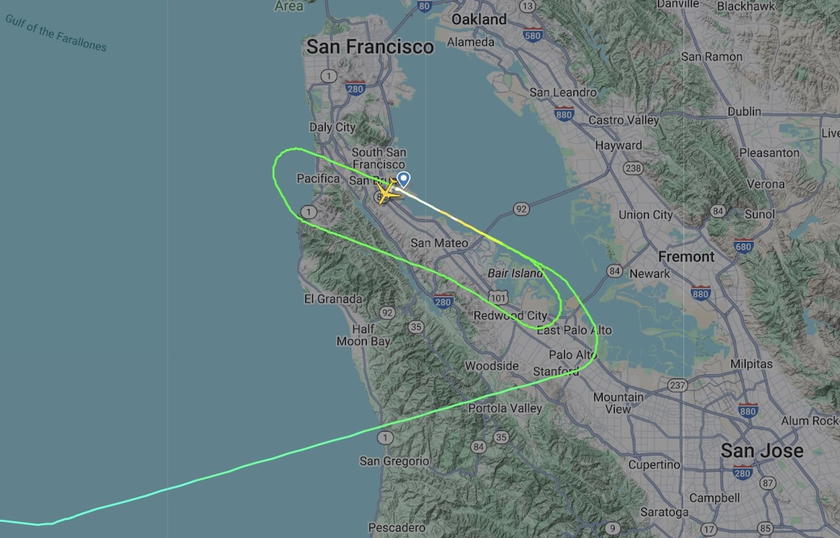
Almost the entire flight appeared to be routine, until the plane was on approach to SFO. Specifically, as the aircraft was still around three miles from the intended landing runway (28L), it descended all the way down to 275 feet, according to flight tracking software Flightradar24.
Fortunately air traffic controllers at SFO got a low altitude alert, and informed the pilots of their concerning altitude. As a result, they initiated a go around. They circled back around, and landed safely, around 15 minutes later.
It’s interesting to note that the plane was both lower than it should’ve been, and also quite a bit faster, as it was going 173 knots. Just to compare this to the typical numbers, the Asiana A350 operating the same flight the day before was at roughly 775 feet, and traveling 136 knots, around the same point.
This incident brings back some memories…
Of course mistakes happen, and sometimes pilots will be a bit high or a bit low on approach. In this case, it’s certainly puzzling how low this aircraft got, and also how fast it was going. With at least three pilots in the cockpit, you’d think that someone would’ve picked up on something not being quite right.
It would appear that the pilots only took corrective action after the tower controller advised them of the low altitude alert. Ultimately one of the reasons that aviation is so safe is because of the number of redundant systems in place. However, as we recently saw, even those systems aren’t perfect.
Of course an incident involving an Asiana plane on approach to SFO brings back memories of 2013, when Asiana flight OZ214 crashed while landing at the airport. The National Transportation Safety Board (NTSB) had determined that the cause of the accident was the crew’s mismanagement of the aircraft’s final approach.
Ultimately in the case of the OZ214 crash, the plane was both too low and too slow. The plane was on a visual approach, and the autopilot was turned off several miles out, so the pilots were hand flying. The pilots seemed to be confused about their path in comparison to the standard glide path. Based on the cockpit voice recorder, there were comments from pilots about being above the glide path, on the glide path, and below the glide path.
Admittedly this latest incident is a bit different. While the plane was low, at least it was flying fast, which would at least make a last second recovery easier, since you can always turn that speed into altitude. Meanwhile if you’re slow and low, that’s much more of an issue.
Bottom line
An Asiana Airbus A350 approaching San Francisco had a dangerously low approach, as the plane descended to just 275 feet, while still roughly three miles from the airport. Fortunately the tower got a low altitude alert, so that the plane could perform a go around, and give the approach another shot.
In isolation, this incident might not sound that wild, but given Asiana’s history at SFO, it’s at least somewhat noteworthy, if you ask me. It’s at least worth calling some attention to, and I hope that VASAviation publishes a video about the approach, with the ATC audio…
What do you make of this Asiana incident at SFO?


Membership is free and takes no more information than commenting as a guest. Earn status points for good contributions, and see fewer ads as your status grows.