
Over the weekend we saw a tragic accident at Miami Airport (MIA), involving a Boeing 767 belonging to cargo operator 21 Air (operating on behalf of Amazon Air). The plane overran the runway, and ultimately hit two cars, claiming five lives.
As usual, the National Transportation Safety Board (NTSB) is doing a stellar job with its investigation, including how it’s communicating. Yesterday I covered what we learned from the last 30 seconds of the flight data recorder. The NTSB has now released some details from what was heard during the final minutes on the cockpit voice recorder, and it points to an absolutely infuriating level of crew resource management (CRM).
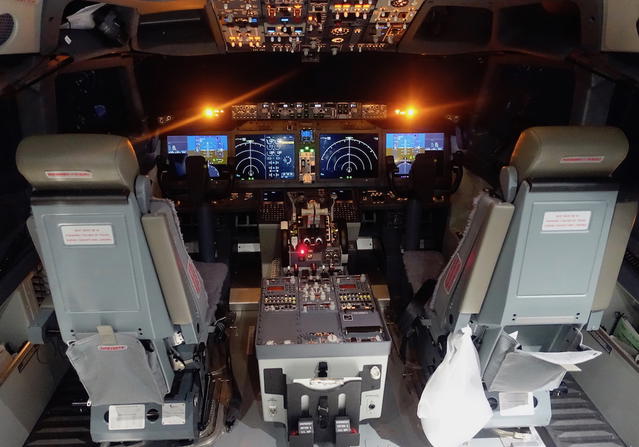
The Amazon Air 767 cockpit voice recorder is a disaster
While a direct transcript hasn’t been released, the NTSB has shared what was observed during the final six (or so) minutes of the cockpit voice recorder of the Amazon Air Boeing 767, before it stopped recording. Below are the observations, and then we’ll talk more about it.
| Approximate Time to End of CVR Recording (mm:ss) | Observation |
|---|---|
| 06:02 | A pilot called for flaps to be set to 1 degree. |
| 04:18 | The flight crew checked in with Miami tower and were cleared to land on runway 30. |
| 02:53 | A pilot called for flaps to be set to 5 degrees. |
| 02:37 | The flight crew lowered the landing gear. |
| 02:14 | A pilot called for flaps to be set to 15 degrees. |
| 01:42 | A pilot called for flaps to be set to 20 degrees, and the other pilot cautioned they were too fast. The other pilot made additional comments regarding the aircraft’s excessive speed throughout the remainder of the recording. There was not a consistent verbal response to the comments about speed. |
| 01:23 | Sounds consistent with autopilot disconnect. |
| 01:12 | Electronic “one thousand” callout. |
| 01:04 | Electronic “sink rate sink rate” callout. |
| 00:58 | Electronic “five hundred” callout. |
| 00:57 | Electronic “sink rate sink rate” callout. |
| 00:54 | Electronic “one hundred” callout. |
| 00:50 | Electronic “minimums” callout. |
| 00:48 | Electronic “too low terrain” callout. Annunciated four times. |
| 00:41 | A pilot called for flaps to be set to 30 degrees. |
| 00:40 | Electronic “forty” callout. |
| 00:39 | Electronic “too low terrain” callout. |
| 00:36 | Electronic “ten” callout. |
| 00:31 | Sounds similar to the aircraft touching down. |
| 00:15 | A pilot called for a go-around. |
| 00:10 | Sounds similar to the aircraft departing the paved surface. |
| 00:00 | The CVR recording ended. |
Since the pilots are being referred to as “a pilot” and “other pilot,” let’s just clarify that it was the 55-year-old ex-Army Black Hawk captain who was flying the plane, while the 37-year-old Colombian born first officer was the one working the radios.
We know this because all of the racists who immediately started yelling “DEI” from the rooftops before any details were made available drew conclusions based on the pilot communicating having an accent. What they conveniently ignored is that the pilot communicating is specifically the pilot not flying.
Two things stand out about the cockpit voice recorder details. First of all, 1min42sec before the end of the recording (and 1min11sec before touchdown), there’s this:
A pilot called for flaps to be set to 20 degrees, and the other pilot cautioned they were too fast. The other pilot made additional comments regarding the aircraft’s excessive speed throughout the remainder of the recording. There was not a consistent verbal response to the comments about speed.
So the first officer warned the captain that they were going too fast, and continued to make comments about that all the way until the accident, but he didn’t receive consistent acknowledgment of that? Wow…
Second of all, 39sec before the end of the recording (and 8sec before touchdown), there was a “too low terrain” warning. As pointed out by the brilliant Steve Giordano, at that point the flaps hadn’t yet reached 30 degrees. They were literally still configuring the aircraft while it was over the runway, flying excessively fast.
The lack of airmanship shown here is beyond awful
Remember how we saw that landing video of the Boeing 767 shortly after the accident? Many of us wondered what on earth was going on in the cockpit. Now we know — the pilots also had no clue what was going on.
This is just insanity. You had an extremely inexperienced captain on the aircraft (he had been on the Boeing 767 for three months) ignoring every possible warning, and squandering every possible chance to go around. And this also obviously points out the horrible training and safety standards that 21 Air must have, if pilots call out things, only to basically be ignored.
Now, the first officer doesn’t get a pass either. He repeatedly mentioned the excessive speed on the final approach, and alarm bells must’ve been going off in his head. Why did he not call a go around?! Did he just not feel comfortable speaking up to the captain, did he trust the captain had things under control (even though he clearly didn’t), or what? Nathan Fielder’s “The Rehearsal” certainly comes to mind.
Unfortunately I think this part of the first officer’s LinkedIn profile doesn’t exactly ring true: “known for being dependable, adaptable, and detail-oriented, I thrive in dynamic environments where professionalism, communication, and sound decision-making are essential.” If he had put that sound decision making to work in this case and called a go around earlier, five people would still be alive.
Bottom line
Within days of the deadly Amazon Air Boeing 767 accident in Miami, we have a pretty clear picture of what happened, and there’s simply no denying that pilot error was at least a major factor in this, if not the only factor.
During the final seconds of the flight, the first officer repeatedly warned of excessive speed, and didn’t receive full responses from the captain. They even got a terrain warning seconds before landing, and were still configuring the flaps over the runway. There’s zero reason that a go around shouldn’t have been called much earlier than it was.
This is all absolutely horrifying, and I imagine that 21 Air’s pilot training program will be under quite some scrutiny in the coming days and weeks. I guess this is the issue with us wanting our cheap Amazon packages, and flying going out to the lowest bidder.
What do you make of these Amazon Air cockpit voice recorder details?




Thank you for calling out racism, @Ben.
Don’t forget that DEI hiring practices are racist by definition. While this accident clearly wasn’t a result of those racist hiring practices, it’s reasonably feasible that there could one day be an accident attributed to DEI.
Hiring people that are equally qualified that also represent population demographics is not racist. What is obviously racist is only hiring white males while refusing to hire minorities and women as pilots that are equally qualified which airlines and other industries have done for years.
@ Sel_D -- What DEI hiring?!
See, this also gets at the problem. If an older white man makes a mistake, we just chalk it up to "it is what it is, mistakes happen." Meanwhile if a woman or minority makes a mistake, we immediately jump on the DEI bandwagon. Isn't that a double standard? Only white men are allowed to make mistakes, without their skin color or gender immediately being blamed.
Sorry I didn’t clarify. This operator doesn’t have a known history of it, but I’m talking about UA’s aggressive racist hiring policy. And yes, people sound like idiots when they immediately say it’s because of DEI without proof, but it’s equally naive to say it isn’t.
@ Sel_D -- I'm sorry, what are you referring to? United set diversity quotas for its training academy, which does not guarantee a job at the airline. It's a completely independent concept, with the idea being that it gives more groups the opportunity to get the training needed to apply for a job at the airline.
That's different than a quota for hiring. *Everyone* needs the same certifications to be a Part 121 operator. Have...
@ Sel_D -- I'm sorry, what are you referring to? United set diversity quotas for its training academy, which does not guarantee a job at the airline. It's a completely independent concept, with the idea being that it gives more groups the opportunity to get the training needed to apply for a job at the airline.
That's different than a quota for hiring. *Everyone* needs the same certifications to be a Part 121 operator. Have you seen any evidence that United turned a white man with 10K flight hours down in favor of a minority with minimum hours?
If they did, I'd certainly take issue with it, because I agree the best people should be hired. We're in the same boat. However, there's simply no evidence of this concept that I've seen... but please prove me wrong! As I see it, this is simply an imaginary narrative.
@Ben, the perpetual issue (as evidenced in multiple comments, and elsewhere) is that large amounts of people still believe that DEI is about hiring unqualified people who happen to have a minority status based on characteristics such as race and gender (among others). In reality, DEI means that organizations would go to greater lengths to FIND fully qualified people who also have lived experience based on said minority status, or create pathways for people in...
@Ben, the perpetual issue (as evidenced in multiple comments, and elsewhere) is that large amounts of people still believe that DEI is about hiring unqualified people who happen to have a minority status based on characteristics such as race and gender (among others). In reality, DEI means that organizations would go to greater lengths to FIND fully qualified people who also have lived experience based on said minority status, or create pathways for people in those communities to EARN the required qualifications.
However, this falls in deaf ears over and over. Most still think that for every single occupation, no minorities can possibly be equally (or more) qualified than local non-minority candidates. That bias (and others) is at the root of racism as you, thankfully, have mentioned in many occasions.
Comment of the day, hbilbao, comment of the day. And week. And month.
I said this before and I'll say it again, this time without the "/s":
Maybe if the brown guy had been the pilot at the controls and the white guy had been on the radio, none of this would have happened.
Not sure what skin color has to do with this tragedy.
Or... it's that race, ethnicity, nationality, background, etc., wasn't the issue, at all. Like, what actually mattered here was likely competence and context. (Isn't that better take-away?)
Well said, Ben. NTSB 'is doing a stellar job,' indeed. (If only the FAA would actually listen to them, more.) And, thank you for recommending Nathan Fielder’s “The Rehearsal” (Season 2). Which reminds me... "Okay. Alright. Okay, good chat... You're being real right now?" *gulp*
If you're not familiar, Amazon Air also had a fatal crash in 2019 which was pure pilot error, and it turned out both pilots had serious issues being certified/were seriously deficient in airmanship:
https://en.wikipedia.org/wiki/Atlas_Air_Flight_3591
From Captain Steve apparently they were going to do a go around but then slam the throttle back and decided to try to stop instead. Seems like there was inexperience in both the Captain and FO. Shouldn't Jet Flying 101 be if you doubt you can get the plane on the ground and stop in time just simply declare a Go Round and do it again. The cargo isn't going to be upset about a delayed arrival.
The answer is, it depends. Yes, in this case, it certainly appears that a go around should have been called well before they were anywhere near the ground. Too fast, not configured properly, unstable approach. And it appears that the PIC was kind of acknowledging the FO with the excessive speed in that he wanted to get it on the ground, hence the rapid rate of decent. It's botched all around.
However, the answer is...
The answer is, it depends. Yes, in this case, it certainly appears that a go around should have been called well before they were anywhere near the ground. Too fast, not configured properly, unstable approach. And it appears that the PIC was kind of acknowledging the FO with the excessive speed in that he wanted to get it on the ground, hence the rapid rate of decent. It's botched all around.
However, the answer is still it depends, and requires skilled *people* to make what is sometimes going to be a hard decision. Are you at minimum fuel? Damage to the aircraft or systems not working? Is there traffic either on the runway or above the runway. The converging nature of the two runways could mean that another plane taking off, and going around you could crash in to them. Very adverse weather or late cross wind that really makes a go around impractical? Lots of things to consider. And sometimes you need to take the better of two bad options.
To be clear in this instance, the go around call should have been made well before.
Captain "Steeeve" (ironically, his official handle) urged pilots to be more cautious; like, if even one thing isn't right, just do the go-around. If NTSB recommends it following this, FAA should seriously consider that directive. Also, Steeeve said, quoting NTSB, that the cargo was mostly contact lenses. Wonder if there's gonna be a spike prices at optometrists and suppliers following this...
Well - wouldn't need to fill the gap in the workforce with skilled workers through H-1B if the local population would invest in education. Interestingly Asian immigrants have the highest per capita median and mean incomes in the US according to the Pew Research Center. I guess DEI hiring pays.
No, DEI hiring does not pay. Not that it was the issue here; but hiring people based on their racial or other intersectional status is wrong. Qualified people should be the goal, no matter what the race/gender/etc. It's why DEI is wrong. That said, I also grimace at the dumbasses jumping to conclusions here about it being DEI. Overly simplistic thought process that's not even close. The real issue appears to be rapid growth and...
No, DEI hiring does not pay. Not that it was the issue here; but hiring people based on their racial or other intersectional status is wrong. Qualified people should be the goal, no matter what the race/gender/etc. It's why DEI is wrong. That said, I also grimace at the dumbasses jumping to conclusions here about it being DEI. Overly simplistic thought process that's not even close. The real issue appears to be rapid growth and the hiring of unqualified and improperly trained individuals. More of which will come out as we go on, I'm sure.
Intended to be sarcasm since the commentator on social media post is ignorant and knows nothing about H-1B, which has nothing to do with DEI and is intended specifically for skilled workers with quotas based on qualification. It is also misinformation that H-1B workers are paid less. It costs substantially much more to file H-1B petitions and competition to retain highly qualified immigrants is tough. Unions other countries, the U.S. allows skilled immigrants preferably, which...
Intended to be sarcasm since the commentator on social media post is ignorant and knows nothing about H-1B, which has nothing to do with DEI and is intended specifically for skilled workers with quotas based on qualification. It is also misinformation that H-1B workers are paid less. It costs substantially much more to file H-1B petitions and competition to retain highly qualified immigrants is tough. Unions other countries, the U.S. allows skilled immigrants preferably, which is a large reason for its technical dominance. You will rarely find a recent Asian immigrant who is not an engineer, doctor, business man or executive. Furthermore higher salaries are actually favourable to immigration status and categorised as such on the application. I know this as a former H-1B status holder as a VP for a major healthcare firm. The point is that H-1B and DEI is an immigration status while DEI is corporate policy and the two are unrelated since H-1B petitions have to clearly indicate a shortage or gap in local skills to fill the relevant position. Furthermore DEI isn’t only race or ethnicity based - I promote DEI in our corporation and regularly encourage hiring of those with disciplines untraditional to our field; i.e. VLSI engineers to head biomedical device systems engineering for instance. DEI pays and numerous statistics and corporate figures prove it. The US is a country of ideas and ideas require creativity and lateral thinking.
Need we say it again, but DEI is about ensuring that we have the widest pool of highly skilled talented people by making sure that we remove structural barriers for talented people of all backgrounds. Diversity makes us stronger not weaker. DEI is not a zero sum game, ensuring everyone can reach their full potential makes us all wealthier.
Nonsense. DEI is about "equity" which ultimately involves elevating some people above others based on cosmetic things. It is not a positive.
Actually... you're wrong. DEI is about recruiting more, wide-ranging candidates to apply for jobs. Then, among the enlarged group, hire the best, qualified candidates.
Not really, it encourages hiring from so-called protected groups over others. Basically grading on the curve for some and not for others. The concept of "equity" (the E in DEI) involves picking winners and losers by definition.
All that said, there's no indication that "DEI" has anything to do with this particular accident (the Black Hawk at DCA was another matter). But it was a nice false flag for Ben to virtue signal by calling people racist. That was fun.
There’s always an opportunity for finger pointing and blaming. If not racist allegations by Duffy I can assure you Buttigieg would have put Amazon on blast.
Did the ATC provide weather conditions when giving landing clearance?
The NTSB chair claims the plane was at a low weight. Others say the cargo was glass lenses.
"...I can assure you Buttigieg would have put Amazon on blast."
I can assure you Buttigieg would have waited calmly for the NTSB to release the results of the full investigation before taking action to learn the lessons from the crash and take action to mitigate such failures in the future.
And President Biden wouldn't have been found guilty of 45 felonies or posted animated gifs of himself violently attacking others, including other world...
"...I can assure you Buttigieg would have put Amazon on blast."
I can assure you Buttigieg would have waited calmly for the NTSB to release the results of the full investigation before taking action to learn the lessons from the crash and take action to mitigate such failures in the future.
And President Biden wouldn't have been found guilty of 45 felonies or posted animated gifs of himself violently attacking others, including other world leaders, while harboring a lifelong joy of malignant narcissism, sadism, cruelty, punching down (as parasites do), racism, sexism, child sex trafficking, rape, sexual harassment, and battling late-stage syphilis and dementia.
But do go on and tell everyone (again and ad nauseum) how unfit for office Biden was. And be sure to add up how much his cronies and enables profited off his corruption publicly and fearlessly.
You are nauseatingly predictable.
Sure Biden was a combination of Einstein and Superman in his presidency.
Yes Homer. Biden was not the loser that we have been saddled with. You must be a TP USA funded project.
We will reorganize the English alphabet. ABCDJT……
Ben, you suggested that the FO should have called a go-round earlier. But clearly he was being ignored by the captain. Why do you think the captain would have listened to the FO earlier, since he clearly wasn't listening to him at any point?
This is just a really tough situation. The pilots have to trust each other in order to work effectively. When one of them starts ignoring the other, what's the other one supposed to do?
@ Ben Can't agree with you here. While that's what theoretically should happen, humans have a massive ability to focus on what happened, and ignore what 'could have' happened.
Even in the best case theory you mentioned, say the FO did take control, did a go around, and whoever landed the plane perfectly next time, what would have happened afterwards? Pilot and potentially others would have chewed him out saying why did you do that,...
@ Ben Can't agree with you here. While that's what theoretically should happen, humans have a massive ability to focus on what happened, and ignore what 'could have' happened.
Even in the best case theory you mentioned, say the FO did take control, did a go around, and whoever landed the plane perfectly next time, what would have happened afterwards? Pilot and potentially others would have chewed him out saying why did you do that, everything was under control, "NO THERE WOULD NOT HAVE BEEN AN ACCIDENT" and potentially got him fired.
Just look at all the chatter about the Y2K issue still now, saying it was a waste of money and hoax "cause nothing bad happened" - when that was the whole point of preparing; to avoid anything bad happening. So the plan works - then everyone complains it was a hoax and waste of money!
First officer has a responsibility to take control of the aircraft if the captain is flying dangerously. The FO should call a go-around, and if ignored, call again for a go around more sternly, and if ignored say "my aircraft" and initiate the go-around. Western aviation advocates for teamwork and crew resource management, not a firm hierarchy
Really? You expect a 37 year old Colombian born first officer to call a go around when his warnings are being ignored and to then seize control of the aircraft from the 55 year old US born captain on US soil? Sorry, but that is never going to happen. I would be surprised if you could find a previous incident where a younger, less experienced first officer seized control of an aircraft from a captain...
Really? You expect a 37 year old Colombian born first officer to call a go around when his warnings are being ignored and to then seize control of the aircraft from the 55 year old US born captain on US soil? Sorry, but that is never going to happen. I would be surprised if you could find a previous incident where a younger, less experienced first officer seized control of an aircraft from a captain who was not incapacitated. Absolutely the correct procedure but not the way things work in the real world
Thanks, Ben and staradmiral. That makes sense - but I'm also sympathetic to farnorthtrader's view (and to the FO). I mean, air travel is so safe in part because pilots train for any eventuality. How much training do they get in "pilot in control is acting erratically"?
The psychology here is fascinating. Everything that's coming out about this is saying that it should have been obvious to both pilots that the situation was dangerous way...
Thanks, Ben and staradmiral. That makes sense - but I'm also sympathetic to farnorthtrader's view (and to the FO). I mean, air travel is so safe in part because pilots train for any eventuality. How much training do they get in "pilot in control is acting erratically"?
The psychology here is fascinating. Everything that's coming out about this is saying that it should have been obvious to both pilots that the situation was dangerous way before the plane landed, and just got more so as time went by. At some point, the increasingly hot water caused the frog to jump out of the pot, but it was too late. What's going on in the FO's mind? As time goes by, I imagine something like this: "This is wrong, but he's the senior officer and he has time to correct it... This is getting worse, but maybe he knows what he's doing and will correct it... Now it's really bad but if I jump in and take control, there's going to be a huge argument about it when we're on the ground... Oh, crap! Now we're going to crash if we don't go round" - and at that point he finally calls it (too late).
@ snic -- Obviously both scenarios are inexcusable, but there's a difference between one pilot sharing observations ("hey, you're going too fast") and taking decisive action. With modern CRM, the intent is that either pilot can call a go around, and the first officer could even say "my aircraft" and execute the go around himself.
Even with how insanely sloppy and reckless this captain was, I'd hope he wouldn't ignore a go around call on...
@ snic -- Obviously both scenarios are inexcusable, but there's a difference between one pilot sharing observations ("hey, you're going too fast") and taking decisive action. With modern CRM, the intent is that either pilot can call a go around, and the first officer could even say "my aircraft" and execute the go around himself.
Even with how insanely sloppy and reckless this captain was, I'd hope he wouldn't ignore a go around call on final. Either way, the first officer never made that call on the air, so we'll never know.
We DO NOT know who was the PF/PM so assuming the FO was the one saying “too fast” is unacceptable. Let the professionals at the NTSB provide the actual evidence.
Just stay in your lane Ben and give the people reviews on hotel rooms and passenger seats while leaving the flying analysis to the professionals who know what they are doing since all you care about is clickbait headlines.
Hey Nino, just stay in your lane and let people have an honest discussion without your snarky comments. It is completely acceptable for Ben to theorize that the Captain was flying while the First Officer was handling the radio. That was my impression from the beginning after listening to the radio transmissions. You don't have to agree, but your comment lacks grace. If you truly believe in the "clickbait" trap, it's sad you fell for it.
Ben, I think your comments yesterday that NTSB is being stellar and far more communicative than the Indian authorities is a bit unfair. It’s somewhat easier to explain a 767 landing late, too fast and a botched to-around, than why both engines of a 787 spool down immediately after takeoff. Flightradar can explain the first, but unless we have a camera in the cockpit, or a huge stroke of luck we will probably never know what happened to Air India.
Disagree. India is completely playing hide the ball for the long term on their crash.
@ John -- My issue with the DGCA is the complete lack of transparency in their investigation, and the level of bureaucracy. Well over a year later, why have they still not released the details of what was found on the cockpit voice recorder?
It's not about releasing a final report with definitive findings, but instead, the issue is the lack of transparency in the investigation, when the findings of this could help to improve...
@ John -- My issue with the DGCA is the complete lack of transparency in their investigation, and the level of bureaucracy. Well over a year later, why have they still not released the details of what was found on the cockpit voice recorder?
It's not about releasing a final report with definitive findings, but instead, the issue is the lack of transparency in the investigation, when the findings of this could help to improve aviation safety in the future.
As of now, we've learned nothing from the crash of AI171, and nothing has been done to ensure a similar event won't happen in the future.
Go around should have been called way earlier. There was no stable approach below 2000 feet. Their rate of decent was approaching 2000 ft a sec which is way beyond any commercial airline allotment. Go around should have been called way before touch down. This plane was doomed from then.
I hope there is a good internal review by Amazon and thier cargo operation. Along with thier entire delivery infrastructure. It is far too fragmented and despite them saying it was another company....they still have the amazon smile on the side of the aircraft.
I hope they bring everything in house and become more like a Fedex or UPS in terms of air operation.
The real question is how many fixed wing hours, especially in large jets, the former helicopter pilot had. Huge difference in fixed vs rotary wing flying.
Where is eskimo?
Hello atsbrad.
My earlier comments was not protected by the 1st amendment.
The FAA needs to force Amazon Prime Air to get its own operating certificate and stop contracting out to a dozen shit operators. FAA forced UPS hand decades ago when they were doing the same BS.
Not sure how much this would help. Realistically, they would be held to the same operating standards by the FAA.
Exactly. You'd think Amazon would have some interest in not having planes with their brand blazoned all over them getting into accidents like this. That ought to be some motivation for them to vet their carriers properly - although probably they'll just sandblast the branding off and call it a day.
Same way Atlas Air needs to stop carrying US military personnel?
Unlike Amazon, US armed forces have their own transport.
But when ICE tries to do it themselves, people complain.
Make up your mind.
I agree completely. If Amazon was the operator here, they would have a vested financial interest in ensuring the best safety practices in their flight ops department, both for PR and liability. These lowest bidder operations encourage a race to the bottom to cut absolutely every cost possible.
One thing that sticks out with the NTSB briefing is not what they said, but what they didn't say. By including the e-mail address for contacting the NTSB and asking for more details, it's pretty clear that they smell something rotten at 21 Air, and want people to come forward.
Same way Atlas Air needs to stop carrying US military personnel?
Unlike Amazon, US armed forces have their own transport.
But when ICE tries to do it themselves, people complain.
Make up your mind.
"Move Fast and Break Things."
It does come with some consequences. This is just one example.
AI exterminating all of humanity? Eh, it's a fairly low probability, so party on.
Ben, you begin your story, “The plane overran the runway … claiming five lives.” More accurately you should have written “The crew f***ed up, killing five innocent people in the process.” C’mon, man.
Interested to know how much liability Amazon itself has in this incident.
I doubt that Amazon exerts enough control over 21Air to be liable as it principal. What recourse to the victims have?
Steve G has it almost correct. (He’s qualified on lots of different jets) They got the “to low terrain” warning because the flaps weren’t in a landing flap setting, 25 or 30 flaps are certified landing flap positions. But he is absolutely correct when he said the transcript is infuriating. It’s sickening to see the gross negligence of the PF.
The NTSB is doing a stellar job. Then again, the evidence and root causes aren’t exactly difficult to identify either.
Thank you for this coverage. Looks like the NTSB is doing its job well. We'll have to await a conclusion. That said, I'll offer that I don't get the DEI angle here. I write that for more reasons than I'm willing to address in a comment thread.