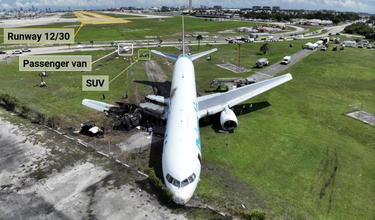
On September 6, 2026, we saw an Amazon Air Boeing 767 operated by 21 Air have an awful accident at Miami International Airport (MIA), whereby the plane overran the runway, leading to five fatalities (all people who were in cars).
The National Transportation Safety Board (NTSB) has just released its preliminary report into the accident. While we’ll have to wait for the final report to fully draw conclusions, this preliminary report makes it clear that this situation was as avoidable of a disaster as we thought it was…
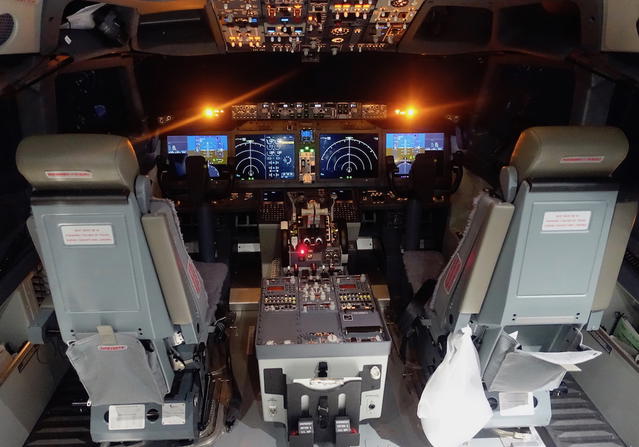
The Amazon Air pilots horribly botched the Miami landing
Within days of the Amazon Air accident at Miami Airport, we had details about what the flight data recorder contained, and we also knew that the first officer reportedly repeatedly warned the captain that they had excessive speed, but didn’t even get verbal responses to some of his warnings.
The landing video honestly looks like what you’d expect from someone in Microsoft Flight Simulator, who has never flown a plane before.
What has the NTSB preliminary report into the Miami accident confirmed?
- The Amazon Air 767 pilots were dealing with excessive speed during the approach, with the first officer repeatedly cautioning the captain about the speed, while the aircraft had multiple “sink rate” and “too low terrain” warnings
- The Amazon Air 767 crossed the runway threshold at a speed of 177 knots, and it touched down 3,750 feet down the 9,360-foot runway, at a speed of 160 knots
- 16 seconds after the Amazon Air 767 touched down, the captain called for a go around
The details from the flight data recorder are just wild:
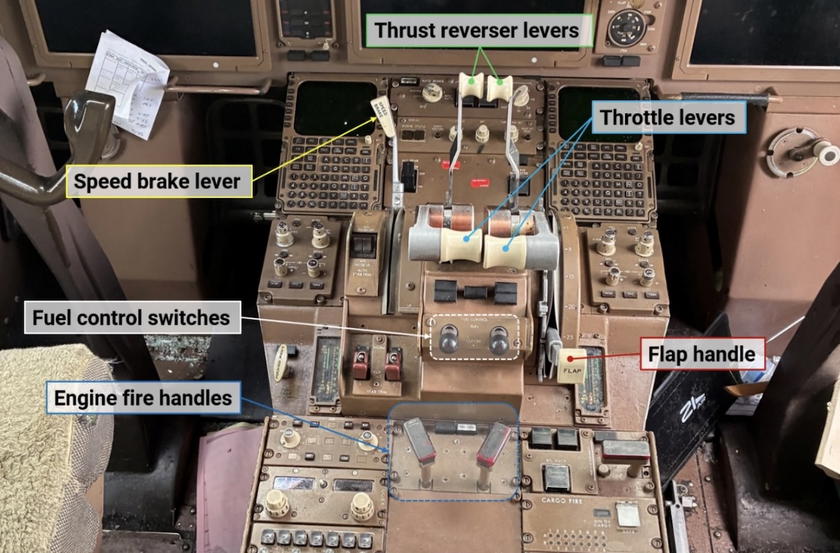
The FDR data showed the speed brakes remained stowed and the thrust reversers did not deploy during the landing and subsequent landing rollout. Wheel brakes were manually applied at a groundspeed of 146 kts. The brake pedals for wheel braking were subsequently released about 8 seconds later at a groundspeed of 120 kts and the throttle resolver angle for both engines increased to go-around thrust values; the airplane had about 930 ft of runway remaining.
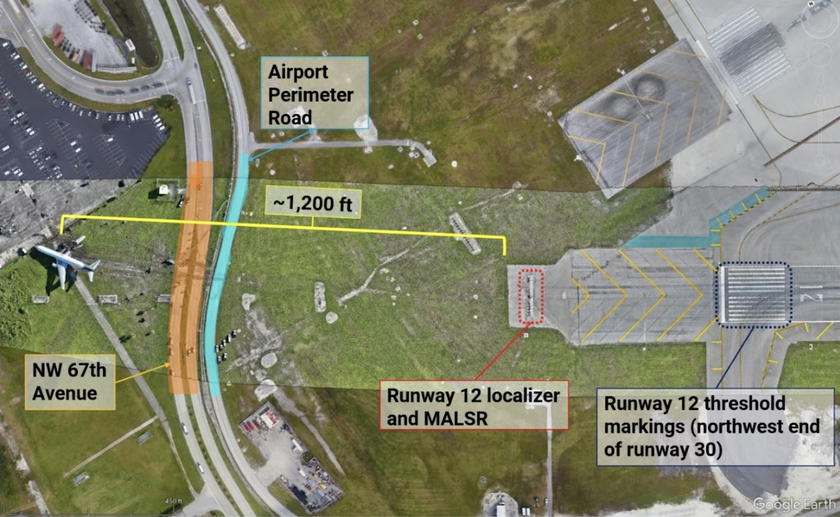
About 4 seconds later, the throttle resolver angles for both engines reduced to idle values at a groundspeed of 117 kts, when wheel brakes were reapplied; the airplane had about 415 ft of runway remaining. The airplane departed the runway at a groundspeed of 113 kts and subsequently impacted the localizer and MALSR at the northwest end of runway 30.
So the speed brakes were stowed, the thrust reversers didn’t deploy, and wheel brakes were manually applied. The pilots touched down way later than they should’ve, and then the captain couldn’t decide whether to go around or not. He first slammed on the brakes, then increased engine thrust for a go around, and then backtracked, and the throttles were set to idle again.
In the 5,610 feet between the initial touchdown and the end of the runway, the plane only lost a total of 47 knots of speed.
This is so beyond bad on so many levels. Based on the first officer’s warnings, the pilots should’ve just gone around. But then when the captain landed anyway, with little room to spare, he couldn’t decide whether to stick with the landing or go around. Talk about making a bad situation worse.
ATC didn’t tell Amazon Air pilots about wind conditions
There are often multiple contributing factors to aviation disasters, and it’s of course important to analyze all of them. After all, aviation is incredibly safe thanks to the “Swiss cheese model.”
So it’s worth mentioning one other contributing factor here. At the time the Amazon Air 767 was landing, winds were gusty. Not only was the wind speed high, but it was at a pretty direct crosswind to the runway. It wasn’t anything beyond the plane’s operating limits, but it’s definitely something the pilots would’ve factored in.
The thing is, the air traffic controller didn’t actually inform the Amazon Air pilots of the wind conditions, as he was supposed to. Per the report (LCS stands for “local control south,” the air traffic controller responsible for relevant arrivals and departures:
The LCS issued a landing clearance to flight 7598 but did not issue information about the wind. Per FAA Order JO 7110.65BB, titled “Air Traffic Control,” both wind direction and velocity were required to be stated when authorizing use of a runway when a tailwind component exists.
About 4 minutes prior to issuing the landing clearance to flight 7598, when asked by another flight for wind information, the LCS stated winds were from 190° at 19 kts with gusts to 22 kts. At the time of this wind advisory, flight 7598 was not on the LCS frequency.
Now, while the controller absolutely should’ve shared that weather information, that’s not supposed to be the only “line of defense” there:
- There’s also the ATIS that pilots are supposed to tune into to get weather conditions at an airport, and that had similar information to what the controller would’ve given
- As a pilot, you’re also responsible for the safety of your own plane, and they should’ve asked for wind conditions if there was any confusion
- The fact that the first officer kept warning the captain they were too fast, combined with the warnings going off in the cockpit, should’ve given them an indication that a go around was the right course of action
Bottom line
The NTSB has released its preliminary report into the crash of the Amazon Air Boeing 767 at Miami Airport. There’s honestly not much that’s surprising, compared to what we already knew. The first officer repeatedly warned the captain they were too fast on the approach, there were cockpit warnings about the speed, and then even after landing, the captain went back and forth about following through on the landing vs. going around.
Perhaps the most interesting new detail is that the air traffic controller didn’t give wind conditions with the landing clearance, which is required. So while that’s a problem, I can’t imagine that contributed to this accident in a meaningful way, given that similar information was available via ATIS, and the pilots also knew they were struggling with the approach, but didn’t go around.
As always, massive kudos to the NTSB for their incredible work. I’m not someone who is typically in the “yeahhh, America is the best country in the world camp,” but I do believe the folks at the NTSB do world class work, and it’s nice to see how that has continued despite the partisanship in so many other parts of our country.
What do you make of this preliminary NTSB report?




If they had followed my original suggestion , they would have lengthened and widened the runways , and not built any carpark crowding the end of the runways . Runways ought to always end in an uninhabited beach or swamp .
Aircraft have both gravity and inertia , and airports ought to think ahead .
And robot ATC would've issued the wind.
If they had circular runway, then we’d not have runway overshot issues at all! What were these airports thinking!
"Aircraft have both gravity and inertia , and airports ought to think ahead ."
This is quite powerful. Thank you for bringing this to everyone's attention. And you're right, "they" should have followed your original suggestion.
Thanks for this incredibly apt and astute piece of insight, great as always Alert… :|
Thank goodness we have the NTSB, non-partisan, no-nonsense, facts-only professionals who want to learn from these tragedies and save lives in the future. (Now, if only we had a FAA that actually took their recommendations seriously...)
There are now 2 humans contributing to this incident. If you add the FO that would make 3.
You need to remove humans ASAP.
Sorta like how your brain was removed, considering the amount of times you make this comment on any given thread?
This is a clear indication that Amazon had it in to ruin Boeing's reputation further, had it been an Airbus, they would've done everything to avoid the issue.
The sooner we muzzle corporations that continue to try and make America look bad, the better.
What a nonsense BS.
What an earth are you smoking today?
According to atc recording, there was a change in the tower. First controller consistently gave wind speed, while the second person did not. A captain of a prior arrival had to ask the new controller for wind speed. The new controller was a woman and there is no judgment here other than your assumption it was a man. Lack of wind speed info was not a factor in this crash. A go around should have been called much earlier in this disastrous, unstabilized approach.