
For the most part, the major global hotel chains just have management contracts for their hotels, and in reality the properties are owned by outside investment companies. Hyatt gets a percent of the revenue for marketing and managing the hotel, and for the most part the agreements work out pretty well.
However, understandably sometimes these relationships sour. This can be for a variety of reasons. For example, with Marriott’s takeover of Starwood, we’ve seen a fair number of hotels leave the portfolio, since the competitive landscape changes a bit when you’re part of the world’s largest hotel group.
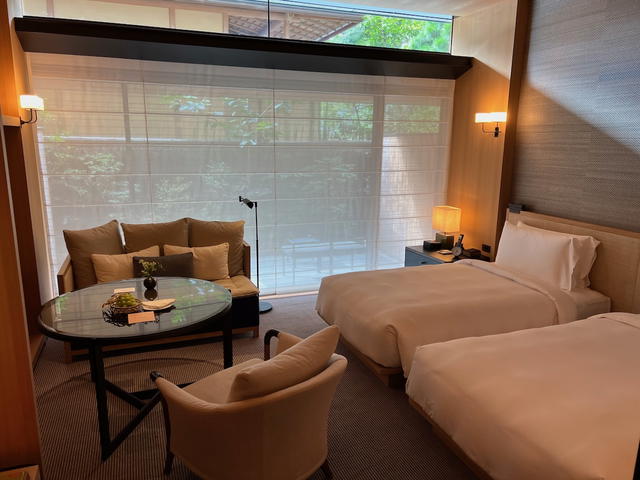
In this post I wanted to look at an interesting lawsuit that was recently filed by the owners of a hotel against Hyatt.
The Hyatt Regency Jersey City lawsuit
The real estate developer behind the Hyatt Regency Jersey City has filed a lawsuit against Hyatt, and I find this to be an interesting one. This lawsuit involves two main components:
- A Hyatt House was built very close to the Hyatt Regency, which the Hyatt Regency claims is causing a $1.3 million annual operating loss
- Hyatt allowed Hyatt Regency employees to unionize without consulting the hotel’s owners, which they claim has led to $58 million in damages
Let’s look at these points in a bit more detail, though if you want to read the full lawsuit for yourself, see here.
The Hyatt Regency’s Hyatt House issue
It’s normal for hotels to have some sort of a proximity clause, where the same management company won’t open a competing hotel within a certain area.
Hyatt had approached the Hyatt Regency owners in regards to the opening of a nearby Hyatt House, alleging that they wouldn’t be a competitor, since Hyatt House is a limited service and extended stay brand. The Hyatt Regency’s owners agreed to this.
Well, the hotel opened in December 2017 under 300 feet away, and the Hyatt Regency’s owners allege this has caused the hotel a $1.3 million operating loss. Their argument is that:
- The Hyatt House has 258 rooms, making it the largest Hyatt House in the country
- The Hyatt House offers a food and beverage program comparable to a full service hotel, and has a destination rooftop lounge and bar
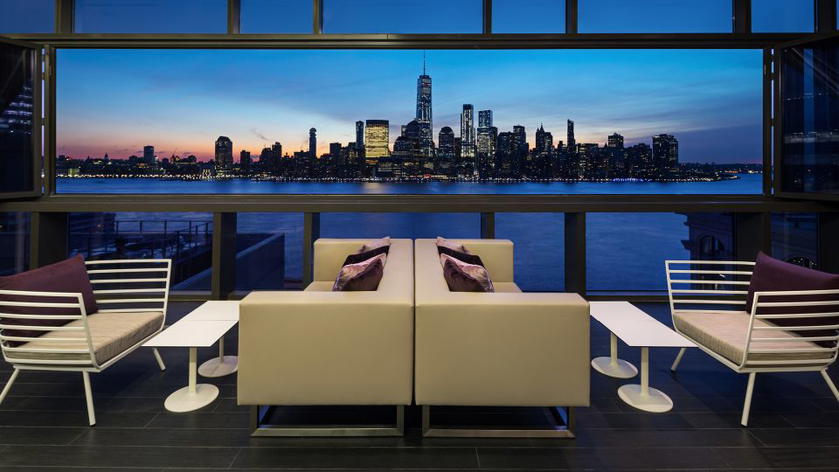
Bar at the Hyatt House Jersey City
So the Hyatt Regency’s owners are basically suggesting this is a Hyatt House in name only.
What I’m not clear on is:
- Did the Hyatt Regency’s owners ask all these questions regarding the size of the hotel, the amenities, etc.? This seems like something you’d ask if a hotel is opening less than 300 feet away.
- Did the Hyatt Regency’s owners get anything for agreeing to let the other hotel open, because otherwise I don’t see what’s in it for them?
To me it’s naive to think that a hotel opening less than 300 feet away wouldn’t impact business.
Even if it’s theoretically targeted at a different demographic of the market, the reality is that many people are loyal to particular hotel brands, and if they’re searching for hotels in the area, the may be willing to book a Hyatt House rather than a Hyatt Regency if the price is right.
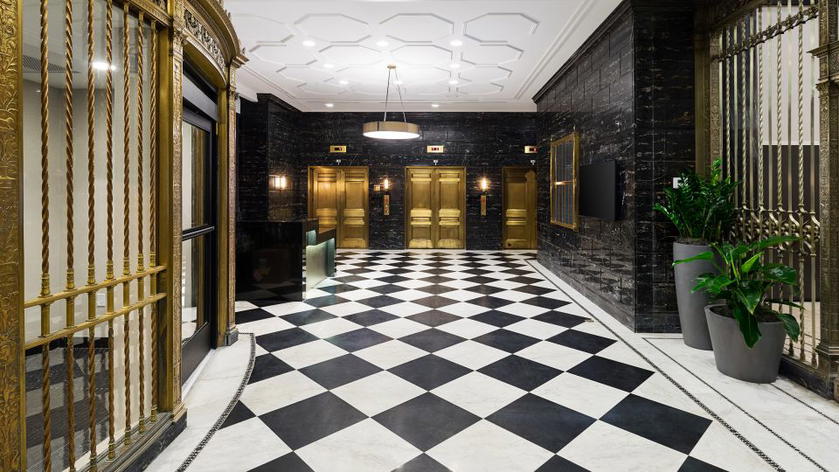
The Hyatt House Jersey City lobby
The Hyatt Regency’s union issue
Union issues are an ongoing struggle in the hotel industry.
The Hyatt Regency’s owners claim that their management agreement with Hyatt requires Hyatt to get their approval before entering into any collective bargaining agreements, and that this hasn’t been done:
- The Hyatt Regency Jersey City opened in 2002 without any sort of collective bargaining agreement
- In September 2014, Hyatt unilaterally subjected the hotel to the Greater Regional Industry-Wide Agreement with the New York Hotel and Motel Trades Council
- When doing this, Hyatt didn’t obtain the hotel owner’s consent, as they were required to
- In December 2017, Hyatt renewed the hotel’s commitment to this, effective as of April 1, 2018
- This has greatly increased the operating costs of the hotel, and the claim is that the hotel has suffered damages in excess of $58 million as a result of this
It’s not entirely clear to me if the hotel could have done anything to prevent this, or if the owner’s issue is simply that Hyatt didn’t properly consult them on this (even if it wouldn’t have impacted the result).
Bottom line
I find this to be an interesting lawsuit, and am curious to see how it plays out. While the hotel is claiming more significant damages from the union issues, I’m more curious how the Hyatt House issue plays out.
It seems crazy to me that the hotel’s owners didn’t think a hotel opening a few hundred feet away would impact their business.
I’ll be monitoring this and am curious how it plays out, though who knows, an agreement will likely be reached behind closed doors.


Membership is free and takes no more information than commenting as a guest. Earn status points for good contributions, and see fewer ads as your status grows.