

The logistics surrounding travel can be complicated, especially when it comes to traveling internationally. In this post, I want to talk a bit about the Schengen Area, and the implications of this for travelers. I know that for some people, this will be super obvious, but for others, it can be quite confusing.
The basics of Europe’s Schengen Area
Within Europe, there are 29 countries that are part of the Schengen Agreement (named after the town in Luxembourg). The practical implications here are that there are no passport checks or border controls when moving between these countries.
The 29 countries belonging to the agreement include Austria, Belgium, Bulgaria, Croatia, Czech Republic, Denmark, Estonia, Finland, France, Germany, Greece, Hungary, Iceland, Italy, Latvia, Liechtenstein, Lithuania, Luxembourg, Malta, Netherlands, Norway, Poland, Portugal, Romania, Slovakia, Slovenia, Spain, Sweden, and Switzerland.
There are some exceptions to this list, particularly where a territory is an island that does not share a border with another Schengen country, such as Greenland for Denmark, or Martinique for France.
There are also three European countries that do not participate in the Schengen Agreement but still have open borders to their surrounding countries. These include Monaco, San Marino, and Vatican City.
The Schengen Area should not be confused with countries belonging to the European Union, or countries using the Euro (yes, confusing, I know!). It’s important to note that:
- While there’s a lot of overlap between the Schengen Area and the European Union, there’s not full overlap; Cyrus and Ireland belong to the European Union, but not to the Schengen Area
- While most Schengen Area countries use the Euro as their currency, that’s not the case with all countries; countries like Iceland and Switzerland have their own currencies
Why the Schengen Area matters when traveling
If you’re traveling by air, how does the existence of the Schengen Area impact your travel experience?
If you’re traveling on a flight between the non-Schengen Area and Schengen Area, it’s no different than an international flight anywhere in the world. In other words, if you’re arriving in Frankfurt, you have to go through passport control, whether you are landing from Delhi or Dublin (since both are non-Schengen Area places).
This means that there will be passport checks, you may need proof of onward travel, in some situations visas may be required, etc. It’s also worth emphasizing that the Schengen Area has passport checks on departure as well (unlike when departing the United States). This means that if you’re traveling from Frankfurt to Paris to Los Angeles, you’d have to go through the Schengen Area passport control in Paris, as that’s the point where you’re exiting the Schengen Area.
Major hubs in the Schengen Area also often allow sterile transit, whereby you don’t enter the Schengen Area. This could be useful if you’re traveling between two non-Schengen Area airports via a Schengen Area airport (like flying from New York to Dubai via Paris).
The huge benefit to travelers, meanwhile, is when moving within the Schengen Area, whether it’s by plane, train, or car. There’s no inbound or outbound passport control, so you can freely move between countries. Think of it almost like taking a domestic flight within another country.
The Schengen Area can also impact lounge access
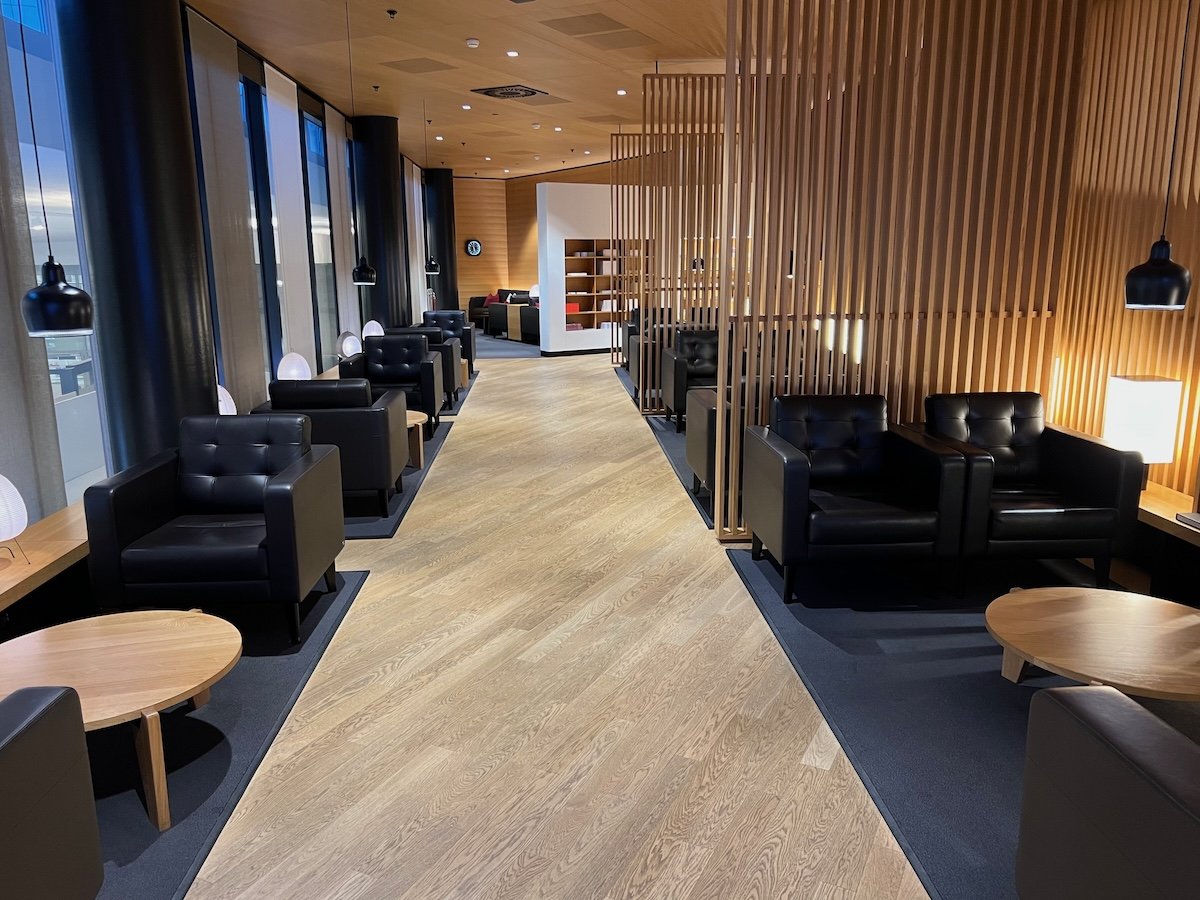
While this is admittedly pretty niche, it’s also worth mentioning the Schengen Area in the context of airport lounge access. At larger airports, you’ll often find that there are lounges in both the Schengen Area, and in the non-Schengen Area.
When visiting lounges, you’ll want to keep track of whether you’re in the Schengen Area or non-Schengen Area:
- If you’re visiting a lounge in the Schengen Area but are departing on a flight from the non-Schengen Area, just remember to save enough time for passport control; at some airports that’s fast, and at other airports it takes a lot of time
- Sometimes lounges will restrict access to those departing from that zone; for example, some lounges in the non-Schengen Area may not welcome guests with flights departing from the Schengen Area, so check the rules for the lounge you’re visiting
- While there’s some variability, I find that immigration officers usually don’t have an issue with moving between the two zones, even if it’s just for lounge access; if they ask, just explain what you’re trying to do
The Schengen Area tax free shopping implications
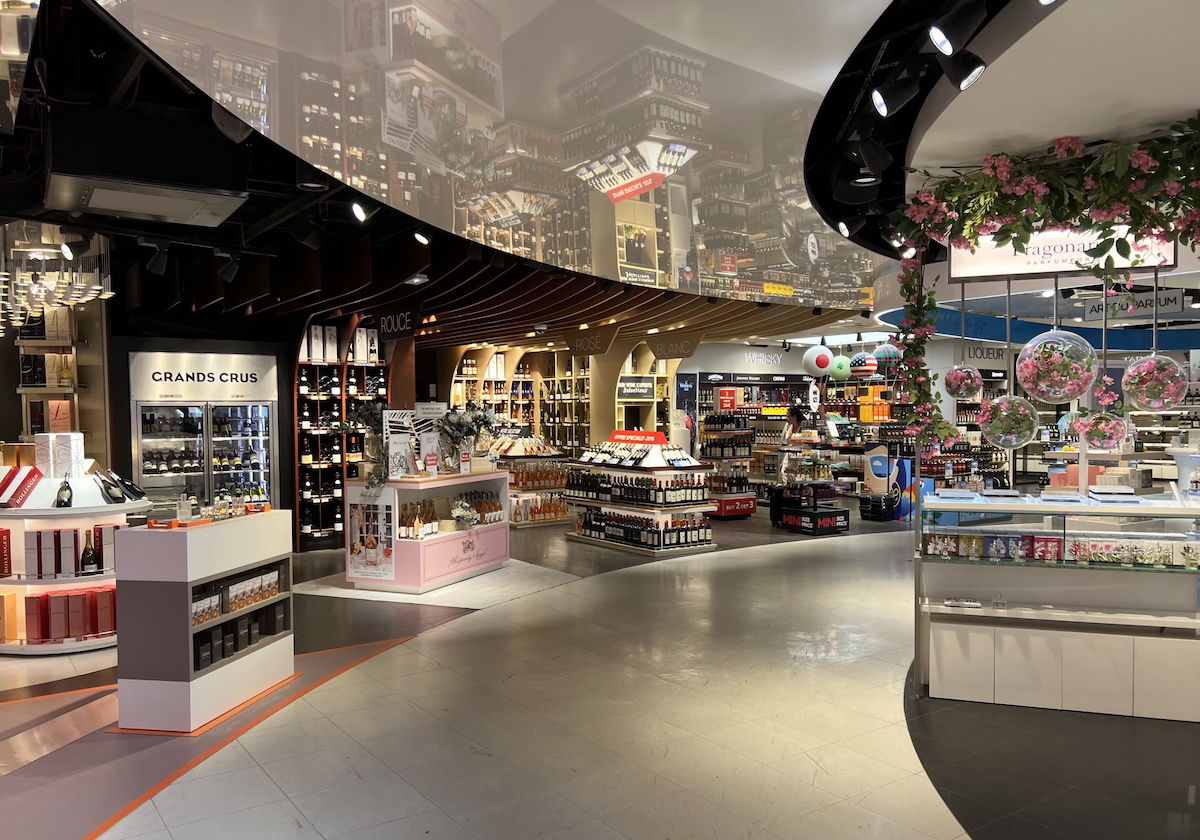
In the interest of being thorough, let me bring up one last point. If you do any tax free shopping while in the Schengen Area and plan to claim a tax refund, you’ll generally want to do that at your last point of exit before departing the Schengen Area.
In other words, if you did shopping in Paris and are then flying from Paris to Frankfurt to Boston, you’d want to make your tax free declaration in Frankfurt, since that’s the airport at which you’re leaving the Schengen Area.
The one slight nuance here is that if you’re putting the tax free items in your checked luggage, and if they’re checked through to a destination outside of the Schengen Area, you’d want to visit the customs desk at your departing airport to show your goods, and to get your forms stamped. So in that case you wouldn’t do it at your last airport before departing the Schengen Area.
Bottom line
The Schengen Area is a handy concept for travelers, as it allows free movement within 29 European countries, in a similar way to what you’d usually get when traveling domestically. While there’s a lot of overlap between the Schengen Area and the European Union, there’s not full overlap.
Hopefully the above is a good basic rundown of what to expect when traveling to, through, or within the Schengen Area. If I missed anything, please let me know.
What has your experience been with Schengen Area travel?




Ben,
Encountered an anomaly landing at KEF a few weeks ago. Upon landing at midnite, the full plane departed rapidly to get bed quickly. Before we got off the jetway, we each met up with three border guards. They insisted on us showing our passports. Who can resist such an invitation. We departed from FRA. So, Schengen to Schengen.
Spot checks are always possible within Schengen. They are somewhat common when arriving from high risk origins (e.g. a lot of irregular migration). Therefore you always need to carry a valid travel document - either a passport issued anywhere in the world (with a visa if applicable) or an ID card issued by an EU member state.
The new EES rules that started early April have been causing problems .
I live in Cyprus ,have permanent residency and a British passport , so to obtain permanent residency last year , I have provided my photo and finger prints to the Cyprus database and in turn to the EU database . So in theory , I should be able to travel easily in the EU .
I have visited Greece many...
The new EES rules that started early April have been causing problems .
I live in Cyprus ,have permanent residency and a British passport , so to obtain permanent residency last year , I have provided my photo and finger prints to the Cyprus database and in turn to the EU database . So in theory , I should be able to travel easily in the EU .
I have visited Greece many times over last 20 years and in the past it took 5 minutes to get through immigration. But in May 2026 when I visited , I had to wait one hour at immigration because I was directed into the ''NON EU Passport '' queue ( British passport holder). This put me behind 40 Americans and Canadians arriving for a cruise , who all had to be fingerprinted and photos taken .When I got to the immigration booth and showed my passport and EU permanent residency card , the officer just waived me through as if I had an EU passport .This is how it should be . So what is needed is a third queue for ''Non EU passport holders with EU residency ''
Some airports (like FEU in the Canaries) do have the 3rd queue in place and you get through in under a minute. There's a black list of EU airports at present:
"....airports including Lanzarote, Tenerife South, Malaga, Porto, Lisbon, Amsterdam, Krakow, Paris CDG, Rome, Palma, Malta, Menorca, Milan Linate and Malpensa, Naples and Budapest as being the worst for queues this summer"
Zurich is a good example for hoing to Nonschengen for the lounge. The whisky selection in the Senator lounge in Nonschengen beats the one in Schengen by far
It would be good to discuss that some airports have S gates that require a bus from the plane to the terminal
Nothing to do with Schengen, such gates exist for non-Schengen flights too. In fact, one of the common reason for using bus at some airports is the plane turning around from a Schengen to non-Schengen flight or vice versa - if the airport has no dual use gates (i.e. mutlilevel layout), then a bus is the only option in at least one direction.
Another weird one is TK at VIE. They use D gates but...
Nothing to do with Schengen, such gates exist for non-Schengen flights too. In fact, one of the common reason for using bus at some airports is the plane turning around from a Schengen to non-Schengen flight or vice versa - if the airport has no dual use gates (i.e. mutlilevel layout), then a bus is the only option in at least one direction.
Another weird one is TK at VIE. They use D gates but these disembark into secure area (not allowed for Turkey arrivals), so there's a bus on disembarking, even on widebodies, and the jetbridge is then attached for boarding.
This is pretty much NO different than traveling within the 50 states of the US...It's the same concept, except all the states of the US belong to the same country. It's not really rocket science...
Not really, sometimes you have passport controls even within Shenghen depending on the airport setup.
@Nic123 - Untrue. Spot checks may occur where decided by local authorities but this has nothing to do with "airport setup". Every airport in Schengen is capable of handling Schengen arrivals without a passport check. That's kinda the point.
It is a SIMILAR concept and I agree it may not be rocket science but it is a lot more complicated than USA because each country has its own laws, rules, regulations and characteristics which have to be taken into account .
And if arriving in Switzerland from another Schengen country you still have to go through customs but not passport control.
Ben I do understand that you travel a lot via the miles/points that you have collected. I have been an ardent follower of your "One Mile at a Time". However we normally have to pay our way for flights. I would appreciate if you would delve on the subject of the sudden exorbitant increase of International Flight fares, for premium tickets. True the price of gas went up. But it is back down and the...
Ben I do understand that you travel a lot via the miles/points that you have collected. I have been an ardent follower of your "One Mile at a Time". However we normally have to pay our way for flights. I would appreciate if you would delve on the subject of the sudden exorbitant increase of International Flight fares, for premium tickets. True the price of gas went up. But it is back down and the fares have not moved an inch. Is there some kind of collusion with all the airlines to increase the prices of the business and first class fares? Business class fares were always more than double that of economy. But now they have tripled.
Correction on the customs thing: It's based on leaving the EU / the Single Market, not Schengen (since Schengen only affects immigration, customs are based on EU treaties). So for example, when flying Frankfurt - Dublin - Toronto, you'd have to declare in Dublin, not Frankfurt. Similarly when flying Frankfurt - Zurich - Hong Kong, you'd have to declare already in Frankfurt.
In this current environment, I recommend the following for connections between Schengen and non-Shengen in either direction.
Immediately upon arrival of your first flight, go through passport control and get to the "other side" for your departing flight and stay there. Do not pass go. Do not delay "crossing borders" to use a lounge. Do not cross back and forth for lounges. Why?
Right now the new entry/exit system (EES) is stressed to...
In this current environment, I recommend the following for connections between Schengen and non-Shengen in either direction.
Immediately upon arrival of your first flight, go through passport control and get to the "other side" for your departing flight and stay there. Do not pass go. Do not delay "crossing borders" to use a lounge. Do not cross back and forth for lounges. Why?
Right now the new entry/exit system (EES) is stressed to a failure point in many locations. The folks running it are acting like there are just a few teething pains, still all is well. There are real problems, however. Airlines are leaving without pax who checked in but couldn't get through >2 hour queues to depart. Pax are missing connections when they arrive from outside Schengen. The one piece of good news is the ETIAS will nearly certainly be further delayed.
Yes it’s shambolic the way it’s been rolled out. Been in and out of 7 or 8 EU countries (on separate trips) since January and EES in some has been implemented very badly. Poorly staffed, not enough machines, lots of broken ones, not enough space etc etc. This means you can’t plan your airport journey with certainty, not knowing if it’s going to take 10 minutes or 2 hours to get through. One of the...
Yes it’s shambolic the way it’s been rolled out. Been in and out of 7 or 8 EU countries (on separate trips) since January and EES in some has been implemented very badly. Poorly staffed, not enough machines, lots of broken ones, not enough space etc etc. This means you can’t plan your airport journey with certainty, not knowing if it’s going to take 10 minutes or 2 hours to get through. One of the biggest gripes for me is registering fingers prints and your face every time. This is only meant to happen once in the first EU country you visit (then you can use the E-gates going forward) but every country has required me to join the registration queue before joining the border queue. Total incompetence.
Several weeks ago I flew into Zurich, morning arrival from EWR. Encountered long lines to get on the train to the immigration terminal. From there it was 2.5 hours to get through immigration. Long lines, no trash receptacles, garbage on the floor, including a few soiled baby diapers. It was an absolute disgrace! This is Zurich, Switzerland for God's sake.
Zurich is a crappy airport and doesn’t represent the rest of the country.
But they have duty free on arrival, right there in the baggage claim. Great opportunity to stack up on cheap smokes and booze.
Good. The rest of us have experienced this arriving in your failed nation for decades.
We should enact a moratorium on Americans, full stop.
And therein lies the problem. A system that was designed to simplify passing between nations is so complicated that an entire thorough post and dozens of follow on comments still leaves one uneasy and confused
It doesn’t leave me uneasy and confused.
It’s one of the greatest inventions of the EU ever and I understand that some countries cannot join the Schengen area, but are still in the EU and others wanted to join this concept while remaining outside the EU.
If you are someone who travels within Europe frequently you will praise and cherish this concept on every trip.
How is it 'the problem'? The system is indeed complicated, but it absolutely simplifies passing between nations.
The reason most people lack understanding of the specifics and niche aspects is because the system works so easily for people that they don't usually bother to look into it, they can just show up and work it out when they arrive.
Only Americans are confused, honey. But you're confused about a lot of things.
Explain me this: why do you yell at each other in public when in Europe?
I don't see how it's complicated. The only somewhat complicated part is the list of the countries included, since this doesn't 100% overlap with the EU member states but you can, well, read the list. Beyond that it's super simple.
Your tax free comments are incorrect and misleading, because customs and tax free regulations have nothing to do with Schengen at all. For example: you can do tax free Shopping or reclaim Vat on a journey from Germany to Switzerland despite the fact that both are in Schengen, but one is outside EU.
Conversely, you cannot shop duty free or reclaim Vat on a journey between Germany and Ireland despite the fact that you...
Your tax free comments are incorrect and misleading, because customs and tax free regulations have nothing to do with Schengen at all. For example: you can do tax free Shopping or reclaim Vat on a journey from Germany to Switzerland despite the fact that both are in Schengen, but one is outside EU.
Conversely, you cannot shop duty free or reclaim Vat on a journey between Germany and Ireland despite the fact that you are leaving the Schengen Area because both are EU which is what matters for customs purposes.
I am surprised that the article gets this wrong.
You need to do your declaration when leaving the EU, NOT when leaving Schengen.
@Ben you should add US bilateral agreements are in place with many EU countries which allows citizens to stay longer after the 90 day rule.
You could just name the countries for us. There’s likely not many at all. Doesn’t require an entire article (which would mostly be ads anyways).
Denmark: 3 months
Belgium: 3 months
Italy: 3 months
France: 90 days
Spain: 90 days
The Netherlands: 90 days
Hungary: 90 days
Portugal: 60 days
How are these “longer than 90 days”?
By the way, that’s 90 days out of 180, the infamous 90/180 rule, which Ben really should have mentioned.
My mistake, feel free to delete.
An update on the current status of EES (delays?) might be a helpful supplement to this article.
Not only EES (fingerprints, etc.), but also the pending ETIAS, which will cost many of us with visa-free entry a €20 fee, and to have to undergo pre-travel security checks. Pushed back to 2027.
EES status is absolutely no Americans are allowed. Stay away.
Airlines are complaining about it. Flights are departing with 50% of the checked in pax. The administrators claim there are 20 troublesome airports, and everything is falling in place. They seem to have learned from American presidents: just deny it's failing.
Hello,
I have a question: If you exit a non Schengen zone country like say Canada for a flight to another non Schengen zone say Istanbul, but you have a connection in Paris. Does that connection in Paris count as a travel day in Schengen?
No, it doesn't. You will stay in international transit in the airport and not encounter any immigration official at all (UNLESS CHANGING AIRPORTS)
Are you going into Paris, Shane? For the gram and your OH MY GAAAWD lard bag of a spouse?
If not, then no.
I went back and forth between zones @ ZRH a few months ago to go to the nicer Swiss senator lounge. It was worth it. The immigration officer knew exactly what I was going when I came back into Schengen to get my flight.
"While there’s some variability, I find that immigration officers usually don’t have an issue with moving between the two zones"
Absolutely right in Germany. Absolutely wrong in France
@JJ -- I was just to comment this exact thing. It is definitely worth it to visit better lounges, especially in ZRH where the Senator E lounge is waaaaay nicer, and ZRH is such an efficient airport. The Senator B lounge in FRA is also way nicer than the others, the Maple leaf lounge too. However, the security going from B to A sucks. Can take the bus to Z though
Cricky
A blog post about the implications of international travel - and that you may need to pass through passport control.
Who would have thought
How American
It's actually very easy, people just make it too complicated because it's CouNtRies and that's gotta mean something (the traditional EU fallacy - we're a confederation operating as such but we can't say it out loud, because it would upset some people :)). So just imagine Schengen as a "country", and it operates like domestic flights in just about any country on the planet operate (US and UK excluded). Imagine everything outside Schengne as not...
It's actually very easy, people just make it too complicated because it's CouNtRies and that's gotta mean something (the traditional EU fallacy - we're a confederation operating as such but we can't say it out loud, because it would upset some people :)). So just imagine Schengen as a "country", and it operates like domestic flights in just about any country on the planet operate (US and UK excluded). Imagine everything outside Schengne as not being within that "country" and it will also operate like international flights in just about any country on the planet operate :)
The only thing that derails people in understanding this is the whole "Italy is not Germany" stereotype, besides that it's the normal domestic vs international distinction like in 90% of countries on the planet.
No, Shenghen zone is far from being a country concept...for instance, there are still import tax between Shenghen countries and you can claim VAT refunds at the border of each country (e.g. Switzerland when shopping in the EU), immigration laws and status are different, you are still crossing a border.
If you want to keep simple, Shenghen zone is a zone where border controls for people are not systematic, but they happen - particularly on land borders.
Before offering advice or lecturing what Schengen borders mean or don't mean, I suggest you get your spelling right. Three times wrong in six lines...
Not convincing.
"you can claim VAT refunds at the border of each country"
Only if it is outside the common market. Switzerland is outside the EU (but inside Schengen), that's why you can get a VAT refund if you are coming from Germany for example.
Going to France you can't because France is both inside the EU (and Schengen).
Pre-Brexit the UK was inside the EU (no VAT refund) (because common market) but outside Schengen (ID...
"you can claim VAT refunds at the border of each country"
Only if it is outside the common market. Switzerland is outside the EU (but inside Schengen), that's why you can get a VAT refund if you are coming from Germany for example.
Going to France you can't because France is both inside the EU (and Schengen).
Pre-Brexit the UK was inside the EU (no VAT refund) (because common market) but outside Schengen (ID check), pretty much the opposite of Switzerland.
Now the UK is outside of both systems, so going there from mainland Europe is the same as going to Dubai (outside Schengen and outside of the EU)
Countries in the schengen zone can still re-introduce border checks if they like. This is mostly on the land borders but arrivals by air might also be affected. This is normally temporary and might not apply to 100% of arriving flights, but be targeted for some reason. So you should always carry your ID regardless that it's not normally checked.
An example is the train between Denmark - Sweden, two schengen members.
When...
Countries in the schengen zone can still re-introduce border checks if they like. This is mostly on the land borders but arrivals by air might also be affected. This is normally temporary and might not apply to 100% of arriving flights, but be targeted for some reason. So you should always carry your ID regardless that it's not normally checked.
An example is the train between Denmark - Sweden, two schengen members.
When I fly Helsinki - Stockholm there are normally no ID checks at all. Just scanning my boarding pass at security and at the boarding gate. So it would be a bit unfortunate to arrive at the other end without ID and find they are doing ID checks.
You cannot fly without ID anyway, as an ID check may be carried out by the airline due to national regulations or due to their own liking.
Almost all LCCs want to see an ID during boarding.
In some instances, you could fly one way without ID but not the other, e.g. LH to Spain. This is because LH generally doesn’t bother with ID checks within Schengen, but there is a law in...
You cannot fly without ID anyway, as an ID check may be carried out by the airline due to national regulations or due to their own liking.
Almost all LCCs want to see an ID during boarding.
In some instances, you could fly one way without ID but not the other, e.g. LH to Spain. This is because LH generally doesn’t bother with ID checks within Schengen, but there is a law in Spain that the identity of passengers must be ascertained before the flight.
So there are more variations on the theme than Ben identified and the bottom line is: you must bring a valid ID regardless.
Americans should note that ID needs to be more substantial than their Starbucks card or their Butthurt City Library card.
Routinely there are border ID checks when taking the train between Salzburg (Austria) and Munich (Germany).
I am dreading my next entry into the Schengen zone this October. I was on a cruise last month which had all ports within the Schengen zone except for the last port (London). We were supposed to be processed out of the Schengen zone in Amsterdam, our final stop within the Schengen zone. Due to a SNAFU, we left Amsterdam without any passengers getting processed out of the Schengen zone.
We were each provided...
I am dreading my next entry into the Schengen zone this October. I was on a cruise last month which had all ports within the Schengen zone except for the last port (London). We were supposed to be processed out of the Schengen zone in Amsterdam, our final stop within the Schengen zone. Due to a SNAFU, we left Amsterdam without any passengers getting processed out of the Schengen zone.
We were each provided with a document from a "Border coordinator" which explained what happened in fractured English. We were directed to bring this document with us when we next attempt to enter the Schengen zone. That will be more than 90 days later for me. I hope they don't toss me in prison, especially considering how the US is treating foreign visitors. I have not yet decided if I should proactively hand the document to the Immigration Officer or if I should wait and hope they just stamp me in.
If anyone has experienced a similar situation, I would welcome your advice.
1. Chances are that the officer won't bother going through previous passport stamps, especially if you're from a low risk country. No need to hand anything proactively.
2. This is EU, no one is gonna throw you in jail, lol. At worst you'll be detained at the airport and sent back home, but even that's super unlikely.
You should proactively offer the document solely because the document was given to you with the purpose of explaining any immigration discrepancies that might arise. It's for you and the next immigration officer to be on the same page, so to speak. I would think any rational border agent would be considerate of your honesty in determining your eligibility for entry.
But as noted below, unless you scanned or were stamped out on departure...
You should proactively offer the document solely because the document was given to you with the purpose of explaining any immigration discrepancies that might arise. It's for you and the next immigration officer to be on the same page, so to speak. I would think any rational border agent would be considerate of your honesty in determining your eligibility for entry.
But as noted below, unless you scanned or were stamped out on departure from a port, there is a low likelihood it would even be noticed.
No, do NOT proactively offer the document. Just have it available and present it and/or other evidence of not having remained in the Schengen zone for as long as the last Schengen stamp(s) in the passport may indicate to them if they bring it up.
Agree - there are other situations where you can end up going into / out of Schengen without a stamp - they've got a lot stricter recently but Canary Islands often processed flights into/out of the UK without stamping to avoid massive queues building up. If you had many stamps / evidence of long periods of staying so you're getting near to 90 days etc then they'd take a closer look, if you just take...
Agree - there are other situations where you can end up going into / out of Schengen without a stamp - they've got a lot stricter recently but Canary Islands often processed flights into/out of the UK without stamping to avoid massive queues building up. If you had many stamps / evidence of long periods of staying so you're getting near to 90 days etc then they'd take a closer look, if you just take a yearly vacation to Europe you're almost certainly going to be stamped in / out without question
Thanks to everyone who provided advice on this matter!
Then don't come. We very much do not need more Americans from the cruise segment who complain about people's ability to speak English.
... and that's from the country that loves grammatical constructions like "have went".
Cat: stay away. We don't want you here.
And then you have peculiar situations, like when an aircraft arriving from a Schengen origin into a hub is scheduled to continue onward to a non-Schengen destination. That will often mean that the plane will be parked at a non-Schengen gate, and even though there's a bridge, passengers will instead deplane by stairs into a bus and will be brought to a Schengen arrivals area.
There are also some weird one-stop flights where extra complexities...
And then you have peculiar situations, like when an aircraft arriving from a Schengen origin into a hub is scheduled to continue onward to a non-Schengen destination. That will often mean that the plane will be parked at a non-Schengen gate, and even though there's a bridge, passengers will instead deplane by stairs into a bus and will be brought to a Schengen arrivals area.
There are also some weird one-stop flights where extra complexities arise. Back in the day, Czech Airlines (RIP) had a Moscow (SVO) to Prague (PRG) service with a stopover in Karlovy Vary (KLV). While PRG and KLV are in the same country, this segment wasn't bookable, because it operated as a non-Schengen flight with a route entirely within a Schengen member country :) This was to avoid having to offload and process every passenger in KLV prior to continuing the final leg to PRG, which just wasn't practical.
Many fifth freedom flights also operate as extraterritorial, e.g. Ethiopian between Vienna and Scandinavia for the same reason.
Most airports these days have flex gates where plane can arrive on a Schengen flight and leave on a non-Schengen one but older terminals indeed lack them sometimes.
The comment about crossing between Schengen and non-Schengen zones for lounge access only applies for those who are entitled to enter Schengen. Trying to do it on e.g. a Kenyan passport without at least multiple entry visa isn't likely to end well.
Wait, so if you can't enter Schengen, you ... can't enter Schengen?
Mind. blown.
The complication is when you can enter subject to restrictions. Someone who has a single-entry visa or is close to their visa-free days limit may not necessarily realise that they will still be processed as an arriving passenger for immigration purposes even if they remain airside.
@France Gall
Lucky's comment "... I find that immigration officers usually don’t have an issue with moving between the two zones, even if it’s just for lounge access ..." indeed could have been clearer and did not take this into account.
Try reading it again. The poster is discouraging some from going back and forth to access lounges. The pax arrives, clears passport control into Schengen---everything is fine. The pax then exits Schengen to go to the non-Schengen lounge and finds the can't enter a second time. At least that's my reading of the post.
What do you mean with Greenland and Schengen, isn‘t it now part of the US?
No it was lost back to Denmark in a wager placed by a senior American official who bet on his country’s football team after the “Red Card” affair.
Not that many of us carry much cash across borders usually (if ever), but if you cross some of the borders within Schengen countries with a substantial amount, you may still be subject to cash/cash-equivalent customs declaration requirements.
It's really important to declare anything over €10k if you don't want to risk getting into a world of pain.
Who do you report it to? Flying from Stockholm to Amsterdam you won’t see a single customs officer from airplane door to the street.
I'm pretty sure you can do it online, but they do have offices in those airports and they'll be able to help.
You have to be some kind of masochist to actively seek out a customs officer to declare your funds on an internal Euro flight.
My friend who is a customs officer at an airport somewhere in Southern Europe would beg to differ. There's no prohibition on carrying the money, it's just an administrative obligation for anti-laundering purposes. It's like an insurance policy - the risk of things going wrong is pretty small, but if they do go wrong you're screwed. Obviously if you're travelling with someone else, you can split the cash and no longer have to declare anything...
My friend who is a customs officer at an airport somewhere in Southern Europe would beg to differ. There's no prohibition on carrying the money, it's just an administrative obligation for anti-laundering purposes. It's like an insurance policy - the risk of things going wrong is pretty small, but if they do go wrong you're screwed. Obviously if you're travelling with someone else, you can split the cash and no longer have to declare anything exceeding 10k per person.
*no longer have to declare anything NOT exceeding 10k per person
Literally the worst possible word to omit
Your friend is probably a corrupt bribe-taking Bulgarian or Romanian customs officer. I’ve seen plenty of those in that that part of the world.
@UncleRonnie - Flying from Stockholm to Amsterdam you'll go through customs in Amsterdam and you're supposed to go through the "red channel" if you have something to declare. Even the green channel at AMS usually has officers there in my experience, but those will only do spot checks of course (which almost never target EU arrivals, and even for non-EU arrivals you're unlikely to be stopped unless you carry half a dozen of bags).
... and if you carry merchandise which you intend to sell in another (Schengen) Country, you would have to declare this too and probably pay (VA)Tax on it.
However isn't this and the 10k cash (eqv.) a rather theoretical discussion which would not affect 99% of the readers of this blog anyway?
Thank you for this post.
Also, there's a hiccup with a 5th freedom flight from one Schengen country to another Schengen country, as you'll have to go through passport control on departure and on arrival. E.g., Ethiopian flight from CPH-VIE.
You also have Montenegro, which uses Euro as official currency, but is not a member of EU or Schengen.
Nelson,
Why don’t you offer your arse to Russia, you are such a bigot and a xenophobe.
Probably everyone knows this, but just in case. USA passport holders can only visit Schengen countries for 90 days combined out of each 180 days without an additional visa.
Rico, I think this is so important Lucky should have emphasized it.
Moreover, the rule covers any consecutive 180-day period; it doesn't end/reset on December 31, for example. It is sufficiently complicated that there are apps one can get to be sure you don't violate the "90/180" rule.
And there are real consequences for violating the rule. You can be denied entry to Schengen if you try to come back too soon. An overstay...
Rico, I think this is so important Lucky should have emphasized it.
Moreover, the rule covers any consecutive 180-day period; it doesn't end/reset on December 31, for example. It is sufficiently complicated that there are apps one can get to be sure you don't violate the "90/180" rule.
And there are real consequences for violating the rule. You can be denied entry to Schengen if you try to come back too soon. An overstay would be caught when you leave. You could be fined, or banned from re-entry, and it would certainly hurt any future application you might make for a longer-term visa.
I don't pretend to know all the consequences; that's why Lucky should have addressed the issue.
And it doesn't just apply to Americans. I'm pretty sure it applies to UK citizens now because of Brexit.
Correct me if I'm wrong, Lucky, but I don't think 90/180 applies to Irish citizens, even though Ireland isn't in Schengen, because the EU has citizenship rights that apply throughout the EU. One more example of the many non-overlaps of laws in Europe.
One final point: there are several EU members in Schengen that do not use the euro, including Denmark, Sweden, the Czech Republic, and Poland; using a different currency does not apply only to the non-EU Schengen members like Iceland, Norway, and Switzerland.
The 90/180 stay limit does not apply in the Schengen zone to Irish nationals. This is because Irish nationals are EU nationals. EU nationals and Schengen country nationals from non-EU Schengen countries are not subject to the rule limiting stays to 90 days within any rolling 180 day period.
Irish citizens have the best of both worlds - no restrictions in the EU thanks to Ireland's EU membership and no restrictions in UK, even after Brexit, thanks to the Common Travel Area agreement.
People don't seem to know about pre-schengen bilateral agreements that are still in effect that came about after WWII. USA passport holders don't need a visa to stay within a handful of European countries a further 3 months or 90 days. Italy, The Netherlands, Poland, are a few of the places this is true. You (USA passport holder) still need to move across a border every 90 days, but that can be from France to...
People don't seem to know about pre-schengen bilateral agreements that are still in effect that came about after WWII. USA passport holders don't need a visa to stay within a handful of European countries a further 3 months or 90 days. Italy, The Netherlands, Poland, are a few of the places this is true. You (USA passport holder) still need to move across a border every 90 days, but that can be from France to Italy, no need to leave the Schengen area.
https://www.reddit.com/r/digitalnomad/comments/1dwmtri/list_of_member_states_bilateral_visa_waiver/
'There are some exceptions to this list, particularly where a territory is an island that does not share a border with another Schengen country, such as the Faroe Islands for Denmark, or the Azores for Portugal.'
You seem to imply that the Azores are not in Schengen. This is incorrect. The Azores are in Schengen.
The Faroe Islands are outside of both Schengen and the EU not because they are islands, but because their...
'There are some exceptions to this list, particularly where a territory is an island that does not share a border with another Schengen country, such as the Faroe Islands for Denmark, or the Azores for Portugal.'
You seem to imply that the Azores are not in Schengen. This is incorrect. The Azores are in Schengen.
The Faroe Islands are outside of both Schengen and the EU not because they are islands, but because their territory has autonomy from Denmark, they had their own decision regarding the EU and chose not to join because they didn't want to join the common fisheries policy.
There are also territories that are fully within EU (as outermost regions) and not Schengen. For example, French Guyana or Guadeloupe are integral parts of France and the EU, yet outside Schengen. This is simply because of some local specifics.
Two follow up questions:
1. How do fifth freedom intra -Schengen flights operated by foreign carriers work - does everyone deplane at the first stop and go through immigration? Or are passengers just taking the fifth freedom flight treated as non-Schengen?
2. Can you elaborate a bit on customs (as opposed to immigration)? I’ve definitely had to go through a nothing to declare line when exiting a Schengen flight.
1) I believe everybody would need to disembark. I took an intra-Schengen portion of one and nobody was on before boarding.
2) Customs is done at final destination. The 'Nothing to declare' lane is often the same as the 'EU arrivals' lane.
But customs and Schengen are quite different as you can arrive from a non-schengen flight that doesn't require going through customs (Dublin to Athens for instance) and you can arrive from a Schengen...
1) I believe everybody would need to disembark. I took an intra-Schengen portion of one and nobody was on before boarding.
2) Customs is done at final destination. The 'Nothing to declare' lane is often the same as the 'EU arrivals' lane.
But customs and Schengen are quite different as you can arrive from a non-schengen flight that doesn't require going through customs (Dublin to Athens for instance) and you can arrive from a Schengen flight that does require it. (Oslo to Athens)
But if you arrive from EU, you go through the arriving from EU lane and if someone decides to pull you for questioning, just tell them where you are flying from and if you have, show your boarding pass, and that should be sufficient.
I remember some airports in the Schengen area having a blue customs lane (specifically for arrivals from within the EU) as well as green (nothing to declare) and red (goods to declare) lanes. Is that still the case?
Often the blue and green will be combined. But yes, this is standard.
@Grey, I have flown Ethiopian MXP-FCO-ADD and we didn't disembark, all the formalities had been completed in Malpensa. Not sure whether they bother selling tickets for the 40-minute local segment though.
Most of these flights operate as extraterritorial, i.e. they are considered non-Schengen in their entirety. So for example to take ET CPH-VIE you need to go through passport control on arrival and departure. Consequently, you can't use this flight if you have a single entry Schengen visa.
The customs officer can see easily from your luggage tag if it was checked in at a Schengen or Non-Schengen location. Tags printed inside the Schegen Area have green line on the edges while tags printed outside Schengen don't have this. This can easily be spottet by customs when you walk through the green line.
There are sometimes arrival passport/ID and/or customs checks when crossing countries within the Schengen area.
And even as there are no such checks most times, they do sometimes deny entry and turnaround foreign visitors who arrive without a passport and/or European national ID.
This is a good point that is often overlooked - and you often clear "customs" (agriculture checks, etc) at a separate airport or country after entering the Schengen area and passing through Immigration. And yes, sometimes it's unmanned / simple and you won't even notice it.
Must be what happened when I landed in Rome last fall, we flew ATL-AMS-FCO and went through passport control in AMS, but appeared to be leaving with general population from the terminal in FCO. Never saw any kind of agricultural/customs check area in the baggage claim like I would if I was leaving from an international flight in a US airport. But who knows, I was also dead tired and figuring out transportation for the...
Must be what happened when I landed in Rome last fall, we flew ATL-AMS-FCO and went through passport control in AMS, but appeared to be leaving with general population from the terminal in FCO. Never saw any kind of agricultural/customs check area in the baggage claim like I would if I was leaving from an international flight in a US airport. But who knows, I was also dead tired and figuring out transportation for the whole family and also helping my stepmother with her lost bag on nothing but a quad shot of espresso and a sandwich from AMS. I might just have not noticed.
You always clear customs at the destination airport, unless you're flying to a very minor destination (think the sort of Greek island airport that only sees 3-4 turboprops a week). If you'd been carrying anything impermissible,they could've intercepted and fined you. They don't really do random checks though, they typically only act on tip-offs or if you arrive from an unusually exotic/notorious origin.
Let's say you're flying from Medellin to Poznan via MAD and CPH....
You always clear customs at the destination airport, unless you're flying to a very minor destination (think the sort of Greek island airport that only sees 3-4 turboprops a week). If you'd been carrying anything impermissible,they could've intercepted and fined you. They don't really do random checks though, they typically only act on tip-offs or if you arrive from an unusually exotic/notorious origin.
Let's say you're flying from Medellin to Poznan via MAD and CPH. SK will notify the Polish authorities that, in addition to intra-EU luggage, they've got 3 pax with bags from MAN, another 5 from ATL and one from MDE, and the customs officer on duty may well keep an eye out for you and your stuff.
If you transfer from a non schengen arrival to a domestic flight then your bag is normally checked through but there won't be customs at arrival when you collect your bag (because at many airports there are no customs checks for domestic flights, especially if the airport only has domestic flights). eg if you fly London - Stockholm and then a domestic connection inside Sweden.
So if you are coming from a non-Schengen area like LAX and going to a Schengen destination like AMS but connecting in another Schengen airport like MUC, do you always “enter” the Schengen area (passport checks, etc.) on the first arrival into a Schengen destination? I would assume so, but…
@ Flyerrx -- Yep, that's correct!
You enter Schengen at the first airport.
But your checked bags do not "enter the EU" at that point.
Unlike in the USA, your bags are checked through to the final airport.
Customs officers there know that your bags did not originate from within the EU because they do not have a green strip on the tag.
Ah yes, the fact that for one purpose the one is Schengen and one is...
You enter Schengen at the first airport.
But your checked bags do not "enter the EU" at that point.
Unlike in the USA, your bags are checked through to the final airport.
Customs officers there know that your bags did not originate from within the EU because they do not have a green strip on the tag.
Ah yes, the fact that for one purpose the one is Schengen and one is EU is fun - non-cleared bags and cleared bags are allowed in the same hold on the grounds that bags don't interact in the way that humans do.
No, what they do is they keep you in the non-Schengen area, board everyone in the Schengen area, then drive the plane over to you in the non-Schengen area, ring a little bell, you hop on through a lil winda.
You are then kept in a special box onboard the plane, and when you land, all Schengen travelers get off like normal, but then they drive the plane over to non-Schengen, do the hokey-pokey, and you go through passport control there.
Hope that helped.
Sounds worth it as long as they don’t let you on.
@ France Gall -- that’s actually how it works in Thailand when leaving the country and having a domestic flight first. Obviously they don’t drag the plane around or put you in a box, but they have domestic and int boarding areas for the same flight.
... so what you're saying is they *do* do the hokey-pokey? :)
Appreciate the info. Next, we'll talk about how to drink water out of a glass or something equally complicated ...
Yep, that's how it works. Consider that there are certainly people who are originating in AMS and flying to MUC; there's no way to separate people on that flight based on origin.
Small correction. You said Cyrus instead of Cyprus.
I have a 70 minute layover in AMS. It’s United IAH AMS then Swiss AMS ZRH. Do I transit in AMS or clear customs then go back in for the onward Schengen flight? Hopefully that’s enough time.
I did IAH lhr ZRH once all BA and stayed airside at LHR.
Yep. You arrive at, say, AMS, follow the signs for a Shengen connection. You'll go through security screening and then passport control (the now dreaded EES) that deposits you in the Schengen side of the terminal. Yep, it's always. Good news is, assuming the arriving and departing flights are on the same ticket, you need not pick up and re-check your bags in AMS (CDG, etc.) Make sure they are checked through at initial check in.