We Tried To Call Out Our Flight Crew For Smoking…

Hello from Shanghai! Matthew and I just flew China Eastern from Los Angeles to Shanghai, and as I wrote about several hours ago, every 15-20 minutes a strong cigarette smoke odor filled the cabin. We did some investigating throughout the flight, and never actually saw anyone smoking, which leads us to believe the smoking was going on in the cockpit, and the smell circulated throughout the plane.
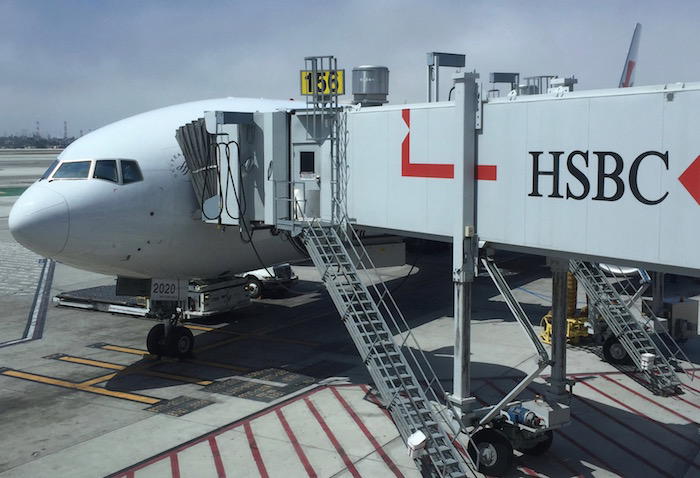

China-Eastern-Business-Class-777 - 1

Upon writing about it, it seems that this is actually very common on Chinese airlines. I’ve flown Chinese airlines quite a bit and never noticed it, though several commenters mentioned they have experienced the same.

We wanted to do a bit of digging, more out of curiosity than anything else. So Matthew and I strategized for a bit, and he came up with a good idea. We wanted to see if we could get the crew to admit that someone was smoking, because we found their complete denial of there even being an odor to be so strange (it’s one thing if they agreed they smelled the odor but said it wasn’t them, but they denied the existence of the odor altogether…).
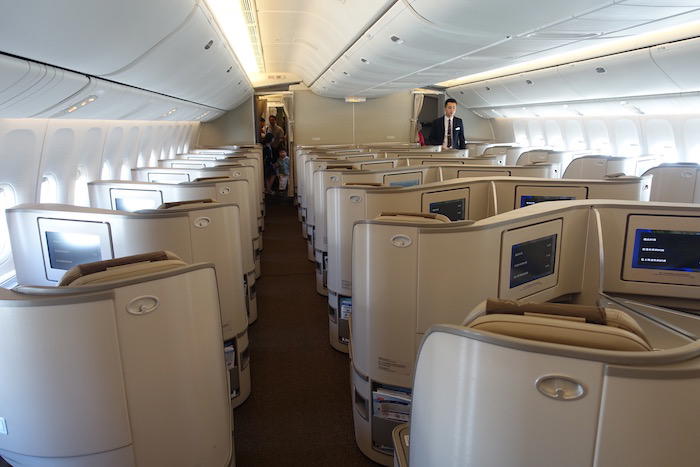
China-Eastern-Business-Class-777 - 5

Matthew asked one of the flight attendants to call the cabin manager. She sort of refused, and asked what the problem was. When Matthew explained the smoking situation, she said “oh, you want to smoke?”

“No, no, no, there’s a smell of smoke in the cabin, and we’re just worried. If it’s just someone in the crew smoking that’s completely fine, but we are worried it might be something else, and that makes us concerned.”

We figured that would be one way to get them to open up. “Nooo, maybe it’s just the oven?”

“No, it’s a very distinct cigarette smoke, it’s definitely not an oven.”

“No, I don’t think anyone smoke.”

“But don’t you smell that, it’s a strong odor?”

She pretended to sniff, and said “no, I don’t smell.”

Like, you must have your nose plugged not to smell that odor.

Matthew reiterated the point again, and then she went to talk to the captain (or so she claimed). When she returned, she said “captain said he has never smoked.” Yeah, I’m sure…

After clearing immigration we just happened to be passing through baggage claim at the same time as our pilots (we knew they were our pilots because we also saw them in the gate area at LAX, since we got to the gate early). They smelled like an ashtray, even from a few feet away…
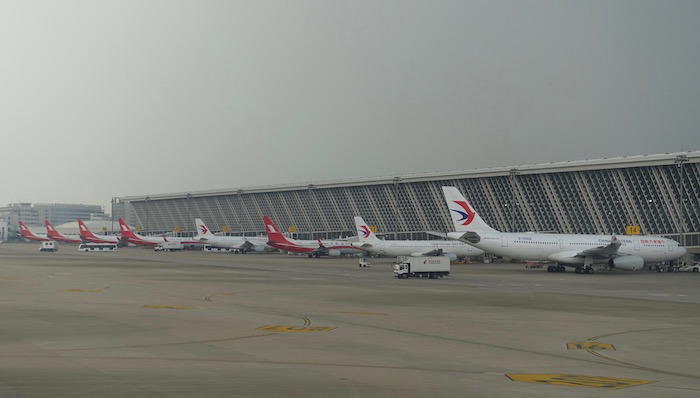
China-Eastern-Business-Class-777 - 102

This is ridiculous and completely unacceptable. Does anyone know if they’re actually violating FAA regulations by smoking on a Chinese airline between the US and China, or do US regulations not at all apply (even though the safety video says that they’re a non-smoking airline, and there are non-smoking signs throughout the cabin)?

Conversations (119)
The comments on this page have not been provided, reviewed, approved or otherwise endorsed by any advertiser, and it is not an advertiser's responsibility to ensure posts and/or questions are answered.
Comment as a member

Membership is free and takes no more information than commenting as a guest. Earn status points for good contributions, and see fewer ads as your status grows.

Type your response here.

If you'd like to participate in the discussion, please adhere to our commenting guidelines. Anyone can comment, and your email address will not be published. Register to save your unique username and earn special OMAAT reputation perks!

  1. Loading comments…
Recent Comments
The latest from the OMAAT community.

The comments on this page have not been provided, reviewed, approved or otherwise endorsed by any advertiser, and it is not an advertiser's responsibility to ensure posts and/or questions are answered.

Gracie Guest

If you didn’t really care that someone was smoking why were you trying to get the crew to admit it?

1
‼ 0
Ross Guest

"The FAA has no jurisdiction over this matter" That's nonsense. The FAA most certainly does have jurisdiction to regulate airline flights (or any other type of flights) to and from the USA and it can take actions up to and including fining the airline or even terminating their permission to fly to the US for violations of the FARs. Non-U.S. air carriers operating flights to/from the U.S. are regulated under Part 129 of the FARs (i.e. 14 CFR 129.)

0
‼ 0
Andy Guest

Smoking is allowed from the cockpit and cabin crew even on domestic US flights. The FAA ruled in the late 90's about safety concerns about nicotine withdrawal from the crew. It is those who smoke who ride in the cabin that has to suffer. I recently flew LAX to Sydney on Delta and every hour or so I could smell cigarette smoke. At first, I thought some American or Aussie was smoking in the toilet, as this is a 14-hour flight, but later found it was coming from the cockpit and the rear crew rest area. The reason you hear a whistling sound in the lavatory is that is where the cabin air is exhausted and that smelly dump you just took, fresh outside air is compressed by the engine turbine, heated, oxygen added and comes through the overhead vents. As for me, I smoke. This decision way back when got me off of commercial flights and into my own private plane. You look at what the airlines are able to pull off now, and the best you can do is "I smell smoke." The cabin air in a commercial airplane is just nasty. You would think this would be updated since it is from 2002. https://www.nap.edu/read/10238/chapter/4 It should be emphasized that recirculation air is not a substitute for outside air and that the flow rate of outside air required to maintain acceptable concentrations of gaseous contaminants is not reduced by using recirculation. Furthermore, the use of recirculation has no detrimental effect on cabin air quality for a given rate of flow of outside air and, when combined with effective HEPA filtration, does not contribute to the spread of infectious agents in the cabin. Recirculation air is obtained from the area above the cabin, under the floor, or both. Only air from the passenger cabin is recirculated. Air from the cargo bay, lavatories, and galleys is not recirculated (Boeing Co. 1988) but is separately vented overboard so that odors and cargo-bay fire-fighting chemicals that could be used in the event of a fire are not introduced into the cabin (Boeing Co. 1995). The flow rate of outside air per seat ranges from 5.9 to 9.6 L/s (12.4 to 20.4 cfm) on older aircraft without recirculation and from 3.6 to 7.4 L/s (7.6 to 15.6 cfm) on aircraft with recirculation (M.Dechow, Airbus, personal communication, Feb. 16 and March 8, 2001; Boeing responses to NAS, April 10, 2001). The percentage of recirculated air distributed to the passenger cabin typically is 30–55% of the total air supply. Some models of aircraft can use different amounts of recirculation or turn recirculation off. Other models are programmed to use different amounts of recirculated air during climb or descent compared with cruise. Table 2–1 summarizes the characteristics of the ventilation systems of various aircraft models (adapted from Lorengo and Porter 1986). It shows that most aircraft use bleed air rather than ram air as the source of cabin air, and it demonstrates that as aircraft have moved from 100% bleed air to recirculated air, the amount of outdoor air has decreased. The use of recirculation has been common in the design of building environmental control systems for many years. In contrast with aircraft, in which the total air flow to the cabin varies from 0% to 55% of recirculated air, building environmental control systems are commonly designed and operated with up to 90% recirculated air. However, the buildings still must maintain flow rates of outside air of about 0.5 kg/min (1.1 lb/min) per person or more to meet ventilation requirements regardless of the amount of recirculation (ASHRAE 1999b).

0
‼ 0
Karma Guest

Gee, in the "good old days" I not only could smoke cigarettes on the plane, I could go in the toilet and smoke weed. What is the point of nostalgia? I could go on forever about how it was, but this is NOW. This is a review and well done for describing everything from the food to the AIR! I'm wondering if the Vogmasks I bought to get through the air pollution in Beijing and Shanghai would help me, as I have developed a strong allergy to tobacco. Also appreciated the point about not having water, so I can buy some if I end up on MU J class. Also appreciated the points about other airlines that tacitly allow smoking. It's an empirical report, nothing more or less, and thank you very much.

0
‼ 0
TheguywhoworksforbigB Guest

You should update your post to include what you have learned. From what I know, all smoking bans are just for the cabins not the cockpit errr sorry that's even now not pc, I mean flight deck

0
‼ 0

Save posts to read later

Saving posts is a member feature. Become an OMAAT member to build a reading list you can come back to from any device.

Become a member
Meet Ben Schlappig, OMAAT Founder
5,883,136 Miles Traveled

43,914,800 Words Written

47,187 Posts Published