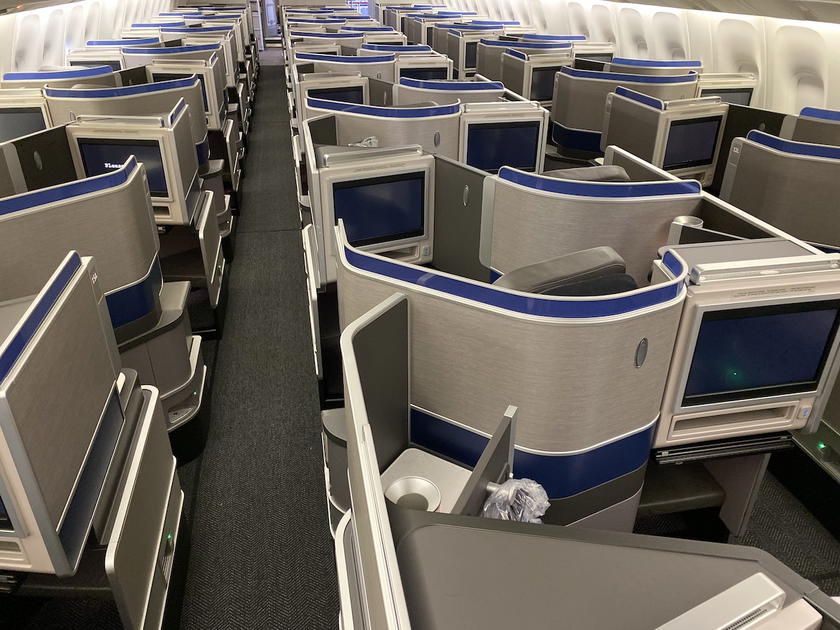
Earn American Status Exclusively Through Spending

Unfortunately in the US airline industry we more or less see the “big three” airlines following one another on just about everything. One area where that’s especially evident is with their loyalty programs.

While American isn’t going all-in on following United’s lead, they are doing so on a targeted basis, clearly to see how members respond.

United’s Switch To Spending Based Status

In October it was announced that huge changes are being made to United MileagePlus in 2020. As of next year, you can earn status through one of two methods:

  • Exclusively based on Premier Qualifying Points (PQPs), with members earning one PQP for every dollar spent
  • Through a combination of PQPs and Premier Qualifying Flights (PQFs), meaning through a combination of how much you spend and how many flights you take (if you qualify through this method, then the PQP requirement is lower)

Distance flown is no longer in any way significant when it comes to earning status.

With the new program:

  • Premier Silver requires 12 PQF and 4,000 PQP, OR just 5,000 PQP
  • Premier Gold requires 24 PQF and 8,000 PQP, OR just 10,000 PQP
  • Premier Platinum requires 36 PQF and 12,000 PQP, OR just 15,000 PQP
  • Premier 1K requires 54 PQF and 18,000 PQP, OR 24,000 PQP

United is changing how elite status qualification works in 2020

American’s Targeted Spending-Based Promotion

American Airlines seems to always be a bit behind Delta and United when it comes to frequent flyer program “enhancements,” and it seems they’re currently offering something on a targeted basis.

American hasn’t announced any major AAdvantage frequent flyer program changes for 2020 (and I doubt we’ll see any, given that the new year is right around the corner), though some members are seeing a targeted promotion in their AAdvantage account (you can log into your account to see promotions here).

On a targeted basis, American is letting AAdvantage members earn status exclusively through spending in 2020.

As American describes it, in 2020 select members will have an alternative way to qualify for status and keep it through January 31, 2022. You can either qualify with the normal requirements, or only by earning Elite Qualifying Dollars (EQDs) at the following levels (this is one version of the offer — it’s possible there are other versions out there):

  • 5,000 EQDs for Gold
  • 10,000 EQDs for Platinum
  • 15,000 EQDs for Platinum Pro
  • 24,000 EQDs for Executive Platinum

As a point of comparison, American’s published status requirements are as follows:

  • 3,000 EQDs AND 25,000 EQMs OR 30 EQSs for Gold
  • 6,000 EQDs AND 50,000 EQMs OR 60 EQSs for Platinum
  • 9,000 EQDs AND 75,000 EQMs OR 90 EQSs for Platinum Pro
  • 15,000 EQDs AND 100,000 EQMs OR 120 EQSs for Executive Platinum

As you can see, they’re requiring somewhere around a 60-67% premium in EQDs in order to not have to qualify via other means.

There are some more terms to be aware of, and again, this is all only for targeted members:

  • Registration is required by December 30, 2019
  • The promotion code is 5229P
  • Flights marketed by oneworld airlines qualify towards this promotion, though you’ll earn EQDs based on a percentage of the distance and fare class purchased (which always presents an arbitrage opportunity)
  • EQDs earned through credit card spending don’t count towards this

As you can see, American is exactly matching United’s spending requirements, which shouldn’t come as much of a surprise.
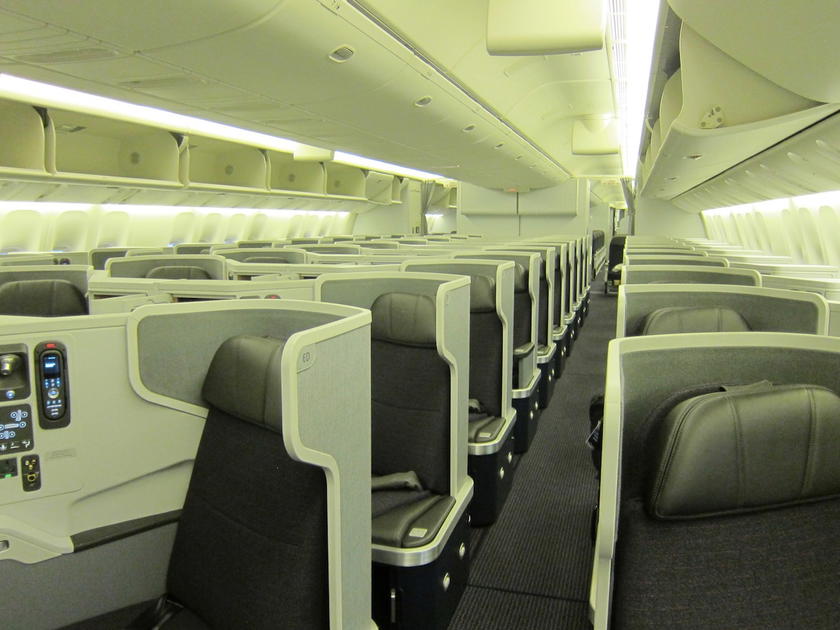
American is trialing a new way to qualify for status in 2020

Bottom Line

American isn’t changing the published elite status qualification requirements for 2020, though on a targeted basis they are offering some members an alternate path to status.

It seems pretty clear that American is doing this to test this possibility, and see if it’s something they should roll out on a widespread basis in the future. They’ll presumably look at whether this causes people to spend more on American, and how many people take advantage of this opportunity.

By offering it on a targeted basis, they’ll have a good opportunity compare the travel patterns of two separate group.s

What do you make of American’s promo to earn status exclusively through spending?

(Tip of the hat to View from the Wing)

Conversations (35)
The comments on this page have not been provided, reviewed, approved or otherwise endorsed by any advertiser, and it is not an advertiser's responsibility to ensure posts and/or questions are answered.
Comment as a member

Membership is free and takes no more information than commenting as a guest. Earn status points for good contributions, and see fewer ads as your status grows.

Type your response here.

If you'd like to participate in the discussion, please adhere to our commenting guidelines. Anyone can comment, and your email address will not be published. Register to save your unique username and earn special OMAAT reputation perks!

  1. Loading comments…
Recent Comments
The latest from the OMAAT community.

The comments on this page have not been provided, reviewed, approved or otherwise endorsed by any advertiser, and it is not an advertiser's responsibility to ensure posts and/or questions are answered.

Peter K New Member

Thanks, Sean S. That' s a good perspective. It's worth my noting, because my "business travel" is government related ... which means I spend my time on low-cost tickets at the back of the plane keeping warm by hating everyone up front. Now, I do so much of that sitting and hating that I presently have nice air status - and I won't, under the revenue-based system. That said, I'd never get mad because a business made a smart business decision that happened to be negative for me. Or not very mad.

0
‼ 0
Sean S. Guest

I also think it is about stimulating taking flights as well, versus simply shifting around already existing flying. For example an individual who flies infrequently, but high dollar, might decide to take an additional flight for leisure because of the perks they have gotten from their other flying. In this sense a revenue based reward program can incentivize individuals who are already spending large sums, to spend even more, versus many frequent flier programs now that primarily reward shifting deck chairs around already "existing" flight demand. Again, for myself, I rarely decide leisure flying based on frequent flier programs because right now I don't ever get close to flying sufficiently to get anything resembling a useful elite status. I would definitely be inclined to however in a revenue program where my elite status would be potentially significantly higher and would push me say to choose a mainline carrier versus an ULCC (all things being equal if its between flying my family without status on a mainline carrier for X amount of dollars, and flying on a ULCC for in some cases hilariously less amounts of money, I'm going to choose the ULCC).

0
‼ 0
Sean S. Guest

I assumed the rationale was to reward high price low cost tickets primarily walk up fares. Which to your point my flights are inelastic in regards to timing but often not in regards to airlines as they are between major domestic cities. So most often there would be at least 2 to 3 options on a given route. To me that’s the perfect situation for rewarding choices.

0
‼ 0
Mort New Member

Are any airlines trying "our elite status is exclusively for frequent flyers". No buy-ins. Instead of lowering the value of Status Level it would maintain it. Otherwise, concierge is the only level not downgraded. "join by [date] and achieve platexec for $1000" for the rest of the year"

0
‼ 0
Peter K New Member

Dear Sean S., I've read your posts and understand your points, which are reasonable. I'll push back a little on your thesis, which is that it's a good idea to reward the customers who are most valuable; I would say that the business purpose of a rewards program is less about rewarding than it is as a means to guide future spending. So, in your case, is your spending on these expensive flights you take elastic? That is, will you be making a choice to fly on AA given the elite status potential, versus some other airline (or not fly at all)? The broader reason I'm asking is that I'd thought the UA (and now AA) rationale for the new systems was to attract profitable $5000 overseas business-class tickets - and I'd thought that most business travelers tended to take the flight their travel department told them to take, and had little choice (or preference) in the matter of carrier. I'm not sure if my point is reasonable. But as a business case I'd think that AA's "optional" approach - which I take as a measurement of market elasticity - is much smarter than UA's "all-in" approach.

0
‼ 0

Save posts to read later

Saving posts is a member feature. Become an OMAAT member to build a reading list you can come back to from any device.

Become a member
Meet Ben Schlappig, OMAAT Founder
5,883,136 Miles Traveled

43,914,800 Words Written

47,187 Posts Published