
There’s a big battle brewing between the “big three” US carriers and the “big three” Middle Eastern carriers, whereby the US carriers are pressuring the government to intervene.
I explained this in a post several days backed, entitled “Should The Big Three Middle Eastern Airlines Be Stopped?”
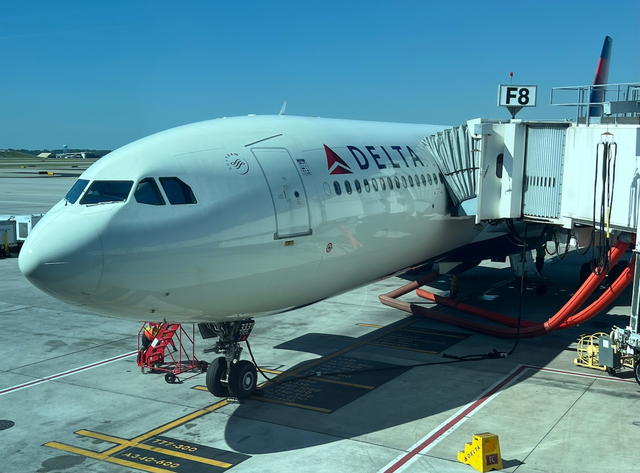
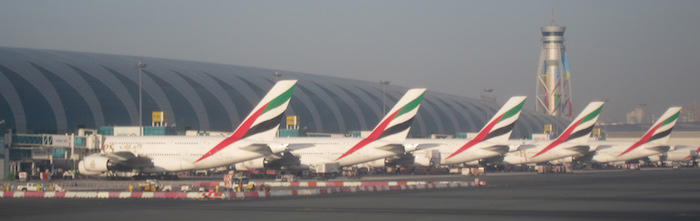
What it basically boils down to is this:
- The “big three” Middle Eastern airlines are government owned, so the US airlines claim they’re no longer competing with other airlines, but rather directly with governments
- Clearly this wouldn’t be an issue if the Middle Eastern carriers weren’t gaining so much market share; this scares the US airlines, because the growth of the Middle Eastern carriers seems endless
- Is this even really a fair complaint, when US airlines have also benefited from governments over the years?
Ultimately this comes down to a government policy debate. Should airlines that are government owned be allowed to compete with for-profit, privately owned airlines? As I’ve explained in the past, I think it’s a slippery slope. There are dozens upon dozens of government owned airlines, yet they’re only going after the “big three” Middle Eastern carriers.
While the point can’t be made if this is a government policy debate, what they’re obviously scared of isn’t that the Middle Eastern airlines are government owned as such, but rather that their goals aren’t to maximize profit for the airline, which is something US airlines can’t compete with. Instead the Middle Eastern airlines want to build up the infrastructure and accessibility of their cities/countries.
Anyway, Richard Anderson, Delta’s CEO, appeared on Richard Quest’s CNN show yesterday (Quest Means Business) to make his case for why the Open-Skies agreements need to be reworked. Here’s the segment:
My impression of Richard Anderson has always been that he’s a really bright guy, though this segment left me shaking my head, especially towards the end when he said:
“It’s a great irony to have the United Arab Emirates from the Arabian peninsula talk about that given the fact that our industry was really shocked by the terrorism of 9/11 which came from terrorists from the Arabian peninsula that caused us to go through a massive restructuring.”
Seriously?!?!?!?!
In fairness, Richard Quest is a really bright guy and asked some fantastic questions, though you’d think Delta’s CEO wouldn’t be so easily stumped.
Bottom line
As I’ve said before, I think the truth is in the middle. If the US airlines want to go after the “big three” Middle Eastern carriers, they really have to go after all airlines that are government owned. And if they do, that’s a slippery slope. Where does it stop — if they’re 100%, 50%, or 5% government owned?
At the same time I don’t buy the rebuttal of the Middle Eastern carriers saying “well, the US airlines just need to learn to compete on service.”
So while I’m all for fair competition, I think I side with the Middle Eastern carriers here. Part of competing in the global airline industry means accepting that life sometimes isn’t fair and that not all airlines are on a level playing ground, from staffing costs to capital to profit goals.
But if the argument is that it’s not “fair” to compete with government owned airlines, it hardly seems fair to single just three airlines out.
What do you think?


Membership is free and takes no more information than commenting as a guest. Earn status points for good contributions, and see fewer ads as your status grows.