
Let me start by saying that I’m obviously no lawyer. That being said, when I read about this lawsuit for the first time I hard a hard time believing that it wasn’t either from April 1, a joke altogether, or from a different century when maybe there might have been merit to this.
American Suing Delta Over Use Of “Flagship” Term
American Airlines filed a lawsuit against Delta Air Lines in Texas federal court yesterday over trademark infringement. American is accusing Delta of confusing customers by adopting the term “Flagship.”
American has used the term “Flagship” as a trademark for their “premium air service” (LOL) since the 1930s, claiming that Delta only adopted the term in 2017.
American does indeed brand a lot of products with the term “Flagship” — they have Flagship First, Flagship Business, Flagship Lounges, Flagship First Dining, Flagship Basic Economy, Flagship Maintenance Delays, Flagship Oasis, etc.
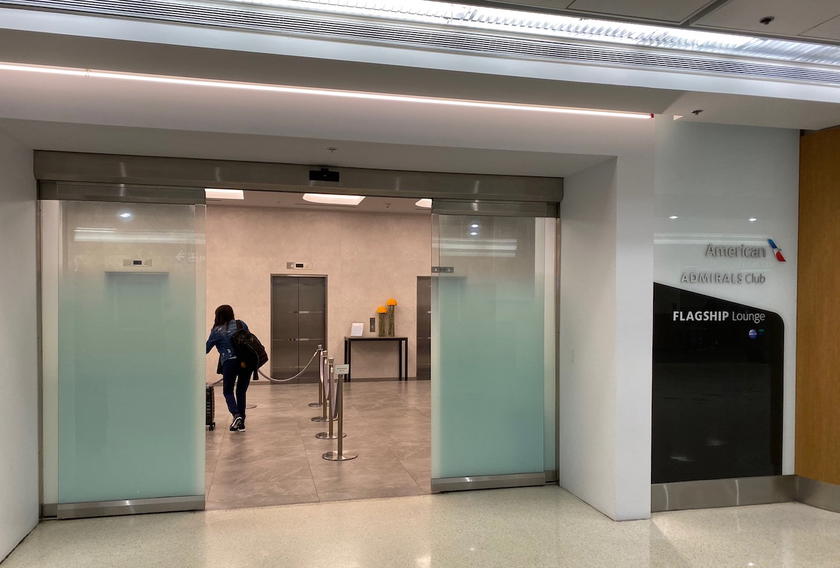 Flagship branding at American’s airport lounges
As American wrote in the complaint:
“Despite knowing that American owns the exclusive right to use the Flagship marks, Delta has begun to use the terms ‘flagship,’ ‘Flagship,’ and ‘FLAGSHIP’ to promote its own airport lounges and premium services and interiors.
This is no accident. American believes Delta is looking to capture additional market share by targeting its greatest competitor, American, and eroding the brand, goodwill, and value that American has built over the past eighty years through the Flagship marks.”
Ah, yes! Delta is trying to piggy-back on all that goodwill that American Airlines has built over the years!
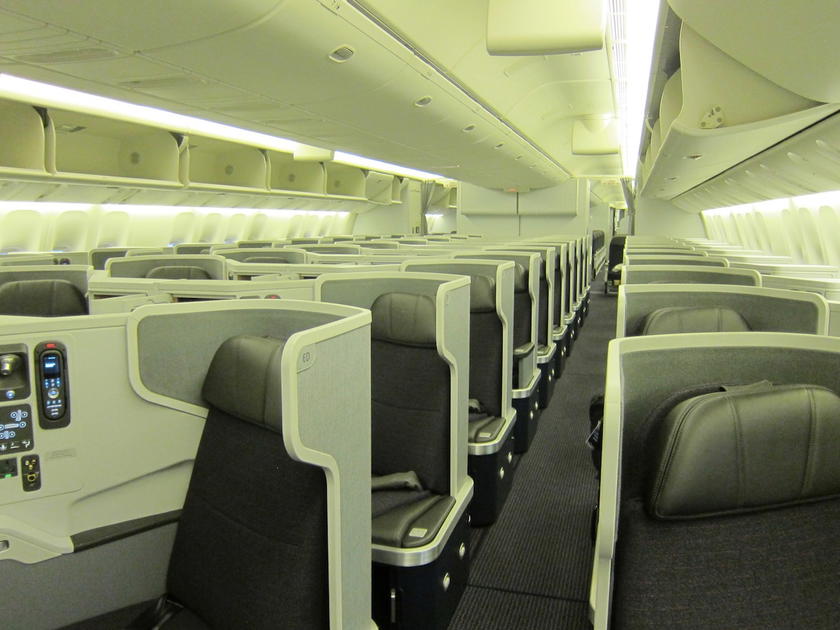 American’s 777 “Flagship Business”
Has Delta Adopted The “Flagship” Branding?
American absolutely uses the term “Flagship” consistently for a lot of their services. However, has Delta really been stealing this term from American?
American claims that Delta started using the term “flagship” in 2016, first as a modifier. For example:
- Delta has referred to their new business class product as their “flagship Delta One Suite”
- Delta has referred to their A350 as the “flagship Airbus A350”
- Delta has referred to their new SkyClub as the “flagship Delta Sky Club at ATL”
Note that this isn’t done consistently, but rather primarily in press releases, etc. For example, the page describing Delta’s business class doesn’t use the word “flagship” once.
American claims that they’ve gone from using the term “flagship” as a modifier to using it to “indicate premium-level interiors and services for certain flights.”
American also writes in the complaint:
“Delta’s steady increase in the branding of its lounges, flights, and premium-level interiors and in-flight services with the terms ‘flagship,’ ‘Flagship,’ and ‘FLAGSHIP’ is likely to cause confusion with the relevant traveling public, and has likely already caused such confusion.”
Right, so people saw a press release where Delta uses the term “flagship” once, then they go to delta.com to book a ticket, and then they’re shocked when they board a plane and find out that they’re not actually enjoying the luxury of American Flagship Business? “But I thought I was booking American!”
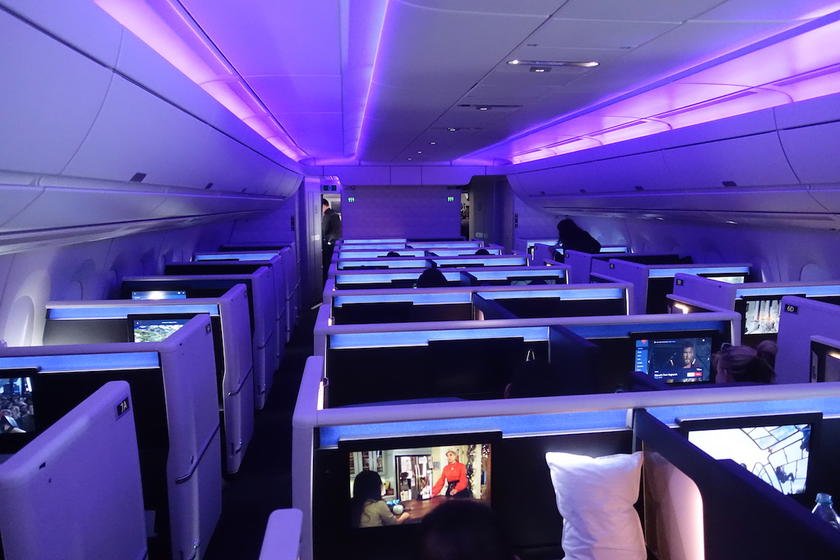 Delta has referred to their new business class as the “flagship Delta One Suite”
My Take On this Lawsuit
Funny enough I got into an argument with a reader on this very topic a few months back. While reviewing Turkish’s 787 business class, I stated that previously the 777 was Turkish’s flagship aircraft. A reader (perhaps the lawyer in this case?) called me out and said:
Stop calling Flagship aircraft, flagship premium cabin, flagship this or that. Flagship is a trademark from American premium products. Flagship first, business, Lounge. Just like delta ONE.
I responded:
No? Flagship is a real word with a definition, and I’m using that word as it’s defined in the dictionary. Flagship First, Flagship First Dining, etc., are American specific terms, but using the word “flagship” as defined is very different than your “Delta One” comparison (because “one” otherwise doesn’t describe an aircraft type, product, etc.).
And I guess that’s my take on all of this. The word flagship is defined as “the best or most important thing owned or produced by a particular organization.” If Delta is using this lower case term to sometimes describe their newest and biggest lounge at an airport, or their best aircraft, or their business business class seats, I think that’s appropriate and accurate.
If American takes issue with Delta using the term “flagship,” I feel like they need to go after just about every airline, no? A few quick headlines I find with two minutes of Googling show Virgin Atlantic, Lufthansa, and British Airways using the term as well:
- “Virgin Atlantic selects the A350 XWB as its future flagship”
- “On Sunday, March 31st, Lufthansa’s flagship aircraft, the Airbus A350-900, will begin to operate the Charlotte – Munich route and fly seven times per week to the capital of Bavaria in South Germany.”
- “The Boston lounge development reflects the style and elegance of our flagship lounges at London Heathrow Terminal 5, with areas to relax and unwind, or refresh and work.”
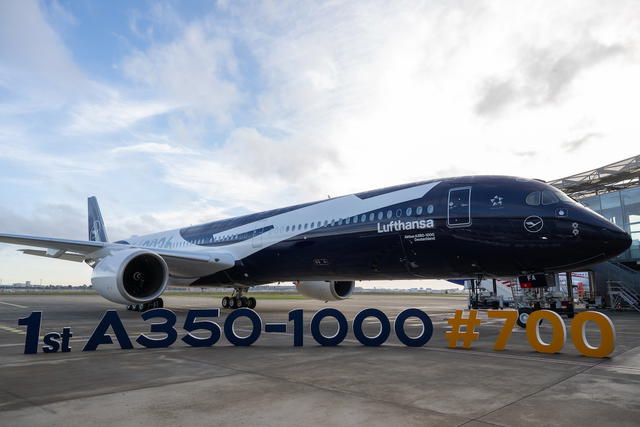
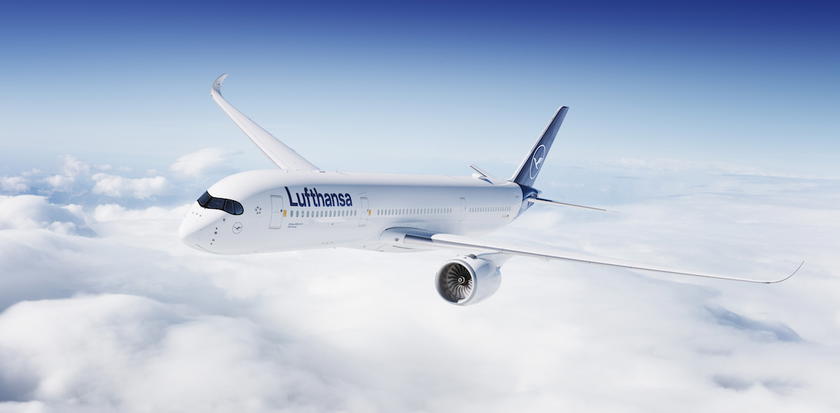 Look, it’s Lufthansa’s new “flagship” aircraft!
Bottom Line
American is suing Delta because American has the term “flagship” trademarked to refer to their “premium services,” and Delta has also selectively been using the term as a modifier to describe their newest lounges, aircraft, or seats.
As a non-lawyer this lawsuit seems ridiculous — “flagship” is a real word with a real meaning, and a lot of airlines and aircraft manufacturers use the term to describe their products and services. Heck, I use it all the time to describe new planes and products.
Maybe lawyers can chime in whether the law agrees with logic in this case, but personally I had to chuckle when I saw that American thinks Delta is “eroding the brand, goodwill, and value that American has built over the past eighty years through the Flagship marks.”
Yeah, that’s what’s giving Delta the advantage…
What do you make of this lawsuit?
(Tip of the hat to @xJonNYC)


Membership is free and takes no more information than commenting as a guest. Earn status points for good contributions, and see fewer ads as your status grows.