
While it might seem backwards on the surface, this move doesn’t really come as a surprise. American has sent out a memo to employees detailing how they won’t be installing personal televisions going forward on their narrowbody planes. This starts with the 737 MAX, the first of which American is taking delivery of later this year.
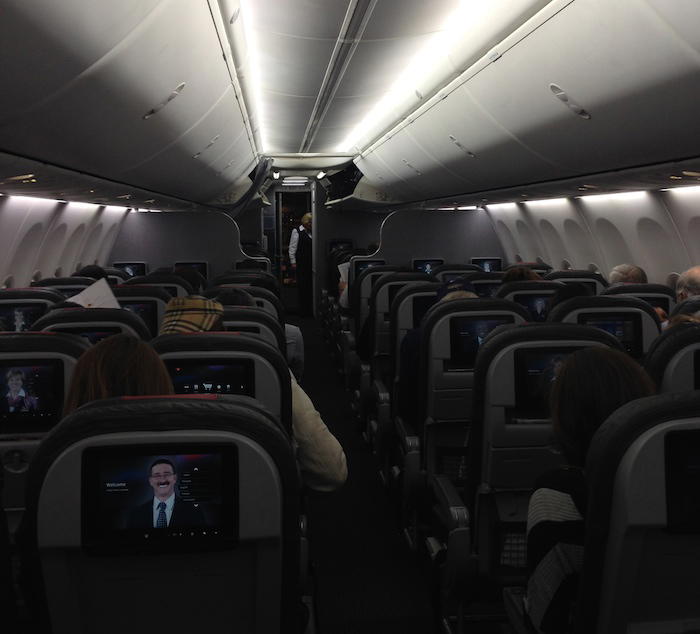
Up until now, American’s new delivery narrowbody planes, including 737s, A319s, and A321s, have featured personal televisions at every seat. It’s a great feature for customers, though at the same having TVs on planes is expensive (not just in terms of installation costs, but also in terms of the added weight, which causes increased fuel burn).
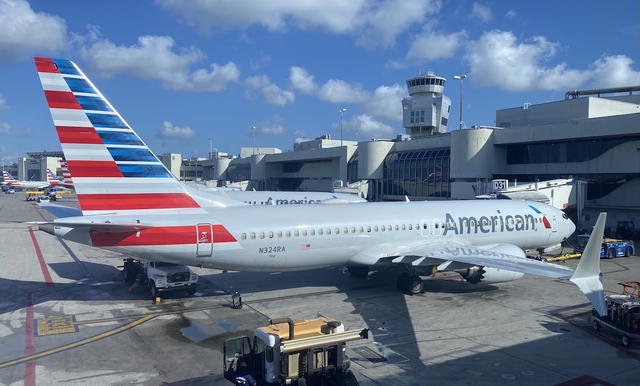
American claims that over 90% of customers travel with devices that let them stream entertainment, so instead American is committed to offering free, streaming high-quality movies and music. While that statistic might technically be true, watching a movie on an iPhone really isn’t the same as watching it on a bigger screen.
Here’s American’s memo regarding this:
As more customers stream entertainment on their own devices, their reliance on seatback entertainment decreases. As a result, American has
We know in-flight entertainment is important to our customers, which is why we’ve committed to offering free, streaming high-quality movies and music, and to investing in fast satellite-based Internet access and power at every seat across our domestic fleet.
Entertainment and connection options like these are the future of in-flight entertainment, which is why we’ve decided that our new Boeing 737 MAX will arrive later this year without seatback video screens.
More than 90 percent of our passengers already bring a device or screen with them when they fly. Those phones and tablets are continually upgraded, they’re easy to use, and most importantly they are the technology that our customers have chosen. So it makes sense for American to focus on giving customers the best entertainment and fast connection options rather than installing seatback monitors that will be obsolete within a few years.
Every customer with a phone, tablet or laptop will be able to watch free movies and TV shows from our extensive on-board library, as well as free live television channels, all without purchasing an in-flight Internet connection.
For those who want to pay to get online, the high-speed, satellite-based Internet access we are installing on the MAX and other aircraft is so fast that everyone on the plane can stream Netflix, Amazon, and other video-on-demand, as well as text and surf the web over a connection that’s just as fast as what they have in their homes.
Both our free streaming library as well as satellite Internet connections will work from gate-to-gate.
While streaming entertainment is an increasingly good option for domestic flights, seat-back screens will continue to be important to customers flying internationally. Our widebodies will continue to have seatback screens, and some of our narrowbodies used for specific flights will also keep their seatback screens. We’ll keep seatback monitors on Boeing 777s, 787s, Airbus A330s, and our A350s, which begin arriving next year. We’re also committed to seat-back screens on our three-class A321s.
Bottom line
While this move is ultimately disappointing, I think it’s an industry-wide trend we’ll continue to see. It’s a lot cheaper for airlines to offer passengers streaming entertainment to their devices, rather than just offering seatback entertainment. So if you’re someone who likes having a personal television on planes, avoid American’s newest narrowbody aircraft.
Perhaps the bright spot is that there won’t be IFE boxes under seats anymore, meaning legroom may be a bit better.
What do you make of American cutting personal televisions on narrowbody planes in favor of streaming entertainment to passengers’ devices?
(Tip of the hat to Jake)


Membership is free and takes no more information than commenting as a guest. Earn status points for good contributions, and see fewer ads as your status grows.