

Want to take advantage of Marriott STARS benefits, including a space available room upgrade, complimentary breakfast, a hotel credit, and more? Contact Ford ([email protected]) for more details. He may even be able to help if you already have a stay booked. This is valid for paid stays at BVLGARI, EDITION, Ritz-Carlton, Ritz-Carlton Reserve, and St. Regis.
In recent times, I’ve been writing a series about some of the world’s luxury hotel groups, both big and small. This includes everything from Airelles to Four Seasons.
In this post, I’d like to talk broadly about Ritz-Carlton Hotels and Resorts. Okay, just about everyone knows what Ritz-Carlton is, as it’s one of the world’s most well known luxury hotel brands. That being said, is it really all it’s cracked up to be, and how will it evolve over time? Let’s start with a bit of background, and then I’ll share my take…
Basics & background of the Ritz-Carlton brand
Nowadays Ritz-Carlton is owned by Marriott, and it has well over 100 properties around the globe, with dozens of properties in development.
The history of what ultimately became Ritz-Carlton goes back over 125 years, to the late 1800s. The brand began with Swiss hotelier César Ritz, known in the industry as the “king of hoteliers and hotelier to kings.” He’s the person behind The Ritz Paris and The Carlton London (the former has no association with modern day Ritz-Carlton, and the latter is no longer open).
The specific Ritz-Carlton brand was first used in the early 1900s, when Ritz-Carlton restaurants were opened onboard ships, though that only lasted for a year, until World War I broke out. Ritz also died in 1918, though his wife continued the tradition of opening hotels named after him.
Now, I don’t want to go on too much of a tangent, so let’s fast forward to 1983, which is when the current version of Ritz-Carlton was founded, as it’s when the previous owners sold the brand name and the Ritz-Carlton property in Boston. That’s really what launched the modern day version of Ritz-Carlton.
A little over a decade later, in 1995, Marriott bought a 49% stake in Ritz-Carlton, in order to expand in the luxury segment. Then in 1998, Marriott purchased an additional 50% stake in Ritz-Carlton, giving it 99% ownership. So there’s no denying that Ritz-Carlton has an incredibly legacy, as there aren’t many hotel groups that go back this far.
Ritz-Carlton is a consistently high quality hotel group
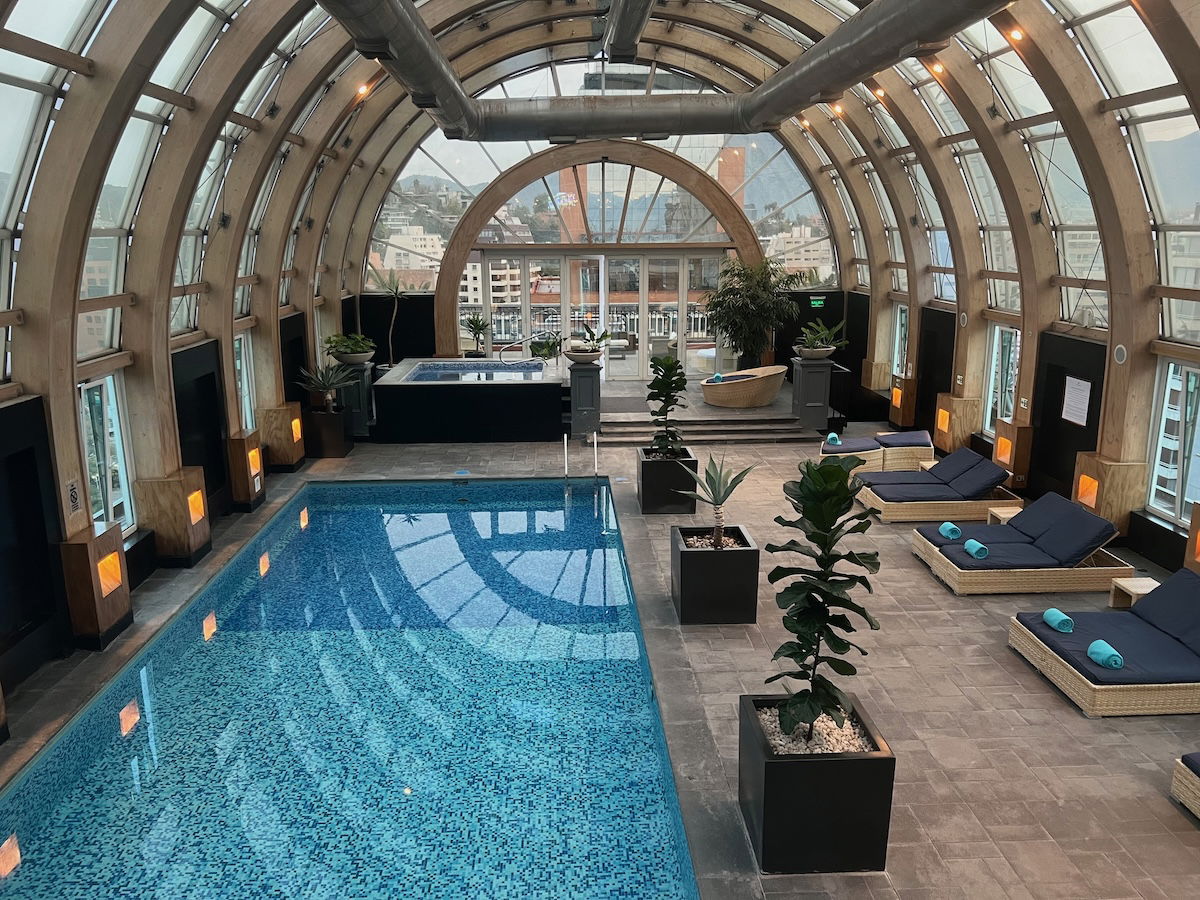
To Ritz-Carlton’s credit, there’s no denying that the brand is near the top of the Marriott portfolio, and that Ritz-Carlton offers hotels that are generally high quality. The hotels typically have good service, and at least some perks associated with luxury hotels are consistent, like turndown service.
I think one thing that Ritz-Carlton does exceptionally well is having high quality club lounges. There’s not a hotel group that offers excellent lounges as consistently as Ritz-Carlton. Admittedly you don’t get upgrades to club rooms on account of Bonvoy elite status, and access is very expensive. But if you’re willing to pay, at least you get a very nice experience.
To be honest, I’m not sure I have a whole lot of other nice things to say about the Ritz-Carlton brand at large, which brings me to my next point…
Ritz-Carlton also suffers from the Marriott effect
Like every hotel group, there’s inconsistency between individual hotels belonging to Ritz-Carlton. As you’d expect, some are much higher quality than others, and on top of that, geography also plays into the quality of a hotel experience (that’s true across hotel groups, generally).
For example, while the Ritz-Carlton Turks & Caicos has a nice setting on Grace Beach, I still can’t get over how cheap the finishes in the hotel are.

Personally, among luxury hotel groups, I don’t think of Ritz-Carlton particularly highly. I think part of the issue is that Ritz-Carlton belongs to Marriott, and we’ve increasingly seen over the years that Marriott isn’t really in the hospitality business, but instead, is in the room count and hotel owner relationship business. Admittedly that’s technically the case for all hotel management and franchise companies, but you definitely feel it more with Marriott than with others.
It feels like Ritz-Carlton largely uses the Marriott Bonvoy program as a crutch to fill rooms and to get away with offering a mediocre experience. I can’t blame the hotel group, since these loyalty programs work. There’s a certain irony to this, though, since Ritz-Carlton is a brand that offers very limited elite perks for Bonvoy members. This is why it makes sense to book stays through the Marriott STARS program, so you can receive extra perks — Ford and his team are happy to help, and can be reached at [email protected].
It just feels like so much about Ritz-Carlton has been “Marriottized” over the years. Personally, I think service at Ritz-Carlton is often rather canned and overly scripted, rather than sincere and anticipatory. Like, the focus seems to be more on incorporating the guest’s last name into every sentence, rather than actually understanding what they need, or how to create a frictionless stay.
Similarly, as we’ve seen so many Ritz-Carlton properties renovated, I can’t help but feel like the design choices are often very generic, and not necessarily different than what you’d expect at a mid-range Marriott property.

Ritz-Carlton also operates a lot of hotels with high room counts, and at times, the properties feel like “luxury factories” (View from the Wing coined the term “resort factories” for Ritz-Carlton back in 2013, and I think that’s accurate). Rather than some sort of exclusive, top notch luxury properties, you often just feel like you’re part of an assembly line. “Oh, you didn’t make a reservation for breakfast while you’re on vacation? That’ll be a 45-minute wait!”
I think at least on paper, Ritz-Carlton and Four Seasons are direct competitors, but I think Four Seasons is an exponentially higher quality hotel group. Both have similar portfolios and operate roughly similarly sized hotels, but I find that Four Seasons has some things that really set it apart — a higher base level of finishes, actually exceptional service with engaged employees, being very kids friendly, etc. I think that partly comes down to Four Seasons having to win business with every stay based on the guest experience, rather than based on a loyalty program.
I wonder what the future holds for Ritz-Carlton
I can’t help but wonder how the Ritz-Carlton brand will modernize for a younger generation. When I think of the Ritz-Carlton brand, the first thing that comes to mind is a hotel that’s probably a bit past its prime, with a huge lobby that has a lot of marble.
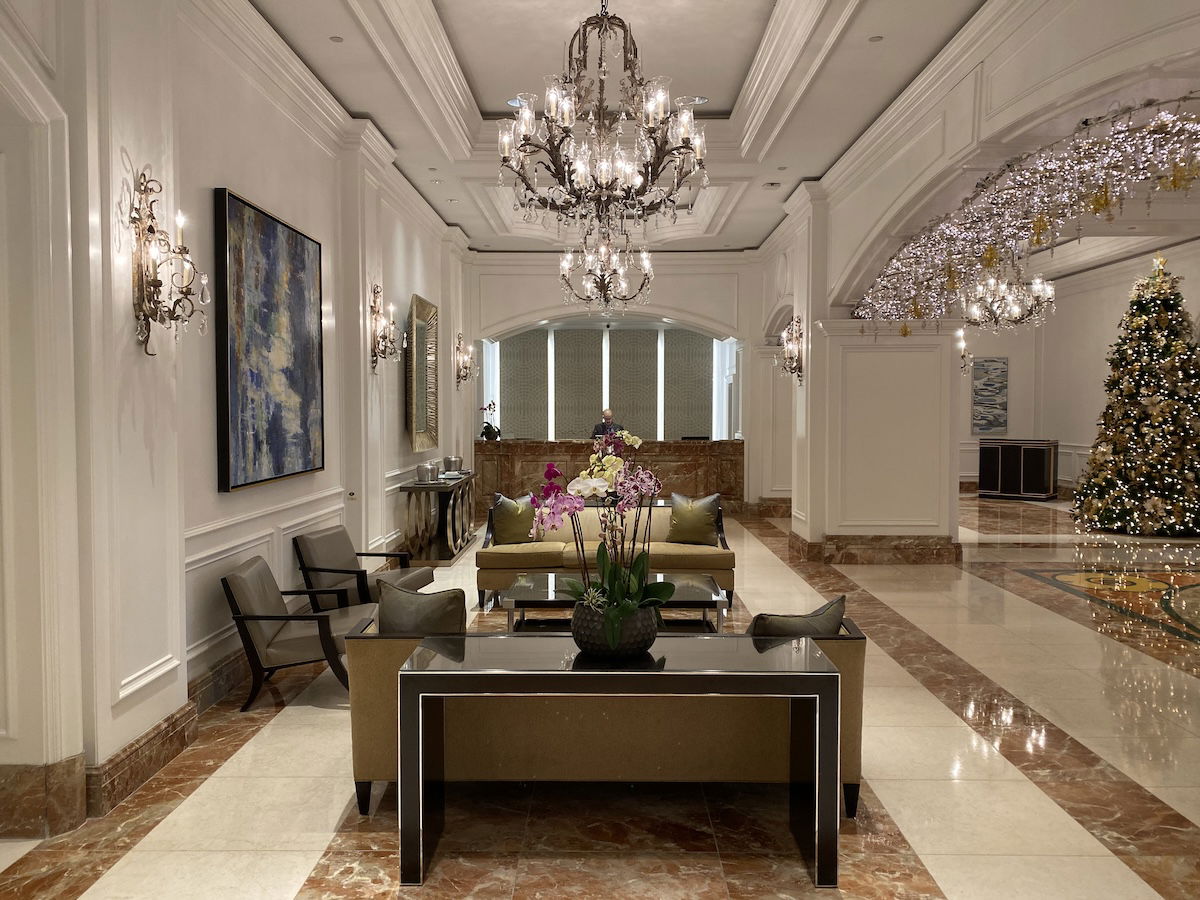
I think the brand was maybe at its (modern) prime in the 1990s, and there’s no denying that many older folks have a very fond perception of the brand. I do wonder how Ritz-Carlton will modernize for a younger generation, though.
What’s interesting is that it seems like EDITION is Marriott’s luxury brand that’s intended for a younger crowd, though that brand has its own issues, as I see it. The question is, how do you modernize the Ritz-Carlton brand, while differentiating it from EDITION?
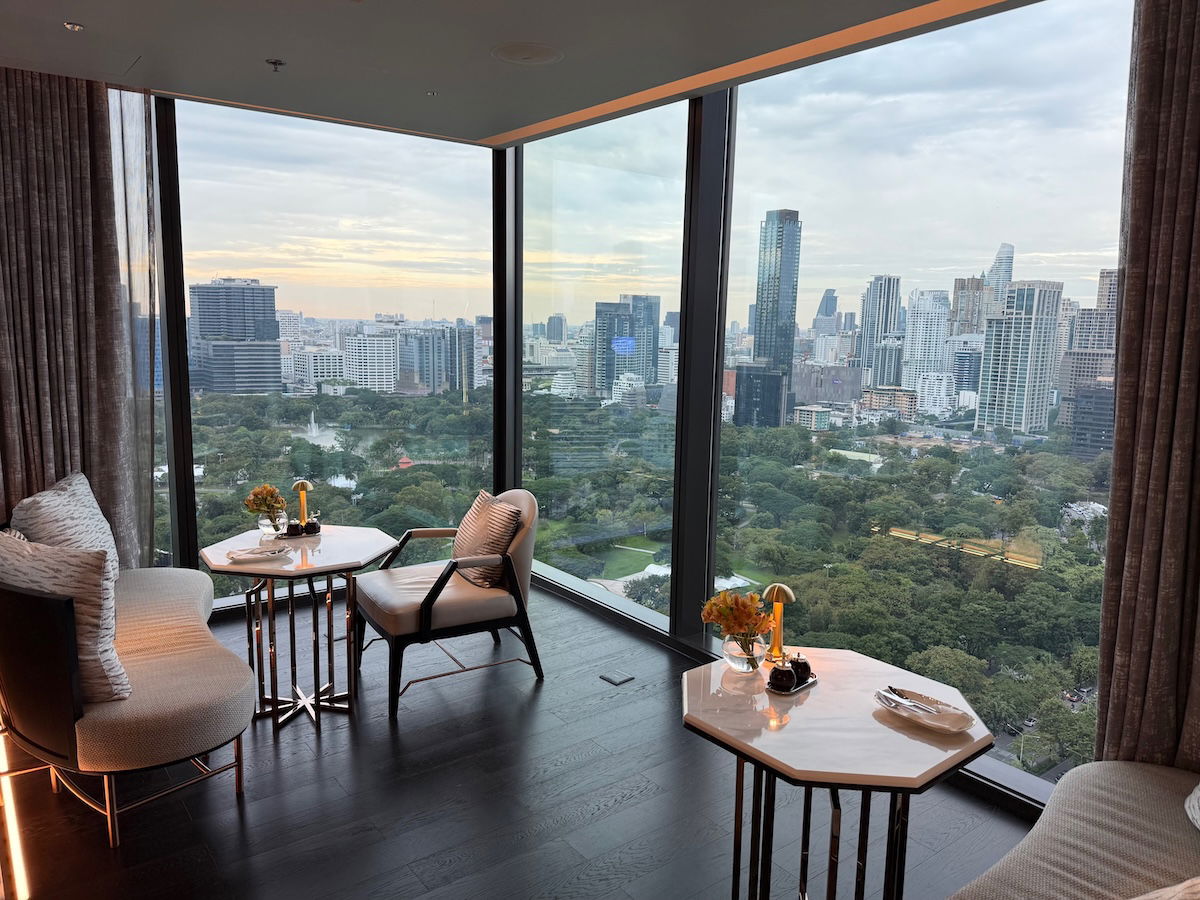
For example, I recently stayed at the Ritz-Carlton Bangkok, and I think that’s one direction the hotel group could go. It’s sort of the same luxury generic design you’d expect from Ritz-Carlton, but it’s modernized a bit.
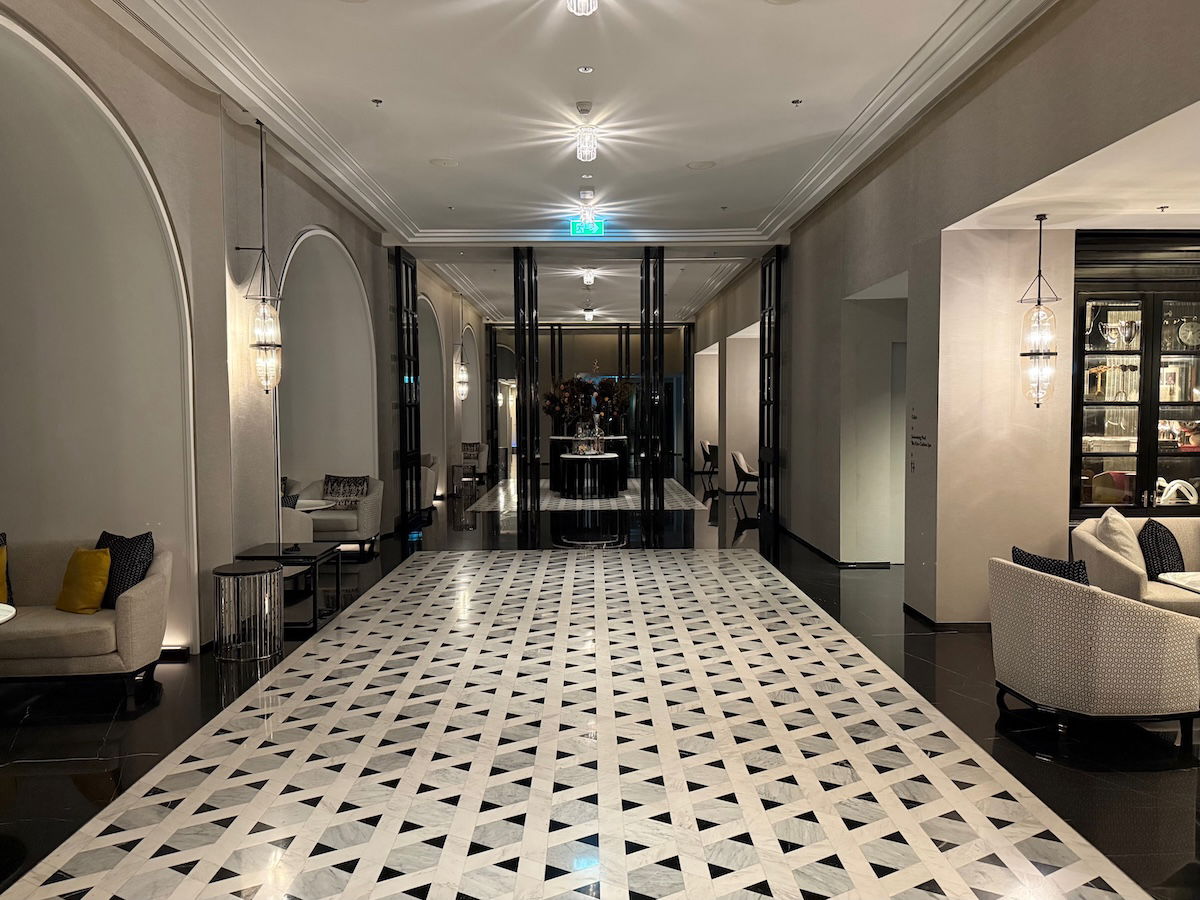
But I think another interesting direction is the Ritz-Carlton New York NoMad, which I actually really liked, though it almost feels like it’s not a Ritz-Carlton. It’s modern, it doesn’t have some massive marble lobby, and the hotel has a variety of dining outlets from José Andrés, which are super popular with locals as well.
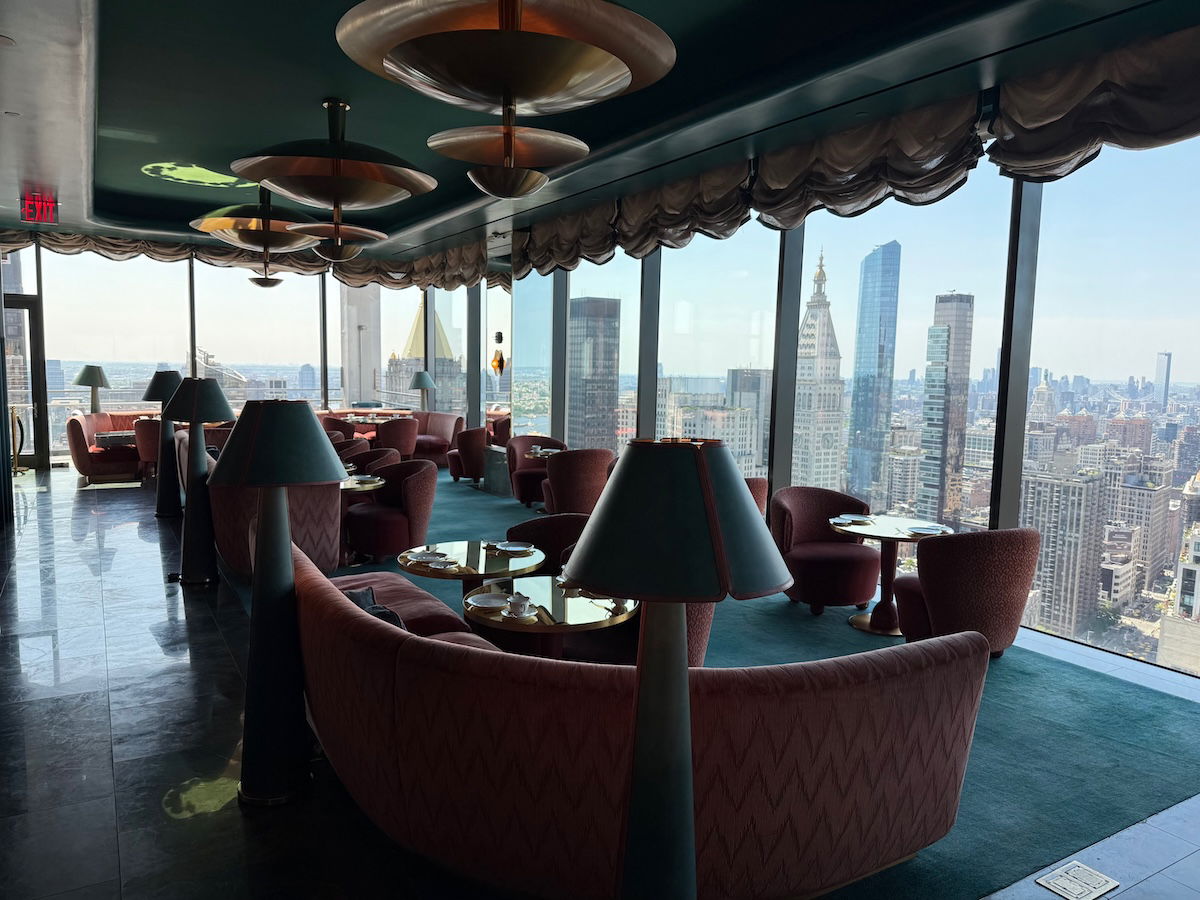
The New York NoMad property almost feels like a hybrid between a Ritz-Carlton and an EDITION, in terms of the vibe, since EDITION is known for its trendy venues (even if hospitality often leaves something to be desired).
So it’s going to be interesting to see if over the coming years, most new Ritz-Carlton properties are more like Bangkok, or more like New York. Either way, consumer tastes are evolving, and I do think Ritz-Carlton needs a bit of a refresh.
Bottom line
While Ritz-Carlton is one of Marriott’s flagship luxury brands, it definitely uses the Bonvoy program as a crutch to compete with other true luxury hotel groups. Ritz-Carlton properties are consistently pretty high quality, though I don’t find them to be up to the level of Four Seasons, Rosewood, etc.
What stands out to me most about the brand is the huge inconsistency in terms of the quality of properties, and the not terribly sincere service, at least in my experience. I am curious to see how the Ritz-Carlton brand will evolve for a younger generation, especially without cannibalizing fellow Marriott brand EDITION.
What’s your perception of the Ritz-Carlton brand?




STOP STAYING AT HOTEL CHAINS YOU HATE! Each hotel is the responsibility of the owner to keep up, to remodel etc… Marriott of course wants a degree of likeness in their individual hotel brands. The old Ritz-Carlton properties will have much more character but you want modern. You are so hard to please but then again so are most people here in the comments.
I did two nights at the Ritz-Carlton in Washington DC, using Bonvoy points. I was kind of excited as I'd never stayed at a Ritz before! So it was quite disappointing to find that it was like a more-posh Westin, only quite frumpy and old-fashioned.
Just spent three nights at the RC HMB and it was fabulous because we paid a bloody fortune to stay in a club room. Thinking about everything else... it was uninspired. I agree -- uninspired, expensive, resort factories with amazing lounges.
I've stayed at 3 different Ritz-Carlton's and have had a great experience at all 3. I have stayed at the Cancun Ritz(before they changed owners and actually stayed after it was renamed the Kempinski as well). Also stayed at the Aruba Ritz and the one in New Orleans. Aruba and Cancun stayed on club level and it was an amazing experience. Maybe club level experience is different so can't judge the other rooms/service.
The Ritz-Carlton and Four Seasons have the same challenge of inconsistency at a product level. It all depends on the destination, on the owner etc. There are lots of tired and dated Four Seasons properties as there are Ritz Carlton properties.
Ritz Carlton = cold box
We wonder why we stayed before, we don't anymore.
Quality is a real thing, not just a label of...
Funnily enough I don't think my parents know what a Ritz-Carlton or Four Seasons hotel is. So I guess not everyone has heard of Ritz-Carlton before :P.
I agree with the observation above having stayed in Four Seasons Hotels within the states as well as Ritz Carlton hotels within the states.My favorite is the Ritz-Carlton Momad in New York. It was not like any of the Ritz Carlton I have booked. Very upscale modern furniture nice spacious bsthrooms. Very profession staff..Excellent restaurants and the 50th floor Nubelez has excellent day and night vuews..
Thank you OMAAT for writing about this. The worst “luxury” hotel experience I’ve ever had was at Mandapa: A Ritz-Carlton Reserve. Never again will I stay at a Ritz-Carlton property. I even avoid Marriott as a whole. It’s just not sophisticated.
I’ve only stayed at a Ritz four times that I can recall. The first time, in about 2000 or 2001, at their Amelia Island property, was the first time anywhere where we broke the $10 barrier for a cocktail. We literally laughed out loud at that lobby bar event. The last time, in 2018, at their Naples beach resort, we endured an elongated check-in process where they tried their darndest to upgrade us at no...
I’ve only stayed at a Ritz four times that I can recall. The first time, in about 2000 or 2001, at their Amelia Island property, was the first time anywhere where we broke the $10 barrier for a cocktail. We literally laughed out loud at that lobby bar event. The last time, in 2018, at their Naples beach resort, we endured an elongated check-in process where they tried their darndest to upgrade us at no small expense to a marginally better room. I’ll take an unaffiliated boutique property anytime. Life is too short.
I disagree with you about the quality of Ritz lounges. It is hit or miss. Some of them provide the all day service. Some of them are just a regular hotel lounge just looking nicer.
I prefer the St Regis brand when it comes to big chain luxury hotels. The decor and the service is much better and high level membership benefits apply.
RC has some nice properties and concierge services at some locations ATL, Puerto Rico, New Orleans. Meanwhile, RC Virgin Islands is trash good concierge service but everything else is trash. The Four Seasons in ATL was trash as well.
Generally speaking I am more of small, boutique hotel person, but stayed at the Ritz in Berlin a couple of months ago (passing through on my way to the airport) and thought it was quite nice. Recently renovated, booked with AMEX platinum so got breakfast and dining credit for dinner. I chose it over the Adlon due to the recent renovations. Overall though, I think everyone is probably spot on with the generic nature of the brand.
Like all hotel chains Ritz-Carlton has its ups and downs. Downs are, like most chains, quite often properties in the US. The US is just the enemy of good customer service and experiences, mediocrity is more the name of the game. RC has some phenomenal properties, Ritz-Carlton Hong Kong being one I always enjoy coming back to. RC Moscow was also amazing, but that is now all gone.
I recently had a stay at...
Like all hotel chains Ritz-Carlton has its ups and downs. Downs are, like most chains, quite often properties in the US. The US is just the enemy of good customer service and experiences, mediocrity is more the name of the game. RC has some phenomenal properties, Ritz-Carlton Hong Kong being one I always enjoy coming back to. RC Moscow was also amazing, but that is now all gone.
I recently had a stay at the Four Seasons Sydney, and I'd pick the Sheraton Hyde Park over the FS any day for future Sydney stays. So the luxury chains do also have their duds outside of the US :)
Our stop at the RC Santa Barbara was such a horrible experience we cut the trip short. In fact, we contemplated leaving the night of check-in. It basically tarnished the entire brand for me it was that bad. Terrible, dated, dark interiors...brutal service. I could go on and on...
I did a wedding there in 2019. It was awful. Supposedly, it's been renovated.
Ben. This Ritz Carlton review is absolutely spot on. I just had a group stay at the Ritz-Carlton St. Thomas. Overall, a disappointment. I will save you all the details, but it was like staying at a posh resort circa 1994, will a great deal of wear and tear. If other properties are in the same condition, it's time for the brand to lower expectations, and most certainly lower rates as well.
Try to manage expectations and think of most any Ritz-Carlton as a "Three Seasons".
I e stayed at almost 20 different Ritz Carlton’s including two Reserve properties. I’ve loved all my experiences. I especially enjoyed them more than my stays at the Four Seasons.
I tend to consider reviews by FORBES and MICHELIN when making hotel choices world wide (though I fully agree with Ben's comment in his article about PALACE hotels about such reviews. A recent stay at the Ritz Carlton Tokyo was terrible. The Club experience was poor with the Bartender having no idea of how to make a cocktail. The food selection was marginal and not great. That said - a stay at the Ritz Cartlon...
I tend to consider reviews by FORBES and MICHELIN when making hotel choices world wide (though I fully agree with Ben's comment in his article about PALACE hotels about such reviews. A recent stay at the Ritz Carlton Tokyo was terrible. The Club experience was poor with the Bartender having no idea of how to make a cocktail. The food selection was marginal and not great. That said - a stay at the Ritz Cartlon Mandapa in Bali a few months back was literally OVER THE TOP. Ritz Carlton Denver is shabby but our experience at the CLUB was excellent - maybe because the staff was excellent! To make a long story short - RC is inconsistent and erratic.
FS, on the other hand, is consistently good. (yes you can have exceptions) but as a rule - CONSISTENTLY GOOD. As are MO, Rosewood and Rocco Forte. Given a choice all of them take precdence over RC. Even St Regis does...
AA ratings in the UK are reliable. That's the UK version of AAA/CAA. Very high standards. Likewise, the French government ATOUT ratings in France are reliable. Especially 5-star and Palace hotels.
Rocco Forte and Peninsula probably the best 5-star brands because they're small enough that they can enforce standards.
Raffles seems inconsistent.
I haven’t stayed at a ritz in nearly twenty years, not happy about it, but good to see my decision is validated
Just stayed at the Ritz-Carlton Geneva and I’d say it’s an exceptional property that can easily compete, or even edge out, the FS down the street. It probably helps that it’s the world’s smallest RC and that it’s in a market where mediocrity just doesn’t cut it.
I guess it depends on the specific property and where it’s located (I.e. in the US or elsewhere).
I think it really depends on the region. The ones in the Middle East are mostly very nice (like Amman, Jordan) and some are even special (like Sharq Village in Qatar and al-Bustan Palace in Oman). And in general there are a lot of nice ones in Asia plus our stay at the Ritz-Carlton Reserve in Thailand was really over the top.
Virtually every four-star and five-star hotel in the Middle East and Asia—whether part of a chain or independently operated—is “very nice.” Why? Labor costs, of course, but also a culture that genuinely values service.
I think you have to think of each Ritz-Carlton as two hotels. One is the standard rooms where the experience has been degraded and arguably not worth the money, and the other is the Club experience which seemingly has not been degraded at all but comes with its own questionable value propositions.
After recent stay at Park Hyatt Saigon, I came to the conclusion that no matter how the luxurious the brand is, if the rooms have not been renovated for a long while, and the room look tired and outdated, it's just not worth it. I would rather stay in a four star or entry level five star hotel that has recently renovated rooms or has recently reopened.
I have a hard time justifying a huge premium for a Ritz-Carlton or other faux luxury brand when traveling in Southeast Asia. The service at any 4-star hotel will rival that of a 5-star hotel back in the USA. Heck, even your typical Holiday Inn is going to be better than the Marriott or Sheraton in Anytown, USA.
"I can’t help but wonder how the Ritz-Carlton brand will modernize for a younger generation."
"I do wonder how Ritz-Carlton will modernize for a younger generation, though."
Article could use some editorialization instead of pontificating about the same thing in back to back paragraphs.
My experience, absolutely. It does seem to be worse in the U.S. The R-C in Denver is a joke, but we loved our recent stay at the R-C in Berlin.
Ritz-Carlton Denver and Ritz-Carlton Philadelphia are among the worst non-resort Ritz-Carlton properties anywhere in the chain's portfolio. Your average Westin and JW Marriott are nicer.
It's not just below-standard service at Denver and Philadelphia properties. Both properties have dumpy rooms that are 5-8 years overdue for an exhaustive renovation. Extremely worn and poorly maintained.
Polished chrome (RC) versus real silver (MO,FS). For same $, better deal elsewhere.
Look at the Ritz-Carlton Sarasota. The decor looks like a Marriott or Westin.
I remember staying at the Ritz-Carlton Sarasota a decade ago about two months after I stayed at the Hyatt Regency that was right next to it. I preferred the Hyatt Regency, even if the price was the same for both properties (it wasn't, RC was double the cost). The Hyatt was newer, had a better design, and the staff was a lot more friendly in my experience there.
More often than not it seems to be a case of the brand name holding more cache and prestige than the actual property itself. It is possible to have fantastic Ritz Carltons (I loved my stay at the Kyoto property) but I usually seek out other luxury brands (oftentimes at better value) where I feel like I would have enjoyed it just as much. Oh and the benefits at the Ritz Carlton. HA, more like lack thereof.
They can be ok. I've had good experiences with them but in general it's not the same level as supposed rivals. They're the Ruth's Chris of "luxury" hotels. Fine, bland, somewhat generic, but purports to be "fancy" and generally a step above your usual mass chain.
I think that's a good way of putting it. Ruth Chris. But not Capital Grille. St. Regis is more like Capital Grille.
Which ‘brand’ is the Outback? W? Moxy? ‘No rules, just right.’
I'd describe Marriott's Marriott brand as Outback.
Marriott… the Chocolate Thunder from Down Under of hotel stays…
Courtyard… the Bloomin’ Onion…
Bonvoy Platinum breakfast benefit? Nope.
Yeah, that’s lame. Like, if St. Regis can include breakfast when Ritz-Carlton can’t, I’mm’a prefer the one that does.
It is an acknowledged fact that when some hotel conglomerates have taken over long established notable hotels, the standards are lowered toward the lowest common denominator. There is a distinct difference between the running of a roadside motel and a classic hotel.
One such lowering of standards is when the hotel group allows points redemption customers to benefit from the once exclusivity. OMAAT is providing the discerning customer with the opportunity to become better...
It is an acknowledged fact that when some hotel conglomerates have taken over long established notable hotels, the standards are lowered toward the lowest common denominator. There is a distinct difference between the running of a roadside motel and a classic hotel.
One such lowering of standards is when the hotel group allows points redemption customers to benefit from the once exclusivity. OMAAT is providing the discerning customer with the opportunity to become better informed about the potential hotel guest experience.
Property owners lease a brand's name. At a point in time, what was brand X yesterday is brand Y today. Brand is meaningless. What matters is the quality of a specific property.
Property owners don't "lease" a name. Some brands "franchise," while others "license" their name. Neither is the same as leasing.
In the case of Ritz-Carlton, approximately 99% of all Ritz-Carlton properties are neither franchised nor licensed. Marriott either owns or manages these properties (or both) on behalf of the owner. Only three or four Ritz-Carlton properties are franchised or otherwise licensed: Montreal, Chicago, and, I believe, Kuala Lumpur.
The RC Half Moon Bay is owned by a Chinese property group.
I’ve always viewed Ritz-Carlton as a brand that appeals to two types of guests: (1) those who don’t actually know what true luxury is and (2) snobs who just want to impress others by casually dropping that they’re staying at “the Ritz.”
Of course, Ritz-Carlton is not actually part of the historic Ritz brand. In fact, it wasn't that long ago when the Ritz-Carlton in Chicago was a Four Seasons and the Ritz-Carlton in...
I’ve always viewed Ritz-Carlton as a brand that appeals to two types of guests: (1) those who don’t actually know what true luxury is and (2) snobs who just want to impress others by casually dropping that they’re staying at “the Ritz.”
Of course, Ritz-Carlton is not actually part of the historic Ritz brand. In fact, it wasn't that long ago when the Ritz-Carlton in Chicago was a Four Seasons and the Ritz-Carlton in Montreal was independent.
Are there markets with legitimate luxury Ritz-Carlton properties? Absolutely.
But there are many markets that simply cannot support a true luxury hotel, yet still have a Ritz-Carlton. This is often due to staffing challenges (St. Thomas is a clear example, and I’d now argue Sarasota as well—especially since it has both a Ritz-Carlton and a St. Regis) or the nature of the property itself (the resort factories).
Marriott diluted the Ritz-Carlton brand by applying it to both iconic downtown landmark hotels and massive, high-volume resorts (the resort factories). I would actually argue that years ago Marriott should have created separate brands for its resort properties instead of lumping resorts under the same brand as non-resort properties. Especially now that Marriott is creating a new brand every couple months.
And as you said, many of the new or newly renovated Ritz-Carlton properties now look indistinguishable from a Marriott or a Westin.
Don’t get me started on the Ritz-Carlton club lounges. Sarasota and Toronto serve JP Chenet as the lounge's sparkling wine.
There are expensive hotels and then there are "true" luxury hotels, with the key difference being the service level. Gone are the days in which employees (as a whole) embodied "Ladies and gentlemen serving ladies and gentlemen."
Correct. There is zero correlation between price and luxury/star rating.
However, I would argue that it’s almost impossible to have true five-star luxury hotels in much of the USA because you can’t properly staff them. Look at the Ritz-Carlton in Philadelphia or the Ritz-Carlton in St. Thomas, U.S. Virgin Islands. In St. Thomas, they have to hire "local staff" as a condition for tax breaks. You literally cannot find "local staff" who are capable...
Correct. There is zero correlation between price and luxury/star rating.
However, I would argue that it’s almost impossible to have true five-star luxury hotels in much of the USA because you can’t properly staff them. Look at the Ritz-Carlton in Philadelphia or the Ritz-Carlton in St. Thomas, U.S. Virgin Islands. In St. Thomas, they have to hire "local staff" as a condition for tax breaks. You literally cannot find "local staff" who are capable of delivering the service standard one expects.
The vast majority of purported luxury hotels in the United States would struggle to achieve and maintain the French Palace hotel designation.
It's hard to deliver a high-quality service when you're constantly grifting for tips.
The Ritz Carlton Aruba was.... I mean... a "fine" enough hotel... but not worth the price paid. Certainly not luxury.
I’ve always viewed Ritz-Carlton as a brand that appeals to two types of guests: (1) those who don’t actually know what true luxury is and (2) snobs who just want to impress others by casually dropping that they’re staying at “the Ritz.”
And add (3) - points bloggers (subset of (1))
and add (4) - people who points bloggers (aka peddlers) got commission off signing up for credit cards staying on free nights who then can gleefully join (2)
@Anna. Yes, that's true.
The RC in St Thomas could absolutely provide superior service if they so desired. Training the local population to exacting standards and paying them noticeably more than the competition in both money and benefits. This opens the door to people you want to employ in a luxury establishment.