
While this doesn’t impact passengers much, as an aviation geek I find this to be an interesting development.
Airline pilots are rated on specific aircraft
Generally speaking, airline pilots are type rated on specific jets, meaning that they’re trained to fly specific aircraft. That makes sense, because being a pilot is a highly technical job, and requires a lot of training and expertise. Not only do planes handle differently, but pilots are trained for every possible emergency scenario on a particular plane.
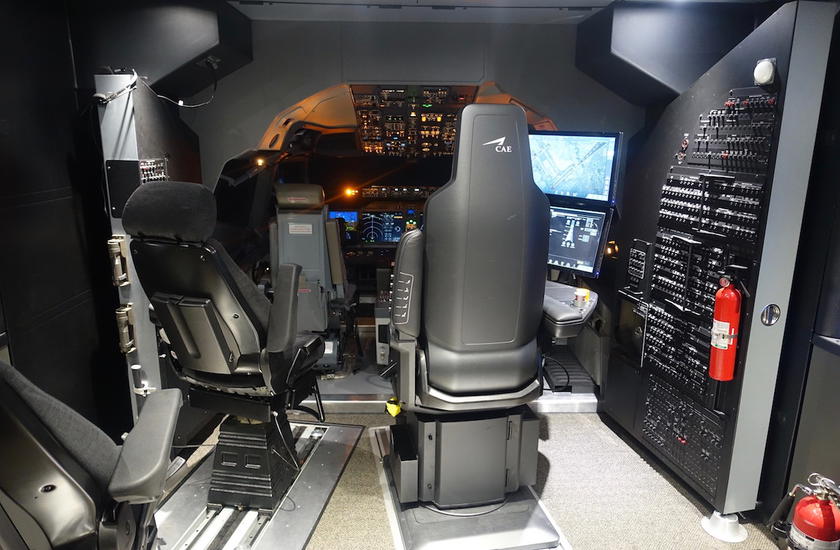
That being said, in some cases there’s a common type rating between planes, meaning that pilots can often fly multiple types of aircraft:
- At most airlines, pilots can fly any variant of a particular type of aircraft; in other words, a pilot might fly the Airbus A320 family of aircraft, and that include the A319, A320, A321, A321neo, A321LR, etc.
- When there’s enough cockpit commonality, pilots can sometimes also fly otherwise different types of jets; for example, the 757 and 767 can have a common type rating, as can the A330 and A350
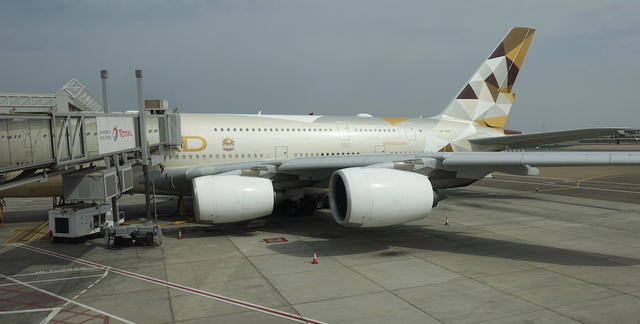
Etihad Airways adds A380 & A350 pilot commonality
Etihad Airways has announced that it has become one of the first airlines in the world to allow pilots to fly both the Airbus A380 and A350. As you’d expect, quite a bit went into making this possible, including introducing new training procedures in partnership with Airbus, and getting regulatory approval.
While Etihad is one of the first airlines to have mixed fleet flying with the A380 and A350, it’s not the first time we’ve seen an airline introduce flying commonality with the A380. In 2021, All Nippon Airways introduced mixed fleet flying between the A380 and A320, with the two aircraft having even more of a size difference.
Here’s how Etihad Chief Operating Officer Mohammed Al Bulooki describes this development:
“Etihad Airways is proud to be the one of the very first airlines to qualify its pilots to fly both the Airbus A350 and A380. This achievement will enhance the resilience and flexibility of the airline’s network and is testament to our commitment to continuously push the boundaries of efficiency, innovation, and customer satisfaction, and at all times ensuring safety is Etihad’s number one priority.”
Over the past decade, Etihad has obtained similar approvals to qualify Airbus and Boeing pilots to interchangeably fly various aircraft types. For example, the airline used to have mixed fleet flying with the Airbus A320, A330, and A340, but those wide body aircraft have been retired. Meanwhile the airline continues to offer mixed fleet flying between the Boeing 777 and 787.
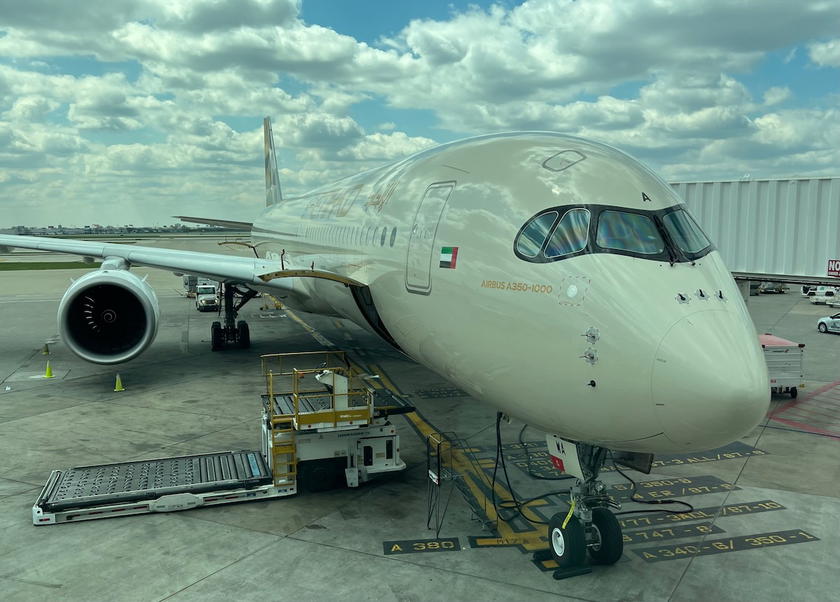
Currently both Etihad’s A380 and A350 fleets are quite small. Etihad flies just four A380s, while the airline flies just five A350s, though has 15 more of those on order.
The benefits to Etihad of mixed fleet flying are significant. This allows a lot more efficient scheduling, since you have a larger pool of pilots who can fly either plane, rather than just one plane. This allows airlines to have common reserve pilots for both aircraft, allows pilots to maximize their hours in a given month, etc.
I’m sure most pilots will also love this. After all, Etihad’s A380 currently just flies to London, and will soon fly to New York. So Etihad A380 pilots don’t have much variety in terms of where they fly to. Their Heathrow Airport hotel is basically their second home.
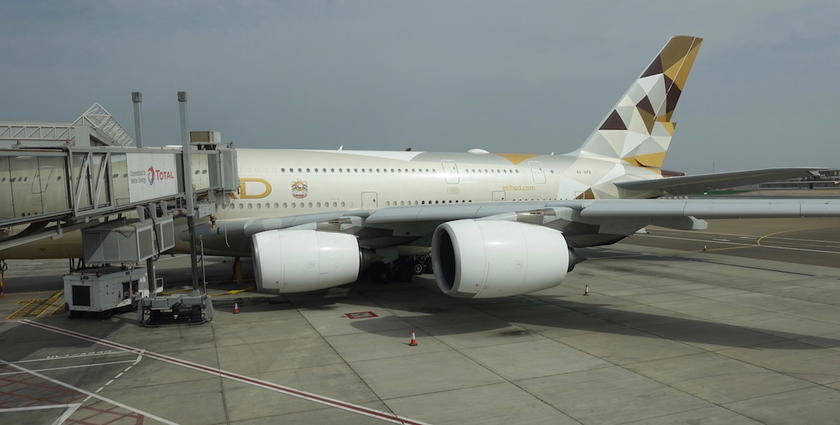
I do wonder how this works in terms of pilot pay. At many airlines, pay scales differ based on how big of a plane you’re flying, and then seniority plays into which plane you fly. With mixed fleet flying, will pilots get paid more when flying an A380 than an A350, or will there just be a consistent scale somewhere in the middle?
I know Etihad has a different pay scale than carriers in the United States, where pilots get a monthly salary, plus a set amount per flight hour.
Bottom line
Thanks to new approval from the UAE’s Civil Aviation Authority, Etihad pilots are now able to fly both the Airbus A380 and A350. While the concept of a common type rating between planes is normal, it’s interesting how airlines are stretching those ratings with planes that have significant differences. Etihad now has common pilots for both the A380 and A350, and for both the 777 and 787.
This improvement will make pilot scheduling more efficient, and should save the airline a bit of money. I imagine many pilots will also enjoy having a bit more variety in terms of their schedule.
What do you make of this mixed fleet flying development at Etihad?


Membership is free and takes no more information than commenting as a guest. Earn status points for good contributions, and see fewer ads as your status grows.