
In early 2024, we’ll see self-service screening coming to airport checkpoints as a trial. While I can appreciate how technology can make our lives easier, I’m not sure I fully understand this concept?
Las Vegas will see self-service TSA PreCheck trial
The Science and Technology Directorate has the Screening at Speed Program, intended to pursue transformative R&D activities that support a vision for increasing airport security effectiveness while dramatically reducing wait times and improving passenger experience.
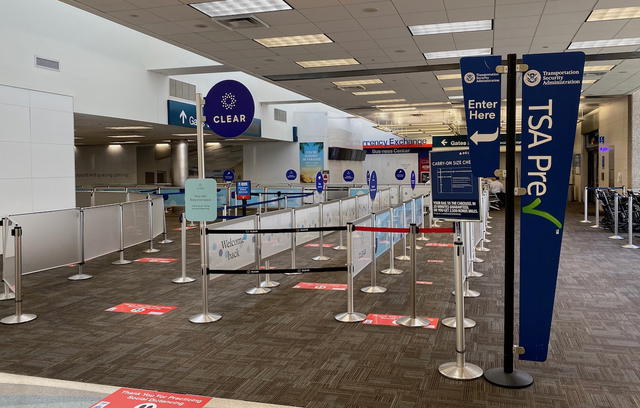
As the number of air travelers continues to increase, the goal is to create sustainable changes to systems and processes to increase screening efficiency while keeping a stable number of Transportation Security Officers (TSOs).
As part of this, we’re going to see a pilot of a new self-service screening system, which will debut in January 2024 at Las Vegas International Airport (LAS). This will allow TSA PreCheck passengers to complete the screening process with minimal to no assistance from TSOs.
As Screening at Speed Program manager John Fortune describes this initiative:
“Like self-ordering kiosks at fast food and sit-down restaurants, self-service screening allows passengers in the Trusted Traveler Program to complete the security screening process on their own. Travelers will use passenger and carry-on screening systems at individual consoles or screening lanes themselves, reducing the number of pat downs and bag inspections TSOs need to perform and freeing their time to be reallocated to the busier aspects of screening operations. The feedback we’ve already received during testing from both mock passengers and TSOs has been incredibly positive.”
As of now, there aren’t more details of what exactly this will look like. The below concept from 2015 is shared…
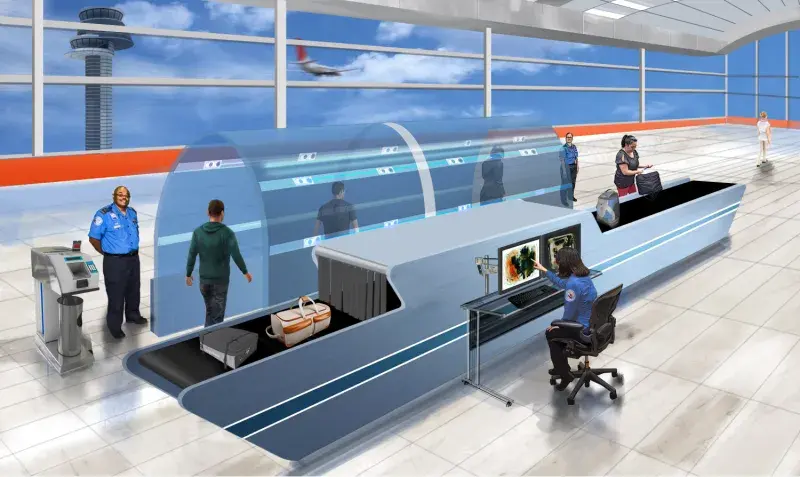
Several contracts have been awarded for these kinds of concepts. This includes Micro-X developing a pod-based design for passengers to use individual screening consoles, consisting of a carry-on screening system and a flat panel passenger screening capability.
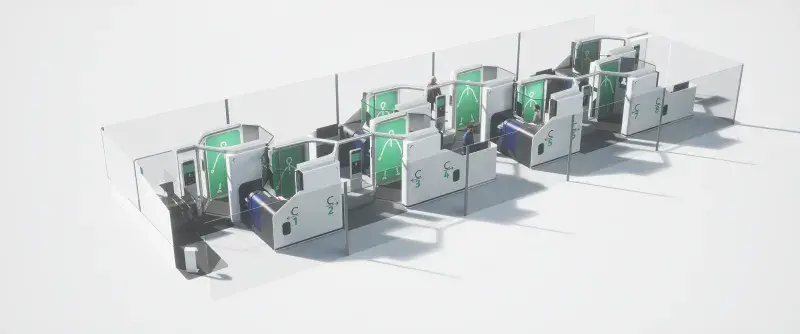
Another concept is Vanderlande’s PAX MX2 prototype, which combines the company’s Automated Screening Lane carry-on bag conveyance system with new and existing Transportation Security Equipment to create four integrated stations for one checkpoint lane.

Why I’m skeptical about this concept
Anything that can simplify the airport screening process without compromising safety is a good thing. However, am I the only one who is skeptical as to whether or not technology can actually solve this problem? Or at least I wonder to what extent this would actually differ from the current reality?
When you think about the current TSA PreCheck process, there’s already very little human interaction:
- At many airports you just insert your driver’s license into a machine, and when the machine makes a noise, the TSO tells you that you can go on your way; you usually don’t even have to show your boarding pass
- You then place your belongings on the x-ray belt on your own
- You then walk through the metal detector, and unless you alarm, you can just keep walking
- You then collect your belongings and can go on your merry way
The only real human interaction is:
- A TSO confirming that your ID has been verified, even if they never touched it
- The TSOs making loud announcements to passengers, reminding them of what they do and don’t have to do
- Potentially being stopped at the metal detector, either because you alarm it due to what you have on you, or because you were randomly selected to go through the full body scanner
- Having your bag inspected due to something suspicious in there
Aside from that first point, I don’t see any way in which automation will simplify the screening process. The press release states the following:
“Travelers will use passenger and carry-on screening systems at individual consoles or screening lanes themselves, reducing the number of pat downs and bag inspections TSOs need to perform.”
But what am I missing? Are we supposed to give ourselves pat downs, and inspect our own bags? Or how else will the number of pat downs and bag inspections be reduced?
I think TSA PreCheck isn’t really the area that needs speed improvements, but rather the general security line. I appreciate how the UK will be eliminating the liquids ban in 2024, which is awesome. I wish we’d see a similar change in the United States.
Bottom line
The TSA is trialing new airport screening technology, which will allow passengers to self-service the screening process. This will launch in January 2024 at Las Vegas Airport, for TSA PreCheck passengers. This is being compared to being able to place your own order at a fast food restaurant, though I’m still not sure I fully understand the concept for airport security.
What do you make of the TSA’s self-service security concept?


Membership is free and takes no more information than commenting as a guest. Earn status points for good contributions, and see fewer ads as your status grows.