

Airline pilots and flight attendants are able to sign up for a program that gives them a special way to bypass security at airports, completely different from the screening process that passengers are used to. Historically, this has been referred to as the Known Crewmember (KCM) program. However, that program is in the process of being discontinued, and is being replaced by the Crewmember Access Point (CMAP) program.
While it doesn’t impact passengers directly, I figure some people might still be curious, especially since airport signage is currently being updated across the country. What’s the difference, exactly?
TSA introducing Crewmember Access Point (CMAP)
We’re currently seeing airports across the United States transition from the Known Crewmember (KCM) program to the Crewmember Access Point (CMAP) program. The transition from KCM to CMAP is taking place at airports between June 22 and September 30, 2026, so it recently got started, and should be available at all airports within a few months.
For context, with the Known Crewmember program, eligible pilots and flight attendants don’t have to clear security when passing through airports. Instead, there’s a special lane they can go through, where they have to scan their badge, and then they can pass right through the checkpoint, without being screened.
The exception is that employees will sometimes be randomly selected to be screened, and the number of random screenings has reportedly increased significantly in recent years.
So, what’s actually different about KCM vs. CMAP? For one, there’s a difference in who runs the program — while KCM was a joint initiative with the Air Line Pilots Association (ALPA) and Airlines for America (A4A), CMAP is entirely under the control of the Transportation Security Administration (TSA).
Next, while KCM just required showing ID to use the planes, CMAP uses biometric data, which is intended to improve security.
CMAP also has a cost of $19 per person who registers, and that will be billed to the airline. That means between American, Delta, and United, the three airlines can expect to pay a total of $6.8 million per year for this service. That’s not a massive amount, but it’s also not nothing (I mean, keep in mind American’s profit last year was $111 million).
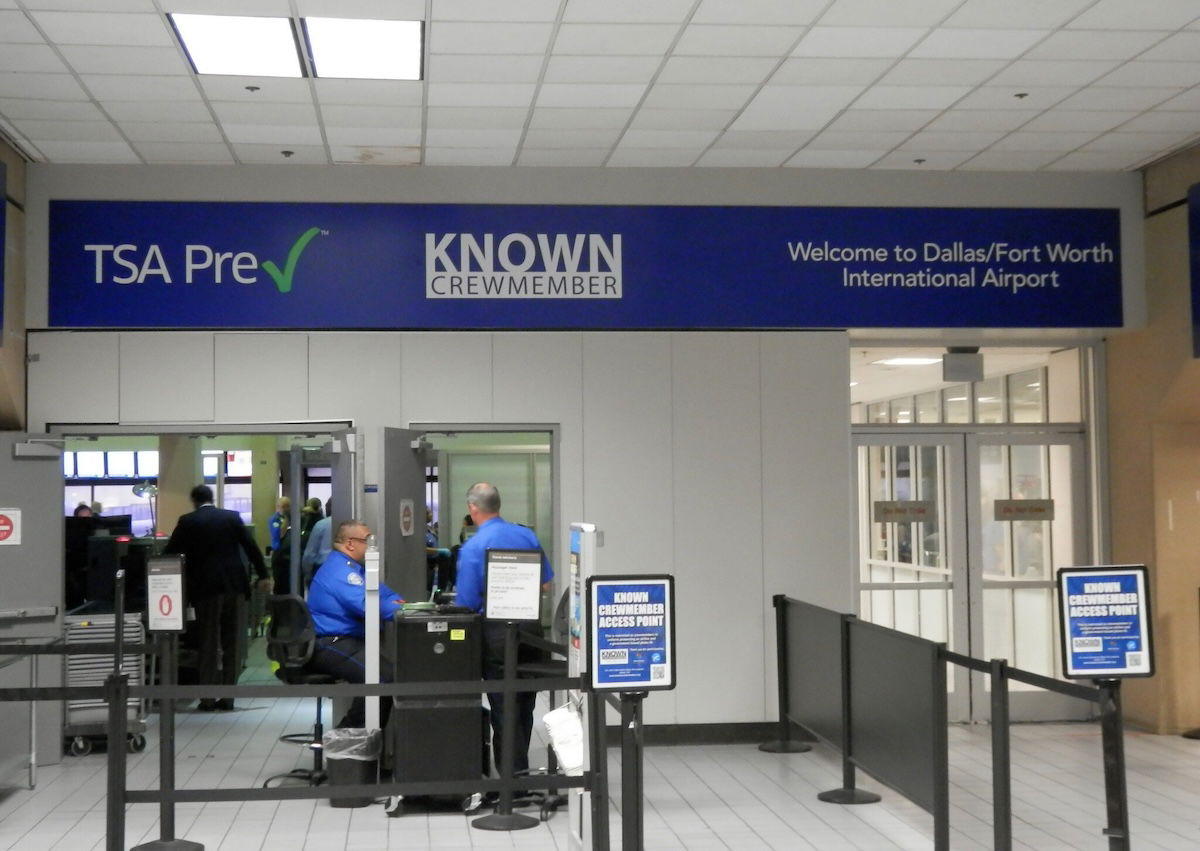
The crewmember screening changes aren’t that drastic
Back when there was first discussion of the move from KCM to CMAP, there was talk of this being prompted by the increase in the number of airline employees who were smuggling things through security. We’re not just talking weapons, but also drugs and large amounts of cash.
The belief was that the new program would also be flight crews have more consistent screening, rather than a vast majority just being sent through. Now, at least officially, the changes there don’t seem to be too drastic.
The TSA does note the following, but it doesn’t sound like we should expect widespread screening:
CMAP is the result of extensive collaboration with industry partners and is driven by the expiration of the current Known Crewmember (KCM) contract, operational risk considerations, and TSA’s statutory responsibility for access control to sterile areas. Along with the name change, TSA will implement new procedures to enhance the security, effectiveness, and consistency of the program.
Now, a few years ago I posed the question of whether the Known Crewmember program should exist in the first place, given the increasing stories at the time of people smuggling drugs and other prohibited items through these checkpoints.
After all, there’s big money in smuggling drugs, and perhaps some newly minted flight attendants don’t feel like they have that much to lose career-wise. If they can make their annual salary as a flight attendant with a couple of “runs,” then they might figure it’s worth the risk.
Ultimately I get the argument that the TSA isn’t there to stop drugs, but rather to stop weapons. That being said, if someone is smuggling kilos of cocaine and fentanyl, getting that off the streets (or out of the skies) doesn’t seem like a bad thing.
Anyway, I’m curious if there’s a significant increase in the number of crewmembers being screened, or if this is just about the TSA having more direct control over the program, using biometric data, etc.
Bottom line
Pilots and flight attendants don’t have to regularly go through security in the United States, though the program that enables this is changing. For years they’ve had the Known Crewmember (KCM) program, while we’re currently seeing a transition to the Crewmember Access Point (CMAP) program.
There don’t actually seem to be that many changes here. The main difference is that the new program is entirely run by the TSA (rather than being a partnership with other enterprises), and that biometric data is used.
While there was talk of the new program also having more consistent screening for pilots and flight attendants, it doesn’t appear like that’s the case, at least based on initial reports.
What do you make of the TSA replacing Known Crewmember with Crewmember Access Point?




crew members are usually screened at foreign airports before departing to the US, so the drug smuggling isnt a huge problem, though it is a concern domestically.
USA is one of the only countries in the world where crew isn’t screened. The international community (ICAO) is not happy about the situation and have pushed for USA to improve to be in standard with other countries.
A similar situation had applied to airport workers (except at a few airports that had voluntarily implemented mandatory screening for airport workers, e.g. MIA and MCO). When TSA eventually decided to require screening of airport workers, it decided to break the law (specifically, the Administrative Procedure Act) and issue the regulation behind closed doors with zero public notice or comment, claiming that it had followed its own regulations.
Numerous airports challenged this, and eventually,...
A similar situation had applied to airport workers (except at a few airports that had voluntarily implemented mandatory screening for airport workers, e.g. MIA and MCO). When TSA eventually decided to require screening of airport workers, it decided to break the law (specifically, the Administrative Procedure Act) and issue the regulation behind closed doors with zero public notice or comment, claiming that it had followed its own regulations.
Numerous airports challenged this, and eventually, a court ruled that the closed-door rulemaking was illegal and an agency can't use its own regulations to get around the APA.
https://law.justia.com/cases/federal/appellate-courts/cadc/23-1290/23-1290-2025-08-22.html
https://www.courtlistener.com/docket/69265670/city-of-billings-v-tsa/
https://www.cozen.com/news-resources/publications/2025/d-c-circuit-reins-in-tsa-s-rulemaking-on-apa-grounds-a-win-for-transparency
KCM exists primarily because TSA was trying to theatrically force pilots through nudeoscopes or into pat downs and a pilot for ExpressJet had enough and just refused. The reality is that there is zero justification for such screening for pilots, who literally have full control of thousands of pounds of metal, filled with fuel and capable of flying 80% of the speed of sound - quite a few of whom are licensed to carry firearms...
KCM exists primarily because TSA was trying to theatrically force pilots through nudeoscopes or into pat downs and a pilot for ExpressJet had enough and just refused. The reality is that there is zero justification for such screening for pilots, who literally have full control of thousands of pounds of metal, filled with fuel and capable of flying 80% of the speed of sound - quite a few of whom are licensed to carry firearms on the airplane. There is little justification for flight attendants as well. The fact that the justification for this program change is drug related shows what a farce the idea is.
Seems unnecessary, and potentially confusing, but probably a power-play by someone in the organization, like renaming the Department of Defense, Gulf of Mexico, or country of Turkey.