
It’s an exciting time at Scandinavian Airlines (SAS). The airline has just emerged from bankruptcy protection, and now has an investment from Air France-KLM, and has also left Star Alliance and joined SkyTeam.
Coinciding with this, the airline is making a bunch of changes, ranging from launching flights to Seattle, to introducing business class on flights within Europe. The company has now revealed a more fundamental strategy shift, which I think makes a lot of sense.
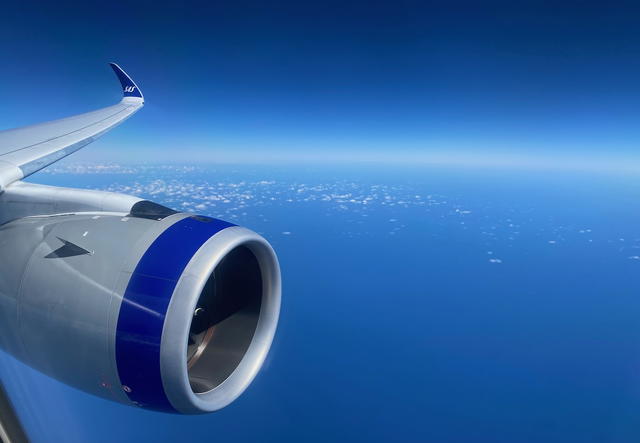
SAS will be more focused on Copenhagen hub
Historically, SAS has had major bases in Copenhagen, Denmark (CPH), Oslo, Norway (OSL), and Stockholm, Sweden (ARN).
While I can appreciate the concept behind this — SAS was the de facto global carrier for all those airports — the reality is that it has made SAS’ network pretty fragmented. I’ve often searched online for itineraries on SAS, only to find that a double connection would be required, and then I ended up booking a different airline.
Clearly SAS has identified this as a problem, and the airline now has a new strategy. SAS will now use Copenhagen as its main hub and as a key international gateway to and from Scandinavia and Northern Europe.
SAS describes Copenhagen as having an attractive location for efficient same-day travel across Northern, Central, and Western Europe, and states that the hub will also serve as a key transit point for long haul travel, connecting Europe with North America and Asia. Indeed, Copenhagen has the benefit of being a bit further south than both Oslo and Stockholm, and that’s a major advantage given the closure of Russian airspace.
While Oslo and Stockholm won’t fully lose long haul flights, the plan is that these hubs will primarily offer connectivity focused on regional and European travel. It’s probably also no coincidence that the Danish state is also the second largest shareholder of the airline, and that the Norwegian and Swedish governments no longer have a stake in the airline.
Here’s how SAS CEO Anko van der Werff describes this strategy development:
“Following new ownership and the successful completion of our restructuring, SAS is emerging as a competitive and financially strong airline. By enhancing Copenhagen as our main hub and expanding our network, we are boosting connectivity and driving economic growth not only in Denmark but across Scandinavia. As we focus on building a global hub in Scandinavia, Copenhagen will become a central gateway, bringing the region even closer together.”
“For our passengers, this means more travel options, improved convenience, and a seamless experience across a growing number of destinations.”
SAS is looking a whole lot more like Finnair
When you look at Northern Europe, Finnair and SAS are the two global airlines. It’s interesting how SAS is essentially trying to follow in Finnair’s footsteps:
- SAS hopes to join the SkyTeam transatlantic joint venture (with Air France-KLM, Delta, and Virgin Atlantic), while Finnair is part of the oneworld transatlantic joint venture (with American, British Airways, Iberia, and Aer Lingus)
- SAS is finally introducing business class on flights within Europe, just as Finnair has had for years
- SAS will use one primary hub for its flights, taking advantage of its strategic geography in Northern Europe (in fairness, Finnair has always only been associated with one country, so the historical strategy difference there isn’t surprising)
Admittedly airlines in Northern Europe don’t quite have the geographic advantage that they used to have. Back in the day, the Northern Europe hub was ideal geography for providing the most direct connectivity to Russia and to other parts of Asia, given the routings that were possible.
With the current Russia conflict, that advantage has largely turned into a disadvantage. There aren’t many places you can fly east from Northern Europe, and for that matter, routings are now much longer than they used to be. I will say, Copenhagen has much better geography than Helsinki does for most long haul connectivity.
For example, take Finnair’s flight from Helsinki to Tokyo, which requires quite the detour.
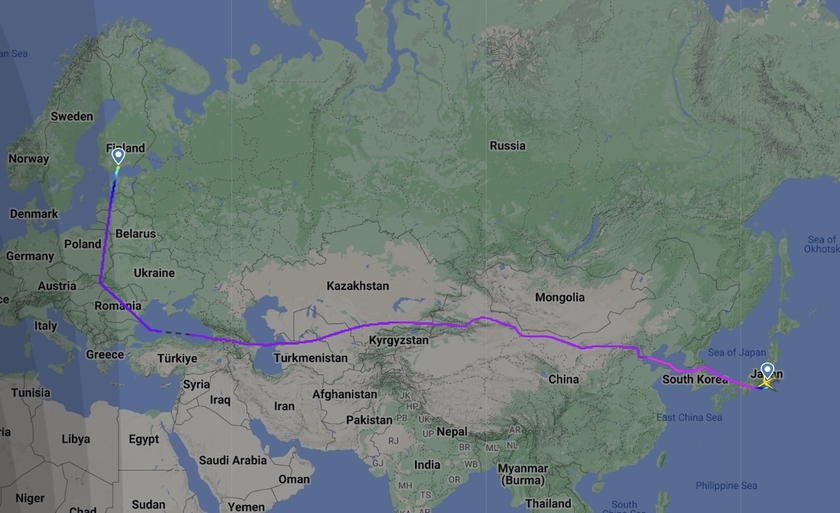
Meanwhile SAS’ flight from Copenhagen to Tokyo still requires a detour, but it’s a bit more direct.

Bottom line
SAS is trying to become more competitive with other network carriers in Europe. The airline will increasingly emphasize its Copenhagen hub, due to its strategic geography, to enable efficient connections, and presumably also because the Danish state is the company’s second biggest shareholder.
This strategy makes sense, and when coupled with the carrier’s other plans, it should set the airline up for (more) success.
What do you make of SAS shifting its strategy to prioritize Copenhagen?


Membership is free and takes no more information than commenting as a guest. Earn status points for good contributions, and see fewer ads as your status grows.