
Southwest Airlines can’t seem to stay out of the news lately when it comes to concerning safety incidents. A couple of days ago I first wrote about yet another near catastrophe, which might just be the scariest one we’ve seen so far. I wanted to provide an update, as I just saw an interesting analysis of what may have caused this, and it’s kind of shocking.
Southwest 737 MAX has near disaster on approach to Tampa
This incident happened on Sunday, July 14, 2024, and involves Southwest Airlines flight WN425, scheduled to fly from Columbus (CMH) to Tampa (TPA). The flight was operated by a less than one-year-old Boeing 737 MAX 8 with the registration code N8841L.
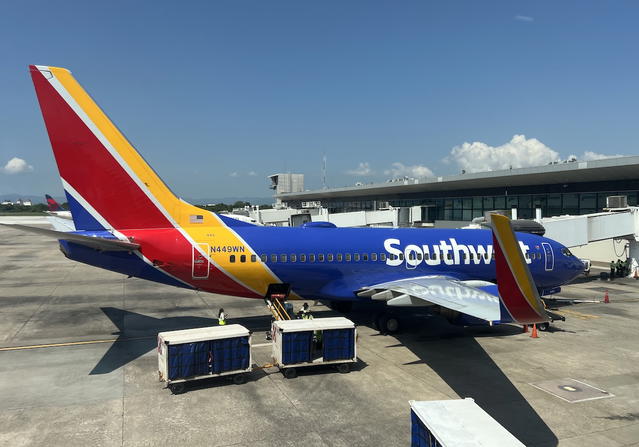
The flight was scheduled to depart at 4PM and arrive at 6:10PM. The plane took off roughly on schedule, at 4:15PM, and most of the flight was routine, though it took a bit longer than usual due to weather enroute, as the plane made several detours.
On top of that, weather conditions in Tampa weren’t great that day, with rain and strong gusts, so it was a tricky approach.
Around 2hr50min after departure, the plane was on approach to runway 10 at Tampa Airport (it’s worth noting that this runway is rarely used by commercial aircraft, but in this case it was the best runway due to the weather conditions). As the plane was coming in over Tampa Bay, while around four miles from the runway, it descended as low as 150 feet, according to ADS-B data.
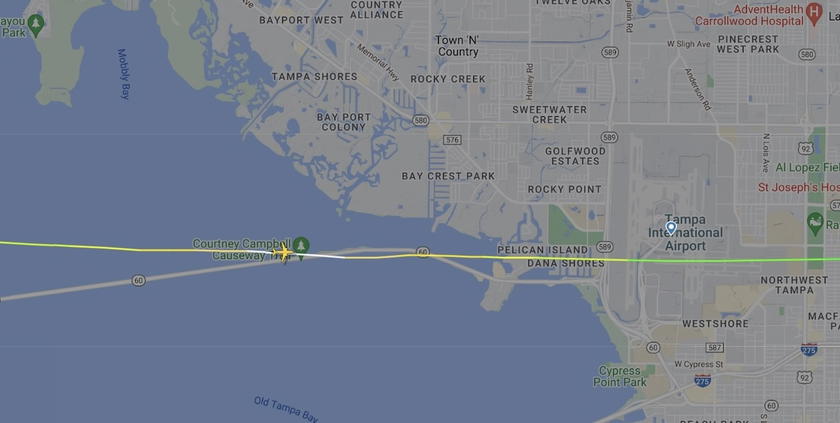
Let’s not mince words here — that’s terrifying, and seconds from disaster. For context, that altitude is just a bit more than the 737’s wingspan. That also doesn’t factor in that the plane was coming in right over the Courtney Campbell Causeway, which is elevated above the water.
Worst of all, the pilots didn’t even seem to realize what was going on. Instead, they only increased altitude again after an air traffic controller warned them about a low altitude alert. Here’s how that interaction went at first:
ATC: “Southwest 425, low altitude alert, check your altitude. Tampa’s altimeter is 30.14.”
Pilot: “30.14, thank you, Southwest 425.”
The pilots sure sound calm, for better or worse. The Southwest plane then started to slowly gain altitude again. Then the conversation continued as follows:
ATC: “Southwest 425, you plan to go around?”
Pilot: “Yeah, we are, we have to go, Southwest 425.”
ATC: “Southwest 425, roger, cancel approach clearance, go around runway 10. For now you can fly runway heading and climb and maintain 1,600.”
After this incident, the jet ended up diverting to Fort Lauderdale (FLL), where the weather was better. There were several other diversions that day. The plane landed safely in Fort Lauderdale at 7:45PM, after 3hr30min in the air.
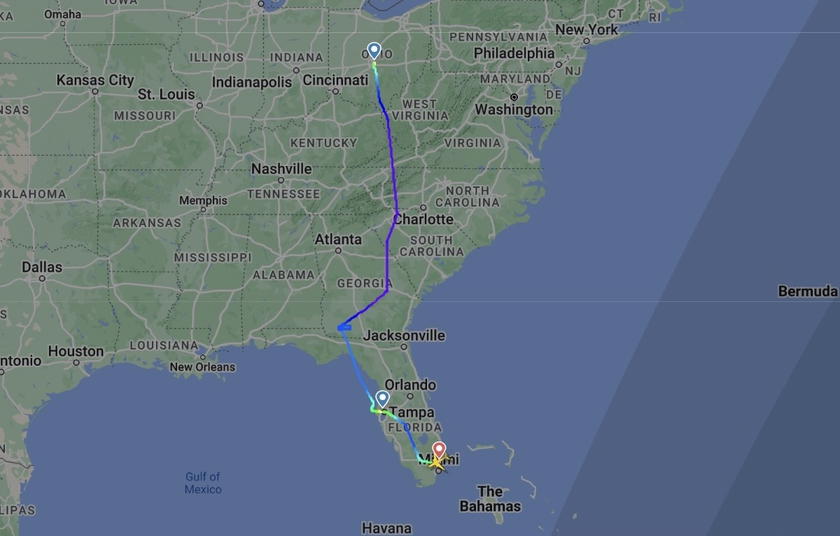
Below you can see a depiction of what happened, plus you can hear the ATC audio. Thanks to “You can see ATC” for discovering this incident in the first place.
The plane on approach immediately ahead of this was also a Southwest 737. When that plane was four miles out, it was at an altitude of 1,300 feet, so that gives you a sense of just how far off 150 feet is. The crew of that flight was asked by air traffic control to report on weather conditions, and stated the following:
“Actually three miles in was moderate rain and just a light chop. The bad stuff is probably 5, 6, 7 miles out with that gust.”
How could this Southwest Tampa incident happen?
We’ve seen a slew of Southwest incidents recently, though I have to say, this one seems like it was the closest to being a disaster. The plane was 150 feet above the bay, and that doesn’t even account for the bridge that’s elevated above the water.
First and foremost, the air traffic controller here deserves massive kudos. This could have had a very different outcome, and he might have just saved a lot of lives that day. I know air traffic controllers have stressful jobs, but credit to this guy for his performance and timing. If he had waited a few more seconds, this could have had a different outcome.
At first, one theory had been that the pilots had the altimeter set incorrectly. For those not familiar with the altimeter, this is the instrument that measures the altitude a plane is at. The catch is that the altimeter always has to be set to local settings, based on the conditions in a place. However, unless the altimeter was on a completely wrong setting, that wouldn’t explain more than a couple hundred feet of altitude difference. So there must be more to this…
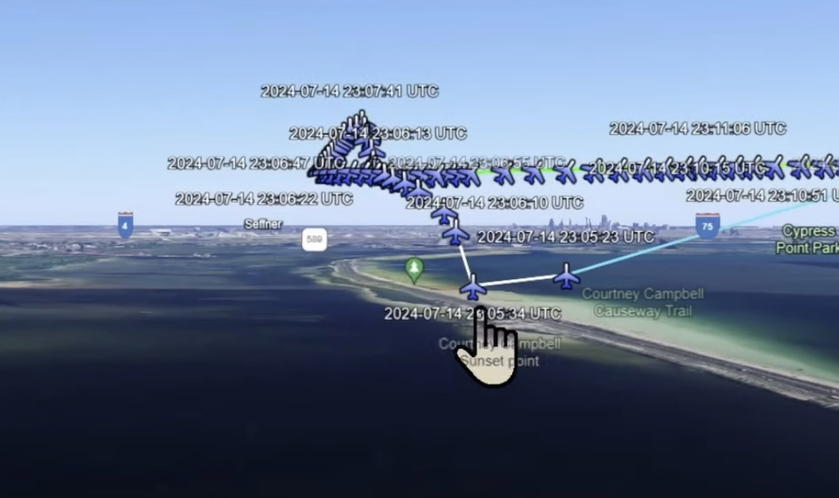
That brings us to what might just be the most likely explanation as of now. The excellent YouTube channel “blancolirio” (run by an airline pilot) has an analysis of the incident, and presents an interesting theory (around seven minutes into the video).
Based on analyzing the data and downloading it into Google Earth, it sure looks like the pilots may have mistaken the Courtney Campbell Causeway for the runway, so they were seconds from trying to land on a bridge, miles from the runway.
Of course this completely defies logic. One has to wonder how two airline pilots could make such a mistake, when it should be obvious that this wasn’t the runway. Then again, there’s not any other logical explanation for why pilots would be flying a plane down to 150 feet, while several miles from the runway. We’ll see what the investigation reveals, but based on the plane’s altitude and heading, it’s hard to imagine that this wasn’t the case…
Does Southwest have an issue with its safety culture?
It’s kind of unbelievable how many close calls Southwest planes have had lately. Just in recent months, we’ve seen a scary go around in Hawaii, a dangerously low approach in Oklahoma City, an inflight Dutch roll, and taking off from a closed runway. And those are just several of the incidents that have been reported.
This incident in Tampa sure seems eerily similar to the Oklahoma City incident, where the plane descended to a dangerously low altitude several miles from the runway.
Is this just bad luck, or does Southwest have a problem? Admittedly Southwest is a huge airline, and operates a lot of flights each day. However, a disproportionate number of the recent incidents involving pilot error are at Southwest.
Just about all US airlines have more junior cockpits than they did before the pandemic, given how many new pilots have been hired. However, what’s specifically going on at Southwest that’s causing this? It’s beyond my pay grade, but at this point I think it’s hard to fully chalk this up to a coincidence.
For all the increased oversight that the Federal Aviation Administration (FAA) has over United Airlines for safety issues, maybe it’s time for the government to look at Southwest’s situation with pilots…
Bottom line
A Southwest Airlines Boeing 737 MAX had a pretty wild approach to Tampa Airport. Weather conditions weren’t great, and for whatever reason, the plane descended down to 150 feet around four miles from the runway. Fortunately the air traffic controller received a low altitude alert and warned the crew, at which point they initiated a go around.
An investigation has now been opened into what happened. It would appear that the most likely explanation is that the pilots had mistaken the bridge for the runway. It’s shocking that this is an error they could make, but it makes more sense than any other theory.
What do you make of this latest Southwest incident?


Membership is free and takes no more information than commenting as a guest. Earn status points for good contributions, and see fewer ads as your status grows.