
Passengers on a US-bound British Airways flight yesterday were in for quite an adventure, as they made it all the way to North America, before the plane made a u-turn, and returned to London.
British Airways’ nine hour flight to “nowhere”
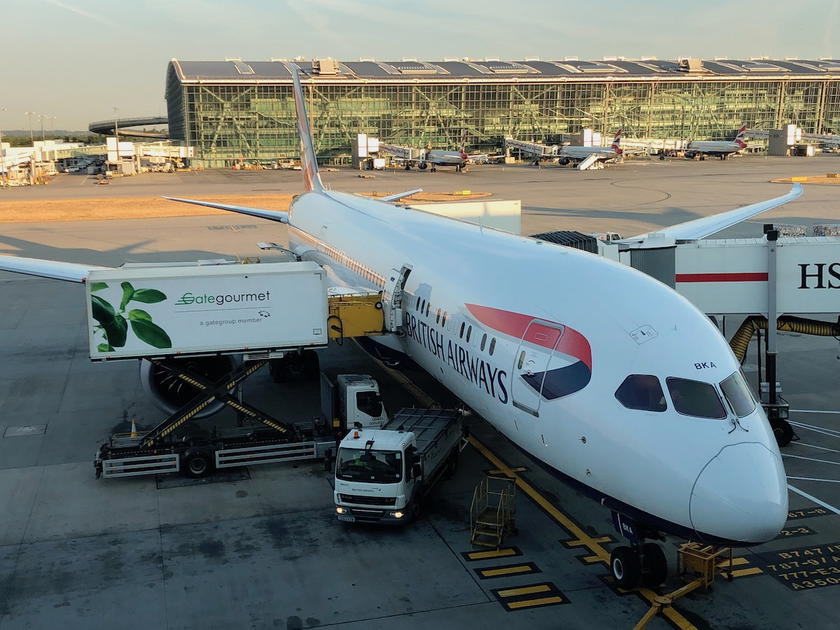
This incident happened on Monday, June 10, 2024, and involves British Airways flight BA195 from London (LHR) to Houston (IAH). The flight was operated by an eight-year-old Boeing 787-9 with the registration code G-ZBKN.
The jet was scheduled to depart London at 9:25AM, and land in Houston at 1:45PM, with the 4,834-mile journey being blocked at 10hr20min.
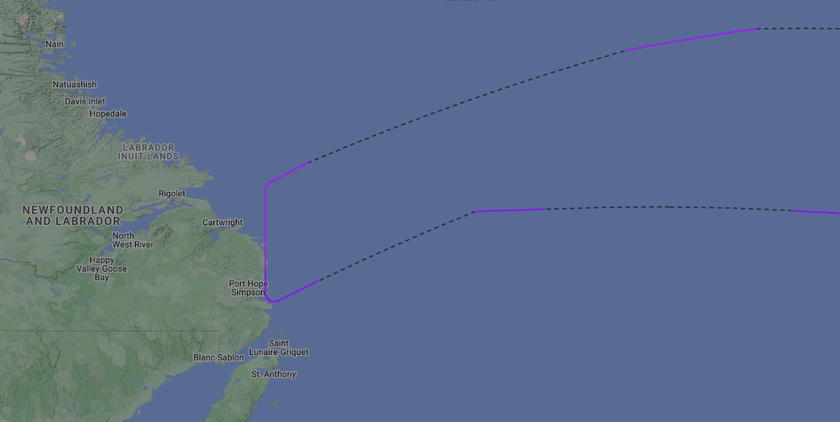
The Dreamliner departed more or less as planned, and took off from London at 9:57AM local time. The aircraft flew west for just under five hours, first flying over Ireland, and then over the Atlantic, before making landfall in the northeastern portion of Canada.
At this point, the aircraft was basically right at the halfway point of the journey, both in terms of distance and time remaining. However, an issue was discovered with one of the engines (more on that later), and the decision was made to cross the Atlantic again, and return all the way to London.
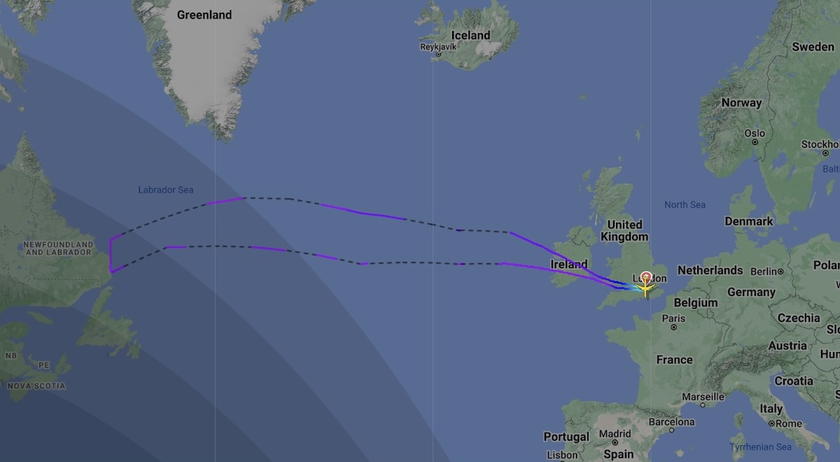
So the jet started flying eastbound over the open Atlantic. The aircraft touched down in London at 6:53PM local time, just a little under nine hours after it took off. The flight ended up being canceled (and presumably passengers were rebooked on other flights), and the aircraft involved in the incident is still on the ground at Heathrow.
How do we make sense of this diversion?
Understandably, I think people struggle with understanding a scenario like this. The jet was basically half way to its destination, so how does it make sense to return to the origin rather than just completing the flight? Furthermore, if there was any sort of a mechanical issue, wouldn’t it be safer to divert to the closest airport or stay over land (with closer diversion points), rather than flying out over the open ocean, with no real diversion points nearby?
Well, as you’d probably expect, there’s an explanation. According to a British Airways pilot on FlyerTalk, the engine issue in question here was a surge on the number two engine, and it was self recovering. This reportedly doesn’t pose a concern for the current flight, but does pose a concern for any subsequent sectors.
Furthermore, due to British Airways’ contract with Rolls Royce (the engine manufacturer), it was reportedly advantageous for the jet to return to Heathrow, and Rolls Royce also probably had input here.
While I can’t personally vouch for any of this, it all adds up. It’s clear that the jet returned to Heathrow not due to any imminent risk, but rather because it was the most practical option in terms of logistics and cost. Presumably the return flight from Houston to London would have been canceled no matter what, and on top of that, British Airways would have had a more challenging time performing maintenance on the jet, or even getting it back to London.
This diversion no doubt cost British Airways hundreds of thousands of dollars, when you factor in fuel, compensation for passengers, replacement flights, etc. But I imagine the savings from being able to perform maintenance on the jet at Heathrow and get it back into service ASAP outweigh that.
Bottom line
A British Airways Boeing 787 that was scheduled to operate from London to Houston returned to its origin after around nine hours, having already crossed the Atlantic. The jet reportedly had an engine issue that didn’t pose a risk for the current flight, but did for any subsequent flights.
While the aircraft could have continued to Houston, that would have been logistically challenging and costly in terms of performing the necessary maintenance to get the plane back into service. So the decision was instead made to fly the aircraft back to its base, even though it inconvenienced a lot of passengers.
What do you make of this British Airways flight to “nowhere?”


Membership is free and takes no more information than commenting as a guest. Earn status points for good contributions, and see fewer ads as your status grows.