
I recently covered how United States Transportation Secretary Sean Duffy warned that we could start to see airspace in the United States close as of next week, as a result of the government shutdown. That raised questions as to whether that was a prediction or a threat.
We then learned about an update that could start to impact passengers before the end of the week. The list of airports that will see traffic reductions has just been published, so we now have a better sense of what this will look like.
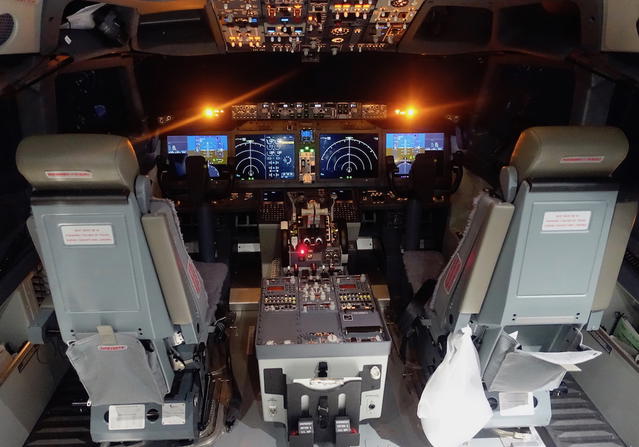
Airlines will be forced to cancel flights due to ATC staffing
It has been announced that flight capacity in the nation’s top 40 high-traffic markets will be reduced by 10% as of Friday, November 7, 2025, assuming the government shutdown continues. The Transportation Secretary claims this is “data based,” though exact details as to how the cuts will be implemented remains to be seen.
“Markets” is seemingly being defined as “airports” here (rather than city pairs or airspaces), with the following 40 airports expected to see flight reductions:
- Anchorage International Airport (ANC)
- Atlanta Hartsfield-Jackson International Airport (ATL)
- Boston Logan International Airport (BOS)
- Baltimore/Washington International Airport (BWI)
- Charlotte Douglas International Airport (CLT)
- Chicago Midway Airport (MDW)
- Chicago O’Hare International Airport (ORD)
- Cincinnati/Northern Kentucky International Airport (CVG)
- Dallas Love Field Airport (DAL)
- Denver International Airport (DEN)
- Dallas/Fort Worth International Airport (DFW)
- Detroit Metropolitan Wayne County Airport (DTW)
- Fort Lauderdale/Hollywood International Airport (FLL)
- Honolulu International Airport (HNL)
- Houston George Bush Intercontinental Airport (IAH)
- Houston Hobby Airport (HOU)
- Indianapolis International Airport (IND)
- Louisville International Airport (SDF)
- New York John F. Kennedy International Airport (JFK)
- Newark Liberty International Airport (EWR)
- Las Vegas International Airport (LAS)
- Los Angeles International Airport (LAX)
- Memphis International (MEM)
- Miami International Airport (MIA)
- Minneapolis/St Paul International Airport (MSP)
- New York LaGuardia Airport (LGA)
- Oakland International Airport (OAK)
- Ontario International Airport (ONT)
- Orlando International Airport (MCO)
- Philadelphia International Airport (PHL)
- Phoenix Sky Harbor International Airport (PHX)
- Portland International Airport (PDX)
- Salt Lake City International Airport (SLC)
- San Diego International Airport (SAN)
- San Francisco International Airport (SFO)
- Seattle/Tacoma International Airport (SEA)
- Teterboro Airport (TEB)
- Tampa International (TPA)
- Washington Dulles International Airport (IAD)
- Washington National Airport (DCA)
It’s going to be very interesting to see how this is actually implemented. Will all flights touching these airports be reduced by 10%? It’s not easy for airlines to just rebuild their schedules, given the domino effect of flight cancelations, so this could prove very tricky for airlines.
So while we don’t know how many total flights will be canceled, a 10% reduction in overall flights in the United States would translate to roughly 5,000 flights per day, give or take, and could impact hundreds of thousands of air travelers per day.
Officially, the logic here is that this is because air traffic controllers aren’t getting paychecks right now, so there’s an increase in fatigue and sick calls. That being said, one wonders what data is being used to determine the optimum number of flights to cancel, since for the most part, flights are still operating pretty smoothly. Furthermore, air traffic controllers not showing up to work is pretty hard to predict.
For example, Tampa Airport has been running smoothly, with no operational issues. So how does canceling a flight from Tampa to a non-congested airport help?
If this shutdown drags on much longer and we see air traffic controllers call in sick on a very widespread basis, then a 10% flight reduction won’t do squat. So I guess the idea is to do something, though this strikes me as rather random.
The political implications here are going to be fascinating
There’s no denying that mass flight cancellations will frustrate the public, and in terms of optics and things people agree on (in other words, not food assistance programs), may be the most widespread impact of the shutdown to date. It’s not just those people booked on 10% of flights who will be impacted, but this will of course make it much more difficult to book flights, since flights will be booked out, they’ll be more expensive, etc.
Our air traffic ecosystem is really the thing that has the ability to end the shutdown, given the importance of it to so many people. So it’s going to be worth watching how this plays out politically. Of course in virtually all official communications, the Trump administration is referring to this as the “Democrat Shutdown,” as that’s the narrative they want to portray.
The issue is, that’s not necessarily how the public sees it, and for that matter, it’s not even seemingly how the Trump administration views it:
- The polling I’ve seen all shows that more people blame the Republican party than the Democratic party for the shutdown (again, that’s the polling I’ve seen, and I’m just reporting that — if people see reputable polling that says otherwise, please share it)
- Following yesterday’s elections (a victory for Democrats), Trump blamed the loss of Republicans partly on the government shutdown; that suggests that he acknowledges that the shutdown continuing is worse for Republicans than for Democrats
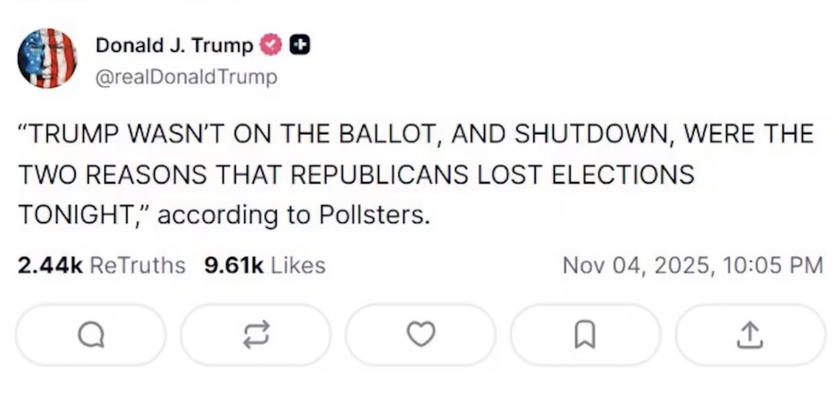
My point is to say that these flight reductions will create immense political pressure. It sure seems like the Trump administration hopes that Democrats just cave when the public becomes angrier, but that seems highly unlikely.
We’re all entitled to our opinions, and have our own takes, so I’m not trying to change anyone’s mind on how they should feel about who is responsible for the shutdown. I’m simply sharing what polling shows, and what Trump himself acknowledges, and the implications that could have on how this plays out. After all, none of us want our aviation system to be a mess for any longer than it has to be.
Bottom line
Transportation Secretary Sean Duffy has announced that the FAA will force 10% flight reductions in the nation’s 40 biggest markets as of this Friday. The reason being given is reduced air traffic control staffing due to the shutdown.
Obviously the Trump administration feels pressure to end the shutdown ASAP, and significant flight reductions will increase public pressure on the shutdown ending. That being said, more people seem to view Republicans as being at fault rather than Democrats, so I don’t necessarily see how this is supposed to play out, unless Trump starts to compromise.
How do you see this flight reduction situation playing out?


Membership is free and takes no more information than commenting as a guest. Earn status points for good contributions, and see fewer ads as your status grows.