
There can be significant variance in on-time performance for flights. That’s true between different airlines, and it’s even true between flights at the same airline. Along those lines, here’s an Etihad flight that must have among the worst on-time performance of any route I’ve ever seen.
Etihad’s Tokyo Narita is an average of 90+ minutes late
Etihad operates a daily flight between Abu Dhabi (AUH) and Tokyo Narita (NRT), EY800, which is flown by an Airbus A380. The 5,035-mile flight is blocked at 10hr20min, and is scheduled to depart at 10:10PM and arrive at 1:30PM the following day, with both times being local.
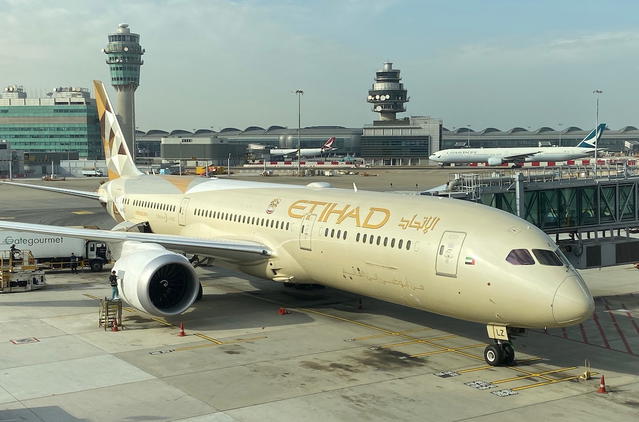
Obviously block time is longer than actual flight time, and the flight time typically varies anywhere from 8hr43min to 10hr1min. So that seems like a fair block time in relation to the actual flight time.
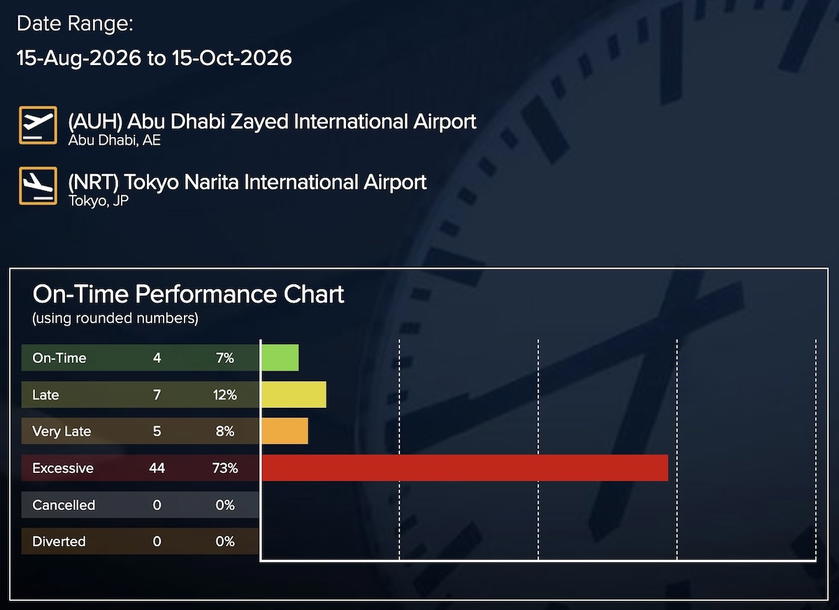
Despite that, this flight simply seems incapable of operating on-time, a point raised by a FlyerTalk member. According to data from FlightStats, the flight is on-time around 7% of the time, and has an average delay of over 90 minutes.
For example, below is a screenshot from Flightradar24, showing 12 consecutive days of this service. During that period, the plane landed anywhere from 1hr5min to 2hr5min after its scheduled arrival time (and keep in mind this doesn’t factor in the long taxi times at Narita, so the actual arrival is delayed even more than that).
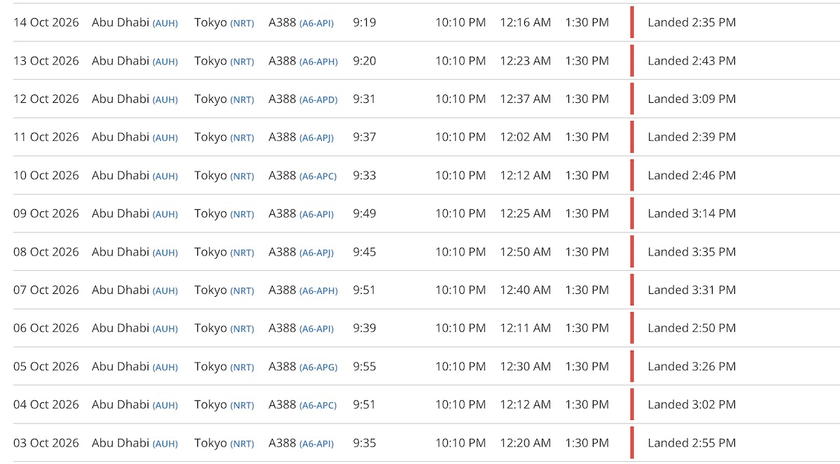
For what it’s worth, with the above columns showing time, 10:10PM is the departure time, and then the number immediately to the right of that is the time when the plane actually takes off. So the standard seems to be for the plane to just take off two or more hours after the scheduled departure time.
The last time that this flight actually arrived at its gate fully on-time was on the September 12 flight, which was 42 days ago. Ouch.
What can explain Etihad’s constant Tokyo Narita delays?
When I first saw Etihad’s poor on-time performance to Tokyo Narita brought up, I figured it would be easy enough to figure out what’s going on. However, the more I look into this, the more confused I am:
- The A380 operating this flight consistently arrives at Abu Dhabi hours before this flight departs, so it’s not a case of having a constantly late inbound aircraft
- I wondered if the airline was always just waiting for connecting passengers, though I find it noteworthy how there are flights to Bali (DPS) and Singapore (SIN) around the same time, and they consistently depart on-time; so if the decision is made to wait for connecting passengers no matter how long it takes, it’s specific to this route
- The plane does have a very long turn at Tokyo Narita, and in the other direction (flight EY801), it consistently operates pretty close to on-time
- I don’t see any reason this could be attributed to ATC delays, since other flights from the region to Japan operate on schedule, and use the same air corridors
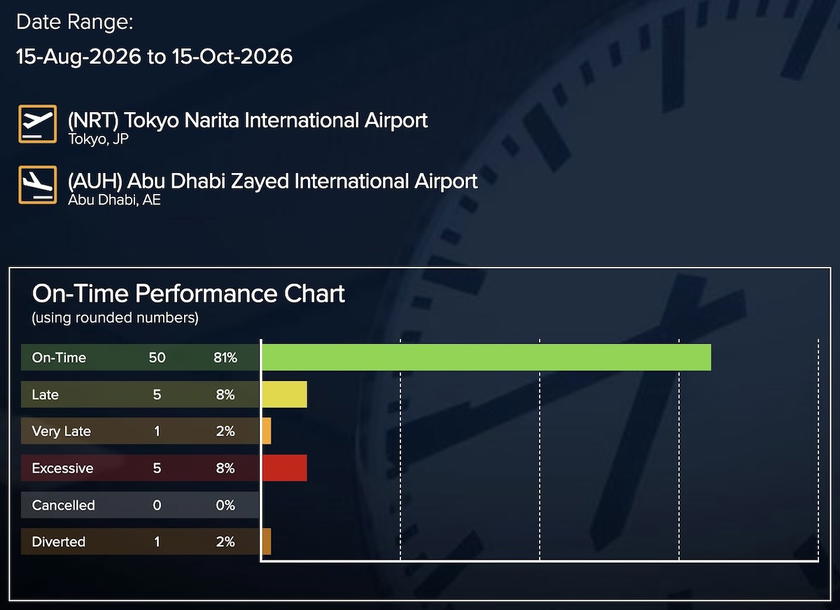
I’m a little light on contacts at Etihad management nowadays, and I doubt many people in the UAE will be able to read this to chime in. 😉 But still, I’m curious if anyone has any theories as to what’s going on here?
I have to imagine this is a case of holding the plane for every last connecting passenger, or something, but I’m not sure why that would be so specific to this route, and not the other Asia routes that depart around the same time, where planes also have a long turn at their destination.
Bottom line
If you’re flying Etihad from Abu Dhabi to Tokyo Narita, definitely don’t make any firm plans for your arrival afternoon, and expect a delay of over 90 minutes, on average. I really can’t make sense of what’s going on here, as the plane just consistently departs around two hours late.
I’d assume the airline is just waiting for connecting passengers with no sense of urgency, but I also don’t understand why it would be specific to this route, and not other Asia routes departing around the same time.
Anyone got some theories here?


Membership is free and takes no more information than commenting as a guest. Earn status points for good contributions, and see fewer ads as your status grows.
There are currently no responses to this story.
Be the first to respond.