
In 2016, an EgyptAir jet had a fatal crash, while flying between France and Egypt. In 2022, French authorities released their report into what happened. Now in 2024, Egyptian authorities have published their report on the accident. Not surprisingly, the two parties have come to very different conclusions.
Basics of the crash of EgyptAir flight 804
On May 16, 2016, EgyptAir flight MS804 crashed into the Mediterranean Sea, killing all 66 people onboard, including 56 passengers and 10 crew members (yes, EgyptAir has very big crews). The flight was operating from Paris (CDG) to Cairo (CAI) using an Airbus A320 when the accident took place.
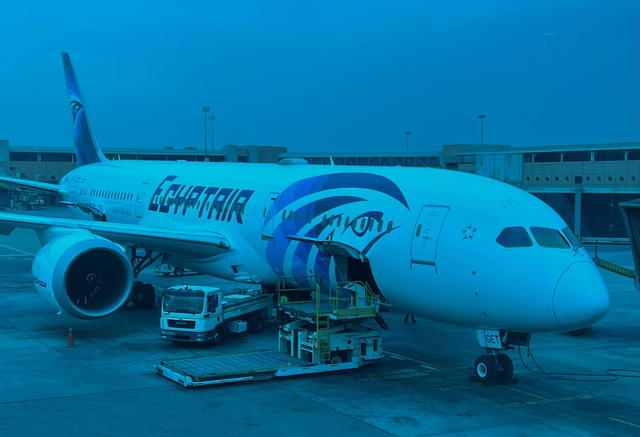
Within days of the accident, the Egyptian Civil Aviation Ministry claimed that the flight was probably attacked. The leading theory initially was that there was a bomb on the plane, as some officials claimed that monitoring equipment focused on the area detected evidence of an explosion onboard the aircraft. Furthermore, Egyptian authorities claimed that traces of explosives had been found on the bodies of some victims.
As more details started to be released, the more common theory was that there was a fire on the aircraft. That’s because in the minutes leading up to the crash, messages sent via ACARS (the aircraft reporting system) indicated that smoke was detected at the front of the jet, in the forward lavatory and avionics bay.
Egypt & France disagree on cause of EgyptAir crash
Both Egyptian and French authorities have now released their reports into the cause of this crash. Most of the time, aviation investigators do an incredible job going through evidence and coming to a logical conclusion. However, Egyptian authorities have a history of coming to different conclusions than other investigators, especially when Egyptian airlines are involved. With that in mind, let’s look at the two reports…
EgyptAir crash caused by smoking pilot (France)
In April 2022, France’s Bureau of Enquiry and Analysis for Civil Aviation (BEA) published its report on the crash of EgyptAir flight 804, and concluded that it happened due to a pilot smoking in the cockpit.
According to this report, Pilot Mohamed Said Shoukair smoked in the middle of the flight, which was actually allowed under EgyptAir’s rules at the time. His cigarette caused oxygen to combust, as it was leaking from an oxygen mask in the cockpit, causing a spark, and then fire to break out.
This was determined based on black box data that captured the sound of the oxygen hissing. The oxygen mask had been replaced just three days before the crash by a maintenance worker, but for unknown reasons, the release valve was set to the emergency position, which can lead to leaks.
EgyptAir crash caused by explosives onboard (Egypt)
When France released its report, Egyptian authorities dismissed the findings as unfounded, but didn’t initially present their own report. Now in October 2024, the Egypt Civil Aviation Authority (ECAA) has published its report into what happened on EgyptAir flight 804.
Egyptian authorities agree that there was fire and smoke on the aircraft, which ultimately caused the plane to crash. What they disagree on, though, is the cause. Egyptian authorities argue that this resulted from the effects of explosive material that was located at the forward galley, just behind the rear section of the cockpit.
The fire and smoke event took place quickly, and spread to the cockpit, causing the flight systems to be disabled. Furthermore, the oxygen flow in the cockpit enriched the fire and smoke.
More specifically, they argue that two explosive substances (TNT and DNT) were placed in the galley carts located in the forward galley area, directly behind the cockpit, and they detonated after a set amount of time. This is based on a claim that the forward galley area wreckage showed a pressure wave from the inside to the outside.
So, why do Egyptian authorities reject the conclusion of French authorities? They make several arguments:
- If there was a leak in the oxygen system in the cockpit, the oxygen cylinder would have been depleted in a shorter time, which is not compatible with the hissing sound time period heard in the cockpit voice recorder
- Based on the cockpit voice recorder, the pilots didn’t use a fire extinguisher in the cockpit, which they would’ve done if the fire originated there
- Based on the flight data recorder, the “lavatory smoke” warning was recorded before the first “avionics smoke” warning, suggesting the situation started outside of the cockpit
- Wire insulations, which are most sensitive to heat effects, were intact, leading to the conclusion that the temperature wasn’t high enough to affect wire insulation, and therefore the fire didn’t originate in the cockpit
- Examination of human remains shows injuries associated with explosive materials, including the explosion of TNT material and the presence of some burn marks
I’ve gotta say, Egypt’s theory doesn’t necessarily sound that unreasonable. There are four major reasons to be skeptical, though:
- Egypt claimed terrorism as the cause shortly after the crash, even before all evidence was collected; it’s almost like authorities set out to prove that theory
- The cockpit voice recorder didn’t record the sound of an explosion, which is kind of an important detail
- Egypt is essentially suggesting this was terrorism, though no one took credit for the attack, so what would the motive have been?
- Egyptian authorities have a questionable record when it comes to transparency and the conclusions they come to; they also insist that the 1999 crash of EgyptAir flight 990 was due a mechanical failure, rather than one of the pilots intentionally crashing the plane into the ground (which the rest of the world basically agrees is what happened)
Bottom line
Over eight years ago, an EgyptAir Airbus A320 crashed into the sea, killing everyone onboard. Now we’ve seen both French and Egyptian authorities release their reports into what happened, though they’ve come to totally different conclusions.
French authorities believe there was a fire onboard caused by a smoking pilot and a leaking oxygen mask, while Egyptian authorities believe it was a terror attack, as explosives had been placed in the forward galley.
Based on the evidence presented, it’s hard to know which report is accurate. Egypt certainly doesn’t have a great reputation when it comes to the history of its accident investigations, so… make of that what you will.
What do you make of the conflicting reports about the crash of EgyptAir flight 804?


Membership is free and takes no more information than commenting as a guest. Earn status points for good contributions, and see fewer ads as your status grows.