
Late on Tuesday night, a Boeing 737 crashed into the Arabian Sea. There’s no such thing as a straightforward aviation accident, and the circumstances surrounding this are particularly strange — the pilots reported navigation issues, and moments later the plane start descending rapidly, only to then climb rapidly, before finally plunging over six miles, and going “missing.”
K2 Airways Boeing 737 to Karachi crashes after navigation issues
This accident happened late at night on Tuesday, July 7, 2026, and involves a flight by Pakistani cargo carrier K2 Airways. The 27-year-old Boeing 737-400 with the registration code AP-BOI was enroute from Sharjah (SJH) to Karachi (KHI), with five people onboard.
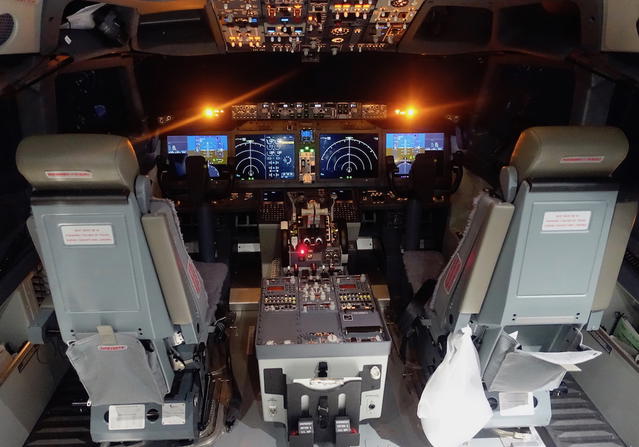
The plane took off from the United Arab Emirates at 8:02PM Pakistani standard time, and was supposed to operate a routine 730-mile to Pakistan. The first roughly 75 minutes of the flight were believed to be routine.
However, the problems started at around 9:18PM, while the plane was around 180 miles from Karachi. At that point, the pilots reported to air traffic control that they were having navigational system issues.
Just one minute later, the plane rapidly descended from around 35,000 feet to around 30,000 feet, only to then rapidly climb up to 36,000 feet. However, that lasted for a matter of seconds, and at that point, the plane started a very steep descent, whereby it went from that altitude to sea level in just two minutes. Radar contact was lost at 9:22PM local time.
Below you can see the Flightradar24 data for what happened, as well as a side profile of the plane’s final minutes. As you can see, the plane actually started a turn as it began descending and then climbing. It’s worth noting that turn was away from the closest airport, rather than toward it.
Search and rescue efforts are underway, and my thoughts are with those onboard and their families. Suffice it to say that striking a body of water with a negative descent rate of over 22,000 feet per minute doesn’t translate to great odds for survivability.
For what it’s worth, this plane was initially delivered in 1999, and flew for Aeroflot, before being transfered to Garuda Indonesia, before being converted to a freighter in 2011.
Mechanical issue, intentional act, or missile, to blame?
It’s a pretty tense time for aviation globally, especially given the region in which this happened. So while it’s too early to know anything for sure, I see a lot of people online speculating that this could’ve been an intentional act (based on the very steep descent profile), or wondering if the plane was shot down by a missile (given that this happened not far from the Gulf region, and the conflict there).
Obviously I have no clue what happened. To state the obvious, most accidents happen during takeoff and landing, and to see a plane just fall out of the sky while at cruising altitude is incredibly rare. As a matter of fact, if you look at major aircraft accidents over the past couple of decades, a vast majority that happened mid-flight were either sabotage or acts of terrorism. That’s of course not to say that happened here, but it’s just reality.
The plane hasn’t even found yet, but no matter what the cause of this ends up being, this is unusual:
- If this was an intentional act, you wouldn’t typically first see reports of navigation issues, followed by a turn, then a descent, then a climb, and then a descent into the sea
- If the plane was struck by a missile, you would expect it to just fall out of the sky, rather than there first being reports of navigation issues
- If the plane was indeed having major mechanical issues, you still wonder how the plane went from having navigation issues to being in the sea a matter of minutes later
So we’ll see how this all plays out. Unless or until there’s evidence to the contrary, my assumption would be that there was some catastrophic failure, and that the crew did everything they could to save this plane. I can’t imagine how rough their final minutes were.
Bottom line
A K2 Airways Boeing 737-400 flying from Sharjah to Karachi disappeared from radar over the Arabian Sea, around 180 miles from its destination. The pilots reported navigation issues with the plane — moments later the plane descended steeply, then climbed steeply, and then plunged 35,000 feet in just two minutes, before disappearing from radar. My thoughts are with those onboard and their families… this is just awful.


Membership is free and takes no more information than commenting as a guest. Earn status points for good contributions, and see fewer ads as your status grows.