
If you’re a frequent flyer on American Airlines, you might notice a new procedure as of today for when pilots go to the bathroom. This will eventually be coming to some planes on all US airlines, but American is one of the first to actually implement this, so let me explain what’s going on.
American starts using new flight deck barrier feature
It’s common for pilots to use the bathroom during a flight. When they do, it’s standard for flight attendants on airlines in the United States to block the aisle with a galley cart, to prevent any passenger from accessing the flight deck while the door is open.
In 2025, we saw the Federal Aviation Administration (FAA) introduce a new rule, requiring a secondary barrier on the flight deck of commercial airplanes in the United States, to ensure the safety of the aircraft, crew, and passengers. As the FAA described this, the intent is to slow any attack on the flight deck long enough so that the flight deck can be closed and locked before an attacker could reach it.
With this, aircraft manufacturers have had to install these barriers on all newly delivered planes as of August 2025. Initially the requirement to actually use these was supposed to be implemented as of then, but that timeline ended up being pushed back to July 2026, to allow sufficient time for training. Interestingly, there are no firm plans to require existing aircraft to be retrofitted with this.
As flagged by PYOK, American is starting to use these cockpit barricades across the fleet as of today, Thursday, June 18, 2026. These are officially known as the “Installed Physical Secondary Barrier,” or IPSB. While these have been installed on new planes for nearly a year now, they haven’t actually been used. In recent months, flight attendants have received training on how to operate them.
American is only the second major US airline to actually start using these, after Southwest, which started deploying them almost immediately after they were installed.
However, as of now, only a small percentage of planes actually have these barriers, so don’t expect to consistently see them. So I guess if you don’t otherwise want to look up the age of your plane, one easy way to tell if it has been delivered within the past year(ish) is based on whether or not it has this barrier.
Is a second flight deck barrier necessary?
It goes without saying that aviation has become so safe over the years thanks to all the incremental improvements that have been made. As a matter of fact, the introduction of this second cockpit barrier is the last 9/11 Commission recommendation to be implemented.
That being said, this seems like a solution that doesn’t actually solve a whole lot. How many people have successfully broken into a flight deck of a commercial airplane in the 20+ years since 9/11? I think zero globally, but someone correct me if I’m wrong.
That comes down to multiple factors:
- It comes down to reinforced flight deck doors, which mean that you can’t break into flight decks
- It comes down to the mentality around hijackings having changed; previously if someone threatened an airline employee with a weapon, they’d typically let them into the flight deck, while that wouldn’t happen in a post-9/11 world
- Passengers wouldn’t allow a hijacking to happen; in the past they would have probably cooperated with hijackers, thinking that would be the solution that leads to the least damage, while I think that mindset has changed post-9/11
Let’s talk about another aspect of the reinforced flight deck door. How many planes have crashed in the past 13 or so years due to one pilot being locked out of the flight deck and not being able to get back in?
- In November 2013, LAM Mozambique flight 470 crashed while the captain was in the flight deck and the first officer was locked out of the flight deck
- In March 2014, Malaysia Airlines flight 370 went missing, and the leading theory is that the captain hijacked the plane while the first officer was locked out of the flight deck
- In March 2015, Germanwings flight 9525 crashed while the first officer was in the flight deck and the captain was locked out of the flight deck
- In March 2022, China Eastern flight 5735 crashed in an accident that’s believed to be pilot suicide, though China refuses to acknowledge it
While I’m not suggesting we should get rid of reinforced flight deck doors, one has to wonder how many lives have really been saved by them.
To me, pilot mental health and one person in a flight deck presents a much bigger risk to aviation than the number of flight deck barriers there are. Admittedly this is more of a global problem than a US problem — at least US airlines are required to always have two people in the flight deck, which is why a flight attendant always has to enter the flight deck when a pilot leaves. This doesn’t apply to foreign airlines flying to the US, though.
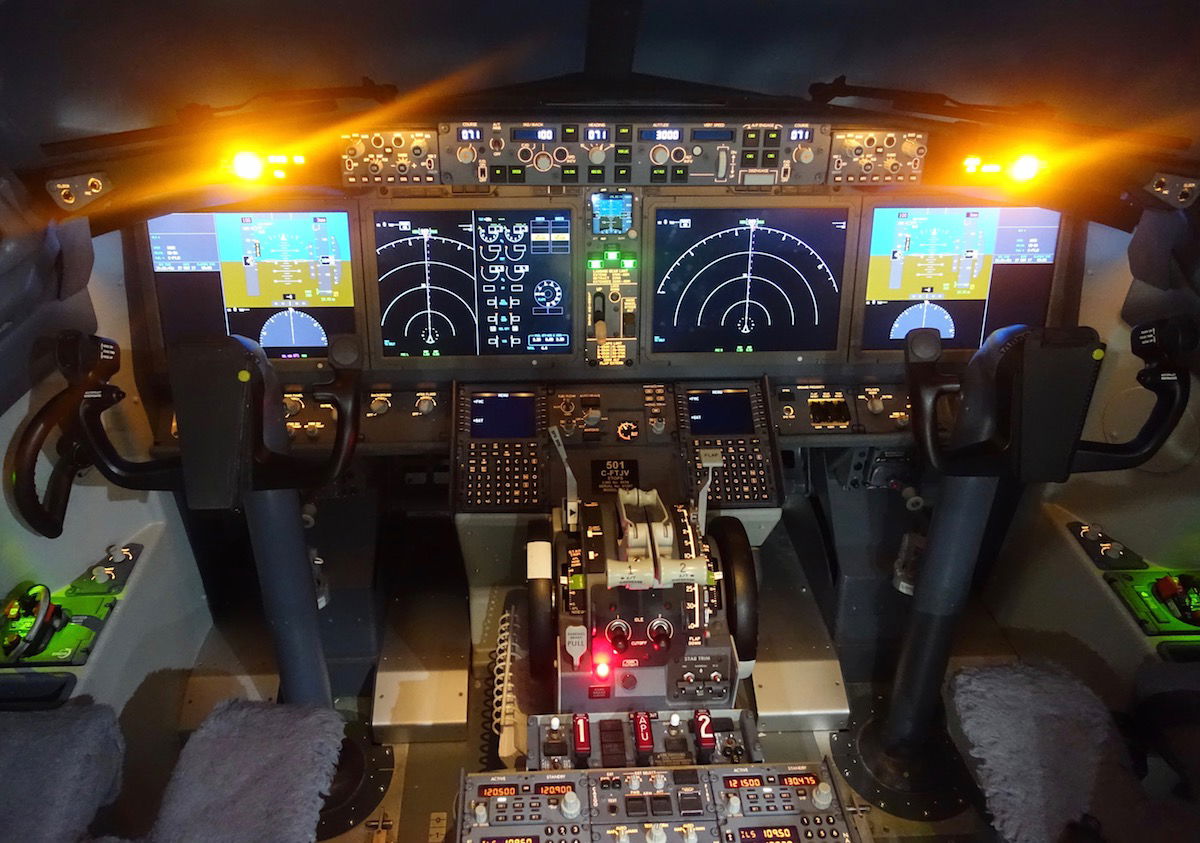
Anyway, I suppose this is “nice to have,” but I’m not sure this will meaningfully contribute to safety in any way.
Bottom line
As of today, American Airlines is starting to use the new secondary barriers when pilots need to leave the cockpit to go to to the bathroom. Up until now, they’ve typically used galley carts to block the aisle, while they’ll start using the specially barriers that have been installed on newly delivered planes since August 2025.
There’s no plan to retrofit existing planes with this, so only a small percentage of planes will have this for the time being. American is the second major airline to start actually using these barriers, after Southwest, though other airlines should soon follow as well.
What do you make of these secondary cockpit barriers?
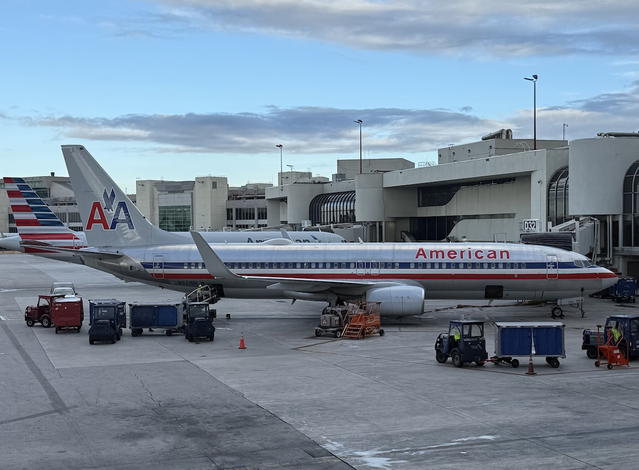




Crew recieved training how to open and close binfolding door... yeah it does look very challenging. If they required special training for this, I am really curious how are they competent to do anything in the plane...
The ones on Southwest (and United) look like a jail cell!
Ben is right that the benefit/cost for this is very low and this rule was undoubtedly pushed forward to keep safety always improving.
There are 20 year old widebodies that already have this feature so it was relatively easy to implement since most cockpits are "recessed" from the cabin, allowing a vestibule to exist around the forward lav.
And I believe most if not all US airlines require a FA or another pilot...
Ben is right that the benefit/cost for this is very low and this rule was undoubtedly pushed forward to keep safety always improving.
There are 20 year old widebodies that already have this feature so it was relatively easy to implement since most cockpits are "recessed" from the cabin, allowing a vestibule to exist around the forward lav.
And I believe most if not all US airlines require a FA or another pilot on augmented crew flights to be on the flight deck if a working pilot steps out of the cockpit.
bottom line is that the chances of a cockpit attack or suicide mission in the US just went down even more from an already very low level
There are undoubtedly other things that have been done to improve safety but this was fairly inexpensive and easy to implement.
Other than that, it happens to be law (FAA mandate)that they are installed on all new airplanes delivered to US airlines. Something Lucky seems to be ignoring.
The cost is low , but the benefit is high . Increase the benefit to very high , with a low rope to trip , while keeping costs very low .
My point is if the benefit is high, the cost is comparatively low- the “benefit/ cost” ratio is high.
The original poster said had it reversed and said “low”, which would mean low benefit/ high cost.
Frank, it matters not what you infer from the ramblings posted by Walter Mitty Dunn, he will argue against what you post regardless.
But is there any benefit? As noted by Ben there has been virtually zero flight deck intrusions/hijackings by unauthorized individuals with just the reinforced doors. OTOH lone pilots crashing the plane on purpose absolutely has happened.
This additional intervention sounds like a problem looking for a solution.
I believe you mean to say that the benefit/cost is high, not low.
United also have them on newer deliveries, someone posted a photo on Reddit of them using it on a MAX 9
Yes , it is necessary to have a Third Barrier of shoe-high ropes to trip anyone charging forward .
LOL
Will they install the same device at the back to allow their FAs to use their phones unmolested by pesky passengers?
FAs do not misuse their phones , only for important conversations .
And playing Candy Crush for hours.
Being very serious now folks, a question ….
Is the person in the video of typical proportions to those of the majority of female FA’s on U.S. airlines?
Yes. Yes. Yes. The average weight of female food server is 198 lbs, or 90 kilos, or for those of you in South Wales 256 stone. Average weight of American female airline passenger is 256lbs.
ClownDancer, thank you very for confirming that which others have mentioned. One was unsure of the validity of their claims due to inter airline loyalties.
Walter Mitty Dunn, has much to learn about how to answer questions from other contributors.
What you missed are all the drunk, crazy and idiot losers that have tried to get to the cockpit (or open an emergency exit) in flight. Since said losers are never really given an appropriate punishment rinse and repeat.
And the rest of the world looks at this with a sense of condensing amusement. Talk about regulatory enforcement of a solution to a problem that don't exist.
It is literally only on US carriers that the carts come out when a pilot have to visit the loo. And it has never been a problem for the rest of the world of aviation. ¯\_ツ_/¯
I’m glad the rest of the world is amused. Except when a suicidal pilot locks the other pilot out of the cockpit and then crashes the airplane, which has happened at least twice only outside the US.
As the name suggests, this is a secondary barrier, designed to protect when the primary flight deck door barrier, however reinforced it might be, is essentially non functional for a split second because the door is open.
Discounting its necessity because no successful attempt has been made in the last 20 years is a bit short sighted; the situation is rare but certainly not impossible.
Cost to implement is not as expensive compared...
As the name suggests, this is a secondary barrier, designed to protect when the primary flight deck door barrier, however reinforced it might be, is essentially non functional for a split second because the door is open.
Discounting its necessity because no successful attempt has been made in the last 20 years is a bit short sighted; the situation is rare but certainly not impossible.
Cost to implement is not as expensive compared to a lot of other commodities on the airplane, and certainly cheaper than having to say "well we wish we would have..." if something does happen.
Just a small FYI, You may want to update your story, as I've now been on a few United flights in which the door has been in use, all on MAX 9s, making them the second carrier to use them.
Yes, United has been using them for many, many months. I've been seeing it on my flights since at least January of this year.
Yes I have seen them on new United planes for a while!
American and lead don’t go in the same sentence!!
If they were really worried about security instead of security theater and cost, they should build lavatories inside the cockpits, especially on widebodies. That secondary barrier looks flimsy.
I’m sure some American and United flight attendants will see it as a new place to disappear, but the upside is that first class passengers might finally get some peace and quiet from the nonstop chatting.
What are you babbling about?
United had these on the 747 over 10 years ago. They were able to delay the rest of the fleet.
More security theatre we will only see from US carriers.
'American is only the second major US airline to actually start using these, after Southwest, which started deploying them almost immediately after they were installed.' - Just saw this for the first time last week flying UA
United has these barriers 3-4 months ago on newer aircraft. Get your facts right before publishing inaccurate information.
Why is this news? Other Airlines in the US have already been using these
Everything old is new again. UA 747-400s had a secondary barrier and they've been retired how many years now? ISTR that (some of?) the UA 757s also had that barrier.
I was just going to note this. On the upper deck before the cockpit, looked like a series of horizontal clothes lines connecting two vertical bars. Quite more effective than just a food cart over which a trained person can jump easily.