
In December 2023, plans were announced for Alaska Airlines to acquire Hawaiian Airlines, in a $1.9 billion deal. Over the past several weeks, the merger has cleared several regulatory hurdles, including with the Department of Justice (DOJ) and Department of Transportation (DOT).
There’s now an update, as Alaska’s acquisition of Hawaiian has officially been completed as of today (September 18, 2024). The company has provided a roadmap of what we can expect, so let’s cover all the details.
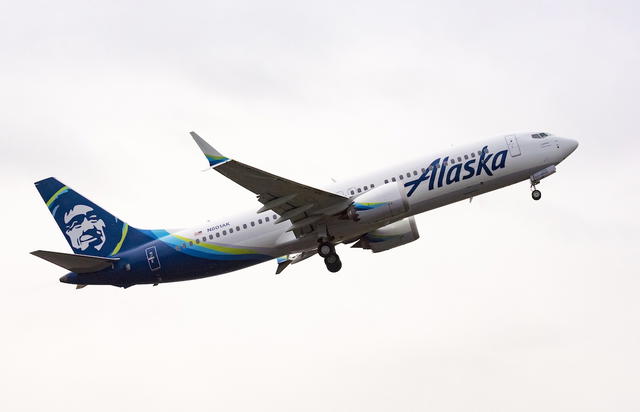
Alaska completes acquisition of Hawaiian
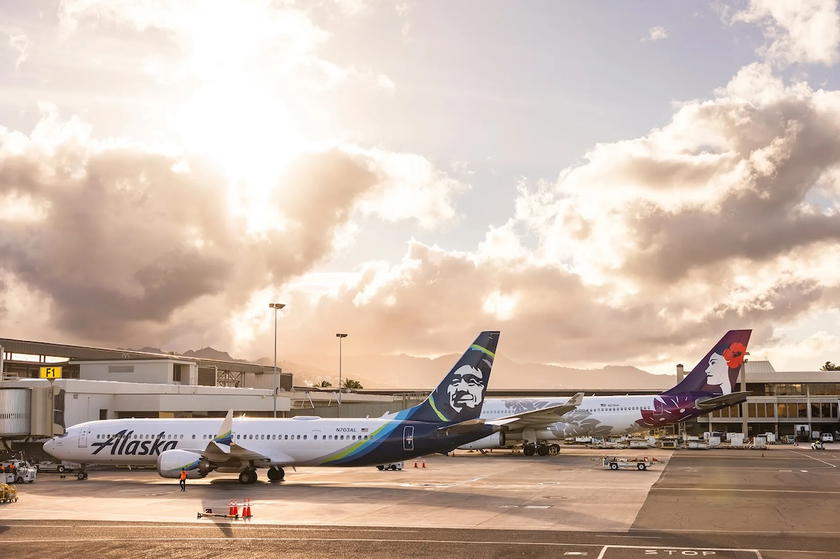
Hawaiian is now officially part of Alaska Air Group. However, as you’d expect, not a whole lot is changing for passengers overnight. The regulatory and financial aspect of the merger is complete, and now the attention turns to integrating the operations of the two airlines.
The next step is for the airlines to secure a single operating certificate with the Federal Aviation Administration (FAA), which will allow the airlines to operate as a single carrier with an integrated passenger service system. In the interim, the airlines will continue to operate separately.
Here’s how Alaska CEO Ben Minicucci describes this development:
“This is a historic day for Alaska Airlines as we officially join with Hawaiian Airlines. Alaska and Hawaiian share tremendous pride in connecting communities with award-winning service, and we look forward to inviting more guests on board to experience what makes both brands unique. Among Alaska, Hawaiian and Horizon Air, we have more than 230 years of history flying guests and serving communities. I know we will build on that legacy and become stronger together – providing the excellent operation guests have come to expect, expanding options to seamlessly travel nearly anywhere in the world, and securing the financial stability and value that inspires investment.”
Here are some interesting statistics about the size of the new combined company:
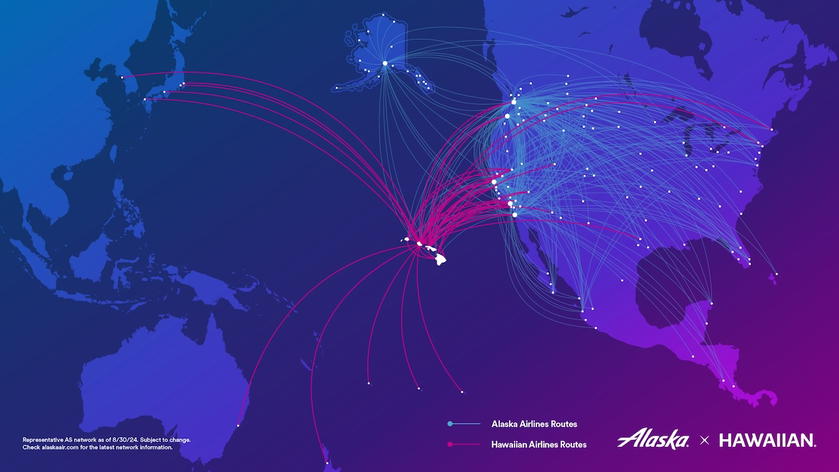
- The company flies nearly 1,500 daily flights to 141 destinations, including 29 international markets in the Americas, Asia, Australia, and the South Pacific
- The company maintains hubs in Seattle, Honolulu, Los Angeles, San Francisco, Portland, San Diego, and Anchorage, with Honolulu becoming the second largest behind Seattle
- The company operates a fleet of 350 aircraft, which includes two Boeing 787s, 24 Airbus A330s, 18 Airbus A321neos, 235 Boeing 737s, 19 Boeing 717s, 44 Embraer E175s, and eight dedicated freighters (three Boeing 737-700s, two Boeing 737-800s, and three Airbus A330s)
- The company employs more than 33,000 people across North America, Asia, and the Pacific
What Alaska & Hawaiian passengers can expect
How quickly should Alaska and Hawaiian passengers expect to see changes? While exact details are limited, here’s what we know….
In the coming weeks:
- It’ll be possible to transfer miles between Alaska and Hawaiian at a 1:1 ratio at no cost
- It’ll be possible to buy flights on both airlines on both websites
- The company will introduce a new travel program just for those who live in Hawaii, called Huaka‘i by Hawaiian, which will offer extra benefits
In the coming months:
- It’ll be possible to earn miles for travel on both airlines on a reciprocal basis
- In early 2025, it’ll be possible to redeem Mileage Plan miles directly on all Hawaiian flights
- It’ll be possible to match status across programs, so that you can link your accounts to automatically enjoy equivalent status with the other airline, and to even combine elite qualifying miles
Then in the long run:
- There will be elite reciprocity between the two airlines, where Mileage Plan elite members will enjoy elite perks on Hawaiian, and vice versa
- There will be a single loyalty program across two brands, with details expected to be shared in mid-2025
- Hawaiian should join the oneworld alliance in 2026
DOT concessions that Alaska & Hawaiian made
While the DOJ didn’t challenge Alaska’s takeover of Hawaiian, the DOT did request certain commitments from the combined airline. Interestingly, many of these involve the frequent flyer program.
The DOT suddenly has a big focus on protecting consumers when it comes to airline loyalty programs, so most of the conditions that have been agreed to involve the future of the loyalty programs of the two airlines. Alaska and Hawaiian have agreed to the first-ever rewards protections against devaluation, which include the following:
- No expiration of miles earned under the current programs — all HawaiianMiles and Alaska Mileage Plan miles earned prior to conversion into the new combined loyalty program must not expire
- Transfer miles at a 1:1 ratio — the programs must allow 1:1 transfers between programs, prior to creating a new combined loyalty program
- Maintaining the value of miles — the combined airlines must not take any actions that would devalue HawaiianMiles miles, must maintain the value of each unredeemed HawaiianMiles mile earned prior to the merger closing, must honor all active HawaiianMiles promotions from prior to the merger closing, must continue to award HawaiianMiles miles at the same or greater value, and the combined airline must maintain a minimum dollar value for all miles in the new program, measured by the guest-facing value of miles redeemed for carrier-operated flights
- Match, maintain, or increase status — the combined loyalty program must match and maintain the equivalent status levels and conferred benefits that are equivalent to Alaska’s Mileage Plan program
- No new junk fees — the combined airline must not impose change or cancelation fees on award redemption tickets for travel on carrier-operated flights
Beyond the loyalty program, Alaska and Hawaiian had to make some other guarantees:
- Maintaining critical inter-island and continental routes — the combined airline must maintain robust levels of service for critical Hawaiian inter-island passenger and cargo service, and for the key routes between Hawaii and the continental United States that are at risk of loss of competition
- Preserving support for essential air service in Alaska and Hawaii — the combined airline must preserve its support for Essential Air Service in the small rural communities of Alaska and Hawaii
- Ensuring competitive access to Honolulu hub airport — the combined airline is barred from directly or indirectly taking actions that would discriminate against new entrants or smaller competitors’ access to airport infrastructure as part of a new or existing investment in Honolulu
- Guaranteeing fee-free family seating — Hawaiian must join Alaska in guaranteeing adjacent seats for children 13 or under and an accompanying adult at no extra cost for all fare types
- Providing alternative compensation for delays and cancellations caused by the airline — Hawaiian must join Alaska in providing a travel credit or frequent flyer miles when, due to circumstances within the control of either airline, a flight is cancelled and they wait three hours or more for a new flight, or a flight is delayed by three hours or more from the scheduled departure time
- Lowering costs for service members and their families — the two airlines must lower costs for the nation’s military and their families, a significant population in both Alaska and Hawaii, by waiving certain fees
While I don’t think any of these concessions are earth shattering, I’m impressed by how thoughtful and reasonable these requirements are from the DOT. Now, I do wonder how exactly some of these conditions will be measured and enforced, but regardless, I love the idea behind this.
This is really pro-consumer, and if it’s a sign of the ways in which the DOT is looking to investigate loyalty programs, then I’m a fan.

Bottom line
Alaska and Hawaiian have just finalized their merger, so the two airlines are now part of the same company. With this, the work of integrating the two airlines begins, including getting on a single operating certificate. Alaska has provided a roadmap for what customers can expect. Not much is changing immediately, but there will start to be benefits from this in the coming weeks and months.
I’m also pleased to see the conditions that the DOT put on this merger, as I think the concept of protecting members of a loyalty program in a merger is positive.
With the merger now having closed, the big question is how Alaska actually plans to make its acquisition of Hawaiian profitable, given the extent to which the airline has been struggling.
What do you make of the Alaska and Hawaiian merger closing, and the commitments requested by the DOT?


Membership is free and takes no more information than commenting as a guest. Earn status points for good contributions, and see fewer ads as your status grows.