
Germany is a country that’s very much dominated by Lufthansa Group, with the only real national competitor being Condor, which doesn’t belong to one of the major airline groups.
Condor and Lufthansa have had a complicated relationship for a long time, and for the past couple of years, they’ve been engaged in a legal battle. This has now been settled, and it’s bad news for Condor and competition. Or I suppose to look at this more optimistically, maybe this is what it takes to push Condor to become a better competitor?
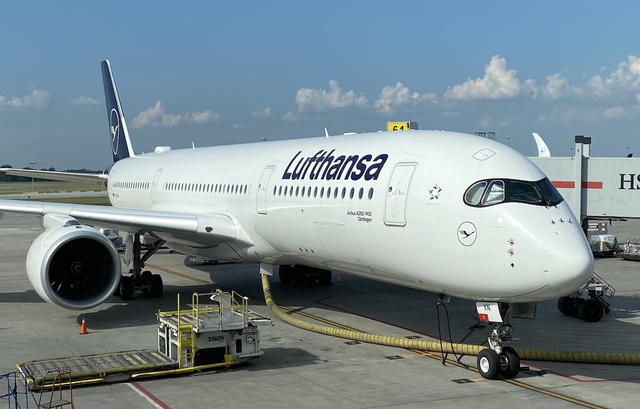
The complicated Condor & Lufthansa relationship
There’s a lot of history between Germany’s two largest airlines, Lufthansa and Condor. When Condor was founded back in 1955, Lufthansa was actually a shareholder in the company, and the airlines cooperated closely. Lufthansa basically viewed Condor as its leisure partner.
Over time that changed, and in the early 2000s, Lufthansa sold its Condor shares to Thomas Cook. When Thomas Cook went out of business, Condor ultimately became independent.
It has been a really exciting several years for Condor, as the airline has evolved in an incredible way. For example, Condor has replaced its outdated Boeing 767-300ERs with Airbus A330-900neos, offering an impressive passenger experience. Furthermore, the airline has increasingly started competing more directly with Lufthansa in long haul markets, flying between Frankfurt (FRA) and major cities in North America, ranging from Los Angeles (LAX), to Miami (MIA), to New York (JFK).
Here’s the thing, though — Condor has been reliant on Lufthansa. Frankfurt isn’t actually a huge market independently (especially for a leisure airline!), but rather the reason it’s such a big aviation hub is because of the size of Lufthansa’s presence there.
Historically, Lufthansa has provided feeder traffic for Condor, at specially negotiated prices, allowing Condor to fill its planes with passengers connecting to and from Lufthansa flights. In other words, if you’re flying from Rome to Seattle, Condor will sell you a ticket with the Rome to Frankfurt segment on Lufthansa, and the Frankfurt to Seattle segment on Condor.
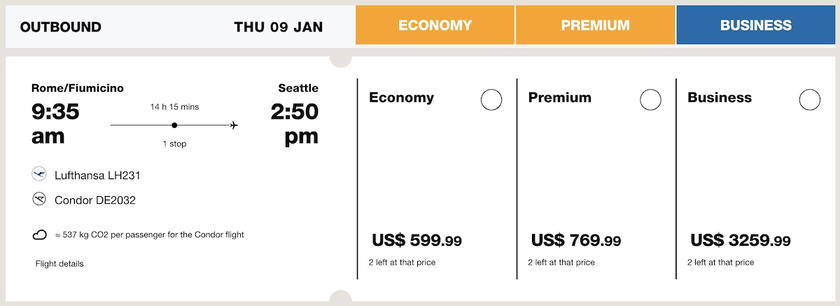
So, why would Lufthansa agree to provide feeder traffic for Condor, its biggest competitor in the country? Well, because it has legally been required to do so. The government has required Lufthansa to provide this reasonably priced connectivity to Condor in order to ensure competition in Germany. For years, Lufthansa has been trying to get out of this arrangement, as you might expect, and in the past couple of years, this has been challenged in the courts. There’s now a major update…
Regulators allow Lufthansa cut ties with Condor
For years, Lufthansa has been in court trying to get the right to discontinue its feeder relationship with Condor. In late December 2024, the airline succeeded, as Germany’s Federal Court of Justice (BGH) ruled in favor of Lufthansa, and against Condor and anti-trust authorities.
On the surface, this meant that Condor was no longer entitled to preferential pricing on Lufthansa feeder flights. However, Lufthansa’s victory didn’t last for long, at least initially.
In January 2025, the European Commission informed Lufthansa that it needed to reinstate its feeder agreement with Condor, at least as an interim measure. Why? Well, the European Commission alleged that Lufthansa’s transatlantic joint venture (which also includes Air Canada, United, etc.) unfairly restricted competition, particularly in the Frankfurt to New York market.
However, that relief didn’t last for long, as there’s now an update. The European Commission has ultimately decided not to move forward with acting on this investigation, and that means that Lufthansa can proceed in terminating its agreement with Condor. Most legal avenues that Condor could pursue have been exhausted at this point.
How will Condor move forward without Lufthansa?
A large percentage of Condor’s long haul passengers connect to or from Lufthansa flights. If Lufthansa now cuts ties with Condor, it seems like it would be devastating for the airline. Yes, Condor is actually starting to operate more feeder flights, presumably in the highest demand markets.
For example, the airline flies from Frankfurt to places like Berlin (BER), Milan (MXP), Prague (PRG), Rome (FCO), and Zurich (ZRH). But even that comes nowhere close to fully making up for the amount of connectivity that has been lost.
Condor is a well run airline nowadays, and ultimately I trust the current management team will find a way to evolve. Obviously transatlantic leisure demand is huge, but Americans usually want to visit Greece, Italy, and Spain, and not Germany. 😉 And interestingly for long haul flights, Condor seems to be much more popular with a US point of sale than a European point of sale.
Furthermore, as much as Condor is a well run carrier, ultimately German aviation just doesn’t have as low of a cost structure as some other European carriers, like Air Serbia, LOT Polish Airlines, and others, when it comes to serving connecting traffic. This is true in terms of airport fees, salaries, etc.
For Lufthansa, this still seems like it might be a case of “careful what you wish for,” and of winning the battle but losing the war. If Lufthansa chooses to terminate its feeder flight agreement with Condor, one certainly assumes that Condor might get more creative, and might align more closely with another major airline group, potentially greatly increasing competition in Germany.
We’ve seen a lot of consolidation in recent times involving the “big three” European airline groups. The leading theory is that perhaps IAG (the parent company of British Airways, Iberia, Aer Lingus, Vueling, etc.) might be interested in investing in Condor. In addition to that, could we maybe seen Condor join the oneworld alliance, and possibly even the oneworld transatlantic joint venture?
Or could Air France-KLM be interested in Condor? Admittedly it wouldn’t necessarily be an easy investment to make work, but competitively, I could see merit to it.
The challenge is that even with an airline investment or an alliance, it doesn’t really address Condor’s underlying challenge — the airline is based at an airport with limited regional connectivity on its own metal, and without a huge amount of origin & destination traffic.
Bottom line
Condor and Lufthansa have been in a heated dispute over the special relationship that the two airlines have. Condor has been reliant on Lufthansa for feeder traffic within Europe. Lufthansa hasn’t been happy with this arrangement for years, but it was required to ensure competition in the country.
Lufthansa has for years been trying to end this agreement, and it seems the airline has now been successful. So Lufthansa has the right to terminate its agreement with Condor, which is going to put Condor in a bind, given its route network.
It’s anyone’s guess how this plays out, but it sure seems like something major is going to have to change at the airline. Whether that involves Condor growing its own regional network, joining a major airline group, or whatever, remains to be seen.
What do you make of this major battle in German aviation?


Membership is free and takes no more information than commenting as a guest. Earn status points for good contributions, and see fewer ads as your status grows.