

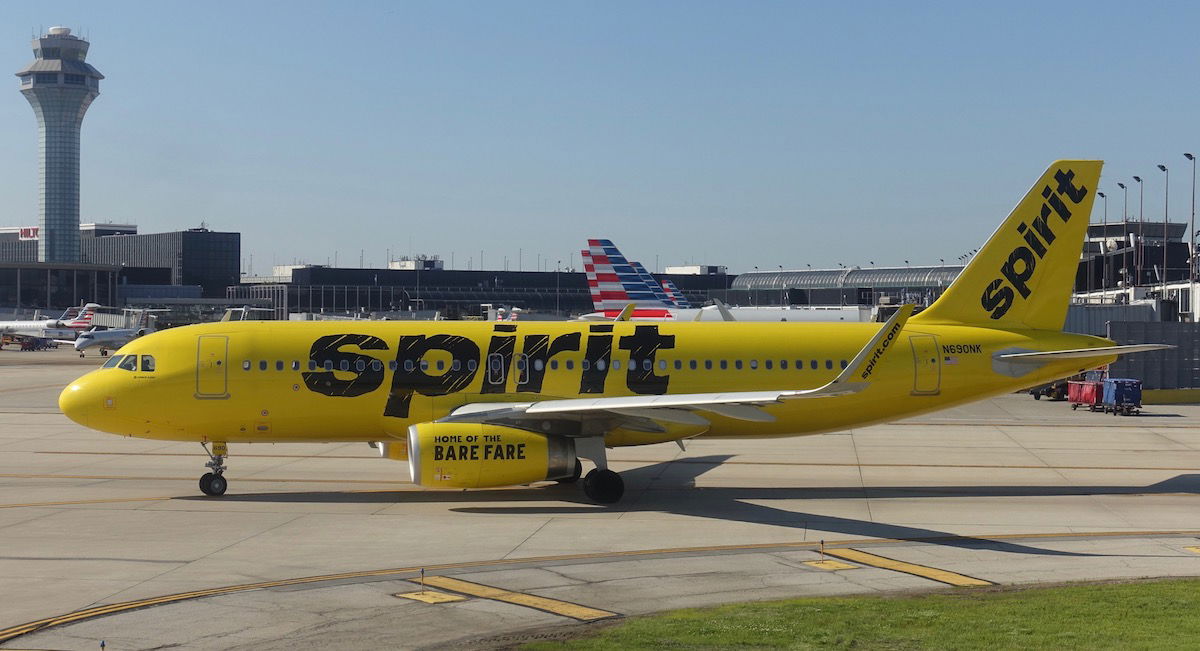
We’ve just learned that Spirit Airlines has ceased operations effective immediately. The airline had been in Chapter 11 bankruptcy twice in the past two years, it hadn’t turned a profit in seven years, and it had the worst margins in the US airline industry.
As you’d expect with something like this, there’s a lot of finger pointing going in, and people are trying to use this situation to score political points. You have some people blaming Trump for Spirit’s shutdown, and you have other people blaming Biden. Who is actually right here? Well, both and neither, so let me explain…
“Trump’s Iran war & high jet fuel prices killed Spirit”
Many Democrats argue that Trump starting a war with Iran, and the resulting massive increase in jet fuel prices, is to blame for Spirit shutting down. Technically that’s true, in terms of the increase in jet fuel prices causing Spirit to burn through its little remaining cash faster than planned.
However, that doesn’t tell the full story. As mentioned above, Spirit has been losing money for seven years, and has the industry’s worst margins. The airline didn’t have any sort of a viable path to profitability. So while an increase in jet fuel prices might’ve moved forward the timeline of Spirit liquidating, it’s by no means the reason for the carrier’s troubles.
It’s not like Spirit was doing well, then suddenly jet fuel prices increased, and that was the start of the carrier’s problems. Spirit’s management so badly botched so many things, ranging from a first Chapter 11 bankruptcy filing that failed to set the airline up for success, to seemingly not actually having a turnaround plan.
“Biden’s blocking of the JetBlue merger killed Spirit”
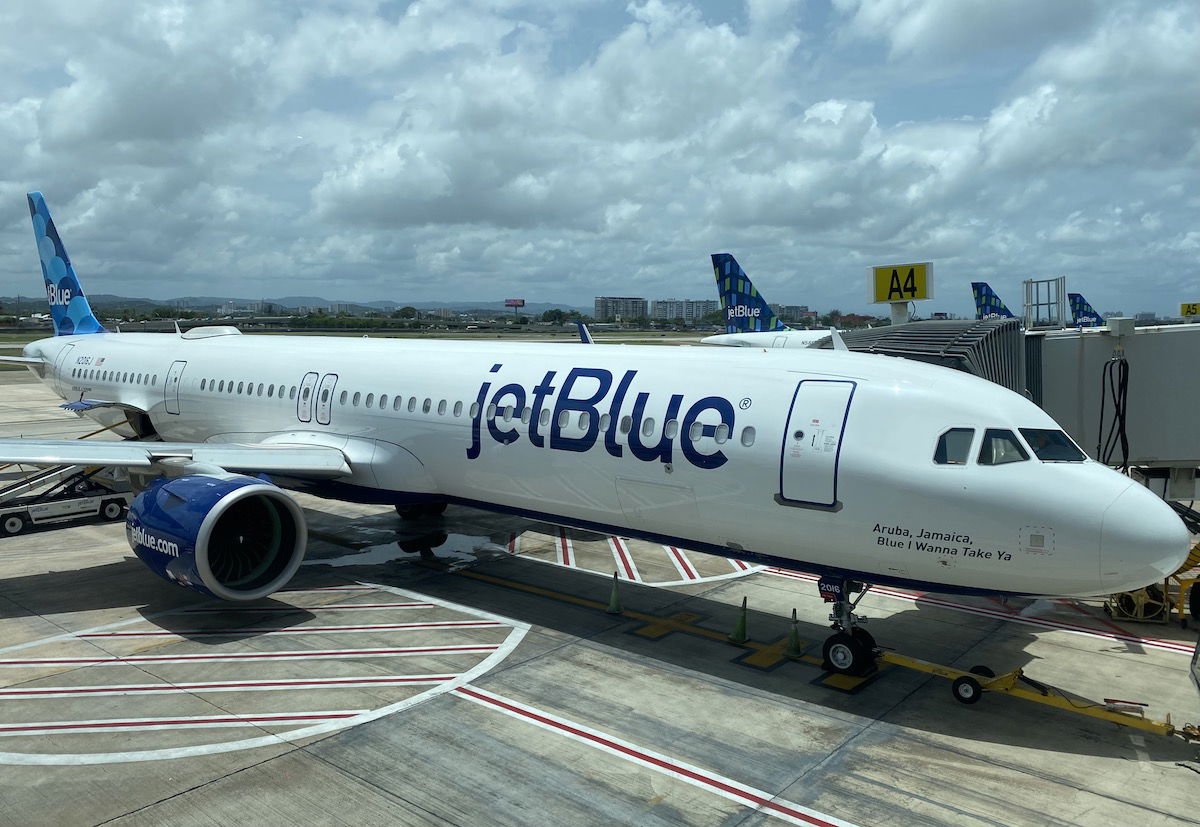
Many Republicans argue that the Department of Justice (DOJ) under Biden blocking JetBlue’s takeover of Spirit is to blame for Spirit shutting down. As many will remember, JetBlue was going to buy Spirit, Biden’s DOJ blocked that, and a (Reagan appointed) judge sided with the DOJ over the airlines, causing the merger to be called off. As the judge explained in his decision at the time:
Spirit is a small airline. But there are those who love it. To those dedicated customers of Spirit, this one’s for you. Why? Because the Clayton Act, a 109-year-old statute requires this result –- a statute that continues to deliver for the American people.
Yeah, that aged like mold. As I said at the time, and as I’ve been saying ever since, I strongly disagreed with the Biden administration’s decision to block this takeover:
- Spirit no longer had a viable business model, and the lawyers for Spirit did a really poor job making that point clear
- Spirit was trying to move upmarket anyway, and what the US airline industry needs is more large competitors, who can leverage loyalty programs for profitability (given the extent to which US airline profits come from loyalty programs)
But we also have to be honest with ourselves — this was a blessing in disguise for JetBlue, and if JetBlue and Spirit had actually merged, both airlines might’ve liquidated at this point. This merger came at a confusing time for the industry, where post-coronavirus demand shifts were viewed more as fads than as structural industry changes.
Keep in mind that JetBlue also hasn’t turned a profit in seven years, and it has around $8 billion in debt. It’s not that far off from a Chapter 11 bankruptcy filing itself. When JetBlue wanted to acquire Spirit, it argued that this is what would allow it to grow the fastest.
Well, in the couple of years since the merger was blocked, JetBlue has voluntarily deferred new aircraft deliveries, has paid pilots to accept early retirement packages, etc. If JetBlue had actually taken over Spirit, it would’ve been catastrophic. Spirit didn’t actually have a lot to offer JetBlue, other than planes and employees, which wouldn’t have actually helped JetBlue. Simply combining two unprofitable airlines isn’t a solution to anything.
So the Biden administration did JetBlue a favor, even if the logic was completely off.
Nothing and no one could’ve saved most Spirit jobs
Regardless of anyone’s preferred finger pointing, I think we can all agree that it’s really sad that 15,000+ Spirit employees are losing their jobs. When Trump was trying to come up with a bailout to save the airline, he claimed it was all about saving jobs.
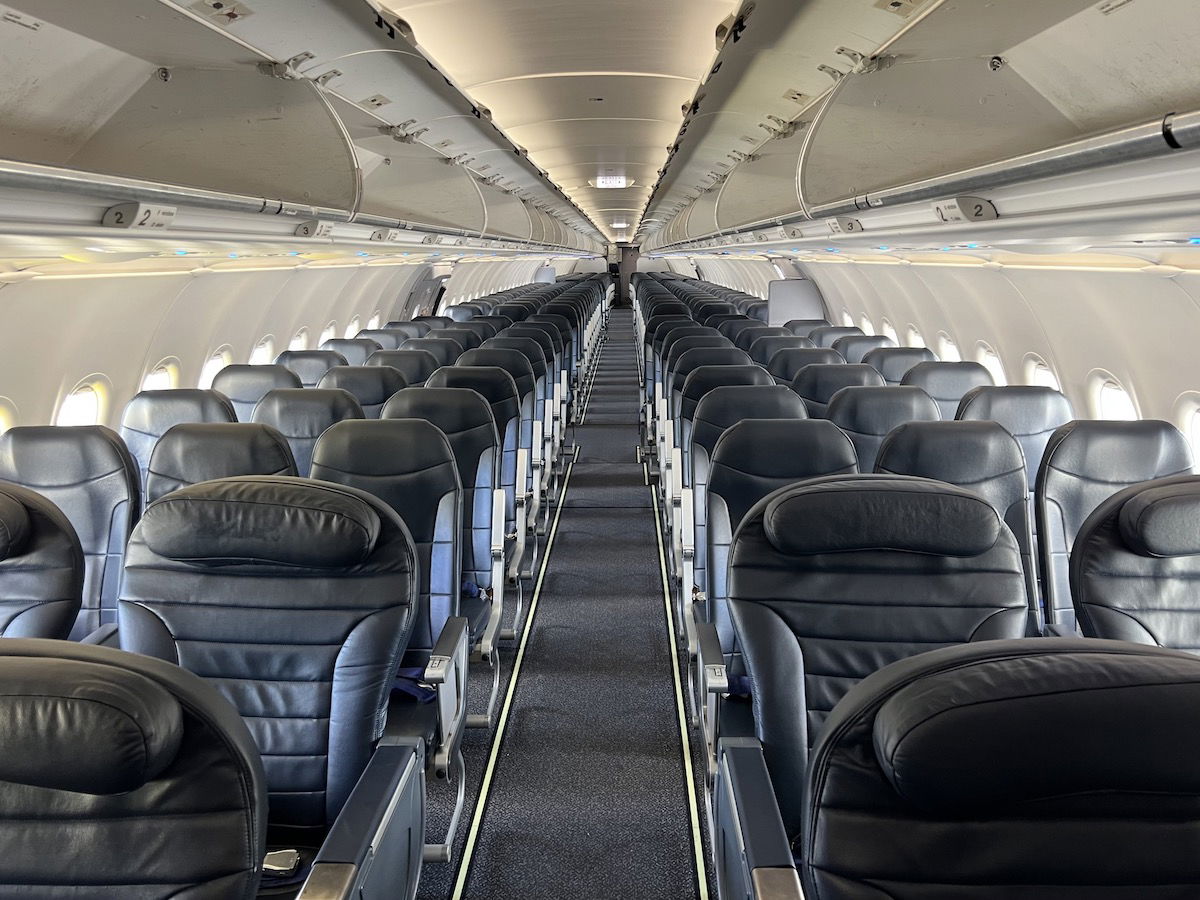
I think the important thing to remember is that Spirit’s jobs would’ve never been fully preserved, even if the airline had been “saved,” and stayed in business. Before the latest Iran war situation, Spirit’s plan was to massively downsize its fleet, to 76-80 planes. Last year, at its peak, the airline had around 215 planes. So even best case scenario, the airline would’ve decreased in size by around two-thirds.
So even if Spirit had been artificially kept alive, a majority of staff would’ve likely lost their jobs anyway, in order to keep the airline in business.
Bottom line
With Spirit Airlines having shut down, a lot of people are trying to place blame on politicians in a way that suits their narrative. Some people blame Trump for high jet fuel prices, and how that sped up the demise of Spirit. Others blame Biden, for blocking JetBlue’s takeover of Spirit.
As I see it, both of those perspectives miss the big picture. Spirit was a very unhealthy and very unprofitable company, and it no longer had a viable business model.
Yes, higher jet fuel prices might’ve expedited Spirit’s demise, but it was inevitable. Yes, Biden blocking JetBlue’s takeover of Spirit technically contributed to Spirit liquidating, but the combined airline would’ve been really, really unhealthy.
So yeah, I blame neither and both of them at the same time (with a lot more “neither” than “both”). Ultimately I think the failure comes down to Spirit’s lack of evolving its business model, and basically sitting idle for years, without making major changes.
Where do you place blame for Spirit’s failure?




I think the failure of the merger is going to be responsible for saving JetBlue. No one wanted Spirit. UAL and AA say they have no interest in acquiring JetBlue either. But if JetBlue were to to declare bankruptcy and shed the debt they have, they become much more attractive to be taken over. I think the current administration would O.K. the merger this time round and that would be the end of JetBlue. If...
I think the failure of the merger is going to be responsible for saving JetBlue. No one wanted Spirit. UAL and AA say they have no interest in acquiring JetBlue either. But if JetBlue were to to declare bankruptcy and shed the debt they have, they become much more attractive to be taken over. I think the current administration would O.K. the merger this time round and that would be the end of JetBlue. If this were to happen, UAL holds the upper hand over anyone else.
A government bailout or government assuming a part ownership of Spirit airline was not a satisfactory to save Spirit and 17,00 employee jobs. However the denial of possible merger with Frontier or Jet Blue would have allowed market values to determine Spirits survival or failure. The government intrusion into merger request expressed concern on future rising airfares; but closure of Spirit guaranteed the same rising prices for travel- Larry T
Now Jet Blue can buy Spirit with no resistance. Trump just added the nails in the coffin. Expect more business failure ahead with the Trump administration chaos.
It was known by airline analysts that when the Biden DOJ blocked the Spirit.. Jet Blue Merger in 2024 that Spirit was doomed. When the Biden administration said they were looking out for customers because once there was a merger, the low cost airline Spirit wouldn't be around to help keep competition alive and the prices low. Meanwhile, all they did was devalue Spirit to such a point that it was unable to Pay it's...
It was known by airline analysts that when the Biden DOJ blocked the Spirit.. Jet Blue Merger in 2024 that Spirit was doomed. When the Biden administration said they were looking out for customers because once there was a merger, the low cost airline Spirit wouldn't be around to help keep competition alive and the prices low. Meanwhile, all they did was devalue Spirit to such a point that it was unable to Pay it's debts. And now it has totally collapsed. So clearly not allowing the merger was more detrimental to the customers then allowing it. Just another example of why business and Socialist Democrat economic philosophies don't mix.
Had DOJ approved a JetBlue/Spirit merger, it would be JetBlue going out of business today. JetBlue has its own financial issues but added debt from buying Spirit would have "them" in the news today.
It's Swiss Cheese Model/Domino effect: Engine issues, bad mgmt, covid/Pax Shift to more premium, legacy airlines fight-back with their Basic Eco Fares, Biden/DOJ block merger, and the Orange Buffoon war with Iran causing Fuel and everything more expensive and more!
Democrats Track Record
ACA - “If you like your health care plan, you can keep it”
Afghanistan Withdrawal
Iran Hostage Crisis
Same Sex Marriage
NAFTA - So many jobs created! IN MEXICO!!!
Spirit Airlines Blocked merger with JetBlue.
ACA - resisted by Repubs from day one. Did everything they could to kill it
Afghanistan withdrawal - designed and set up by Trump, dumped on Biden
Iran Hostage Crisis - The Iranians did this. Not Carter.
NAFTA - a bi-Parisian effort to kill American commerce
Spirit / Jetblue merger - business as usual. Trump is doing more as we speak
One of the worst all-time decisions by DOJ. Comicly idiotic bureaucratic overreach.
"Discount air" is a failed business model. you can't deliver it profitably without making your customers hate you. this is no politician's fault. a failing company failed.
The worst absolute lousiest airline I've ever flown on... nobody but Spirit tanked that mess.
We can add the Spirit bankruptcy to the long list of democratic failures.
Affordability Care Act - “if you like your healthcare plan you can keep it”
The withdrawal from Afghanistan
Failed Border Security
Legalizing Same Sex Marriage
NAFTA - WOW! So many jobs created! Lol
The Iran Hostage Crisis
And the list goes on and on.
And this is why Repugnants should be placed in a large concentration camp formed by surrounding Nebraska and Kansas with barbed wire.
Donald Trump signed the surrender to the Taliban, pulled out most of our troops leaving the remainder helpless, and delayed the effective pullout date so mouth breathers would believe Biden did it. look it up.
Several of the "failures" you've listed were unambiguous successes.
Both administrations are to blame, but let’s not forget the two key causes. Spirit and their continual mismanagement of the airline. Also, JetBlue deserve a lot of the blame. People forget that F9 wanted to merge with NK and that was NK’s preferred merger, but then B6 came in and pushed F9 out of the way. I think the Biden administration would have been more open to that merger. The fear of B6 was they...
Both administrations are to blame, but let’s not forget the two key causes. Spirit and their continual mismanagement of the airline. Also, JetBlue deserve a lot of the blame. People forget that F9 wanted to merge with NK and that was NK’s preferred merger, but then B6 came in and pushed F9 out of the way. I think the Biden administration would have been more open to that merger. The fear of B6 was they would eliminate an ULCC, whereas F9 would have made a bigger and stronger ULCC!
My big question now is what happens with NK’s assets? Do we see most of them go to airlines in the Middle East and Asia? Or do we see some US carriers stepping in to grow service in the short term, and thus needing the planes?
It's truly sad for Spirit. The sad underlying for a lot of the ULCCs is the P&W issue that have cost airplanes flying. Spirit's model would have faced similar to what is happening at Southwest if there were no engine issues. Engines aside, as most have stated, Frontier and Spirit would have made sense merging with Frontier, better business model than merging with JetBlue. It'll be interesting to see in a year from now, what...
It's truly sad for Spirit. The sad underlying for a lot of the ULCCs is the P&W issue that have cost airplanes flying. Spirit's model would have faced similar to what is happening at Southwest if there were no engine issues. Engines aside, as most have stated, Frontier and Spirit would have made sense merging with Frontier, better business model than merging with JetBlue. It'll be interesting to see in a year from now, what happens with ticket prices and how many ULCC's are left. JetBlue, Frontier and others are going down he same path as Spirit and if the ULCC model can work or will we be stuck with the Big 5 (Adding Southwest and Alaska)?
If the death of Spirit were a murder, while not the primary ones, people like most of the Boarding Area blogs - and not really including this one but your friends out there who were probably edging all day waiting for the announcement - would definitely be on the hook for "aiding and abetting." I realize this bankruptcy is going to be tough for people like some of your Boarding Area colleagues who will lose a lot of their clickbait and thus ad revenue.
It is not the responsibility of government to keep one airline in business, just to preserve competition when there are half a dozen competitors ready to step in for any given route. Spirit's demise is not the fault of either Biden or Trump.
So it was ok when Obummer bailed out Chrysler with a 12.5 billion dollar package that has never been fully repaid?
Who?
Mel - don’t be such a lil cuck
https://www.nytimes.com/2014/12/20/business/us-signals-end-of-bailouts-of-automakers-and-wall-street.html
Spirit Airlines died tonight at the hands of the socialist crusader, Elizabeth Warren
She must be so proud to add another casket to her achievements
Everything Trump touches turns to absolute sh!t. Thanks MAGAts!
UA NYC - JetBlue offered $3.8 BILLION in cash to buy Spirit in 2022. Shareholders, flight attendants union, literally everyone voted yes.
The combined company would have held 9% of the US market against a Big 4 that already owned 80%.
For anyone who understands numbers: 9% isn’t a monopoly against 80%.
Warren said no.
Your obsession with Elizabeth Warren is Trump Derangement Syndrome focused on a different target. Why don't you become a Masshole so you can vote against her?
ORD second home - She wrote letters. She pressured Buttigieg. Biden’s DOJ sued. A federal judge killed the deal in January 2024.
Her argument: the merger would cost consumers $1 billion a year.
Now look at her collateral damage she dusts under the rug.
510 pilots gone in the months after. 1,800 flight attendants furloughed in December.
14,000 jobs in 2023. 7,500 last week. Zero tonight.
Eliminating a scumbag airline like NK gives her another positive in my book, and the books of anyone who detest the deplorables that flew that airline, like a lot of your MAGAt brethern. Go hug your Kristi Noem waifu pillow and shoot your coon hound.
Nahhh just take the L and go touch grass bro
Socialism is a system of government where the state owns the means of production.
Senator Warren is not an advocate of such a system, and has never proposed one.
It's worth noting, however, that the current administration has acquired partial ownership of a dozen companies.
The Democrats clearly failed twice. First Biden blocking the JetBlue merger.
Then when President Trump attempted to step in and fix sleepy Joes mess, which would have saved over 10,000 jobs- the liberal progressive democrats blocked him out of spite.
I thought you hypocrites wanted the market to decide. Guess what? The market decided.
Joe Biden President
Merrick Garland Attorney General
Elizabeth Warren Senator (MA)
Pete Buttigieg Transportation Secretary
William Young Federal Judge
And all of them are heroes and deserve medals. Mayor Pete deserves something more. If he runs in 2028, I'm supporting him.
Had that merger gone through both entities would not be going out of business unless there had been an acquisition. I still think one of the legacies will acquire JetBlue because that airline actually has something to offer a potential acquirer.
Spirit had nothing to really offer. It was a dog and would always be so.
@George Romey “I still think one of the legacies will acquire JetBlue”, from your mouth to God’s (Alaska’s) ears.
VirginFlyer already made the point I was going to - there is a clear entity to blame for Spirit's Shutdown - it is JetBlue, which tried to force a merger which didn't make much sense for itself, and was specifically modeled on raising prices relative to what Spirit was charging, which is why the merger was blocked. Shareholders were also to blame. I remember after the JetBlue-Spirit merger was blocked, the Spirit CEO said on...
VirginFlyer already made the point I was going to - there is a clear entity to blame for Spirit's Shutdown - it is JetBlue, which tried to force a merger which didn't make much sense for itself, and was specifically modeled on raising prices relative to what Spirit was charging, which is why the merger was blocked. Shareholders were also to blame. I remember after the JetBlue-Spirit merger was blocked, the Spirit CEO said on an earnings call that he tried to convince shareholders that the Frontier deal was more likely to be approved, but shareholders refused to listen. So the entities most to blame for this situation are JetBlue (which has bumbled from missed or bad deal to bad deal for decades) and activist shareholders.
I also have some issues with the idea that the Biden administration should have let the JetBlue-Spirit deal, and the related American-JetBlue joint venture, go through. At the end of the day, these mergers were blocked by judges that cited relevant anti-trust law. Either the mergers were illegal under the law, or they aren't. I know there is debate about this, but competent judges, appointed by presidents of both parties, viewed these deals as illegal. If the deals were illegal, it's not about what president or administration is to blame - the blame should go towards the relevant parties lawyers for telling the parties that their deals would pass antitrust muster.
Southwest was profitable for many years but had to adapt when its financial condition deteriorated. Management recognized this. Criticize SW management about its specific choices if you will but it appears SW is back on track. Spirit is no different. Other companies are no different. Other industries are no different.
Last I checked, we live in a capitalist society. The market spoke.
And this is why I am thankful we are a Capitalist nation. The market spoke, and this was the right result.
@Lucky, I think the piece missing from this analysis is that JetBlue’s merger attempt with Spirit was Spirit’s second one on the table, which spoiled the first one which may or may not have had a clearer run through the DOJ. While the JetBlue merger was clearly about getting rid of a competitor and acquiring their assets, the proposed Frontier merger was arguably more about creating a larger scale UCC drawing on the bases of...
@Lucky, I think the piece missing from this analysis is that JetBlue’s merger attempt with Spirit was Spirit’s second one on the table, which spoiled the first one which may or may not have had a clearer run through the DOJ. While the JetBlue merger was clearly about getting rid of a competitor and acquiring their assets, the proposed Frontier merger was arguably more about creating a larger scale UCC drawing on the bases of both operators to better compete with the big 4 at a national scale. JetBlue coming to the table with an over-priced offer cruelled that deal, and all for nought in the end.
Would a combined F9-NK (am I the only one who thinks Frontier Spirit would have been the perfect name for an American airline?) have weathered the current storm better? I don’t know. But when obituary on Spirit is given, the failed Frontier merger should definitely be mentioned.
V/F
100% agree. A merger with Frontier retaunung Frontier's management was likely the best option.
@ VirginFlyer -- You're completely right, I agree with you. Ultimately Spirit shareholders got greedy, and obviously JetBlue felt desperation, after losing the Virgin America bidding war to Alaska. There was just no way this was going to end well.
I buy the argument from VFTW that it was actually blocking the AA-B6 deal that was the original sin, and the B6-NK deal only made sense at the time that the AA-B6 deal was on the table. After that was blocked, the rest was formalities but the fate was sealed.
@ Simon -- For sure the JetBlue and American deal shouldn't have been blocked, and that was so dumb. That being said:
-- Based on JetBlue's own financials, the deal wasn't actually that lucrative for JetBlue, and I'm not sure a bunch of cheap international connecting traffic would've actually saved JetBlue
-- I think management needs to take accountability, because having a deal blocked doesn't justify making a stupid, unrelated business decision, which...
@ Simon -- For sure the JetBlue and American deal shouldn't have been blocked, and that was so dumb. That being said:
-- Based on JetBlue's own financials, the deal wasn't actually that lucrative for JetBlue, and I'm not sure a bunch of cheap international connecting traffic would've actually saved JetBlue
-- I think management needs to take accountability, because having a deal blocked doesn't justify making a stupid, unrelated business decision, which really had very little upside
-- JetBlue waited way too long to actually transform its own business model, with things like introducing first class, lounges, and leaning more into its loyalty program by introducing partner programs
Both Spirit and JetBlue management seemed asleep at the wheel for the years coming out of the pandemic, while carriers like United used the opportunity to positively transform themselves.
But would the Northeast Alliance have been lucrative deal if JetBlue eventually joined the OneWorld TATL JV?
Do you think JetBlue getting ATI with Lufthansa and other Star Alliance carriers for TATL could give them some extra cash to help them in the present?
Which one is next?
@ Dan -- For liquidation? I think all airlines are a little better positioned with Spirit gone. I still struggle to figure out how Frontier will achieve positive margins.
JetBlue definitely has the most to gain here, and I think between this and the upcoming introduction of first class, JetBlue could have a more sustainable business model. However, servicing billions of dollars in debt isn't cheap.
Breeze, Avelo.