
I’m faced with a shopping conundrum. We’re in the market for a new DSLR after yours truly dropped our current one off a table at a BBQ joint. It’s a Canon Rebel that’s a few years old, so it’s not the end of the world or anything. It’s throwing an error with the shutter, so presumably that needs to be replaced. Incidentally, this is the same camera that my wife dropped from the top of an elephant about a year ago — we were able to get it fixed on the streets of Siem Reap for $60, which we thought was a great deal — so it’s already on it’s second life.
The cost to fix it is getting close to what it’s worth. We might do that eventually, but for now we’ve made the decision to replace it and pretty much know what we want. And where to buy it.

The question is, how should we pay for it? And that’s a bit a complicated. Let me explain.
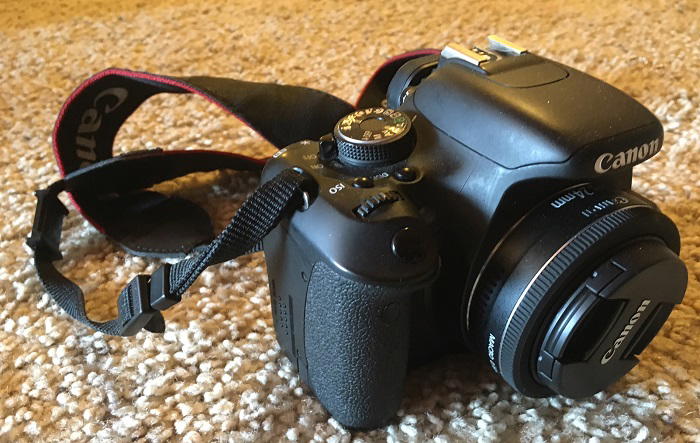
How many lives does a DSLR have?
The Camera
We’re going to get a crop sensor DSLR in the $750 range. It’s basically just a newer version of what we have now. Sure, I’d love a full-frame, but
- I’m really not that good of a photographer so it would probably be somewhat of a waste
- Getting a somewhat cheaper camera makes us feel less bad when it eventually gets dropped
And it will get dropped.
Amazon’s price is as good as anywhere, and they’ll Prime it to us in a couple of days. My conundrum is how to pay for it. Not like whether I have the money or not, but as in what form of payment to use. And that’s something that only those of us in the miles and points world can understand.
Pay With Amazon Gift Cards
My family shops at Amazon a lot.
We normally buy Amazon gift cards at an office supply store using our Ink Business Cash® Credit Card so that we can get 5x Ultimate Rewards points on all of our Amazon purchases. Now that OfficeMax and Office Depot are offering 2% back in Rewards Everything (targeted), that deal just got sweeter. I value Ultimate Rewards points at close to 2 cents each, so it’s like getting a 12% discount at Amazon. On a $750 camera, I’d get 3750 Ultimate Rewards points ($75 value) and a $15 of store credit at OfficeMax.
If I pay for it with gift cards, however, I don’t get any extended warranty protection. I’ll get the manufacturers 1-year warranty and that’s it. Let’s call paying with gift cards Option 1.
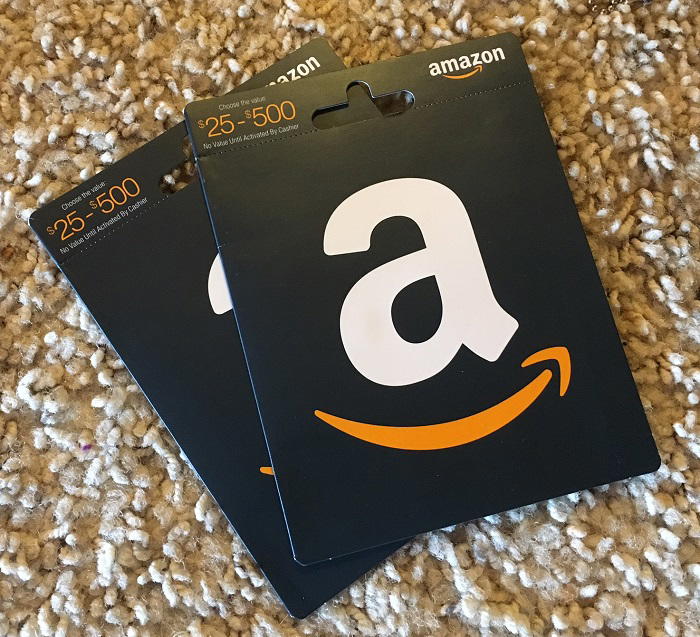
A couple of these should cover it
Pay With American Express Platinum Card
On the other hand, I could buy it with my Platinum Card® from American Express and get one extra year of warranty protection. I’ve personally only used the American Express extended warranty once, coincidentally when our previous DSLR camera died due a failed circuit board — not our fault for once — and they basically cut us a check for the repair. I was impressed. If I buy it this way, I’d also earn 750 Membership Rewards points, which I value at about 1.5 cents each. So that’s about $11 of value.
I know other cards also offer extended warranties, but I have personally had a good experience with American Express. So let’s call this Option 2.
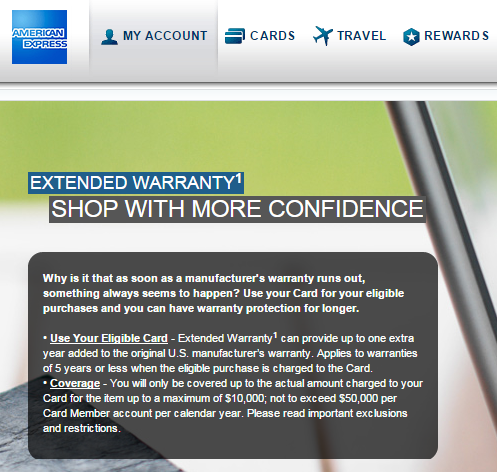
Extended warranty protection from American Express
Pay With Gift Cards And Buy Extended Warranty
It turns out that there’s actually a third option, or perhaps more accurately, an Option 1B. I could pay for the camera with Amazon gift cards, but then purchase an extended warranty from Amazon. The 3-year Camera Accident Protection Plan costs $60 for a $700-$800 camera. Or there is a 4-year version for $90. It’s listed as a SmartGuard warranty sold by Warrantech, which seems to be an insurance company in Texas.
The policy is described as:
- Includes Parts and Labor coverage plus accidental damages caused by drops and spills
- Repair or Replacement Promise on Every Product and Never a Deductible
- 5 Day Repair Guarantee on Depot Service
- Contract Delivered by E-mail, Register and File Claims Online or by Phone
- Excludes Aerial Drones and Radio Controlled Devices
Coverage for “drops and spills” seems exactly like what my family needs!
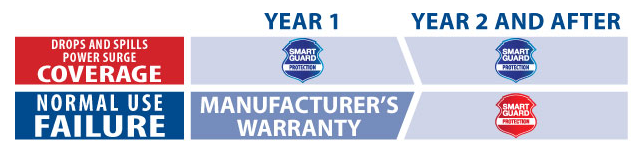
How the coverage works each year
The problem is, it’s really hard to tell how reputable the company is, and whether they stand behind their policy. A quick skim of the comments shows that they cut some folks a check after they dropped their camera. And other people say the company completely ignored them when they tried to file a claim. So it’s a mixed bag.
Overall, they have a 55% five-star rating. But 17% gave them 1-star.
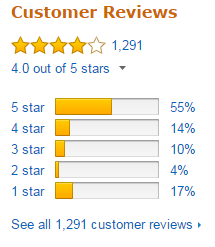
You either love ’em or hate ’em
Summarizing the Options
I usually find that it’s best to make a table quantitatively comparing the options. The “net cost” is the purchase price less my personal valuation of any miles and points that I’d earn.
| Option 1A: Pay with gift cards | Option 1B: Pay with gift cards, buy warranty | Option 2: Pay with the Platinum Card® from American Express | |
|---|---|---|---|
| Cost | $750 | $840 | $750 |
| Payment Method | Amazon gift cards purchased from office supply store | Amazon gift cards purchased from office supply store | American Express Platinum Card® |
| Points Earned | $84 of Ultimate Rewards + $15 OfficeMax credit | $84 of Ultimate Rewards + $15 OfficeMax credit | $11 of Membership Rewards |
| Warranty Protection | 1 year manufacturer | 4 year extended warranty | 1 year manufacturer + 1 year from Amex |
| Net Cost | $651 | $741 | $739 |
This shows that going from a 1-year to a 2-year warranty adds about $80 to the cost. But then going to a 4-year warranty adds only $12 more, which seems silly not to do. The problem is that it’s hard to judge the value of the Warrantech warranty — a 4-year policy isn’t worth much if you can’t actually file a claim against it! And remember, we’re comparing it to the 1-year extended warranty from American Express which I regard as just about rock solid.
Conclusion
I think I lean toward rolling the dice on the 4-year warranty. Coverage for “drops and spills” sounds really good to me. And a majority of people give it 5-stars. I’d be getting twice the warranty for only $12 more.
What would you do? Anyone have a favorable experience with Warrantech?


Membership is free and takes no more information than commenting as a guest. Earn status points for good contributions, and see fewer ads as your status grows.