
When it comes to clearing immigration at airports in the United States, a vast majority of people do so upon arrival. However, many people may not be aware that the United States has what’s known as a Preclearance program, whereby you clear immigration prior to boarding your US-bound flight when departing from select airports.
The United States is the only country in the world to have a program like this (probably largely because we also don’t have sterile international transit), so I’d like to take a closer look at the program in this post. Which airports have such a facility, and how does it even work?
What are US Preclearance facilities at airports?
US Customs and Border Protection (CBP) has what’s known as the Preclearance program, whereby passengers departing select airports clear immigration prior to boarding their flight to the United States, so they then land as a domestic passenger. That means they don’t have to clear immigration or security upon arrival, and that’s very convenient if you have a connecting flight.
To briefly go through the logistics, Preclearance facilities are available at select airports, and you’ll find US CBP officers stationed there. You’ll have to leave more time before departure when using these facilities:
- You have to go through a special security check approved by the United States, different from the standard one that a foreign airport may have
- You then have to be screened by a US CBP officer, just as you otherwise would be on arrival; there are typically still Global Entry kiosks and Mobile Passport Control lanes, should you be eligible for one of those programs
- Once you clear immigration, you’re then basically on “US soil,” for all practical purposes, even though you’re in a foreign country
- The plane then lands the same as any domestic flight would; if you have a connecting flight, you don’t have to clear security, while if you’re terminating your travels at that airport, you can collect your bag at a domestic baggage claim carousel
Below is a video outlining the Preclearance process.
Then below is an interesting video about the history of these facilities. As you can see, they date back quite a long time, and were initially used for ferries, and not airplanes.
Which airports have US Preclearance facilities?
Currently there are 16 US Preclearance facilities, spread across six countries:
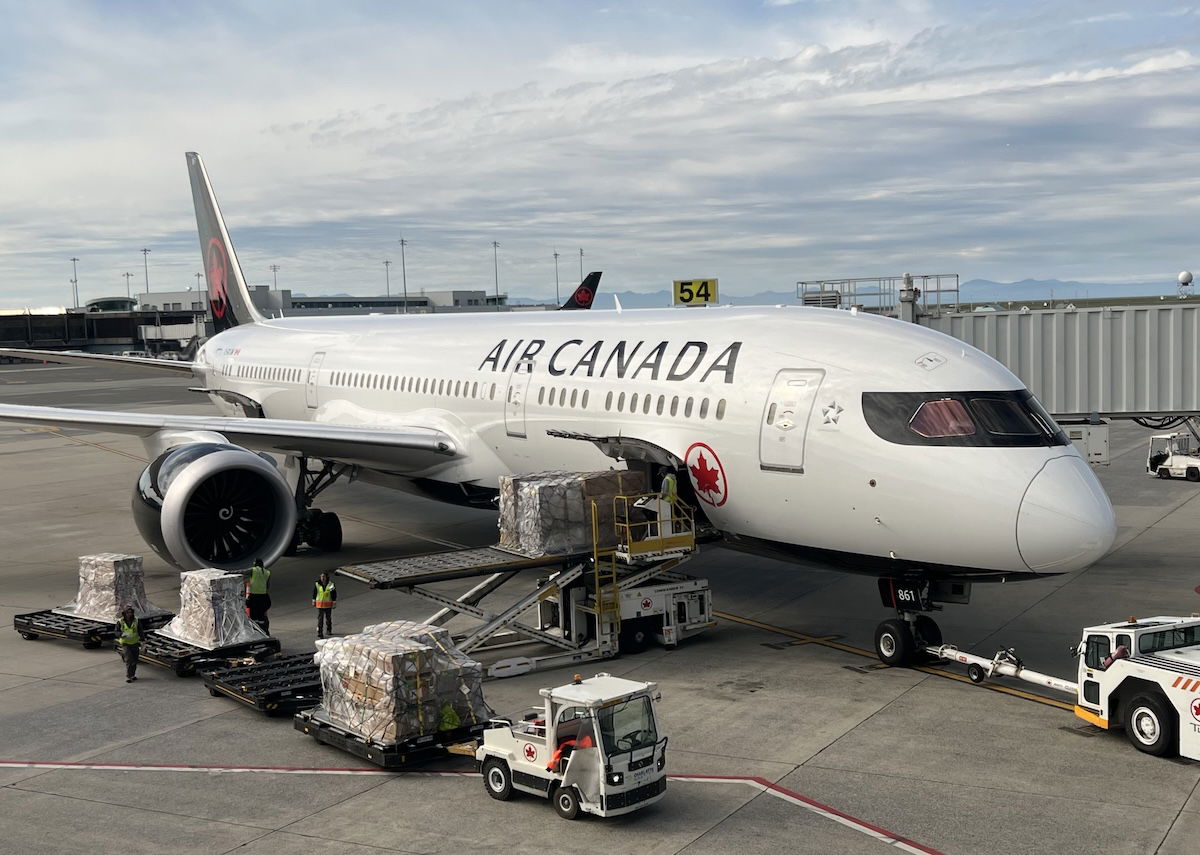
- Calgary (YYC), Edmonton (YEG), Halifax (YHZ), Montreal (YUL), Ottawa (YOW), Toronto (YYZ & YTZ), Vancouver (YVR), Victoria (YYJ), and Winnipeg (YWG), in Canada
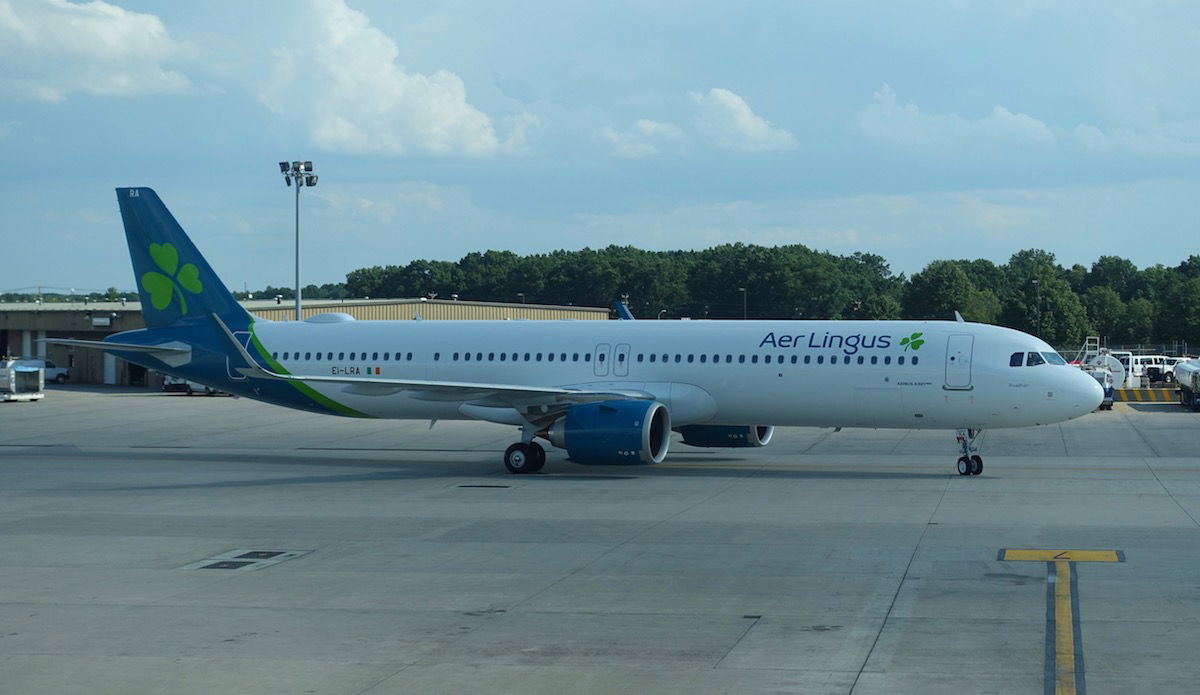
- Dublin (DUB) & Shannon (SNN), in Ireland
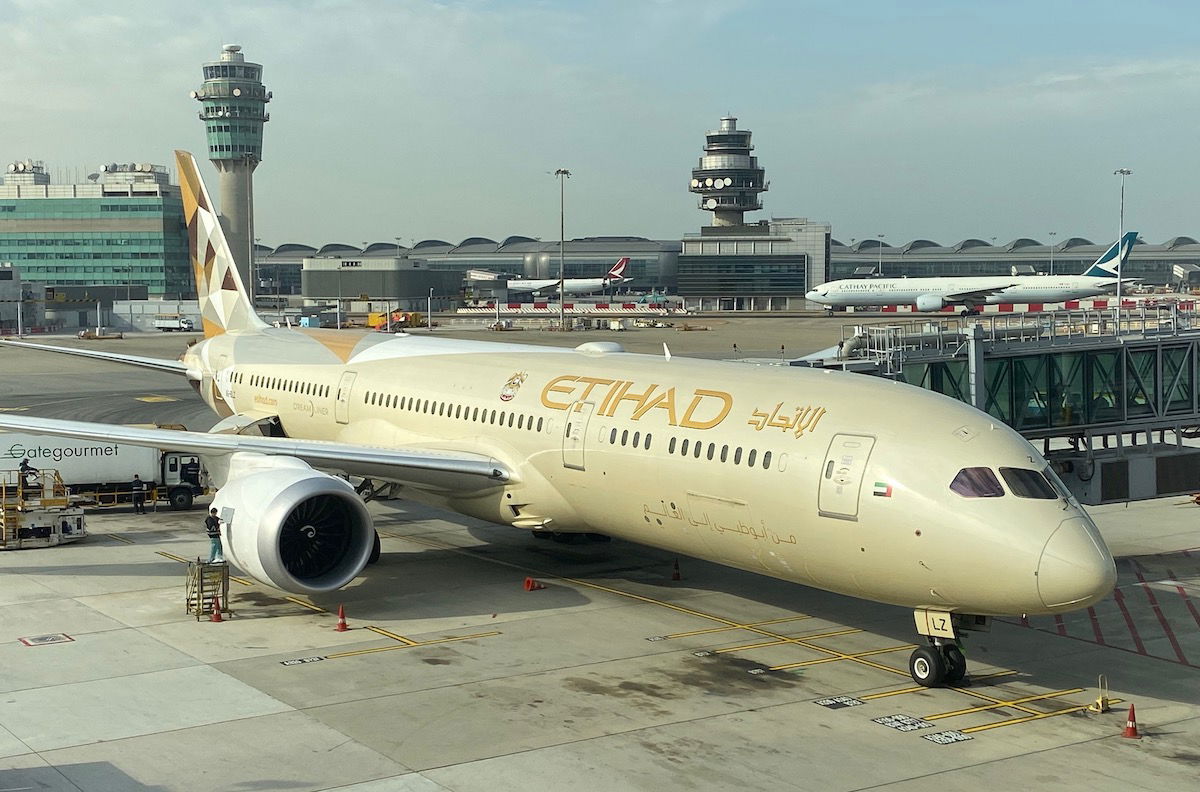
- Abu Dhabi (AUH), in the United Arab Emirates
- Aruba (AUA), Bermuda (BDA), and Nassau (NAS), in the Caribbean
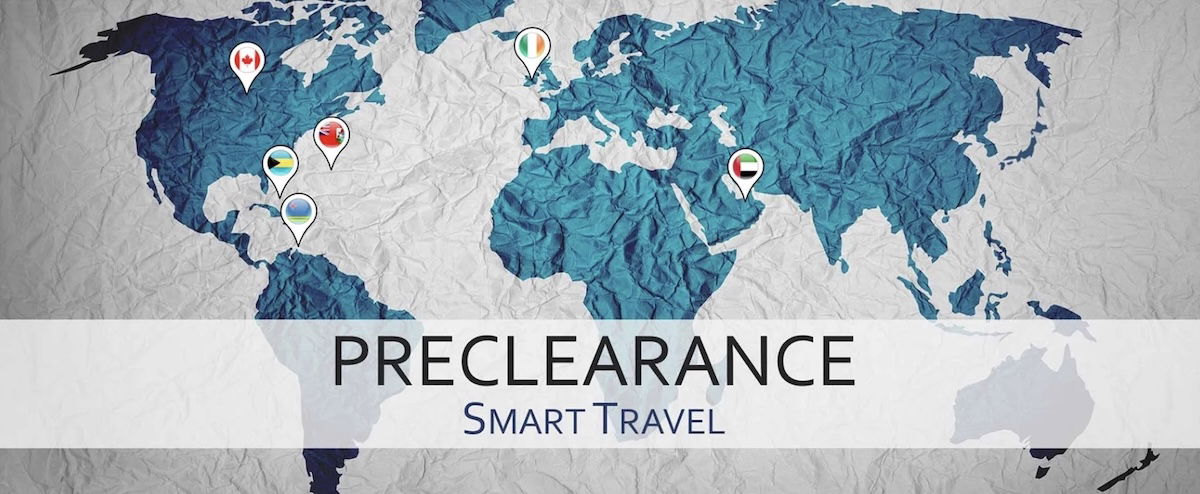
As you can see, the bulk of these facilities are in Canada, though you’ll also find some in other countries. Over time, we’ve seen lots of talk of other countries being interested in opening these facilities, though as far as I know, no finalized contracts have been signed for more to be added.
In the past, we’ve seen interest expressed for these facilities at airports in Bogota (BOG), Brussels (BRU), and Dubai (DXB), among others, though nothing ever came of that.
Who pays for US Preclearance facilities?
As you can tell, the selection of airports where you’ll find US Preclearance facilities seems rather random. How exactly are these decided on? Let me share my understanding, though others correct me if I’m wrong, since obviously not all of this is public.
My understanding is that foreign countries can apply to introduce Preclearance facilities. If a deal is reached, the cost for these facilities is shared between the US government and the country that applied. The US largely pays for the CBP staff, while the applicant country is responsible for providing the space at the airport for the facility, as well as building the facility.
As you can see, there’s a significant investment on the part of the applicant, as it’s not just the US footing the bill.
How do governments benefit from US Preclearance facilities?
What are the pros and cons of these US Preclearance facilities from the perspective of the government?
For the United States, the benefit of Preclearance facilities is that travelers can be screened before they board a flight, which in theory enhances security. After all, it’s better to determine if someone should be eligible to travel to the United States before they get on the plane. Furthermore, this program helps ease congestion upon arrival.
However, even with the foreign government footing part of the bill, I have to imagine that the US is paying more per average person screened through this program than it does at home, purely in terms of scalability. For example, Shannon has a CBP facility, but has a very limited number of flights to the United States. The cost per processed passenger can’t be competitive to what it would be at a major airport in the US.
From the perspective of the foreign country, the benefits are twofold. For one, it’s intended to make an airport more attractive for US-bound passengers, as airlines market the ease of this service, and hope it’s a point of differentiation. Furthermore, these facilities are often part of a larger diplomatic deal, to promote close relationships between the United States and the foreign country.
How do passengers benefit from US Preclearance facilities?
How do international travelers feel about these US Preclearance facilities? Well, it depends entirely on who you ask. For that matter, a person may have a different opinion depending on the type of trip they’re on.
Let me start by acknowledging that clearing airport immigration can be stressful for travelers, so there’s something to be said for getting that out of the way prior to a long flight, and then being able to relax.
That being said, it’s also important to acknowledge that for many travelers, immigration isn’t nearly as stressful as it used to be. Admittedly not everyone is eligible for these programs, but if you use Global Entry or Mobile Passport Control, then immigration is often a painless process.
The way I view it, these are the travelers that benefit most from these facilities:
- If you’re not eligible for US expedited traveler programs, then US Preclearance is probably pretty desirable
- If you’re connecting after an international flight from the same terminal (and especially if you’re checking a bag), then it’s great to not have to clear security again or to have to collect your bag, as that saves quite a bit of time and hassle
I think it’s also important to acknowledge that clearing immigration has become so much more efficient over the years thanks to programs like Global Entry. So for those of us who are eligible for Global Entry and who are terminating our travels at our US point of entry, I don’t consider this to be much of a value add.
It’s also important to at least mention the downside to these facilities. If you’re connecting from another flight onto your US-bound flight (like if you’re flying from Delhi to Abu Dhabi to New York), you’re more likely to misconnect, because you can’t just make your connection if you have very limited time. Clearing the facility takes time, and you often have to be through there an hour or so before departure.
I guess what I’m most curious about is to what extent these facilities actually impact consumer behavior. Does Etihad actually pick up any US-bound traffic that would otherwise go to Emirates due to having a US Preclearance facility? I’m not saying it’s a bad thing, I just feel like it’s a significant investment, and I wonder if there’s actually a return on it.
Bottom line
US CBP has Preclearance facilities at 16 foreign airports, whereby you can clear immigration prior to boarding your US-bound flight. It’s great to be able to deal with the stress of immigration prior to boarding a flight, and it potentially makes connections easier, both for the passenger and their bags.
Just how valuable the program is really depends on the type of passenger you are, though. If you have Global Entry, you’ll probably find this less useful than if you’re a foreigner who usually deals with long immigration lines on arrival.
What’s your take on US Preclearance facilities? Would you like to see the program expand?
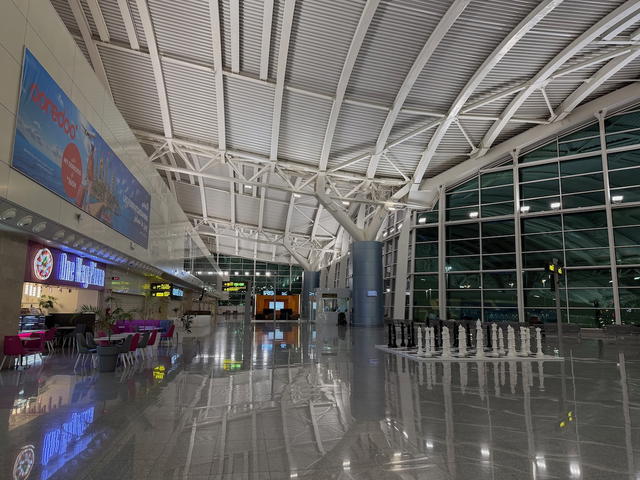




Abu Dhabi ? Who could sneak in from the Persian Gulf ? Really bad idea .
Did you put even 5 seconds of thought into this?
The whole point, even at the time of institution, was to pre-screen such potential liabilities BEFORE even setting course for the USA (where they also be secondarily screened), instead of making the USA the first point of CBP contact.
No, it was initiated at Pearson at the request of American Airlines, primarily so that they could offer direct flights to smaller airports which lack customs/immigration services.
Something that I didn't see mentioned (forgive me if I missed it) is that these facilities sometimes have LIMITED HOURS.
Abu Dhabi is the most notorious, in that not all of Etihad's scheduled US flights can use pre-clearance, and significant delays can lead to customers who are scheduled on a flight meant for preclearance, not having the ability to be screened, and thus the flight requiring stateside CBP/FIS when it wasn't scheduled to.
Since 2014. Haven’t personally experienced it, but it’s not something new.
post-CBP area at Abu Dhabi is probably the least bad of them, but it still sucks.
Related: In a few places, Global Entry physical card was required to use kiosks, even though not technically required (like, if you’re a GE member you should be able to proceed to the kiosk, regardless), which is frustrating, because I don’t always bring the card (now I do, just in case). This has happened to me at YYZ, and even STT (which is US territory but still has customs).
One thing that I do is bypass the kiosk and use the GE app. I've used it all over Canada to just go straight to the customs agent. Also doing it via the app will let you know if you have cleared already. A timesaver especially for airports like YYZ and YUL
Decent idea! The issue I’d run into is the Toronto-based security screeners won’t let you use the expedited GE security like without the physical card at some times, like, peak hours. And, technically, those screeners aren’t even with US CBP, so… they’re kinda makin’ their own rules.
They’ve changed security at YYZ and will eventually all over Canada. Now you can do it with just the pre-check on your BP however if you don’t have the physical card you are still subject to the random “button”. It’s dumb. But then again everything in Canada right now is like an IQ of 70. And I’m a dual national.
-G
There's another downside not mentioned - after clearing immigration you're trapped in an area of the airport of the airport which may have limited services.
Yep. I used to fly to Dublin a lot, and the Dublin setup was very annoying. Takes extra time, even with Global Entry, and then you are locked up in this separate area, ten gates, duty-free liquor shop and not much else. I'd much rather walk through the Global Entry back in the US. The Abu Dhabi post-clearance area has a mini-lounge at least, although it isn't much either. And don't start me on Pearson...
Bingo. Flew out of Dublin back to the U.S. once and vowed to never do that again if I have the choice. Not only was there lack of anything resembling food (except coffee), but there also wasn't enough seating throughout the terminal (people were sitting on the floor in the hallways), not enough bathrooms, and the "amenities" were as bare bones as you could get. There was pretty much zero investment made to make this...
Bingo. Flew out of Dublin back to the U.S. once and vowed to never do that again if I have the choice. Not only was there lack of anything resembling food (except coffee), but there also wasn't enough seating throughout the terminal (people were sitting on the floor in the hallways), not enough bathrooms, and the "amenities" were as bare bones as you could get. There was pretty much zero investment made to make this entire area anything more than passable.
For this reason, I kind of assumed all Pre-Clearance facilities are similar in nature and avoid them if possible.
Never flown out of DUB, but will this summer. The refurbished lounge will be open, so I hope I won't find it as you did.
Ben, there is no preclearance at YYJ. There is preclearance at the ferry terminal in the Victoria harbour.
The biggest thing not mentioned is the way it can significantly simplify gate allocation/scheduling/management and cost for airlines. Two examples come to mind. First, anyone who has arrived early into Dallas and had to wait for customs to open before being allowed to deplane, that scenario is somewhat self-explanatory. The Canada example is also huge; since most Canadian airports have the facilities, most flights to and from Canada for both Canadian and US airlines can...
The biggest thing not mentioned is the way it can significantly simplify gate allocation/scheduling/management and cost for airlines. Two examples come to mind. First, anyone who has arrived early into Dallas and had to wait for customs to open before being allowed to deplane, that scenario is somewhat self-explanatory. The Canada example is also huge; since most Canadian airports have the facilities, most flights to and from Canada for both Canadian and US airlines can operate in and out of any domestic gate in the US, without needing to relocate the plane or wait for a gate connected to the sterile customs zones in the US, greatly expanding the flexibility of the operation. At Seattle, this is a longstanding pain point for many international services, which have to deplane at the S gates (which are limited and premium, often leading to wait times). They either schedule a short-turn, or they have to tow the plane out to a stand to wait (looking at you, Icelandair), or to another gate elsewhere to board. American's short-lived Seattle-LHR service used to fly out of the N gates, but had to arrive into the S gates, neither of which was a standard area for AA flights (which have historically been in the A gates and now are in the D gates, which can't take a widebody). Likewise, Alaska pays for only one or two narrow body gates in the S gates, mainly to land Mexico services, but will depart them out of others. In 35 years of flying Alaska in and out of Seattle, I've only boarded an Alaska flight in the S gates exactly once (and once, due to presumably related space constraints, we landed into the B gates). You can tell when an airline does this because they will say "International arrivals only". Would love to hear from others who actually know the story here (I only am presuming based on what I've seen).
I've never done this except when the preclearance was at my start of my trip home. I would only do it connecting if I had extra time built in. It does mean I have to get up quite early on my flight home from DUB this summer, but it will be nice not having to go through the whole process connecting in the US (particularly not having to go through TSA if the DHS funding isn't solved by then).
Another Con:
They confiscate my apples etc before I even get on my flight, so can't bring my own fruit etc.
Other countries have a similar system. Kind of. Uruguay has immigration at ports in Argentina. Eurostar does Schengen immigration in London. St Vincent & the Grenadines has immigration in the St Lucia airport.
Brussels (BRU) was supposed to get US CBP preclearance. There was an agreement signed in 2020, but I haven't read about any progress on it.
Worth noting the lounge quality (if even available) within pre clearance facilities is usually a significant downgrade compared to the others in the airport you may be eligible for on the other side of the line in the airport
Not at Canadian airports where AC invests significantly in the cross-boarder lounge experience vs. the domestic lounges.
There is one important reason why this is not used more. If a CBP is doing the clearance in another country he needs a special permit by this country to do so. And not all countries like to have foreign officials act within their borders
Surprised Australia hasn't jumped onboard the CBP-preclearance wagon yet. Given the vast amount of US bound traffic from all major east coast capitals (Sydney, Brisbane, Melbourne) to the US every day of the week on at least 6 or 7 major carriers. Including the Qantas a380. Ireland traffic to the US simply pales in comparison. But then again the Australian gov't tends to move at a snail's pace, so.........
But, the ultimate and more cost effective solution is being trialed where arriving international pax can, after facial rec, pass directly into the terminal and bags are loaded onto the next flight just like a domestic connection.
As a Canadian with Nexus, US CBP is a god-send because who wants to stand in line with hundreds of other travelers when it takes me no more than 5 mins to clear US CBP on my way from YYZ to the US.
Pre-Clearance is highly valued by my brown and black friends, who value the assurance that the worst a US border control officer can do to them is to send them home to their fluffy bed in Toronto
I swear these victimisation fantasies are getting out of hand. 70% of officers who have ever interviewed me upon entry into the US have been black or brown.
I think this program really benefits Air Canada specifically, which is why Canada has done it all over the place. It would allow an American passenger to connect in a Canadian airport with Air Canada without having to fool with formally entering Canada, then re-entering the US. It also allows for flight from Canada to US cities that don't have airports with a proper CPB setup.
You still do actually need full visas etc to enter Canada if you intend to connect there, though, even if you never actually stamp in due to the preclearance. A friend of mine found that out the hard way. It's not considered full sterile for connecting purposes.
Worth noting as well, that USCBP are allowed to carry firearms in Canada in the pre-clearance area, but definitely not allowed in Ireland, and fairly certain in other overseas locations as well.
They also used to have Pre-clearance at London, ON (YXU) but it looks like DL dropped service from DTW, so no more US flights except for seasonal leisure markets
This is new-ish; they weren't prior to 2019.
The US Govt has no interest in making it easier for travellers to enter the US by providing pre-clearance overseas. The objective is to stop illegal immigration or undesirable visits at source or at least outside of the US, hence the selection of Abu Dhabi, Canada, Ireland and Korea, from where such immigration attempts have been highest. A government official 15 years ago famously likened the situation to NFL. The objective is to protect the...
The US Govt has no interest in making it easier for travellers to enter the US by providing pre-clearance overseas. The objective is to stop illegal immigration or undesirable visits at source or at least outside of the US, hence the selection of Abu Dhabi, Canada, Ireland and Korea, from where such immigration attempts have been highest. A government official 15 years ago famously likened the situation to NFL. The objective is to protect the end zone from the half way line.