
American’s CEO, Doug Parker, has bragged about how the airline will never lose money again, and has essentially argued that the company’s current profits are at the bottom end of what the airline will ever make. Of course this is music to the unions’ years. The airline has given employees proactive pay raises and bonuses, though employees are trying to bargain for more.
For example, American pilots are angry that Delta employees recently got big profit sharing checks, which are part of their contract and based on Delta’s superior financial performance. It’s ironic, because during American’s last round of contract negotiations, pilots negotiated higher base pay and lower profit sharing, but now they still want more profit sharing.
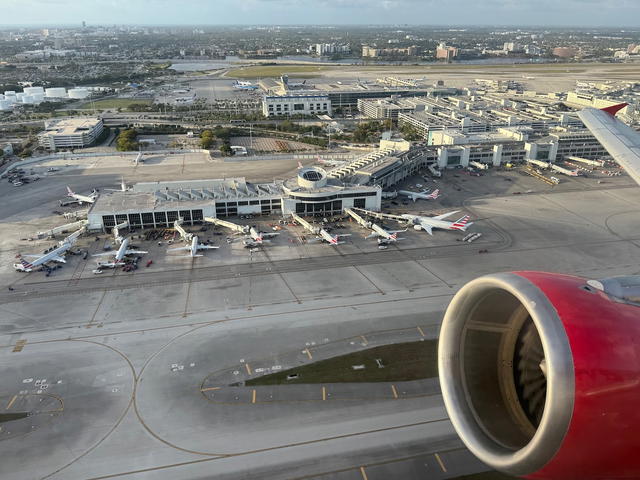
While mainline employees at American are doing quite well for themselves, one of the dirty little secrets of the US airlines is their regional carriers. The reason they use subsidiaries to operate their regional flights is so that they can operate a lower cost operation, and a large part of that is paying employees significantly lower wages.
Some work groups at American’s regional subsidiaries are entering into collective bargaining agreements for the first time, and they’ve called on congress to demand higher pay on their behalf. Over 80 members of congress signed a letter addressed to Doug Parker, requesting higher pay for employees of Envoy and Piedmont, which are American subsidiaries. This letter reads in part as follows:
As a leader in the aviation industry, you have recognized the importance to the flying public of these employees. They are on the frontlines for American Airlines serving the public in airports big and small, staying late when there are weather-related or other disruptions to make sure passengers reach their destination and performing important pre-flight security and safety checks to ensure that your passengers can travel safely. In some cases, they check in passengers, load their bags and help aircraft depart. They truly help keep the airline running in many challenging situations.
We were surprised to learn that many of these agents earn less than $11 an hour and, as a result, must deal with constant churn at work and struggle at home to make ends meet. In September, you pointed out that the industry has become more reliably profitable and that, in fact, the company would never lose money again. In light of those strong assurances, we believe that passenger service employees who have played a major role in achieving continued company profitability share in its benefits.
We hope that you will conclude your collective bargaining negotiations and ensure that all of your employees can earn a living wage. There is no stronger investment that American Airlines can make for its future, the future of the traveling public and the future of our communities. We thank you for giving our request your full, fair and prompt consideration.
The Dallas Morning News ran a story a couple of days ago about how little many of these workers are earning, including a passenger service agent who earns $15.71 an hour after being with the company for 18 years, and she’s on the very high end of their pay scale:
After 18 years with Envoy, Gower makes $15.71 an hour, half what someone with similar duties makes at American’s mainline operation, according to the Communications Workers of America, which represents Gower and 3,800 other Envoy agents.
Gower’s pay still tops that of many of her co-workers, 75 percent of whom earn less than $13 an hour, according to an online survey of 900 members published by the union Wednesday. In addition to manning airport gates, passenger service agents work on the ramp, helping guide planes on the tarmac and handling bags.
Starting pay for these employees, about 500 of whom work at DFW, is as low as $9.48 an hour, with a guaranteed $1 increase after the first year but no other guaranteed raises for the next 10 years.
I’ll be curious to see what comes of these contract negotiations, and am certainly hopeful that they’ll get some raises. Airlines have historically used these regional airlines to pay a subset of their workgroup less, and that’s one of the reasons we’ve seen regional airlines spread so much. If employees working for regional airlines were consistently paid fair wages, chances are that we wouldn’t see so many regional jets flying.


Membership is free and takes no more information than commenting as a guest. Earn status points for good contributions, and see fewer ads as your status grows.