

Across the board, we’ve seen a lot of inflation in recent years, particularly since the start of the pandemic. Admittedly inflation hasn’t impacted all parts of the economy equally.
In this post, I’d like to address what we’ve seen in recent years when it comes to luxury hotel prices in popular leisure markets. In many places, luxury hotels are charging more than ever before, in a way that has massively outpaced inflation. What is actually driving this trend?
Luxury hotel rates have gone up a lot in recent years
At the very top end of the market, it’s pretty incredible how much hotel room rates have gone up. It’s not the same in all markets, but let me give some examples.
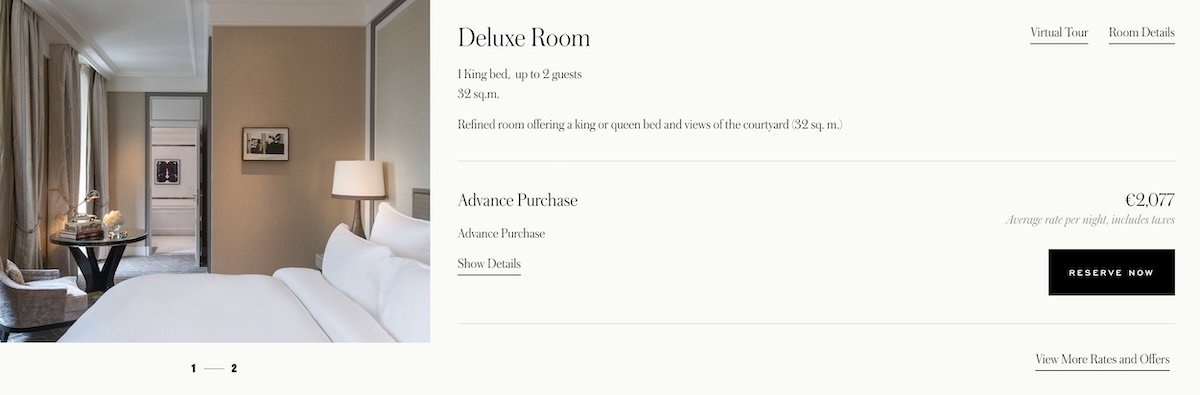
It used to be that the top hotels in Paris cost well under €1,000 per night, while now the city’s top tier of hotels (like Rosewood’s Hotel de Crillon) retail for around €2,000 per night for a standard room on any random night.
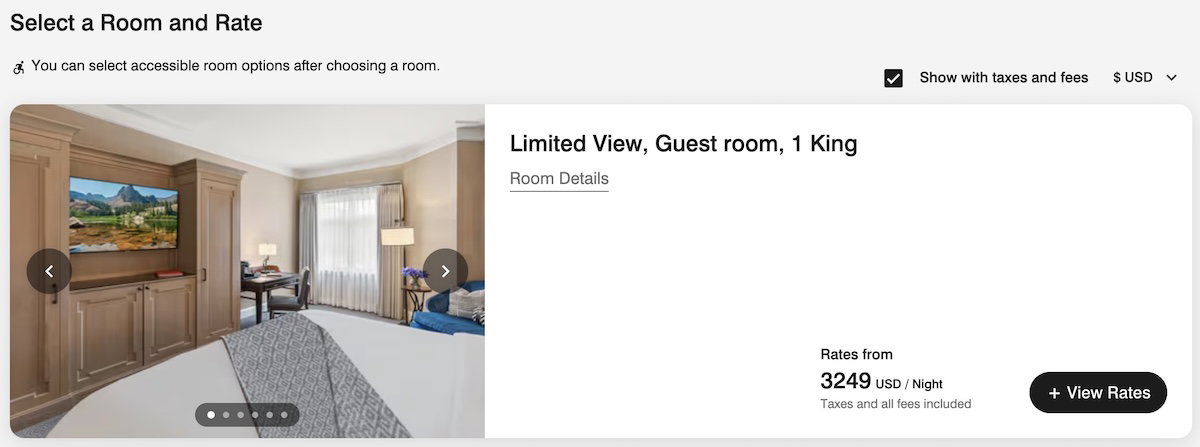
When you look at ski resorts in the United States, it’s pretty shocking what’s being charged nowadays. For example, take a look at the St. Regis Deer Valley, where a $3,000+ nightly rate is just the norm nowadays in peak season. Admittedly this property is a bit of a “points farm,” and I’d assume a majority of rooms aren’t actually being sold at those rates. But those people paying those amounts are really… not looking to maximize value.
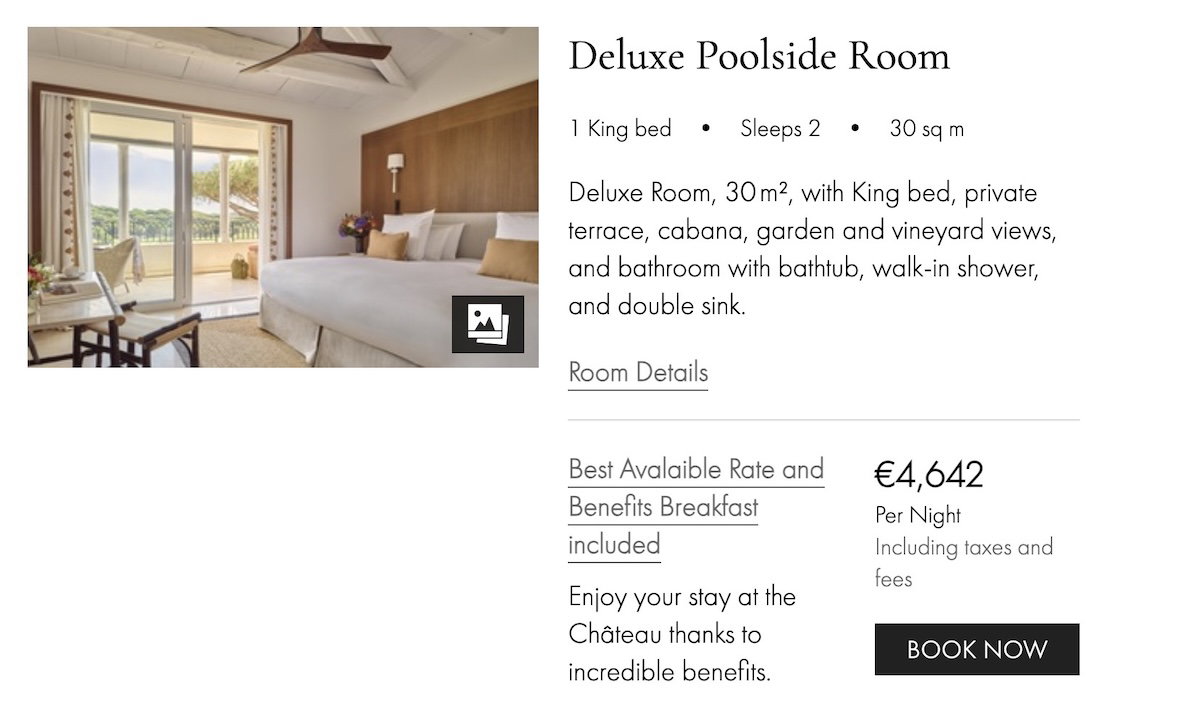
Also, admittedly the South of France is a hot destination in summer, and Airelles Chateau de la Messardiere is the new “it” hotel (and is even where White Lotus will be filmed), but it’s pretty wild to see a rate of over €4,600 per night for a standard(ish) room.
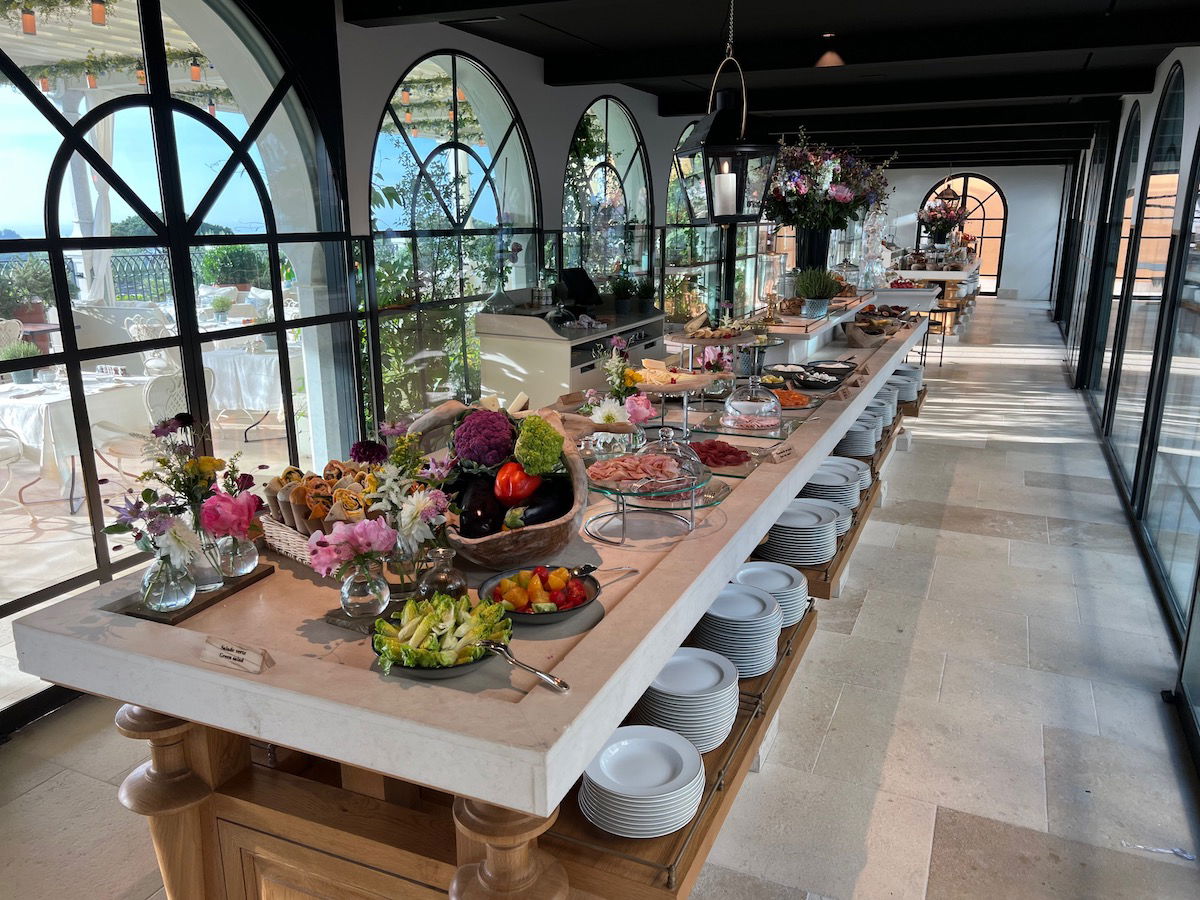
The funny thing is that by comparison, the types of vacations that used to be considered by far the most expensive now represent a much better value. For example, we haven’t seen the same level of inflation to luxury safari costs. So while they’re still more expensive than many of the above, it’s a truly special experience that includes virtually everything, so you at least feel like you’re getting some “value.”
What’s driving this trend, and what we can make of it
The obvious answer is that supply and demand is driving this trend, but I think it’s a bit more nuanced than that. We constantly hear about the K-shaped economy, especially when it comes to airlines and hotels.
Based on conversations I’ve had with folks in the hotel industry (particularly in luxury leisure markets in “hotspots”), demand for luxury hotels in many markets is just highly inelastic, and they find their demand doesn’t fluctuate that much even with big swings in pricing. Admittedly that’s a slight oversimplification, but the idea is that for places like Paris, the South of France, the Amalfi Coast, this has increasingly become the reality.
What’s causing this, specifically?
- It’s clear that more than ever before, people value travel experiences; we see this on all ends of the market, including when you look at the growth in summer transatlantic demand in recent years
- People feel the need to keep up, to visit hotels that are on every list, to see their Upper East Side neighbors in Saint-Tropez, etc.
- Wealth (especially when it comes to people spending big money on hotels) is so heavily concentrated in the United States, in terms of the total number of hundred millionaires, billionaires, etc.
- Americans are known for their limited vacation time, so when they only have one or two weeks per year where they can unwind, many people don’t care how much it’ll cost to have the “best” experience
So from a revenue management standpoint, my understanding is that at many of these properties, they’re essentially trying to skim the market. While some hotels will always be booked out in peak season, there are just as many hotels that are happy with a marginally lower occupancy level but with much higher rates, since that’s ultimately the most profitable.
Keep in mind that hotels are typically real estate investments, and the goal is for hotel operations to make it profitable to hold onto land, as it appreciates over time.
This means “value” has to be judged relatively, largely
For those of us who appreciate value, the issue is that this rate inflation makes many people believe that because a hotel charges X amount per night, it’s going to be amazing. After all, if a hotel is going to be charging a fortune, you expect a great experience — if you order a $100 steak at a restaurant, you don’t expect to be served a Big Mac.
I think this is really a challenge the industry is facing in terms of managing expectations. To a billionaire, it doesn’t matter whether the hotel costs $1,000 or $3,000 per night, or whether a cocktail costs $15 or $40. To someone splurging on a honeymoon or anniversary trip, that does make a big difference, and I think high prices also come with high expectations.
Often when I write about hotel openings and share the prices that are being charged, people will point out the pricing is ridiculous, and isn’t worth it. I can’t disagree with the “worth it” argument, if the goal is to feel like you’re getting value for your money. You’re ultimately paying for the popularity of a place, and on some level, for its proximity to major wealth centers of the United States.
When you look at the very top end of the hospitality market, it’s easier to come away with a great impression if you travel further from the United States:
- While there are exceptions, the United States’ hospitality industry is pretty sad, with the biggest focus being short term profits, maximizing revenue, and minimizing costs; you really feel that in the guest experience, and often I don’t enjoy staying at hotels in the United States
- In Europe, luxury hotels can be really expensive, but at least they often have a great sense of place, a high level of service, nice facilities, and good dining
- Asia is still where you can no doubt get the most value; while Asia’s most expensive properties have gone up in price over the years, it’s still relatively reasonable, and aside from places like Kyoto, you can get a hotel at the top end of the market without dropping four figures per night
The other issue here is that luxury hotels are more differentiated than pre-pandemic. This isn’t so much about improvements at luxury properties, but instead, about negative changes at other hotels. We’ve seen so many service cuts at more mid-range properties, with concepts like daily housekeeping, room service, etc., no longer being things consumers can expect.
I think ultimately the value of hotels also has to be judged on a relative basis, rather than in absolute terms. For example, if you’re going to drop $3K per night at a ski resort, you can stay at the 173-room St. Regis Deer Valley, where almost is nothing included, and service isn’t very attentive.
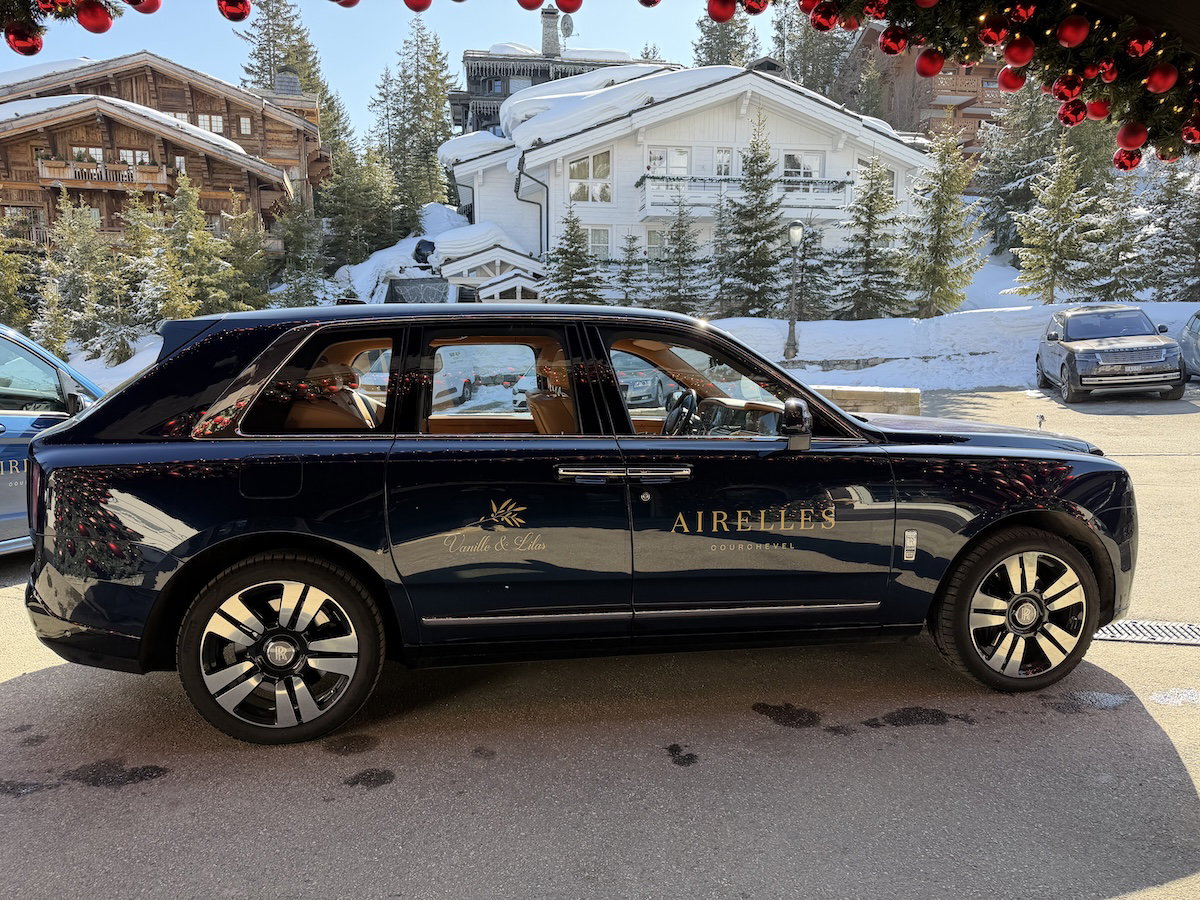
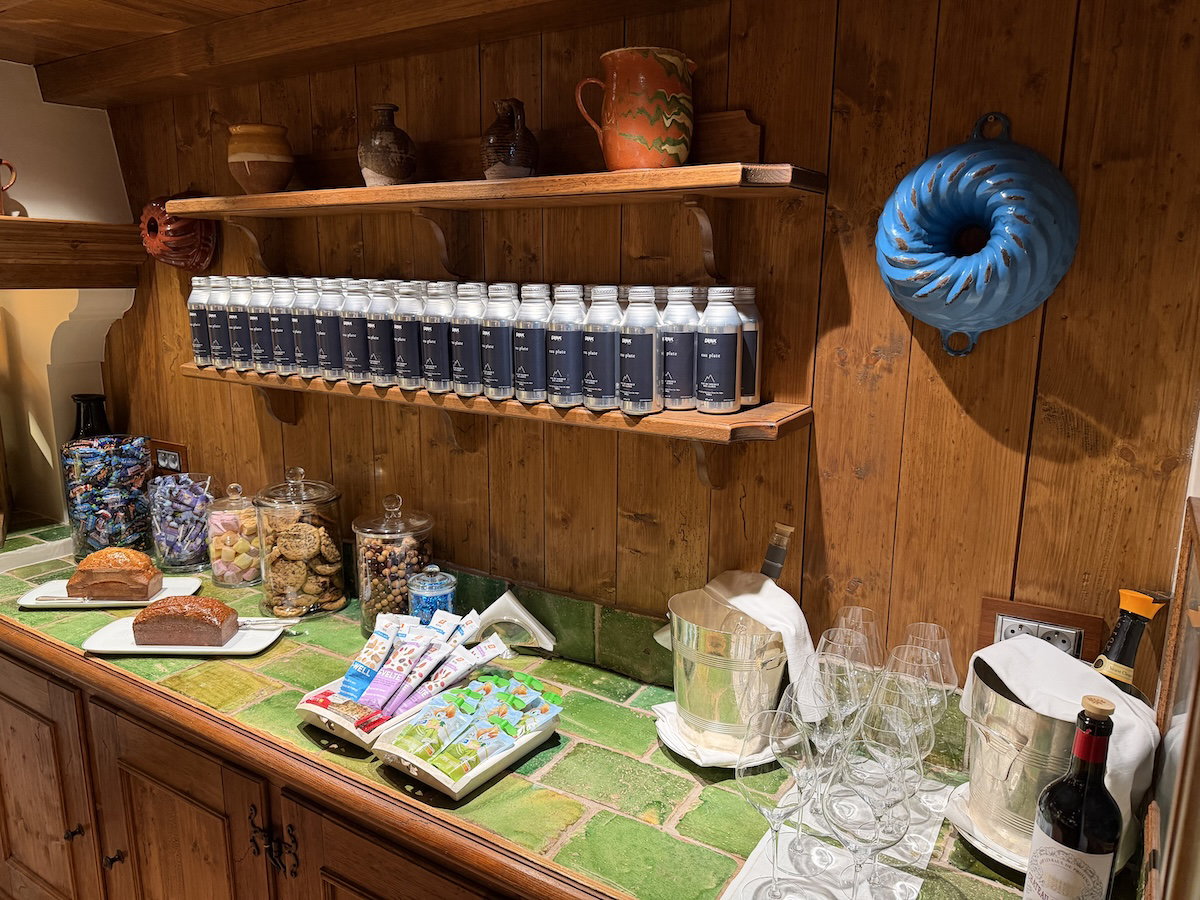
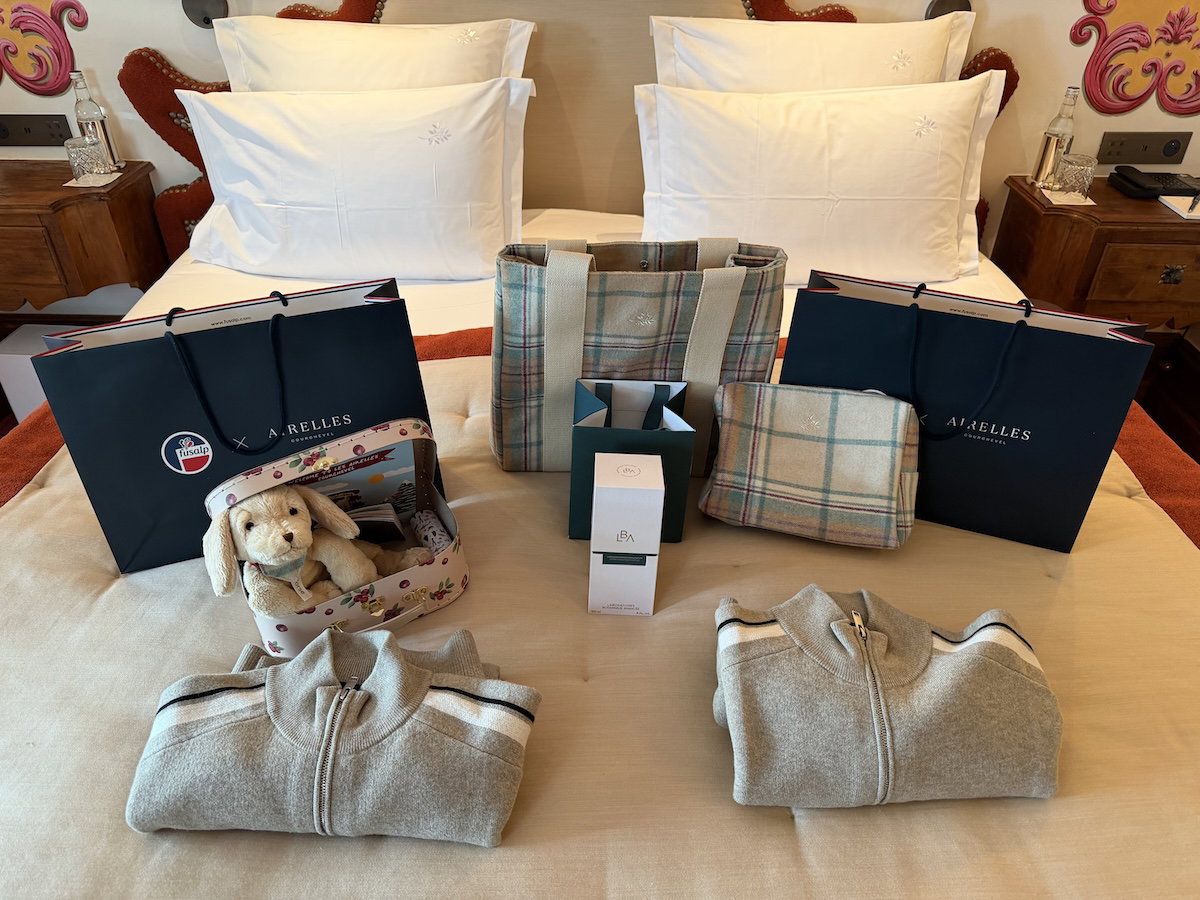
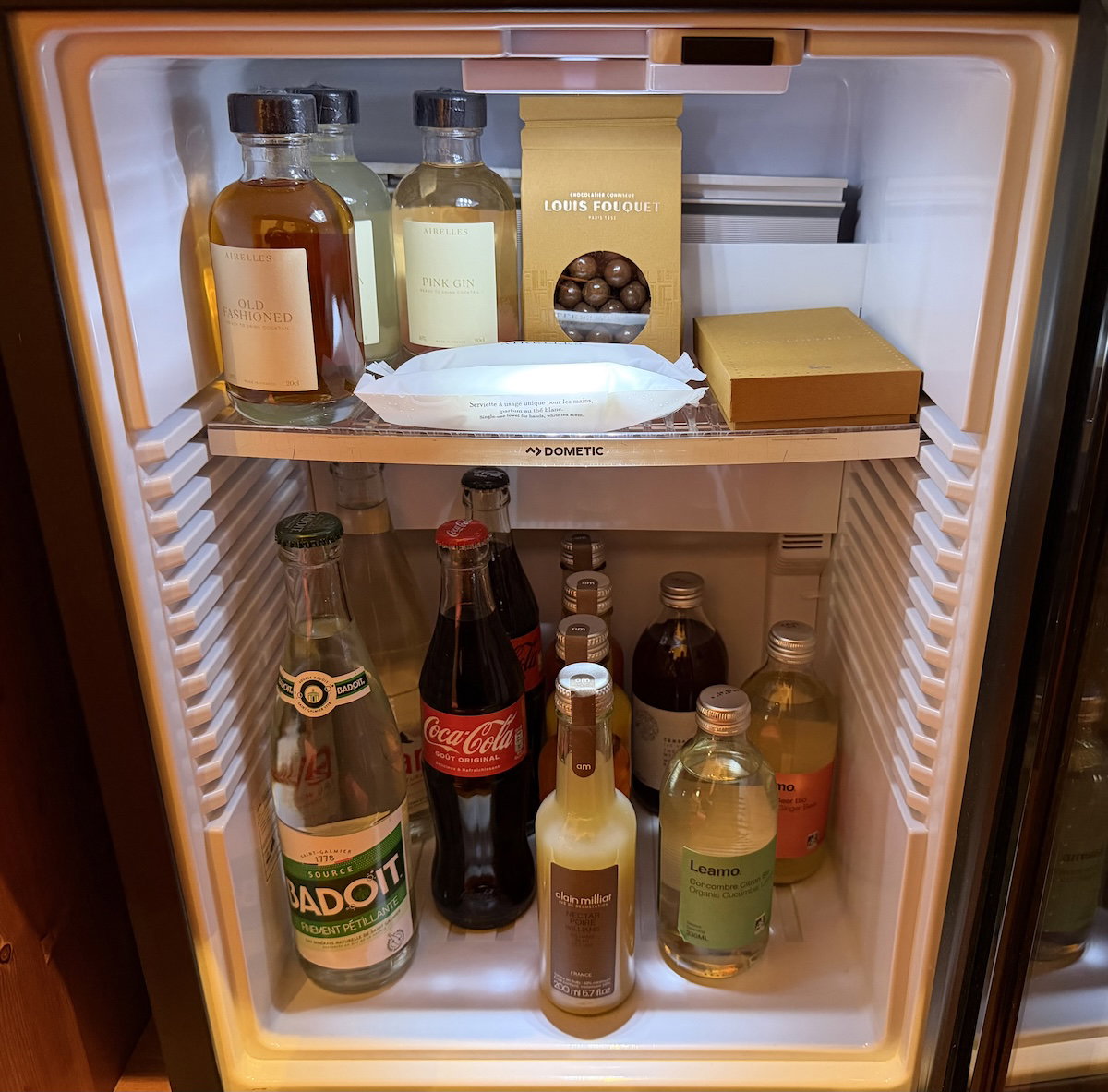
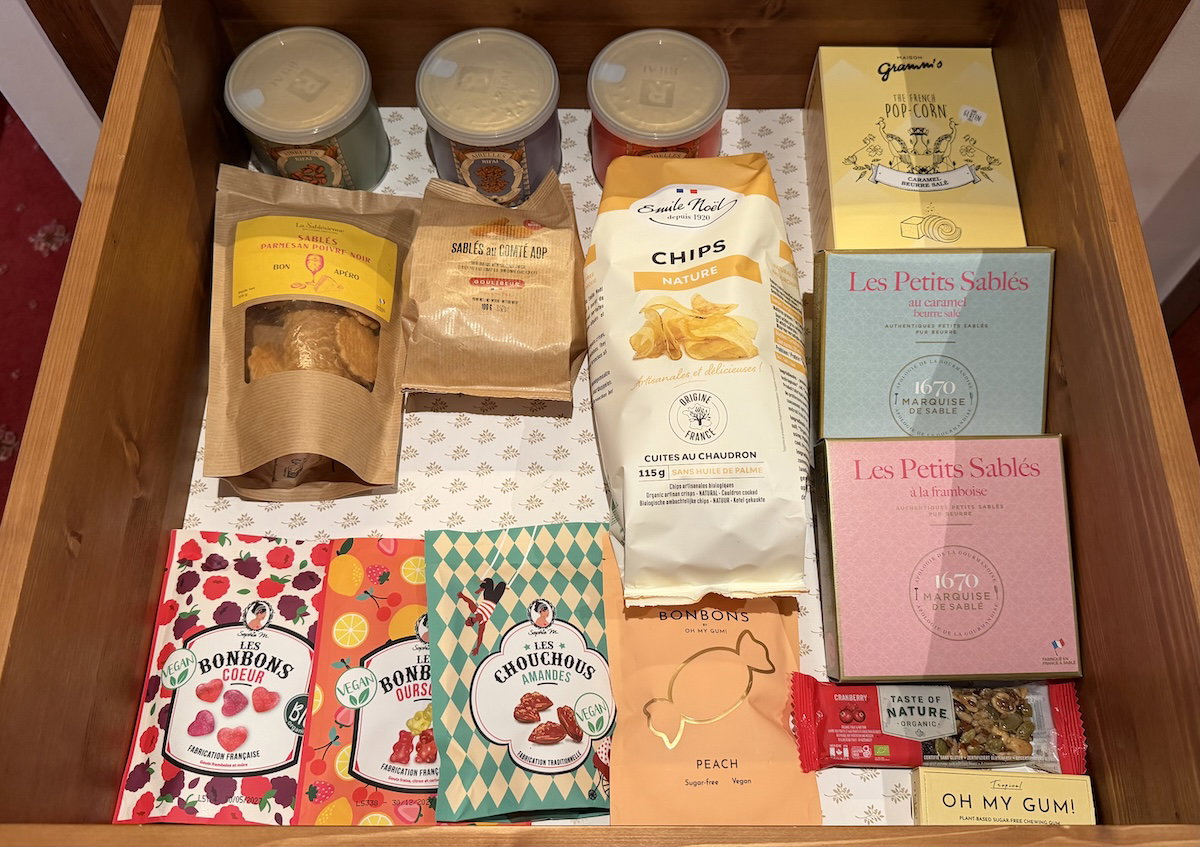
Or you can stay at the 44-room Les Airelles Courchevel, and use the Rolls Royce hotel car, sip on unlimited Veuve Clicquot in the ski room, and receive generous welcome gifts and a large complimentary minibar. It’s just a different experience.
Bottom line
At the very top end of the market, luxury hotel rates have gone up massively in recent years, in some cases doubling and tripling. This is an understandably frustrating trend, given that the experience hasn’t necessarily improved proportionally.
What’s happening is that demand is inelastic at popular “premium leisure” destinations, and luxury hotels are finding that consumers maybe aren’t as price sensitive as they used to be, at least on the very high end. There’s not much that can be done there, and you’re unlikely to feel like you’re getting some amazing value at one of these hotels.
But ultimately if you want to have that experience, it’s the only option. I do think it’s worth also considering value on a relative basis, assuming you have flexibility with where you can travel. An expensive hotel in Asia or Europe is almost always going to offer more special of an experience than an expensive hotel in the United States.
Where do you stand on the general trend of luxury hotel rate inflation?




2 observations
First another commenter noted shopping around can net equal or better “luxury” for less money. Especially mix in some judgement on what hotel characteristics matter most to you.
2nd especially in USA, points and miles have exploded in popularity so much post covid-19 that redemptions actually driving much luxury demand, so properties see no need to drop cash rates when higher cash rates also drive higher room “category” redemption rates.
As a avid traveler we see what's happening everywhere we go. RICH people don't really care what the cost is because it doesn't impact their travel plans. People who travel and plan on a budget can't afford to pay the high rate so that just means they travel les or don't travel where you're tier lodging and resorts are. Pretty indicative of today's world.
A bunch of newly minted crypto millionaires are playing with house money, so this trend won’t last much longer. It was the same before the S&L crises, the dot.com bubble, real estate bubble, etc. When will we ever learn?!
Definitely something to be said about blowing it allon one trip because of limited vacation time in the US.
Its the same reason people think they got a deal when they spend 400k airline points on a ticket. They accumulate those points without any cost flying around for 6 days a week, 50 weeks a year for their corporate overlord. Makes sense to blow it all in one go.
the head of the Swiss hotel certification agency recently stated that thanks to healthy luxury demand they could increase the prices and thus gain more profitability. It thus has nothing to do with more quality or more costs at the hotel supply level, but simply more demand. Also, the value of money is diluted (M2) so there is that nominal factor to consider as well.
Amen bro. I was just having a conversation about my last trip to the US, and how the omnipresent goal there is “maximize profit”. When were rental cars $100 a day? Oh yeah, because some conference is in town this week. Pay up. Why is a drip coffee $13,50? Because you’re on the Vegas strip. Pay up. Why is it $125 to store 3 pieces of luggage for 6 hours? Oh yeah, because there is no alternative so pay up. It all drives me insane there now.
There's a good article here about this phenomenon called "The Death of the Amex Lounge: Why the Upper Middle Class Isn’t Special Anymore"
The apt quote is "Picture it. You’re at one of the nicest resorts in one of the most prized vacation destinations in the world and there are literal millionaires scrambling to get pool chairs at 8AM. "
It's worth a read but the short version is there are too many rich people chasing mediocrity.
Thank you for the reference to this article.
There’s a 2008 book titled “Deluxe: How Luxury Lost Its Luster” that describes how luxury brands have become a commodity, rather than the true “luxury” they once were. Back in the day relationships were often generational, with the shopping experience much more rarified and personal. Alas, these days every other douchebag Wall Street trader has a Centurion card, a bimbo girlfriend who carries a Birkin, and a painting purchased at Christie’s hanging on the wall...
There’s a 2008 book titled “Deluxe: How Luxury Lost Its Luster” that describes how luxury brands have become a commodity, rather than the true “luxury” they once were. Back in the day relationships were often generational, with the shopping experience much more rarified and personal. Alas, these days every other douchebag Wall Street trader has a Centurion card, a bimbo girlfriend who carries a Birkin, and a painting purchased at Christie’s hanging on the wall of a loft in Tribeca. Money can’t buy you class…
This blog has basically become a rich person blog with discussion and reviews of places where the nightly rate is more than the monthly rent of 99% of this world
Can we discuss miles and points hotels again?
Ben needs to drive traffic to the $$$$$ hotels where Ford can pick up a fat commission as TA ;-)
This issue is hardly caused by the billionaire set. For a start, there are fewer than 3500 billionaires on the entire planet, and people who are that rich tend to holiday in one of the houses they own in different cities/countries, or in houses owned by their similarly wealthy friends. Why ski at Val d'Isér when you already own a house at Jackson Hole and another by the lake near Queenstown?
You've got to see economic news not on the front pages.
This is the Elite move, the Entitled who live in gated villages.
The hotels only want them, they can pay it. They don't want common people there to mingle in with them.
Sorry, but this is typical Class divisions.
There have always been rich people who could afford things that most people couldn’t. That ain’t go’n change.
Thousands of rich Americans read this blog every week. If you know about an amazing place that hasn’t been discovered by the Instalame Crowd yet, then STFU!!!!
Idiots.
Let's talk about racism in luxury travel.
When the system design has priced out a certain demographic.
Isn't many of those who stay at these $1k+ night properties the same snowflake who asks for equality?
It sounds like you're the racist to think a "certain demographic" can't afford luxury travel.
@Mantis , it's fair to say that the structural advantages of the reserve currency and the unipolar world which emerged after the Cold War have provided structural advantages to Americans over basically everyone else.
I don't think the ethnic/religious/etc makeup of the USA reflects that of the world at large, do you?
Muricans are far from being some sort of majority customers in (luxury) hotels, outside the US of course.
@Samo , they all go to the same places (both in terms of destinations and individual properties), so it's not surprising that they end up taking over some of them.
I believe social media has also played a big role in popularizing top end properties at world famous destinations. Everyone seems to want that perfect instagram worthy picture @ISP overlooking the Amalfi coast. For me, the key is to find those places NOT on the influencers radar but that also provide a near identical experience. They tend to attract mostly local/regional visitors. In these locations, tourist infrastructure remains very well developed, but lacks in the...
I believe social media has also played a big role in popularizing top end properties at world famous destinations. Everyone seems to want that perfect instagram worthy picture @ISP overlooking the Amalfi coast. For me, the key is to find those places NOT on the influencers radar but that also provide a near identical experience. They tend to attract mostly local/regional visitors. In these locations, tourist infrastructure remains very well developed, but lacks in the instant name recognition of their more popular brethren. For example, in the Italian lakes region everyone has heard of Lake Como. But you mention to most Americans Lakes Garda or Maggiore and they give you blank stares. And, lo and behold, hotel prices across the area reflect this discrepancy in profile. Villa D’este is priced exactly as you describe. However, last year we stayed at a stunning resort overlooking Lake Garda in a lake view room in mid September for under 1000E nightly. But the hotel was almost entirely filled with Italians, Germans and French. Very little American English was heard. And, true to form, my very conspicuous consumption Gen Y neighbors happened to visit the Lakes region simultaneously to us. But of course their Insta posts were exclusively of the Villa D’este. We found this also true in the Greek Islands. Go to Santorini and the prices can be absurd. However, go to near by Folegandros for nearly the same vertiginous cliff perched hotel experience and the prices were one third or more less.
1000€ per night is still an absolutely ridiculous price for a hotel room, lol.
What hotel in garda was so amazing?
Not sure why this is surprising. Isn't this *exactly what you'd expect* from a K-shaped economy? As the amount of wealth that wealthy people grows, their sensitivity to price decreases, therefore the luxury good they buy become more expensive. I'm more interested in why it's *not* happening in certain markets where you'd expect it, such as safaris. But the article touches on that only briefly. Maybe much of the safari market is made up of...
Not sure why this is surprising. Isn't this *exactly what you'd expect* from a K-shaped economy? As the amount of wealth that wealthy people grows, their sensitivity to price decreases, therefore the luxury good they buy become more expensive. I'm more interested in why it's *not* happening in certain markets where you'd expect it, such as safaris. But the article touches on that only briefly. Maybe much of the safari market is made up of the unwashed masses? I personally know several people (upper middle class-ish) who have taken their families on safaris. I know literally no one who has ever stayed in a $2000/night hotel.
"the amount of wealth that wealthy people HAVE grows", sorry :)
From what industry insiders tell me, it's mainly travel pattern. Baby boomers from the US and China have started to do their "once in a lifetime" trip after the pandemic has ended. They are prepared to spend a large part of their savings on one trip, which must be plush. Meanwhile, younger generations and those from Europe, the Middle East, Latin America and the rest of Asia prefer to travel every year and, obviously, design...
From what industry insiders tell me, it's mainly travel pattern. Baby boomers from the US and China have started to do their "once in a lifetime" trip after the pandemic has ended. They are prepared to spend a large part of their savings on one trip, which must be plush. Meanwhile, younger generations and those from Europe, the Middle East, Latin America and the rest of Asia prefer to travel every year and, obviously, design their travel plans based on disposable income rather than savings. Therefore their destinations are (fortunately) less affected.
I just think it's more about hotel groups being better about profit maximization, especially with high demand locations. Probably mostly AI driven. 20 years ago you needed to pay consultants 10s of millions to build your pricing algorithm, now it's a subscription. Sold out basically means you priced too low. Ideal is one room left.
Rare based comment, Dr. Toboggan!
All the increases in airline fares , hotel stays , and auto repair are being driven by Greed , and more Greed .
The Greed is everywhere , including people who misuse programs .
Yes, we're humans. Do you not also want stuff?
„Greed“ never explains anything, because it is a constant.
The greed was the same 8 years ago, when you could book the Loews in Chicago for $149 a night, $100 F&B credit included.
I mean, the simple solution is to book a luxury hotel or resort which hasn't been featured in a TikTok reel or been on a bucket list for some sort of tri-state area rich moms book club.
I stayed at the Belmond Splendido in Portofino JUST after Covid in September 2021 and it was expensive (1100 EUR a night?) but, sure, exquisite, and also every other guest was a loud, rich, splashy American showing...
I mean, the simple solution is to book a luxury hotel or resort which hasn't been featured in a TikTok reel or been on a bucket list for some sort of tri-state area rich moms book club.
I stayed at the Belmond Splendido in Portofino JUST after Covid in September 2021 and it was expensive (1100 EUR a night?) but, sure, exquisite, and also every other guest was a loud, rich, splashy American showing off their brands. Now I don't think you can get in the door for 3000 EUR, but would you want to share a hotel on the Italian Riviera with the same people who have the reservationist at Carbone in NYC on speed dial? Maybe you do, but I sure as hell don't.
The Capitolo Riviera just outside of Genoa is fabulous and about 1/10 of the price, still FHR, and a 10 minute drive or train ride to Camogli, which is charming, just around the corner from Portofino but not as crowded, fewer Americans and plenty of authenticity.
Idem for every other fancy resort/hotel in Europe.
I, an American, personally cannot wait for the American economy to crash at the highest levels, and for all of these vulgar Belmond-chasing, Amalfi-insisting, White Lotus-worshipping poseurs to cut back their hotel costs. And in turn, I can't wait for Belmond, Passalacqua, Rosewood and the like to realize that Italian and French tourists, no matter how rich, aren't going to drop 1700 EUR++ a night on a base room. Comeuppance, it's what's for dinner.
Hopefully .
This pretty much sums it up along with Ben's point about some types of hotels figuring out they can lower operating costs with lower occupancy at higher rates.
Add on top the other point below about luxury travel agents getting big commissions from these Americans - there are 'commission farm' brands that make it lucrative to steer clients at inflated rates.
This is all about boomers with fat AI driven 401k balances.
Yeah, how dare they save and invest. So awful.
Many doing their 'once to say we did it' trip, and probably not much repeat of a given property.
Harder for hotels to price for lifetime value of returning guests in this environment.
I was thinking about this recently. It's wild, a couple years ago, it used to be the absolute pinnacle hotel charging nearly $1000 per night, and now you can find the JW Marriott Dallas at $750 per night. It definitely isn't a great value.
Yes I was just there. Absolutely a mid-tier property charging ridiculous rates in a mid market.
It will change. These hotels better grab it while they can.
Interesting. The FIFA activity may have it spiked further, but it is still too high. What did you think of the facilities and the dining options there?
I think that you hit the nail on the head with the comments about Americans- those in the relatively significant cohort having basically unlimited money can definitely inflate prices wherever they congregate, but we're also millions of Americans who are easily in the top 3-4% of the global population in terms of income and/or wealth but at remain unable to take much time off work and want to get the absolute maximum out of each...
I think that you hit the nail on the head with the comments about Americans- those in the relatively significant cohort having basically unlimited money can definitely inflate prices wherever they congregate, but we're also millions of Americans who are easily in the top 3-4% of the global population in terms of income and/or wealth but at remain unable to take much time off work and want to get the absolute maximum out of each travel day time/experience.
That's why there's no comparison between Courchevel and US ski resorts, and why staying in the suburbs is the rational choice whenever visiting a city that's popular with American visitors.
What's really interesting/funny is that quite a few of the places that aren't popular with Americans have become cheaper, certainly in relative terms and sometimes even in absolute numbers.
German hotels are a great example of that - I'm forever surprised at being able to find something very solid in a great location in a major city/state capital for €83 or whatever.
The best double room (not a proper suite but more than comfortable enough) at the stunning NH Collection Palacio De Burgos is going for €156 in mid-June. A comically tiny (12 sq m) single room at the Moxy Barcelona is going for €202 for the same dates- or, if you must stay in that city, you can at least salvage a bit of your dignity by booking away from the American chains and choosing the Silken St Gervasi for €160ish per night.
*we 're also talking millions... (I'm not an American!)
This is exactly right, you’ve hit the nail on the head too.
The insane inflation is only at places where Americans go. 10 years ago, a trip to Aspen was half the price of Courchevel… now Aspen is double the price of Courchevel! Crazy times.
For the rest of us now, it’s about travel to places that aren’t popular with American tourists, as you’re right, prices have even come down in some of those places.. or at least they’ve stayed flat (and fair).
get on a few of the high end travel forums on reddit which are run by a few travel agents (FATTravel and chubbytravel). The FATTravel one in particular... the push is "if you don't go to these X hotels you are wasting your money." Those hotels are often the most expensive. Thus no one is going to a nice mid tier hotel.. they are going to whatever the most expensive hotels are in the area.
...get on a few of the high end travel forums on reddit which are run by a few travel agents (FATTravel and chubbytravel). The FATTravel one in particular... the push is "if you don't go to these X hotels you are wasting your money." Those hotels are often the most expensive. Thus no one is going to a nice mid tier hotel.. they are going to whatever the most expensive hotels are in the area.
Anguilla is a good example... Basically if you don't go to FS Anguilla or Cap Juluca (spelling?) you shouldn't bother going to the island (per these forums). It then pushes people with little price sensitivity to a handful of hotels.
Didn't realize travel agents are the moderators. Explains a lot, and the 'commission farms'
This phenomenon has made the random hotel credits from every new "premium" credit card essentially worthless, too. A $200-300 credit when a 2 night minimum stay is required ultimately results in more money out of my pocket, when you consider the random other costs (resort fees, parking, etc.). Unless I am definitely already traveling somewhere, even a staycation with these credits has become useless!
The credits are more about the card issuers wanting you to book hotels through their portal since it is so much higher-margin than flights, so they effectively give you a small cut of the commission in both statement credits and perks. Since most people won't be maximizing (i.e. booking an FHR property for 1-2 nights at $300-$400 or so), the card issuer/travel agent will likely come out well ahead on most bookings.
My point being...
The credits are more about the card issuers wanting you to book hotels through their portal since it is so much higher-margin than flights, so they effectively give you a small cut of the commission in both statement credits and perks. Since most people won't be maximizing (i.e. booking an FHR property for 1-2 nights at $300-$400 or so), the card issuer/travel agent will likely come out well ahead on most bookings.
My point being that you are definitely correct to only value a credit towards something you would reasonably be willing to pay cash for.
@JT - if you can’t afford it or think you can get an Amex FHR or Chase The Edit hotel “free” because you pay for the card you are a loser. I use all the credits but have no problem paying for 4/5 star hotels and consider the credits a great benefit even though I still pay $500 a night or more. I’m used to that and can easily afford it. If you can’t get out of the game - they don’t want people like you
Those programs have lots of properties where the stay gets covered or mostly covered by the credits. Just more outside USA than inside - where "people like" JT can go with the "free" airline ticket he booked with miles.
So, in short: Americans are ruining everything for the rest of us. Great. Thanks for nothing.
You're welcome for nothing.
Sounds like something an ungrateful European who had their national defense subsidized for over a century by those terrible Americans would say. Kannst du Deutsch? Nein? Bitte.
We would far sooner converse in German than endure the incoherent spectacle of a self-styled “Jesus Trump” erecting a grotesquely grand Arc de Triomphe.
"We would far sooner converse in German than endure the incoherent spectacle of a self-styled 'Jesus Trump' erecting a grotesquely grand Arc de Triomphe."
Literally right in front of Arlington National Cemetery no less, arguably the most hallowed of ground in the USA for honoring the US military - both those who have given their lives in service, and those who have served honorably.
cry harder
Ultimately, "value" is probably not the right word, as it is all entirely subjective. Flying to Australia from the USA costs between $1500 or $20000 depending on where you sit, and you still arrive at the same time. The "value" is in the eye of the purchaser.
My general view of hotels is not dissimilar. The sense of place is most important to me. along with a good location and a comfortable bed. Everything else...
Ultimately, "value" is probably not the right word, as it is all entirely subjective. Flying to Australia from the USA costs between $1500 or $20000 depending on where you sit, and you still arrive at the same time. The "value" is in the eye of the purchaser.
My general view of hotels is not dissimilar. The sense of place is most important to me. along with a good location and a comfortable bed. Everything else is negotiable. Spending $1000 for a hotel that does not provide something that money can generally not buy for me on a visit in any other manner - location, facility, access - never seems worth it to me.
Hotels are charging what people are willing to pay. If all of the luxury hotels are $800+ per night and all the mid tiers are $400+ per night in a major city, what is one to do? People are only going to go so low for what they'll accept for a hotel. Also Airbnb's and VRBO's have gotten more expensive as well.
Most people think they're gonna die soon anyway so they're spending with that same energy.
Hotels are charging what the 2% are willing to pay. And don't care if occupancy is at 50% as a result. So, "the people" are actually not willing to pay this in general - but hotels found a carve out in even higher rates and lower occupancy. I remember reading an interview a few years ago with FS founder Isadore Sharp. He took the journalist to his office window overlooking the streets of Toronto and...
Hotels are charging what the 2% are willing to pay. And don't care if occupancy is at 50% as a result. So, "the people" are actually not willing to pay this in general - but hotels found a carve out in even higher rates and lower occupancy. I remember reading an interview a few years ago with FS founder Isadore Sharp. He took the journalist to his office window overlooking the streets of Toronto and said, "See these people down there? We do not build Four Seasons for them."
Exactly- successful businesses don't waste time chasing unprofitable customers.
So were FS & Ritz unprofitable from 2010-2019? Let's not forget what labor costs have done to pricing. Just look at the wages of a housekeeper or front desk personnel in 2016 compared to 2026.
I forget where I read the article but a few months ago one of the mainstream papers did a deep dive into this and it was clear what is going on. That is that hotels discovered during Covid that it is far more lucrative to charge breathtaking rates and not to obsess over occupancy. That the costs of running a luxury property go down due to less staffing, wear and tear etc, and the revenue...
I forget where I read the article but a few months ago one of the mainstream papers did a deep dive into this and it was clear what is going on. That is that hotels discovered during Covid that it is far more lucrative to charge breathtaking rates and not to obsess over occupancy. That the costs of running a luxury property go down due to less staffing, wear and tear etc, and the revenue still goes up. As well, in the case of Paris and other places there are not only the 2% in the U.S. but a large swath of Middle Eastern and Asian wealth that will not balk at these rates at destination areas.
With that said, even lower and mid scale properties, as well as luxury, also seem to be on this trend in the U.S.. Napa, NYC, Naples, are becoming exorbitant (I had to pay $500 a night for a Hyatt House in Naples where I had a series of meetings - as the Four Seasons, Ritz and others were over $2K). Even cities that used to be not so expensive like LA and Chicago are all creeping into the $600-$1200 a night range. I remember when the Pen in Chicago, pre covid, was often a great value at around $400 a night. Good luck below $700 now.
As long as the uber wealthy are willing to pay these rates it will just keep on. At least we have Indonesia, lol. For now.
Just a quick data point, I did manage to get the PEN in Chicago for three nights for ~$450/night in February through Amex. FHR (I believe it was a stay two nights get the third night free promotion, allowing them to keep the base room rate high, though, which speaks to your very valid point).
This makes sense on some level. It's a lot like the general argument for why AA and Spirit failed the past several years while United and Delta were much more successful.
The former two often acted like they were chasing volume without really asking if it was profitable to do so, especially when so much of it was to leisure markets or connecting origin markets that were never going to be able to deliver higher...
This makes sense on some level. It's a lot like the general argument for why AA and Spirit failed the past several years while United and Delta were much more successful.
The former two often acted like they were chasing volume without really asking if it was profitable to do so, especially when so much of it was to leisure markets or connecting origin markets that were never going to be able to deliver higher yields and fares as fuel and labor costs began to rise.
Both United and Delta certainly introduced basic economy fares, but it feels like everything they have done and continue to do is focused on attracting people that will generate far more revenue, even if fewer in number. Not people they will definitely lose money on.
You leave out one key factor. US based Travel agents! As they get a kick-back they have a strong incentive for higher prices. The more a client spends, the higher their commission is.
So in high end markets popular with American Tourists the agents booking through the likes of Virtuoso want the prices to be that high.
They also have no incentive to research interesting local alternative hotels. So they continue to direct clients to...
You leave out one key factor. US based Travel agents! As they get a kick-back they have a strong incentive for higher prices. The more a client spends, the higher their commission is.
So in high end markets popular with American Tourists the agents booking through the likes of Virtuoso want the prices to be that high.
They also have no incentive to research interesting local alternative hotels. So they continue to direct clients to the very expensive hotels in these markets.
@Ben: What is your view on this?
I seriously doubt this is a major factor. Travel agent assisted bookings are still a small percentage of the total.
@Omar , it's actually pretty important when it comes to the demographic of wealthy Americans who aren't too familiar with the rest of the world and are happy to spend lots of money on their holidays- but not much time on researching promising beaches in Malaysia, archaeological sites in Puebla, or the best spots for dancing kizomba in Luanda.
It is on the margin. They tend to overindex with low price sensitivity and low awareness of relative value in the particular market clients. Hence why they hire them. And they overindex on luxury properties because that and cruise are all that really pays these days.
There are also only 25 rooms at the Passalacqua in Como, fewer than 100 standard at the Crillon in Paris. Doesn't take much travel agent driven steering to skew things.
you noted the main drivers (wealth, k shaped economy etc) but just to drive the point home, there was a recent statistic that came out via Federal Reserve data:
There are 430,000 households in the US with at least 30 million in net worth (!!!!). this explains it all
No. Wealthy people don't get that way by throwing away money on "luxury" hotels. And their homes (and second homes) are likely much nicer than any hotel.
Wealthy people who accumulated their wealth over a lifetime may not "throw away" their money on luxury hotels, but wealthy people who came into their fortune in their 30s and 40s thanks to an IPO, investments, etc. certainly do so.
Yup, and over 50% of that wealth has come from investing directly in the stock market.
And actual room availability depends on your last name. A last name of Petrov in Courchevel meets with a no room availability but a name like Jean Pierre Garnier mysteriously finds sudden availability
What if your name is Jean Pierre Petrov?
Greed. Excess. Careless people.
I also think there's a fad element to it
Careless indeed! “Let me tell you about the very rich. They are different from you and me. They possess and enjoy early, and it does something to them, makes them soft where we are hard, and cynical where we are trustful, in a way that, unless you were born rich, it is very difficult to understand. They think, deep in their hearts, that they are better than we are because we had to discover the...
Careless indeed! “Let me tell you about the very rich. They are different from you and me. They possess and enjoy early, and it does something to them, makes them soft where we are hard, and cynical where we are trustful, in a way that, unless you were born rich, it is very difficult to understand. They think, deep in their hearts, that they are better than we are because we had to discover the compensations and refuges of life for ourselves. Even when they enter deep into our world or sink below us, they still think that they are better than we are. They are different. ” -- F. Scott Fitzgerald (The Great Gatsby)